For those who haunted the 'Euro Horror' shelves of the local video store, fingers tracing spines adorned with lurid artwork and tantalizing taglines, the name José Ramón Larraz promised something… different. Not the polished jump scares of Hollywood, but a certain languid, sun-drenched dread, often steeped in uncomfortable eroticism and psychological ambiguity. His 1982 film Black Candles – originally, and perhaps more revealingly, titled Los ritos sexuales del diablo (The Sexual Rites of the Devil) – is pure, uncut Larraz, a hazy, unsettling trip into suburban Satanism that feels less like a conventional horror movie and more like a half-remembered nightmare dredged up from a feverish sleep. This wasn't the kind of tape you rented for party viewing; this was one you watched alone, late at night, the flickering CRT casting long shadows across the room.
A Slow Burn into Darkness
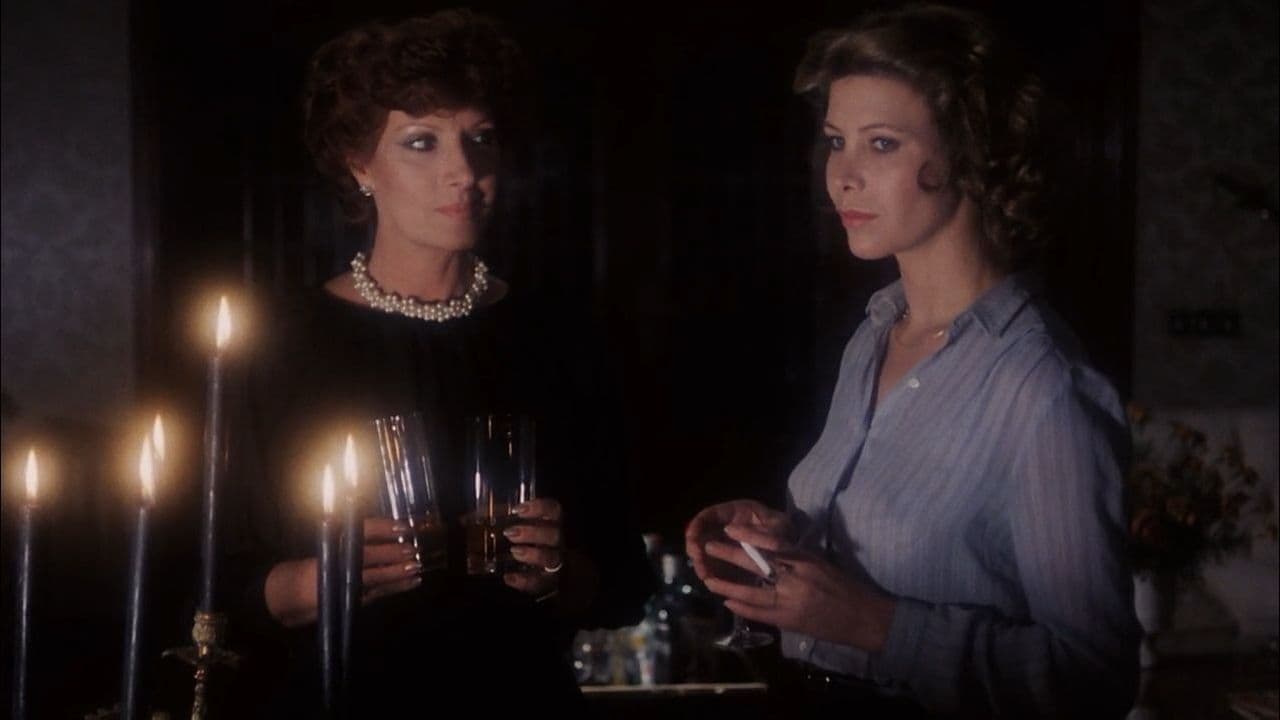
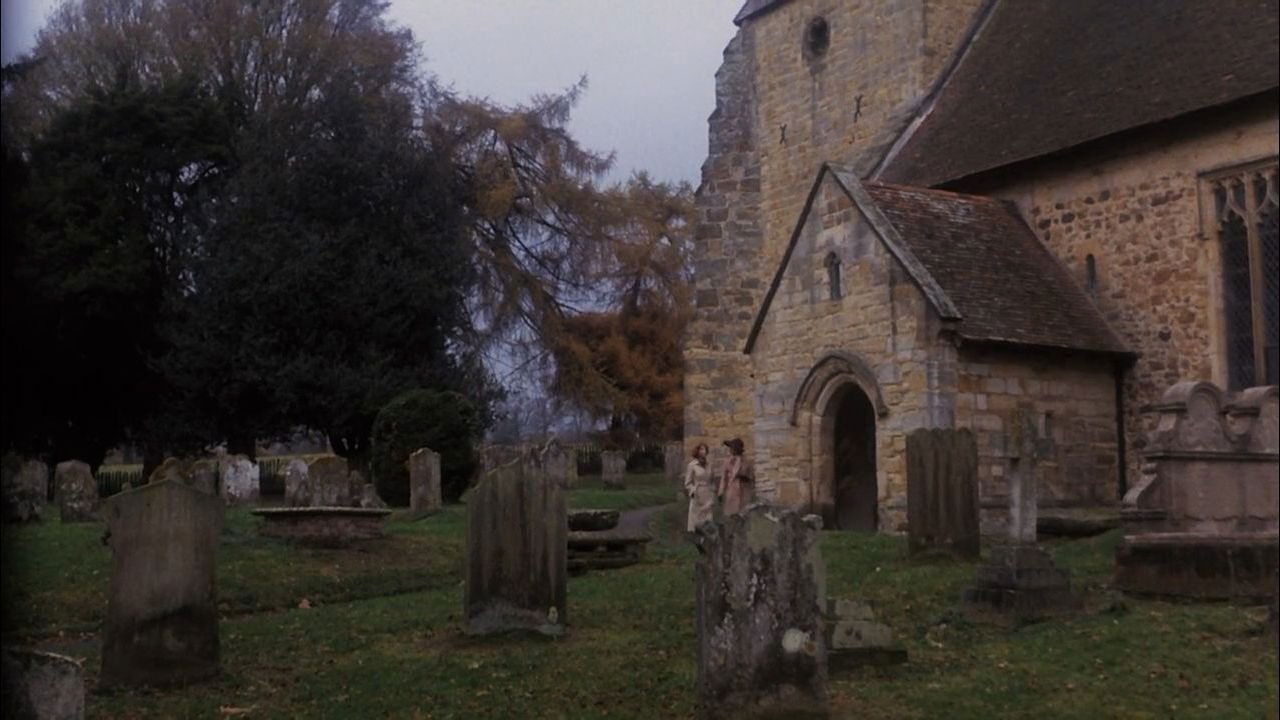
The setup is deceptively simple, almost mundane. Young Carol (Vanessa Hidalgo) arrives at the secluded English country house of her older sister, Fiona (Helga Liné), and her husband. There's an immediate sense of unease, a palpable tension hanging in the air thick as summer humidity. Fiona is distant, preoccupied, her husband vaguely sinister, and the sprawling house itself seems to hold its breath. Larraz, ever the master of atmosphere over outright shocks, lets the dread accumulate slowly. He uses the picturesque, almost idyllic setting – a stark contrast to the darkness brewing within – to lull the viewer, making the eventual descent into ritualistic horror feel all the more jarring. Forget frantic pacing; Black Candles simmers, letting the isolation and unspoken secrets do the heavy lifting. It's a style that might test the patience of modern audiences weaned on constant stimulation, but for those who appreciate a slow, deliberate tightening of the noose, it's remarkably effective.
Euro-Cult Sensibilities and Satanic Panic
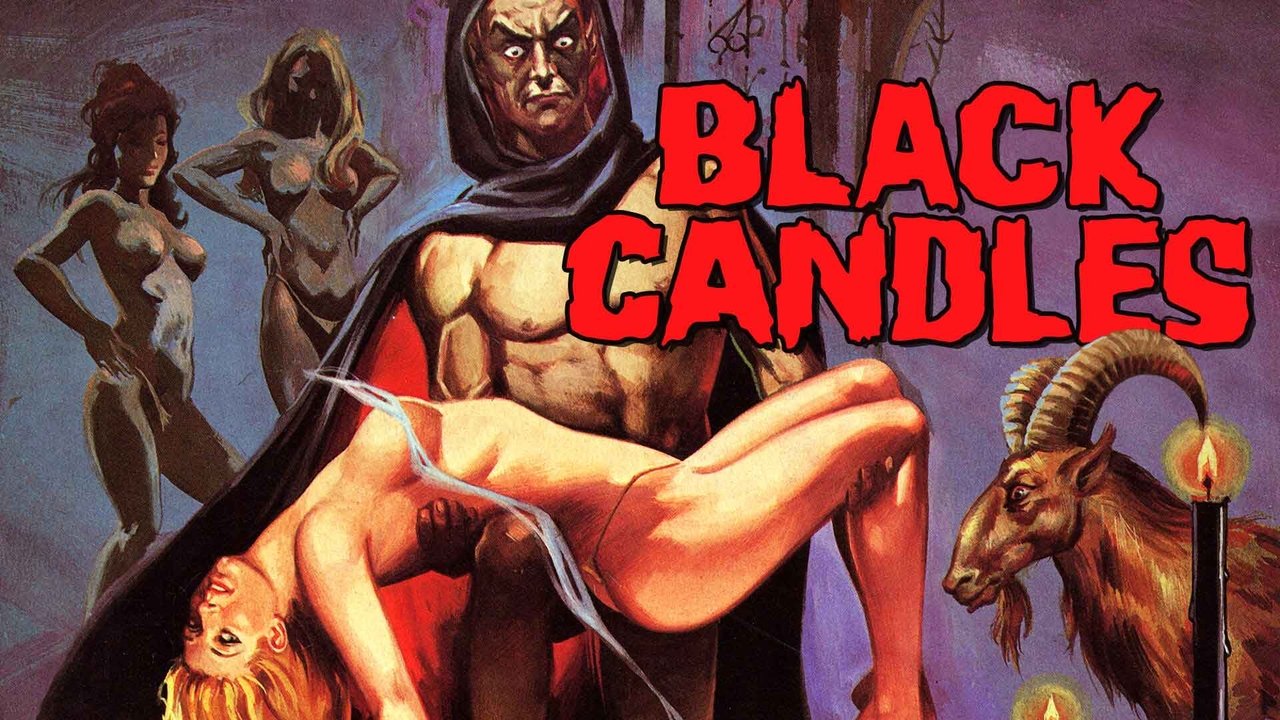
Released in the early 80s, Black Candles arrived amidst the burgeoning 'Satanic Panic' era, though its roots feel deeper, drawing more from the lineage of European folk horror and the transgressive psychosexual dramas of the 70s. Larraz, who also penned the script, wasn't interested in a straightforward devil-worship narrative. Instead, he explores themes of corrupted innocence, sexual awakening twisted into something perverse, and the insidious rot beneath a veneer of middle-class respectability. The film taps into that specific Euro-cult flavour – a blend of art-house sensibility, exploitation elements, and a willingness to linger on moments of uncomfortable intimacy or implied violence. It’s fascinating to note that Larraz, a Spaniard, frequently set his most memorable chillers like this one and the earlier, equally unsettling Symptoms (1974), in the UK, using the perceived reserve of the English landscape and architecture as a canvas for suppressed horrors.
Helga Liné: The冰冷的中心 (The Icy Center - evoking the coldness of the character)
Anchoring the film is the magnetic presence of Helga Liné as Fiona. A veteran of European genre cinema, often seen in Gialli and horror films, Liné brings a chilling combination of icy beauty and quiet menace to the role. Her performance is key; she embodies the film's central mystery, her placid exterior barely concealing the dark secrets she harbors. She commands the screen with a subtle intensity that elevates the material. Opposite her, Vanessa Hidalgo effectively portrays Carol's mounting fear and confusion, serving as the audience's surrogate in this increasingly bizarre and dangerous household. While the acting across the board has that slightly heightened, stylized feel common to European genre films of the period, Liné's performance remains genuinely unnerving.
Atmosphere Over Gore
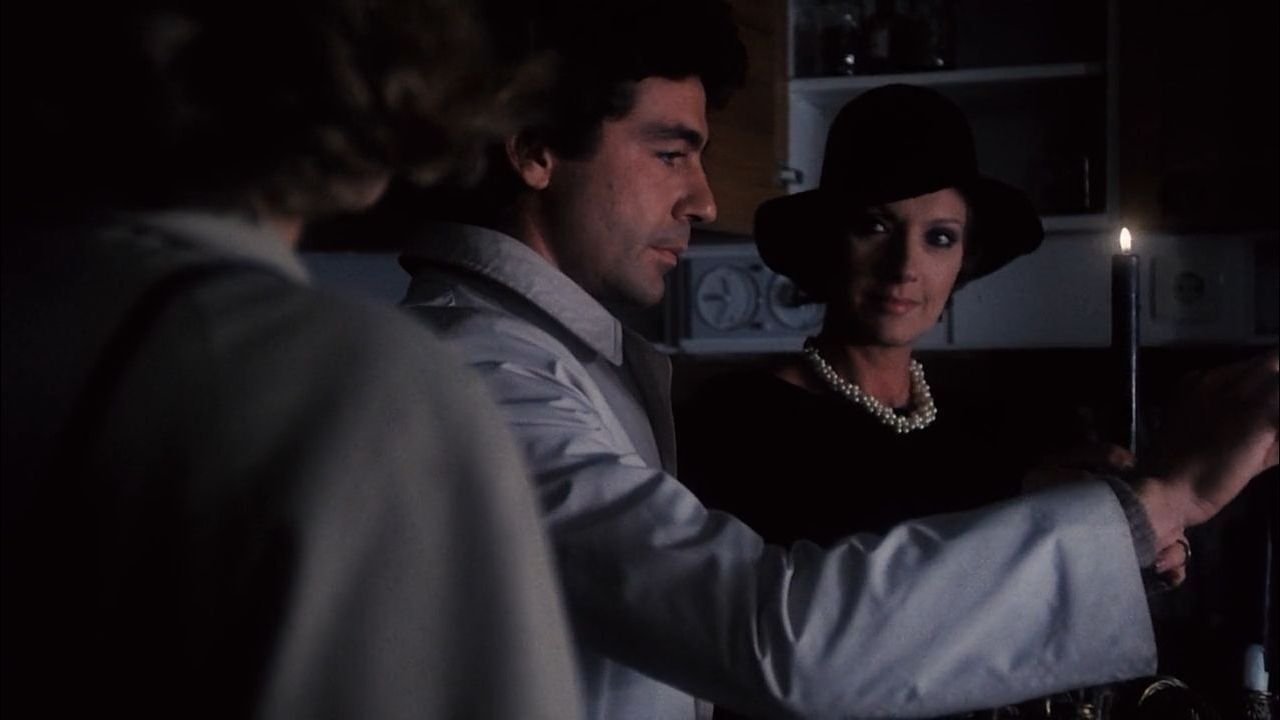
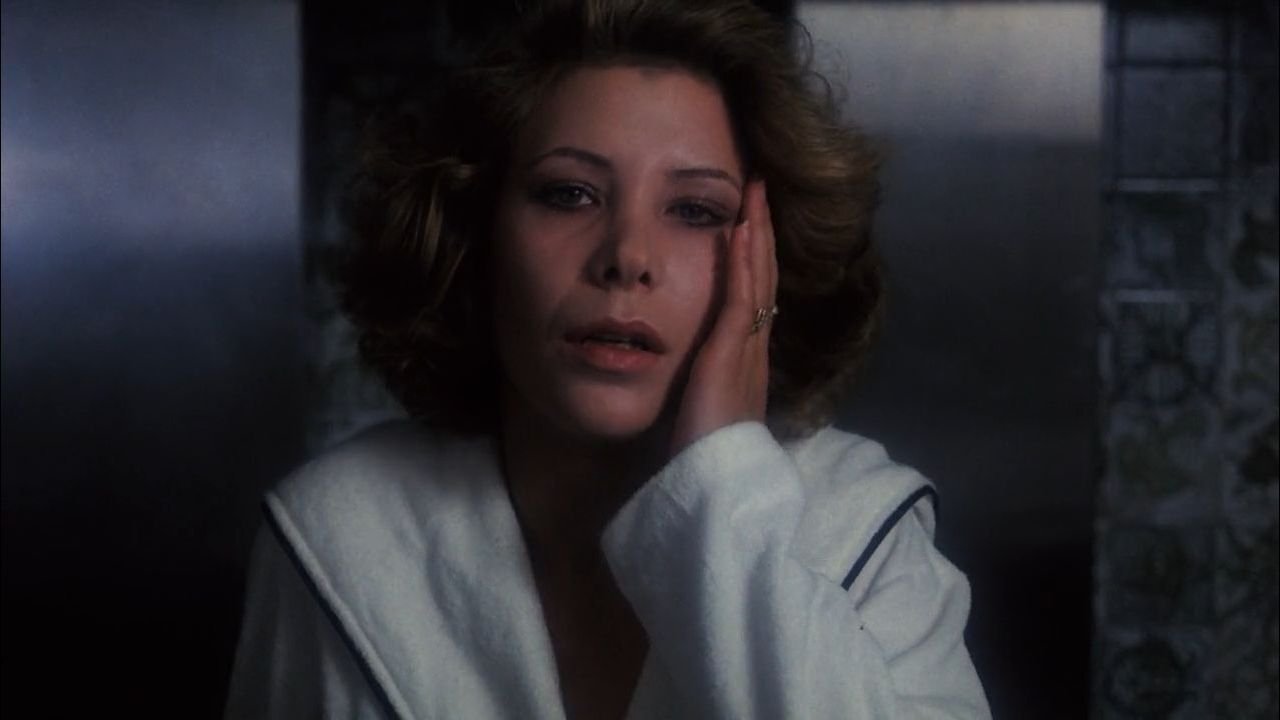
Don't expect a gorefest here. While the film deals with dark themes and culminates in ritualistic sequences, Larraz prioritizes suggestive horror and psychological dread over explicit violence. The horror comes from the pervasive wrongness of the situation, the vulnerability of Carol, and the slow reveal of the cult's true nature. The dimly lit interiors, the flickering candlelight during the pivotal sequences, and the often-dreamlike cinematography contribute significantly to the film's unsettling mood. Reportedly filmed on a tight budget, as was typical for many of Larraz's productions, Black Candles makes the most of its limited resources, focusing on location, performance, and careful framing to build suspense. There's a raw, almost handmade quality to it that feels distinctly of the VHS era – a far cry from slick, modern productions, but possessing its own eerie charm. Did anyone else find the almost casual depiction of the occult preparations strangely chilling back then? It felt less like movie magic and more like glimpsing something genuinely taboo.
Legacy of Languid Dread
Black Candles isn't a perfect film. Its pacing can be challenging, the plot somewhat opaque at times, and its blend of eroticism and horror might not sit comfortably with all viewers. Yet, it remains a fascinating example of José Ramón Larraz's unique directorial vision and a standout piece of early 80s European cult horror. It doesn't scream, it whispers; it doesn't jump out at you, it slowly creeps under your skin. For those who discovered it on a grainy VHS tape back in the day, perhaps drawn in by its evocative title or striking cover art, it likely left a lasting impression – a sense of unease that lingered long after the credits rolled. It’s a film that rewards patience and a taste for atmosphere over action, a distinctly European nightmare captured on celluloid.
Rating: 6.5/10
Justification: The score reflects the film's undeniable atmospheric strengths, Helga Liné's chilling performance, and its status as a distinctive piece of José Ramón Larraz Euro-horror. However, it's docked points for pacing that will alienate some, occasional narrative ambiguity, and budget limitations that are sometimes apparent. It's a strong mood piece, but perhaps less satisfying as a conventional narrative.
Final Thought: Black Candles remains a potent little chiller for those who appreciate slow-burn dread and the unique, often unsettling flavour of 80s Euro-cult cinema – a reminder that sometimes the most disturbing horrors are the ones that unfold quietly in sun-dappled rooms.