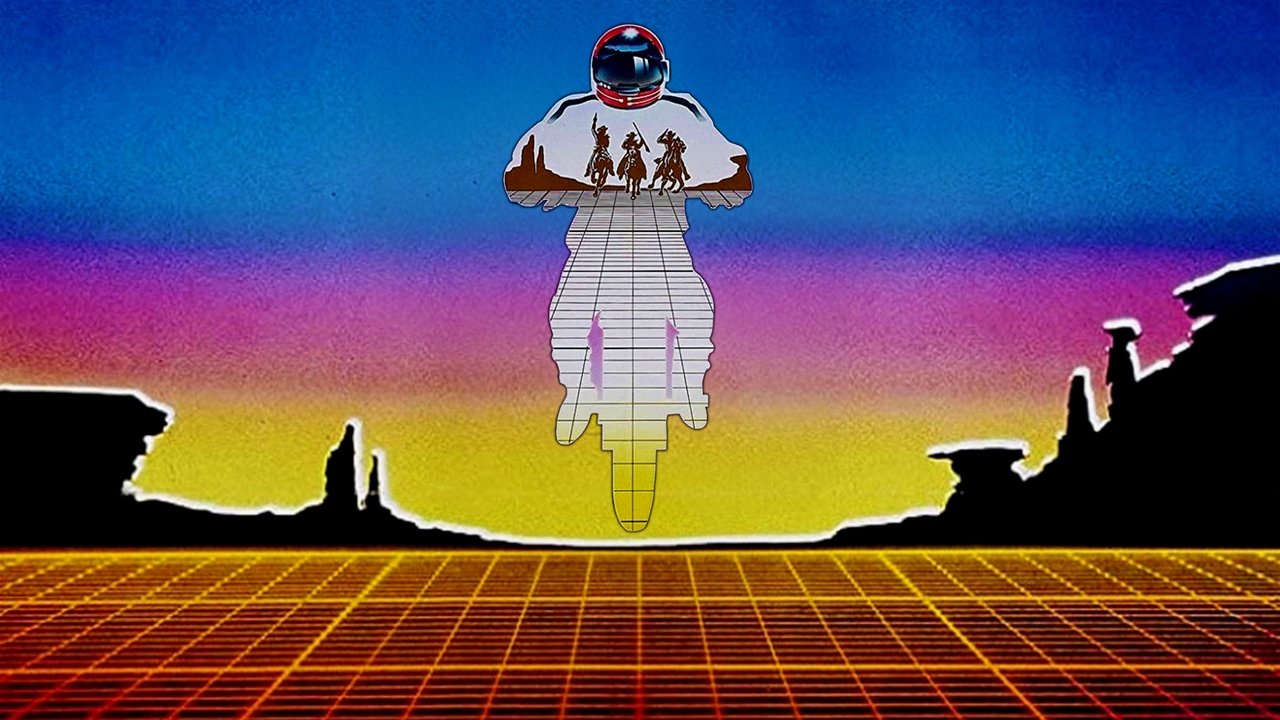
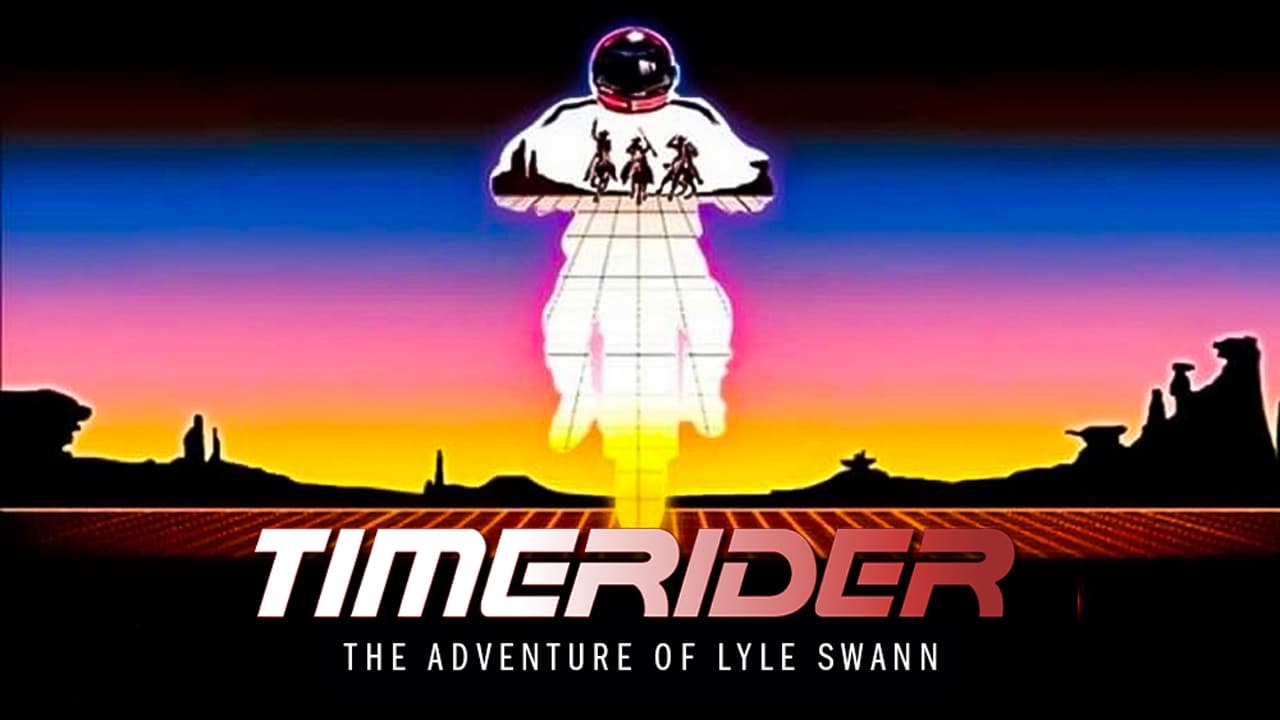
Okay, fellow tape travelers, let’s rewind to a time when high-concept mashups felt wonderfully weird and utterly compelling. Imagine this: a dusty, sun-baked Western landscape, circa 1877. Tumbleweeds roll, horses whinny... and suddenly, a figure clad in bright red racing leathers, astride a roaring dirt bike, materializes out of thin air. That startling image is the core hook of Timerider: The Adventure of Lyle Swann, a 1982 gem that blended sci-fi, action, and Western tropes into something uniquely memorable, especially if you stumbled upon its distinctively illustrated VHS box art back in the day. And perhaps the most surprising behind-the-scenes twist? This whole unlikely adventure was co-written, produced, and scored by none other than Michael Nesmith – yes, the thoughtful, wool-hat-wearing member of The Monkees!
### When Motocross Met the Wild West
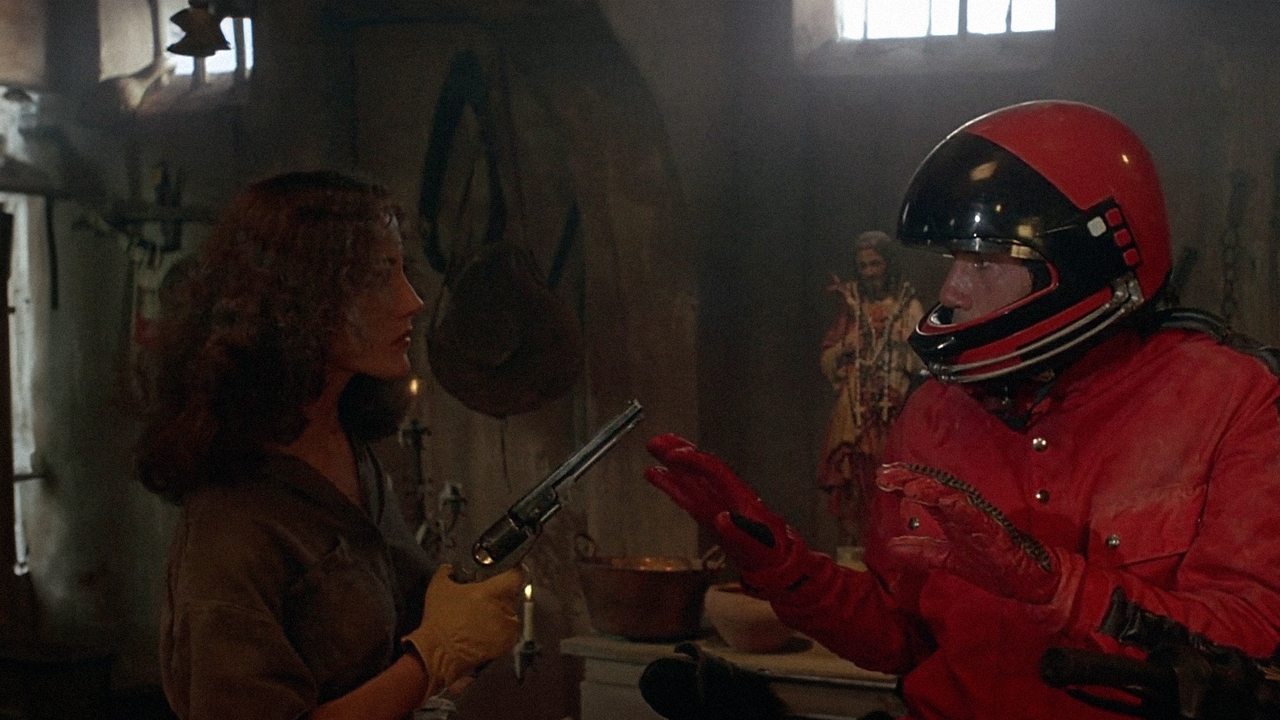
The premise is beautifully simple, the kind of brilliant "what if?" that fueled so many beloved 80s flicks. Lyle Swann (Fred Ward, radiating stoic cool) is a champion off-road motorcycle racer competing in the Baja 1000. Unbeknownst to him, he accidentally rides through the field of an experimental time-displacement device (because, why not?) and finds himself stranded over a century in the past. His high-tech bike, sleek helmet, and fire-engine red suit instantly make him an object of fear, fascination, and, inevitably, greed among the local populace and a particularly nasty gang of outlaws led by the charismatic but ruthless Porter Reese (Peter Coyote, oozing menace). Swann, utterly bewildered but resourceful, just wants to figure out what happened and maybe, just maybe, get back to his own time.
What follows is less a complex time-travel puzzle and more a thrilling chase movie with a sci-fi catalyst. Directed and co-written by William Dear (who later gave us Harry and the Hendersons), Timerider leans into the inherent culture clash and visual juxtaposition. Seeing Swann's Yamaha XT500 kick up dust alongside galloping horses never gets old. The sheer confusion of the 19th-century characters trying to comprehend this noisy, futuristic machine provides plenty of gentle humor and tension. It taps into that classic fish-out-of-water narrative, but swaps the usual suburbanite for a rugged, capable racer who can handle himself, even when his primary tool is utterly alien to his surroundings.
### That Nesmith Connection and Rugged Charm
Let's talk about Michael Nesmith's involvement, because it's one of Timerider's most fascinating footnotes. Post-Monkees, Nesmith became a pioneer in music video (winning the first-ever Grammy for Video of the Year for Elephant Parts) and used some of the fortune he inherited from his mother's invention of Liquid Paper to fund passion projects like this. His fingerprints are all over Timerider, not just in the script, but especially in the synth-heavy, driving musical score. It’s pure early-80s electro-rock goodness, perfectly complementing the action sequences and adding a distinctive flavor that sets it apart from typical Western or sci-fi soundtracks of the era. It's a score that sounds like the era it was made in, capturing that blend of analogue grit and burgeoning digital sounds.
Fred Ward is pitch-perfect as Lyle Swann. He brings a weathered authenticity and quiet competence to the role. He isn't a superhero; he's a skilled professional utterly out of his element, relying on instinct and his machine. Ward, who sadly left us recently, had that incredible ability to convey toughness and vulnerability simultaneously, making Swann relatable despite the fantastical situation. Watching him try to explain his predicament or utilize his limited 20th-century gear against 19th-century threats is a core part of the film's charm. Fun fact: Ward reportedly performed many of his own motorcycle stunts, adding an extra layer of gritty realism to the action. Opposite him, Peter Coyote crafts a memorable villain – intelligent, dangerous, and utterly captivated by the perceived power of Swann's "machine." And Belinda Bauer provides a strong female presence as Claire, a woman who finds herself drawn to the mysterious stranger.
### Retro Fun Facts and VHS Glory
Timerider wasn't a box office smash, earning around $3.6 million in the US against a reported budget of roughly $5.5 million, but it found its true home on VHS and cable TV. It became one of those movies you'd catch late at night or excitedly grab from the rental store shelf, drawn in by the promise of action and that irresistible high-concept premise. The practical effects, particularly the shimmering time-displacement field and the integration of the motorcycle into the Western setting, hold a certain nostalgic charm today. They might look dated compared to modern CGI, but there's an undeniable tangibility to them.
The film was shot on location in New Mexico, adding authentic scope and beauty to the Western backdrop. There's a story that Nesmith specifically wanted a Yamaha XT500 for Swann, loving its look and sound – a detail that adds to the film's specific character. While critical reception was initially mixed, often citing pacing issues or a thin plot, its unique genre blend and earnest execution helped it cultivate a dedicated cult following over the years. It’s the kind of movie that might not be perfect, but its heart is definitely in the right place, aiming purely for adventurous entertainment.
### The Verdict
Timerider: The Adventure of Lyle Swann is a quintessential piece of early 80s genre filmmaking. It’s quirky, undeniably dated in places, but possesses a rugged charm and a brilliantly simple concept executed with enthusiasm. Fred Ward delivers a great lead performance, Michael Nesmith's score is a standout, and the sheer novelty of seeing a dirt bike tear through the Old West remains surprisingly effective. It might not delve deep into the paradoxes of time travel, focusing instead on action and atmosphere, but that straightforward approach is part of its appeal. It’s a film that doesn't ask too much of its audience beyond strapping in for a fun, slightly off-kilter ride.
Rating: 7/10
This score reflects Timerider's status as a solid, entertaining cult classic. It successfully delivers on its core premise with good performances (especially Ward and Coyote), a memorable score, and unique visuals. While it might lack narrative depth or polish compared to bigger-budget contemporaries, its earnest B-movie energy and sheer distinctiveness make it a fondly remembered piece of VHS-era adventure.
So, if you spot that distinctive cover art again or feel like revisiting a time when high concepts didn't need complex explanations, give Timerider a spin. It’s a reminder that sometimes, all you need is a cool bike, a dusty trail, and a century-wide gap to kickstart a great adventure.