Could a video game really prepare you for intergalactic war? In the summer of 1984, amidst the neon glow of arcade cabinets and the satisfying crunch of joystick buttons, The Last Starfighter offered a generation of dreamers a glorious, optimistic answer: "Heck yes!" This wasn't just another sci-fi flick; it felt like a whispered promise that maybe, just maybe, those hours spent mastering digital dogfights could actually lead somewhere extraordinary. For anyone who ever felt stuck, gazing up at the stars from a place that felt decidedly earthbound, this movie tapped directly into that potent vein of wish-fulfillment.

### From Trailer Park to Star Command
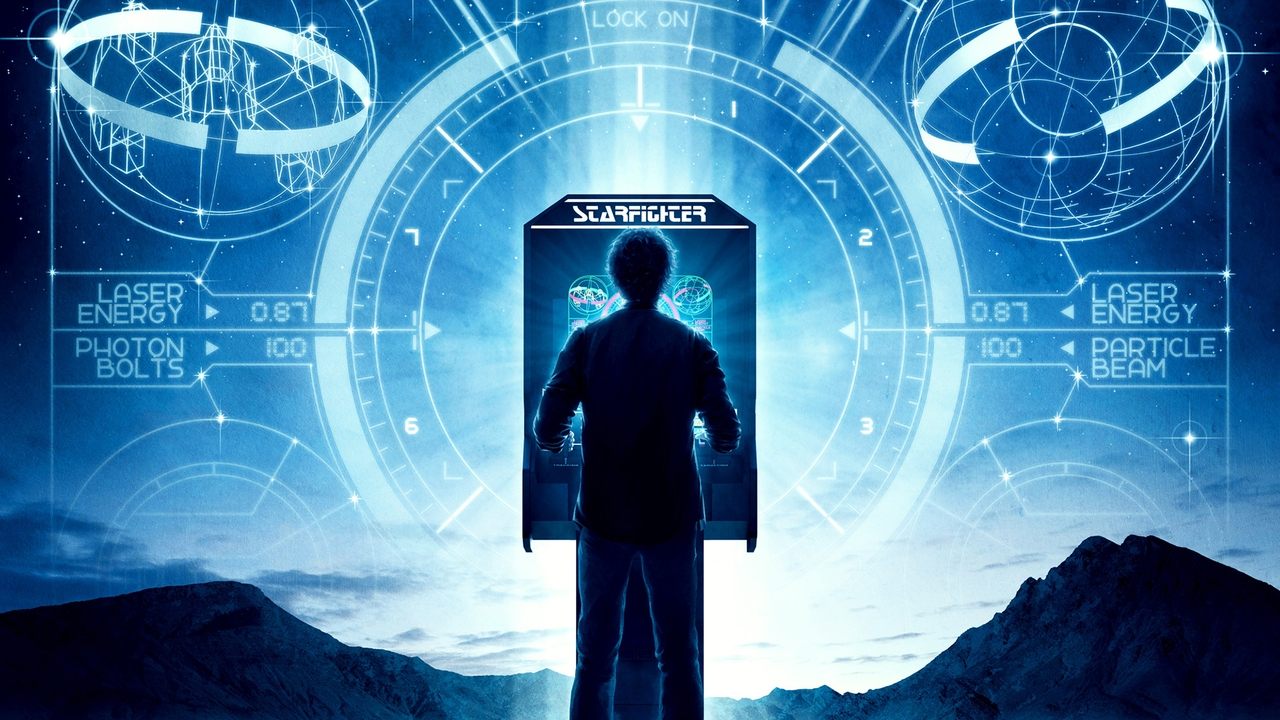
Our hero, Alex Rogan, played with earnest relatability by Lance Guest, isn't conquering distant galaxies when we first meet him. He's stuck in the Starlite Starbrite trailer park, dreaming of college scholarships and escaping the gravitational pull of his dead-end reality alongside his supportive girlfriend Maggie (Catherine Mary Stewart, who radiated girl-next-door charm). His only real claim to fame? Being the undisputed champion of the "Starfighter" arcade game tucked away in the corner of the park's rec room. It's a setup many of us recognized – that feeling of potential simmering beneath mundane circumstances, waiting for a spark.
That spark arrives not as an acceptance letter, but in the form of a sleek, futuristic car driven by the enigmatic Centauri. Played initially by the legendary Robert Preston (who tragically passed away shortly after filming began, leading to the equally brilliant Dan O'Herlihy stepping into the role), Centauri isn't a college recruiter. He's the inventor of the game, which, in a twist that fired up countless young imaginations, is actually a sophisticated interstellar recruitment tool. Alex hasn't just been racking up points; he's been demonstrating the skills needed to pilot a real Gunstar spacecraft and defend the Star League of Planets from the tyrannical Kodan Armada and the treacherous Xur (Norman Snow, chewing scenery with delightful villainy). The transition from arcade joystick jockey to galactic defender is swift, bewildering, and utterly captivating.

### Greetings, Starfighter! You Have Been Recruited...
The arrival of Centauri’s "StarCar" – a practical prop that looked impossibly cool descending into that dusty trailer park – is just the beginning. Suddenly, Alex is whisked across the cosmos to the Rylos Star Command base. It's here the film truly embraces its visual ambitions. Directed by Nick Castle (who, fun fact, famously donned the mask as Michael Myers in John Carpenter's original Halloween – talk about range!), The Last Starfighter was a genuine pioneer in computer-generated imagery. While Tron (1982) had broken ground two years earlier, Starfighter took the bold step of using CGI for all its intricate spacecraft models, alien landscapes, and blistering space battles, integrating them with live-action footage.
Spearheaded by Digital Productions using a mighty Cray X-MP supercomputer (the most powerful machine on Earth at the time!), rendering those complex sequences was a monumental task. Creating just one minute of the CGI reportedly cost nearly half a million dollars back then and took weeks, sometimes months, to complete. The film's $15 million budget was significant, but the results, while obviously dated by today's standards, were absolutely jaw-dropping on cinema screens and, later, our beloved CRT TVs. They possessed a clean, almost ethereal quality distinct from the miniature models prevalent in other sci-fi epics of the era. Watching those Gunstars engage the Kodan fighters felt like witnessing the future unfold. While it wasn't a runaway smash hit, earning a respectable $28.7 million at the box office, its groundbreaking effects and heartfelt story cemented its place as a cult favorite, especially once it hit VHS rental shelves.

### Friendship Beyond the Stars
Beyond the digital wizardry, the heart of The Last Starfighter beats strongest in the relationship between Alex and his reptilian navigator, Grig. Dan O'Herlihy, pulling double duty after stepping in for Preston, imbues Grig with warmth, humor, and a surprising depth beneath layers of latex prosthetic makeup (designed by Ron Cobb, who also contributed designs to Alien and Conan the Barbarian). Grig becomes Alex's mentor, friend, and co-pilot, their interactions providing much of the film's charm and emotional core. Their cockpit conversations, filled with tactical discussions and cultural exchanges ("Terrific! I'm about to get killed a million miles from nowhere with a gung-ho iguana!"), are genuinely funny and touching. It’s this pairing that elevates the film beyond just a visual effects showcase.
Meanwhile, back on Earth, a delightfully malfunctioning android duplicate of Alex (the "Beta Unit") tries hilariously – and disastrously – to cover his absence, leading to some classic fish-out-of-water comedy that provides a nice counterbalance to the high-stakes space opera unfolding light-years away. It’s a simple B-plot, but it adds to the film's overall sense of fun. Writer Jonathan R. Betuel, who reportedly conceived the idea while observing teenagers mesmerized by arcade games, perfectly balanced the gee-whiz adventure with relatable characters and genuine heart.
### An Enduring Flight of Fancy
Watching The Last Starfighter today is like unearthing a treasured cassette tape – the playback might have a few charming imperfections, but the energy and joy are undeniable. The CGI, once cutting-edge, now feels like a fascinating historical artifact, a testament to the ambition of early digital artists. Yet, the film's core appeal remains timeless: the universal dream of being chosen, of discovering hidden potential, and embarking on an adventure far bigger than ourselves. It captured that specific 80s optimism, a belief that technology and heroism could conquer anything, even interstellar threats discovered via a quarter-munching arcade machine. It never quite got the Atari video game tie-in it deserved (though prototypes exist), nor the sequels often rumored, but perhaps its status as a standalone gem is part of its enduring charm.

Rating: 8/10
The Last Starfighter earns its score through sheer heart, pioneering spirit, and unforgettable wish-fulfillment. While the plot is straightforward and the effects are a product of their time, the wonderful performances (especially O'Herlihy's dual roles), the iconic Gunstar design, and the sheer, unadulterated fun of its premise make it a standout. It perfectly balanced its groundbreaking digital ambitions with a classic, feel-good hero's journey.