There’s a certain quiet ache that lingers after watching Night on the Galactic Railroad, a gentle melancholy mixed with a profound sense of wonder that’s rare not just in animation, but in cinema overall. Released in 1985, this adaptation of Kenji Miyazawa's classic, unfinished novel isn't your typical brightly-coloured, action-packed 80s anime fare. Instead, it offers something far more ethereal and contemplative, a journey that feels less like a story being told and more like a dream slowly unfolding before your eyes. Finding this tape on the rental shelf back in the day, perhaps nestled between giant robots and martial arts epics, was like discovering a hidden portal to another state of mind.
### A Train Bound for the Stars
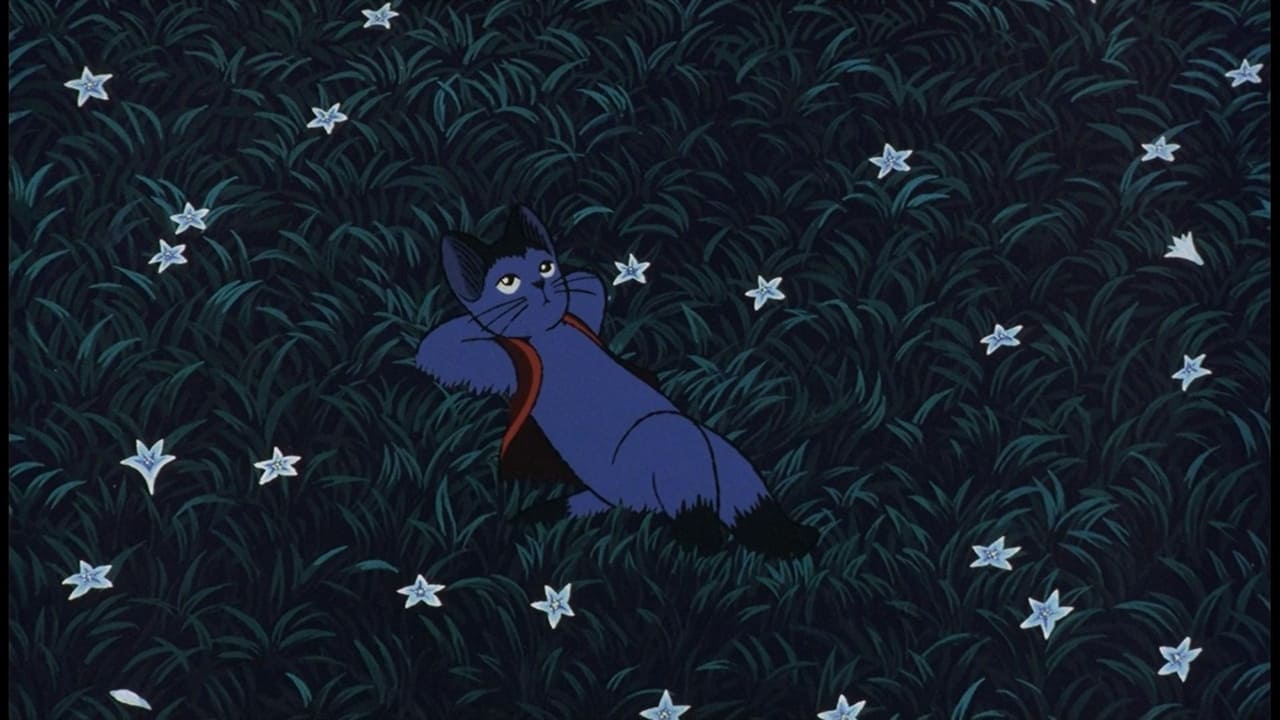
The film introduces us to Giovanni, a lonely young cat scraping by in a provincial town, burdened by worries about his absent father and sick mother. During the local Festival of Stars, while his classmates celebrate, Giovanni finds himself alone on a hilltop. Suddenly, a fantastical steam train appears, puffing its way across the Milky Way itself. He climbs aboard, finding his only friend, the kind and popular Campanella, already seated. What follows isn't a quest or a race against time, but an episodic passage through strange and beautiful cosmic landscapes, populated by passengers whose brief encounters hint at deeper truths about life, loss, and what lies beyond.
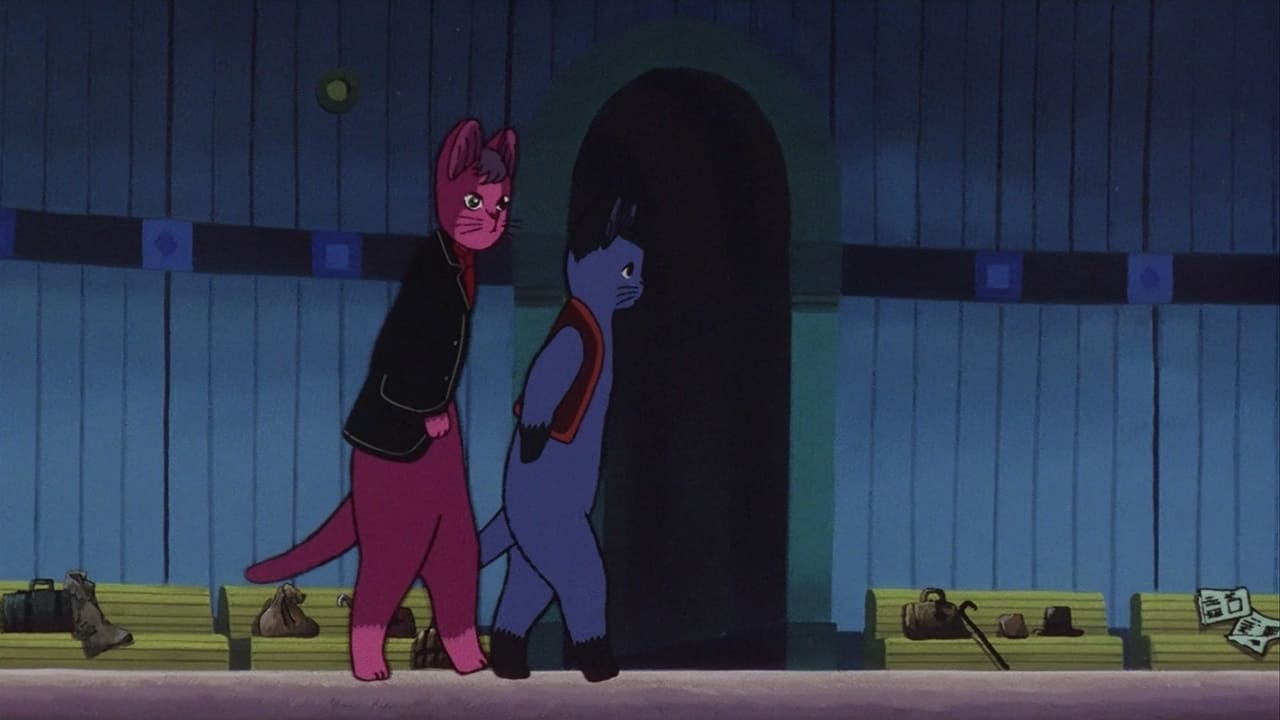
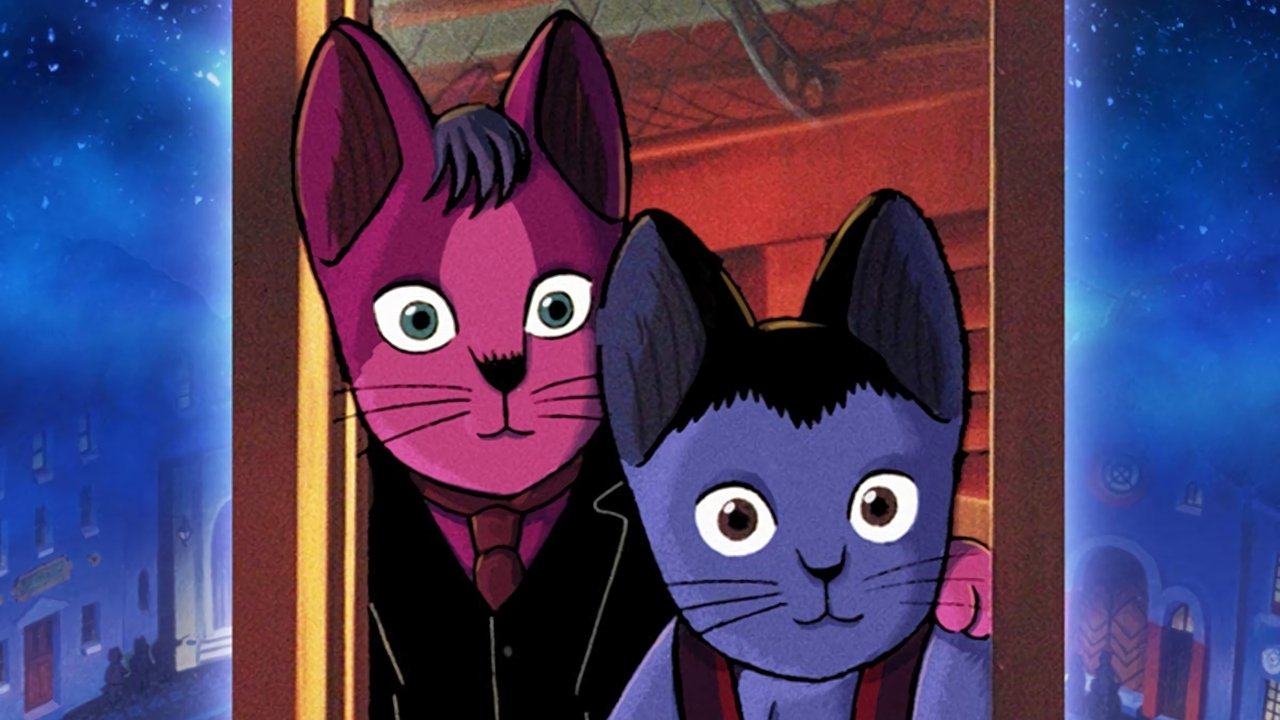
One of the most striking, and initially perhaps puzzling, choices by director Gisaburo Sugii (who would later direct the Street Fighter II Animated Movie) was portraying nearly all the characters as cats. This wasn't mere whimsy. Sugii reportedly felt depicting Miyazawa's deeply personal and philosophical tale with human characters might make it too specific, too grounded. By using feline forms, he aimed for a more universal, symbolic quality, distancing the viewer just enough to allow the allegorical weight of the journey to resonate without being tied to literal interpretations. It’s a decision that imbues the film with a unique, otherworldly feel from the very first frame.

### Whispers of the Cosmos
The train itself becomes a vessel carrying souls, each stop revealing another facet of existence. We meet the obsessive Birdcatcher, trapping herons that turn into candy; passengers from a tragically sunken ship, wrestling with sacrifice and faith; a gentle Lighthouse Keeper maintaining his solitary vigil. These aren't action set pieces; they are quiet moments of reflection, conversations filled with enigmatic pronouncements and profound sadness. The film doesn't offer easy answers; it invites contemplation. What constitutes true happiness? What is the meaning of sacrifice? How do we reconcile ourselves with grief and separation? The narrative unfolds like Miyazawa's poetic prose, favouring atmosphere and emotional resonance over clear-cut plot progression.
This atmosphere is significantly amplified by the film's visual design and score. The animation, by Group TAC (the studio behind Touch and later films like Arashi no Yoru ni), blends beautifully detailed, almost painterly backgrounds of starry vistas and ethereal landscapes with the simplified, expressive cat characters. There’s a deliberate slowness to the pacing, allowing the viewer to soak in the melancholic beauty. And then there's the score by Haruomi Hosono, a key figure in Japanese electronic music and founding member of Yellow Magic Orchestra (YMO). His minimalist, synthesizer-driven compositions are perfectly attuned to the film's mood – haunting, wistful, and deeply affecting. It’s hard to imagine the film carrying the same emotional weight without Hosono’s sonic tapestry.
### Voices in the Celestial Dark
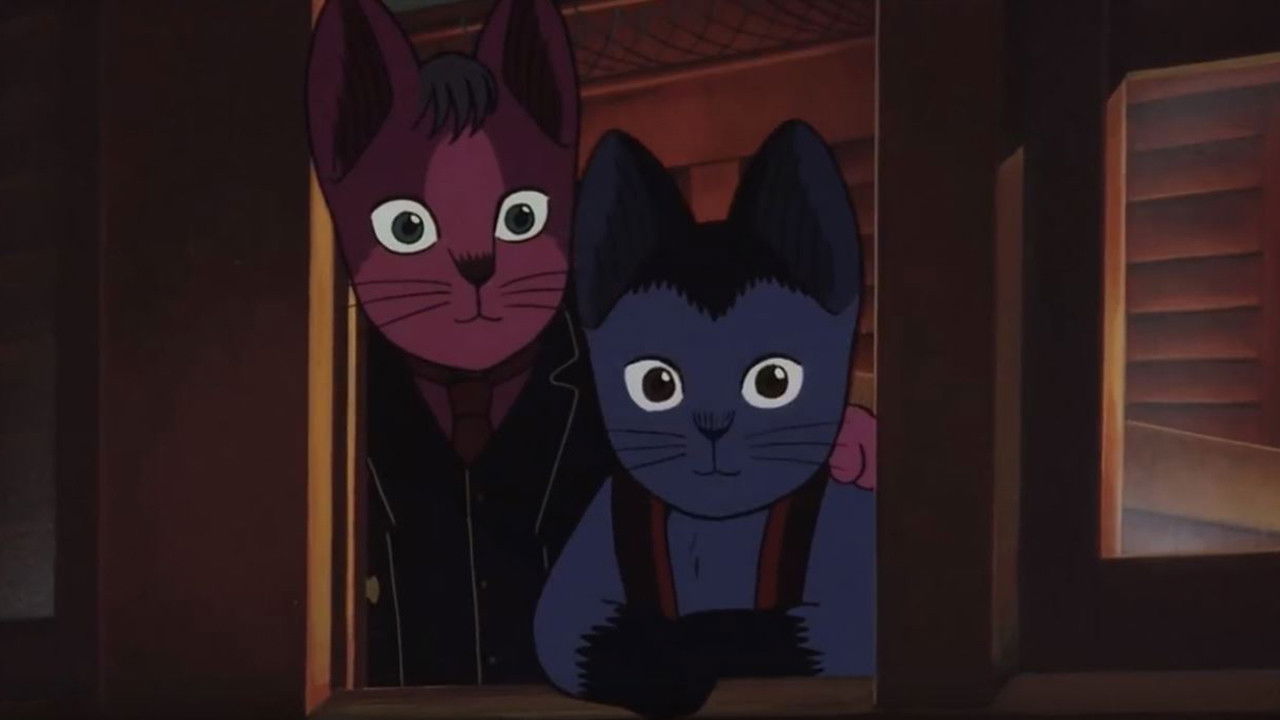
The voice acting, often a crucial element in conveying emotion in animation, is subtly powerful here. Mayumi Tanaka (a voice many would later recognize as Luffy in One Piece or Krillin in Dragon Ball Z) imbues Giovanni with a palpable sense of loneliness, wonder, and eventual, heartbreaking understanding. Her performance captures the weight of a child forced to confront adult realities far too soon. Opposite her, Chika Sakamoto (who voiced Mei in My Neighbor Totoro) gives Campanella a gentle, almost ethereal quality, hinting at the deeper reasons for his presence on this particular train journey. Their interactions form the quiet, emotional core around which the film's philosophical explorations revolve.
Adapting Kenji Miyazawa's work was undoubtedly a challenge. The original novel, heavily influenced by Miyazawa's Buddhist faith, scientific interests, and the tragic loss of his younger sister Toshiko to tuberculosis in 1922, was left unfinished upon his own death in 1933. This inherent ambiguity allows for multiple interpretations, and Sugii and screenwriter Minoru Betsuyaku navigate this by focusing on the emotional journey and the powerful themes of friendship, mortality, and finding meaning in sorrow. It’s a testament to the source material’s power that its themes felt just as relevant in 1985 as they did when Miyazawa first penned them decades earlier.
### A Lasting Impression on the Magnetic Tape
Night on the Galactic Railroad stands apart from much of the anime that reached Western audiences on VHS during the 80s and 90s. It lacks the kinetic energy of Akira or the fantastical adventures of Nausicaä of the Valley of the Wind. Its rewards are quieter, demanding patience and reflection. For those who connected with it, perhaps discovering it as a curious rental based on its intriguing cover box, it offered something uniquely profound. It’s a film that explores grief not through dramatic outpourings, but through a dreamlike acceptance, a gentle acknowledgement of life’s transient beauty and inevitable sorrows. It doesn't just entertain; it resonates deep within the soul.
Rating: 9/10
This score reflects the film's exceptional artistry, its courage to tackle profound themes with grace and subtlety, and its creation of a truly unique and haunting atmosphere. The deliberate pacing and allegorical nature might not appeal to everyone, but for those attuned to its wavelength, it’s a masterpiece of meditative animation. Its visual beauty, coupled with Hosono's evocative score and the depth of its emotional and philosophical journey, makes it an unforgettable experience.
Night on the Galactic Railroad is more than just an anime film; it's a visual poem, a celestial meditation that stays with you, prompting quiet reflection long after the gentle chugging of the star-bound train fades from the screen. What does it truly mean to live, and how do we carry the memory of those we've lost on our own onward journey?