That faint, ethereal melody from a pendant, a girl falling gently from the sky… some cinematic moments are just etched into memory, aren't they? For many of us who navigated the glorious aisles of the local video store, Castle in the Sky (or Laputa: Castle in the Sky, as the worn VHS box might have proclaimed) wasn't just another cartoon. It was a portal. Released in 1986, this film wasn't merely an animated feature; it was the official christening voyage of Studio Ghibli, helmed by the master storyteller himself, Hayao Miyazaki. And what a soaring statement of intent it was.

### A Race Against Gravity and Greed
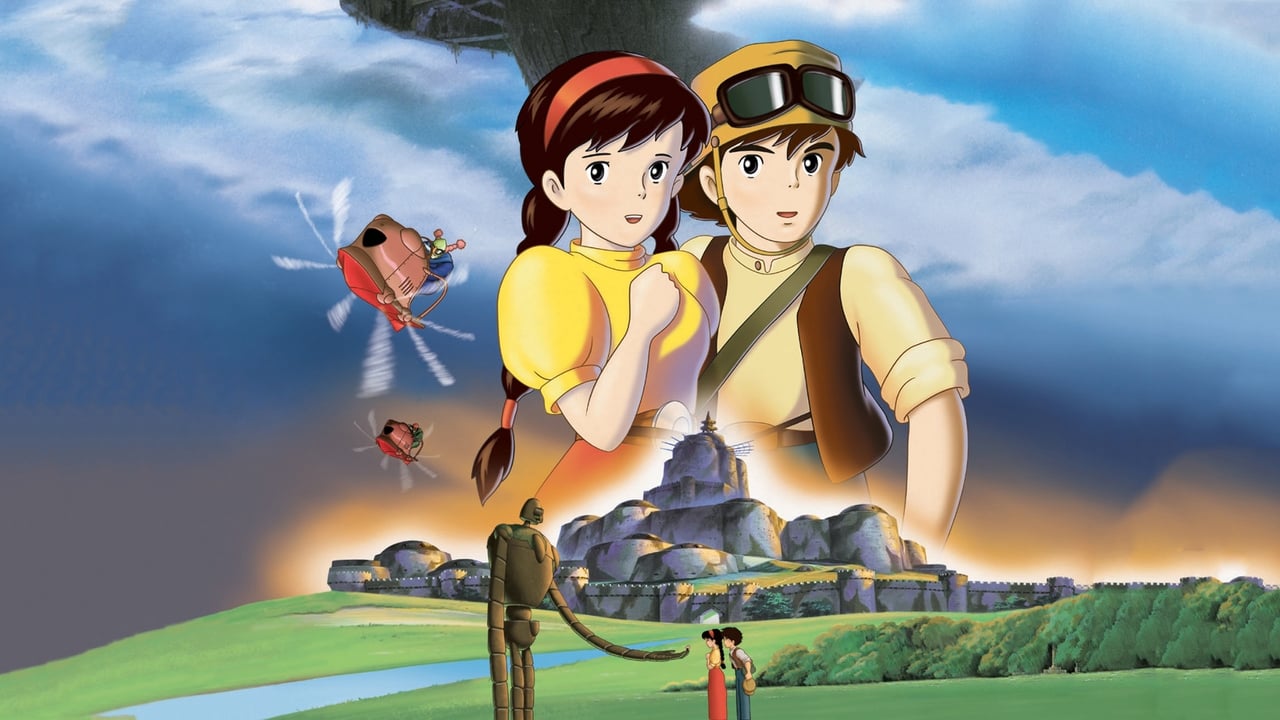
The story kicks off at a breathless pace. We meet Sheeta (Keiko Yokozawa), a young girl mysteriously clutching a glowing blue crystal amulet, plummeting from an airship besieged by sky pirates. Miraculously, the crystal slows her descent, landing her gently into the arms of Pazu (Mayumi Tanaka), an earnest young miner's apprentice in a steam-powered town carved into a mountainside. Pazu dreams of finding Laputa, the legendary floating castle his father once glimpsed, a myth dismissed by most. But Sheeta's arrival, pursued by both the jovial-but-dangerous Dola pirate gang and sinister government agents led by the calculating Muska (Minori Terada), proves Laputa is far from fiction. Her crystal holds the key, and suddenly, Pazu's dream becomes a desperate, exhilarating reality.
What follows is pure, unadulterated adventure, the kind that felt impossibly grand unfolding on our flickering CRT screens. There are thrilling chases through mining tunnels, desperate escapes aboard sputtering ornithopters, and encounters with wonderfully eccentric characters, most notably the formidable sky pirate matriarch Dola (Kotoe Hatsui) and her rough-around-the-edges sons, who unexpectedly become endearing allies. Miyazaki, drawing inspiration from sources as varied as Gulliver's Travels and, reportedly, his impressions of Welsh mining towns during the miners' strikes of the 80s, crafts a world that feels both fantastical and tangibly real. The clanking machinery, the soot-stained villages, the majestic airships – it all breathes with incredible detail.
### The Birth of a Legend (Studio Ghibli Takes Flight)
It’s impossible to talk about Castle in the Sky without acknowledging its monumental place in animation history. While Hayao Miyazaki and Isao Takahata had already made waves with Nausicaä of the Valley of the Wind (1984) – often spiritually considered the first Ghibli film – Castle was the first official production under the Studio Ghibli banner, founded just a year prior in 1985 with producer Toshio Suzuki. You can feel the ambition pulsing through every frame. This wasn't just meant to be a kids' movie; it was intended as epic cinema, brimming with action, heart, and Miyazaki's burgeoning thematic preoccupations: the complex relationship between humanity, nature, and technology, the corrupting influence of power, and the quiet strength found in kindness and courage.
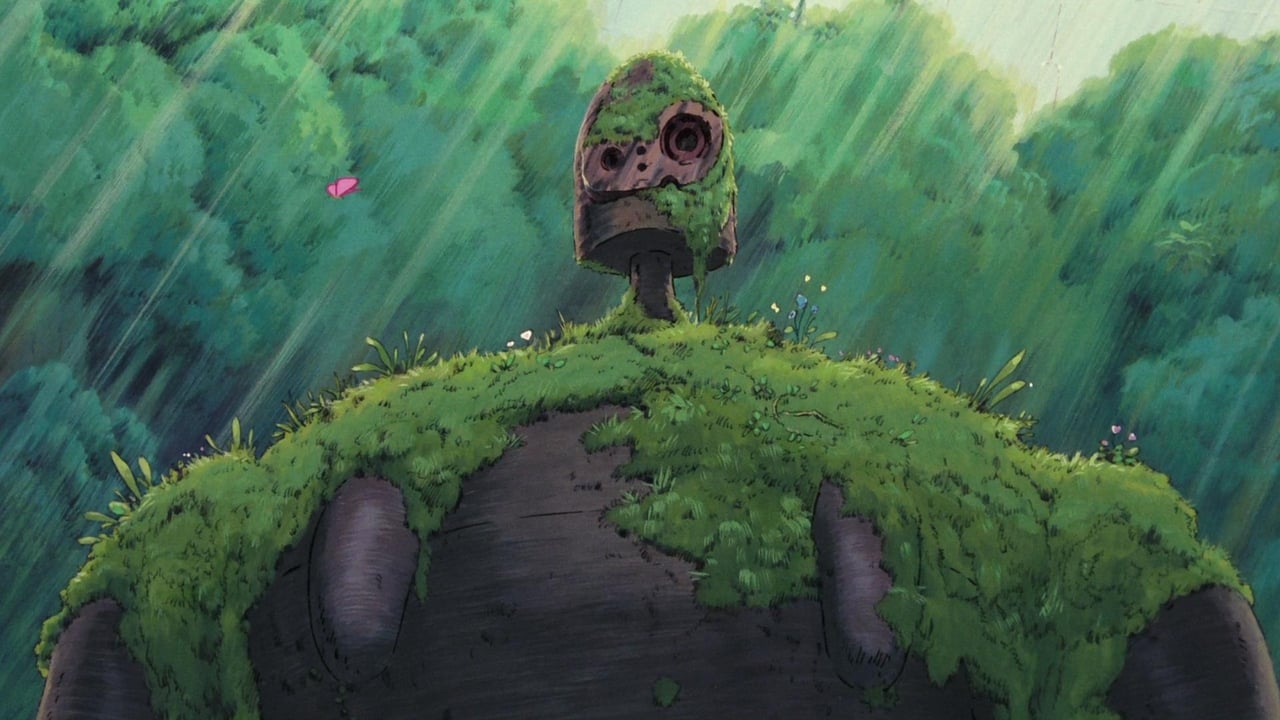
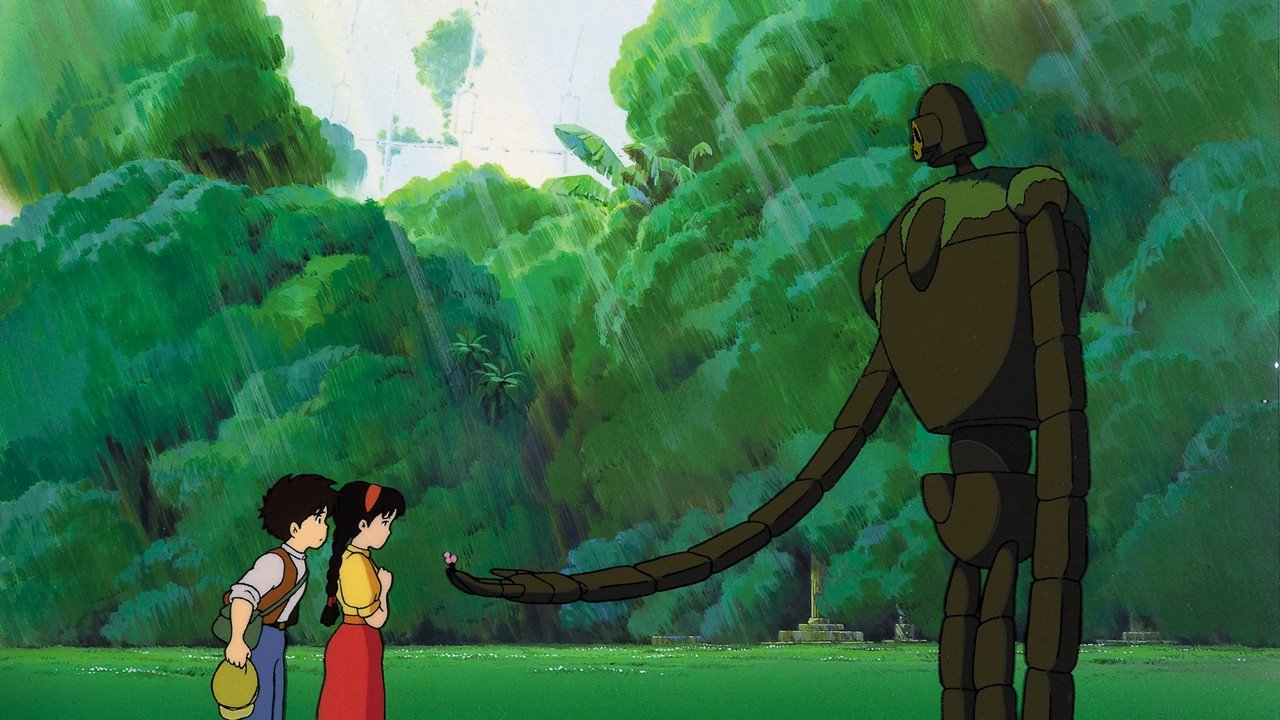
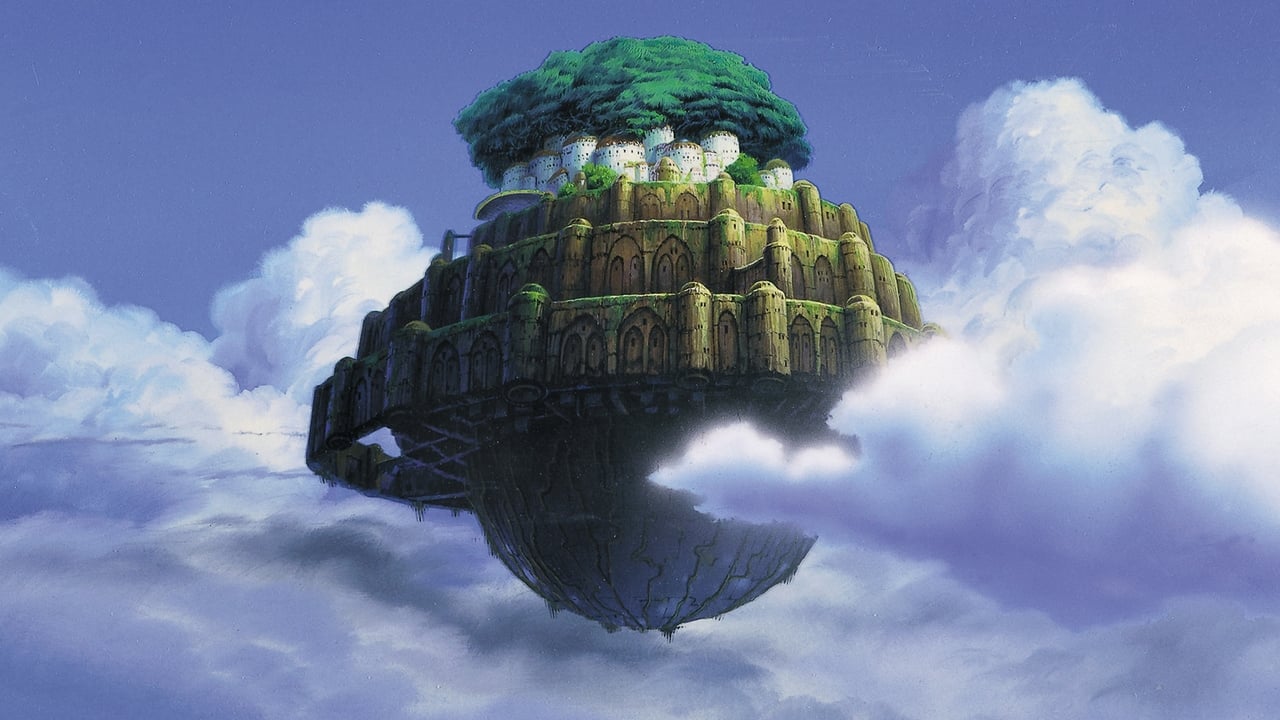
And oh, the visuals! Even by today's standards, the hand-drawn animation is breathtaking. The flight sequences possess a genuine sense of weight and exhilarating freedom. Laputa itself, when finally revealed, is a melancholic marvel – a decaying technological utopia reclaimed by nature, guarded by silent, imposing robots whose design hints at both immense power and profound sadness. These ancient guardians, capable of immense destruction yet gentle with birds and foxes, perfectly encapsulate the film's central tensions.
### Sounds of Wonder, Whispers of Trivia
Let’s not forget the auditory magic woven by composer Joe Hisaishi. His score for Castle in the Sky is simply iconic, instantly recognizable and perfectly capturing the film's blend of soaring adventure, gentle wonder, and underlying melancholy. That main theme? Pure nostalgic goosebumps. Hisaishi would, of course, become synonymous with Ghibli, scoring nearly all of Miyazaki's future masterpieces.
For fellow retro enthusiasts, there are some fun tidbits surrounding this gem. The full Japanese title, Tenkū no Shiro Rapyuta, directly references the floating island from Jonathan Swift's Gulliver's Travels. However, the word "Laputa" led to some awkwardness in Spanish-speaking territories due to its resemblance to an offensive term, resulting in the title often being shortened internationally – a classic localization quirk! And depending on when and where you first saw it, you might have encountered different English dubs. The original, rather straightforward dub done for Japan Airlines' international flights is a different beast from the later Disney version (released much later, in 2003 stateside), which featured well-known actors like Anna Paquin (Sheeta), James Van Der Beek (Pazu), the delightfully hammy Mark Hamill as Muska, and the legendary Cloris Leachman absolutely owning the role of Dola. Debating the merits of different dubs was practically a rite of passage for anime fans in the VHS era, wasn't it?
### Why It Still Soars
Castle in the Sky isn't just important because it launched Studio Ghibli; it's important because it's a phenomenal adventure film, full stop. It balances thrilling action set pieces with moments of quiet beauty and genuine emotional connection between Pazu and Sheeta. Their unwavering support for each other forms the resilient heart of the story. It explores serious themes about power, greed, and the potential dangers of unchecked technological advancement without ever feeling preachy or sacrificing its sense of wonder. It respects its audience, delivering a complex, layered story wrapped in a visually stunning package. It truly felt like discovering a treasure map every time you slid that tape into the VCR.
VHS Heaven Rating: 9.5/10
This rating reflects the film's sheer excellence in storytelling, animation, music, and world-building. It’s a near-perfect animated adventure that set an incredibly high bar for Studio Ghibli right out of the gate. The slight deduction acknowledges that, compared to some later Miyazaki masterpieces like Spirited Away (2001) or Princess Mononoke (1997), the character arcs, while strong, might feel a touch more straightforward. But honestly? That's nitpicking an absolute classic.
Castle in the Sky remains a foundational piece of animation history and a pure distillation of adventurous joy. It’s a film that reminds you of the boundless possibilities waiting just beyond the clouds, a feeling as potent today as it was peering at that glowing screen all those years ago. It truly is Ghibli magic taking its first, magnificent flight.