Alright, settle in, grab your preferred beverage (maybe something suitably retro?), and let's rewind the tape to 1982. Imagine browsing the packed shelves of your local video store, past the big Hollywood blockbusters, maybe venturing into the slightly dusty 'Foreign Comedy' section. Tucked away, perhaps with a slightly outlandish cover, you might have stumbled upon a real curiosity: Attila flagello di Dio, or as it’s sometimes known internationally, Attila Scourge of God. This wasn't your typical swords-and-sandals epic; this was something gloriously, unashamedly silly, and a massive hit in its native Italy.
When Rome Met Milanese Slang
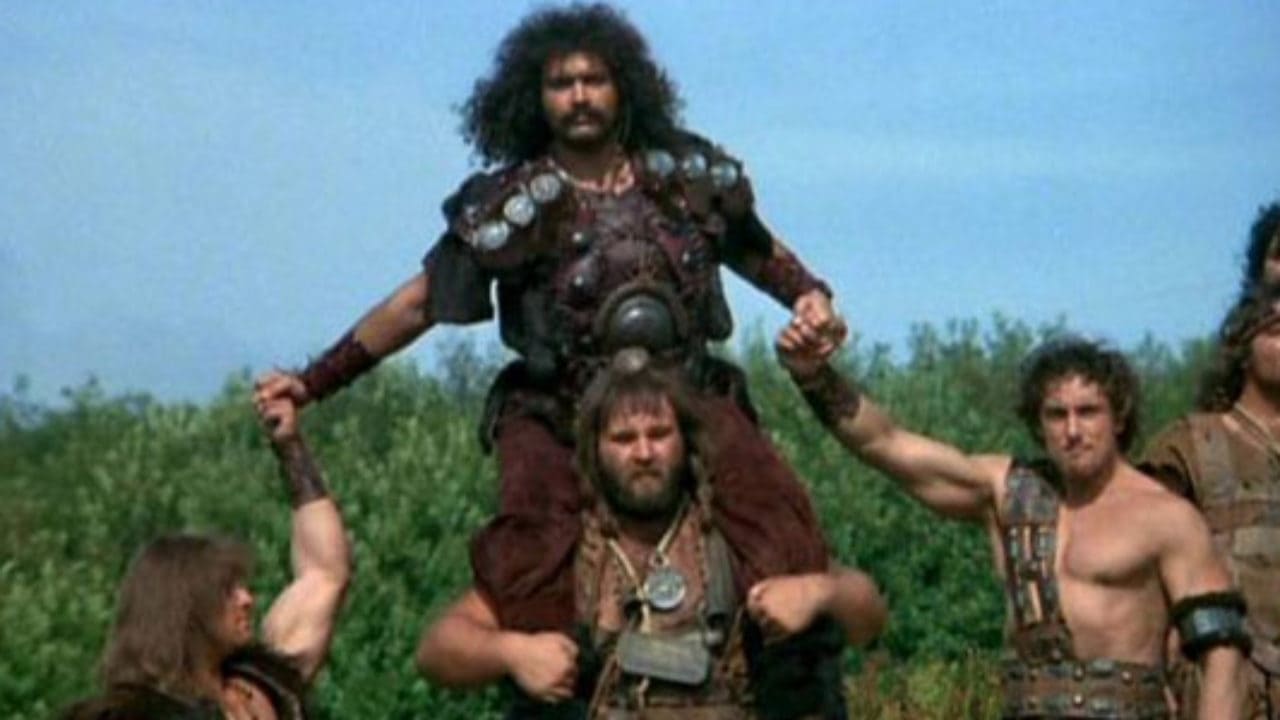
Forget Charlton Heston or Kirk Douglas brooding over maps of conquest. This Attila, played with infectious, manic energy by the breakout star Diego Abatantuono, is less a terrifying Hunnic warlord and more of a comically inept barbarian chieftain leading his equally hapless tribe ("the Cumans," here reimagined as bungling fools) towards a vaguely conceived notion of sacking Rome. Directed by the prolific Italian comedy duo Franco Castellano and Giuseppe Moccia (often credited simply as Castellano & Pipolo, famous for helming numerous hits with stars like Adriano Celentano), the film throws historical accuracy out the window faster than a spear missing its target. Instead, it delivers a barrage of slapstick, anachronisms, and, crucially for its original audience, Abatantuono's unique comedic persona.
The Secret Weapon: Abatantuono's 'Terrunciello'
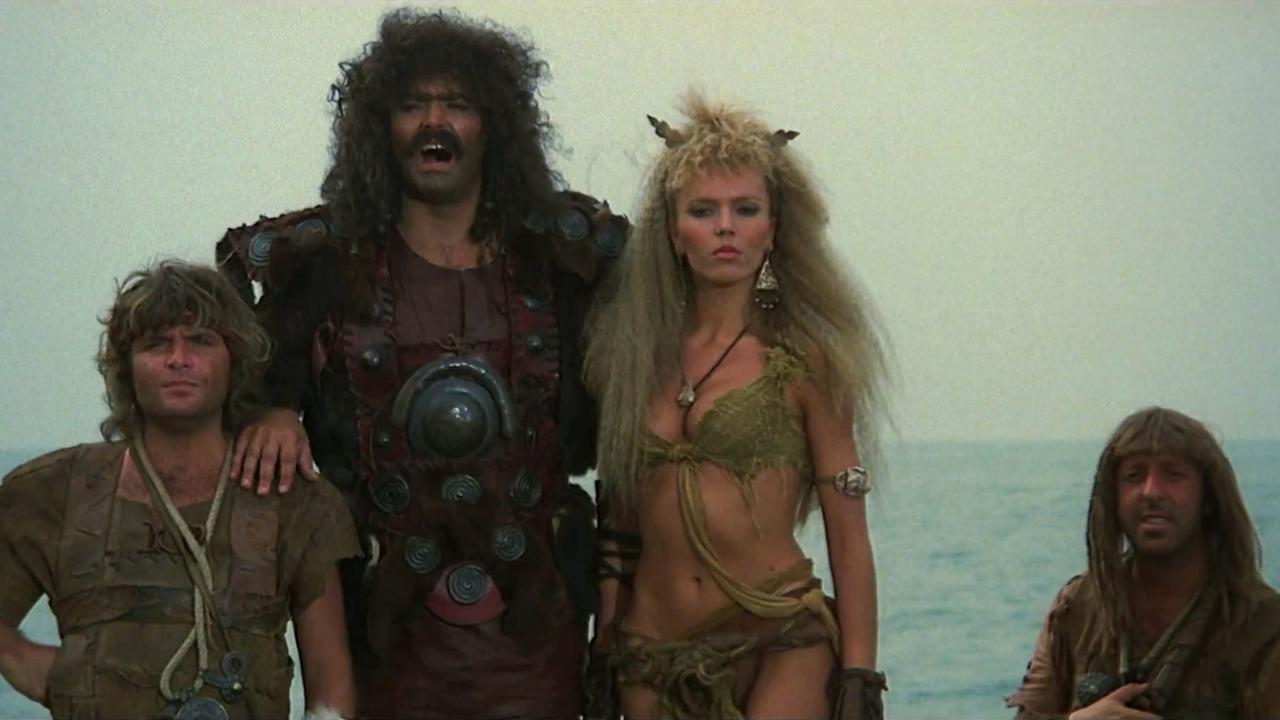
You can't talk about Attila Scourge of God without focusing on Diego Abatantuono. This film cemented his stardom in Italy. A key element, largely lost in translation but fascinating nonetheless, was his delivery. Abatantuono employed a heavily affected, grammatically mangled Italian peppered with Milanese slang – a comedic character type he'd honed known as the terrunciello (a playful Milanese term, sometimes derogatory, for Southern Italians, flipped here for comedic effect by having a 'barbarian' speak this way). Even if you don't speak Italian, his sheer physical comedy, expressive face, and bewildered-yet-arrogant swagger shine through. He stomps, he yells, he mugs, he mispronounces Latin phrases hilariously – it's a performance of pure, unadulterated goofiness that carries the entire film. It’s a Retro Fun Fact that Abatantuono’s unique delivery was so popular it became a cultural phenomenon in Italy during the early 80s, making this film a box office juggernaut there. Reportedly, in 1982 Italy, Attila even outperformed Spielberg's E.T. the Extra-Terrestrial!
Low-Budget Charm and Anachronistic Gags
Let's be honest: this isn't a lavish production. Filmed partly at the legendary Cinecittà studios in Rome and on location in the Lazio region, Attila wears its budget on its rough-spun sleeve. The costumes look like they were raided from a high school play's wardrobe, the Roman sets feel functional rather than grand, and the battle scenes… well, they consist mostly of Huns tripping over each other and Romans looking mildly inconvenienced. But somehow, this works for the film. The cheapness becomes part of the joke, amplifying the absurdity. Remember those slightly dodgy practical effects from the era? Here, they're less about gritty realism and more about comedic timing – a poorly aimed arrow, a collapsing prop, a silly stunt. It’s the antithesis of polished CGI, feeling endearingly handmade.
The humor relies heavily on anachronisms. Attila and his Huns use modern slang (in the original Italian), misunderstand Roman customs completely, and generally behave like uncouth tourists crashing a toga party. We see barbarians trying to decipher Latin road signs, mistaking Roman baths for something else entirely, and engaging in slapstick routines that feel straight out of vaudeville. Supporting actors like Mauro Di Francesco as Undino, Attila’s perpetually confused right-hand man, and Rita Rusić (who later became a prominent film producer) as the captive Roman beauty Uraia, gamely play along, providing foils for Abatantuono's relentless buffoonery. Retro Fun Fact: The directors, Castellano & Pipolo, were masters of this kind of light, accessible comedy, churning out crowd-pleasers throughout the 70s and 80s, perfectly capturing the zeitgeist of Italian popular cinema at the time.
A Relic of Its Time, But Still Good for a Laugh?
Watching Attila Scourge of God today is like unearthing a time capsule. The pacing might feel a bit rambling by modern standards, and some jokes definitely land better if you understand the original linguistic humor and the specific Italian cultural references of 1982. It’s not sophisticated satire; it’s broad, unapologetic silliness. There’s no deep message here about the fall of empires or the nature of barbarism. It’s about watching a charismatic comedian run wild in a goofy historical setting.
Is it essential viewing? Probably not for everyone. But for fans of retro European comedies, aficionados of Diego Abatantuono, or those who appreciate the particular brand of low-budget, high-energy absurdity that thrived in the VHS era, it’s a genuine curiosity. It represents a specific moment in Italian cinema when broad comedy reigned supreme, driven by larger-than-life comedic personalities.
### VHS Heaven Rating: 6/10
The Breakdown: This score reflects Attila's undeniable success as a vehicle for Diego Abatantuono and its status as a significant Italian cult comedy (points for cultural impact and performance). Its low-budget charm and consistent silliness offer nostalgic fun. However, the humor is very much of its time and place, potentially losing impact in translation, and the production values are undeniably basic, preventing a higher score based on craft alone. It's more charmingly dated than timelessly hilarious for a global audience.
Final Thought: Attila Scourge of God is the cinematic equivalent of finding a weird foreign snack food in the back of the cupboard – maybe not gourmet, definitely an acquired taste, but surprisingly enjoyable and a perfect reminder of the wonderfully bizarre discoveries awaiting us on those forgotten video store shelves.