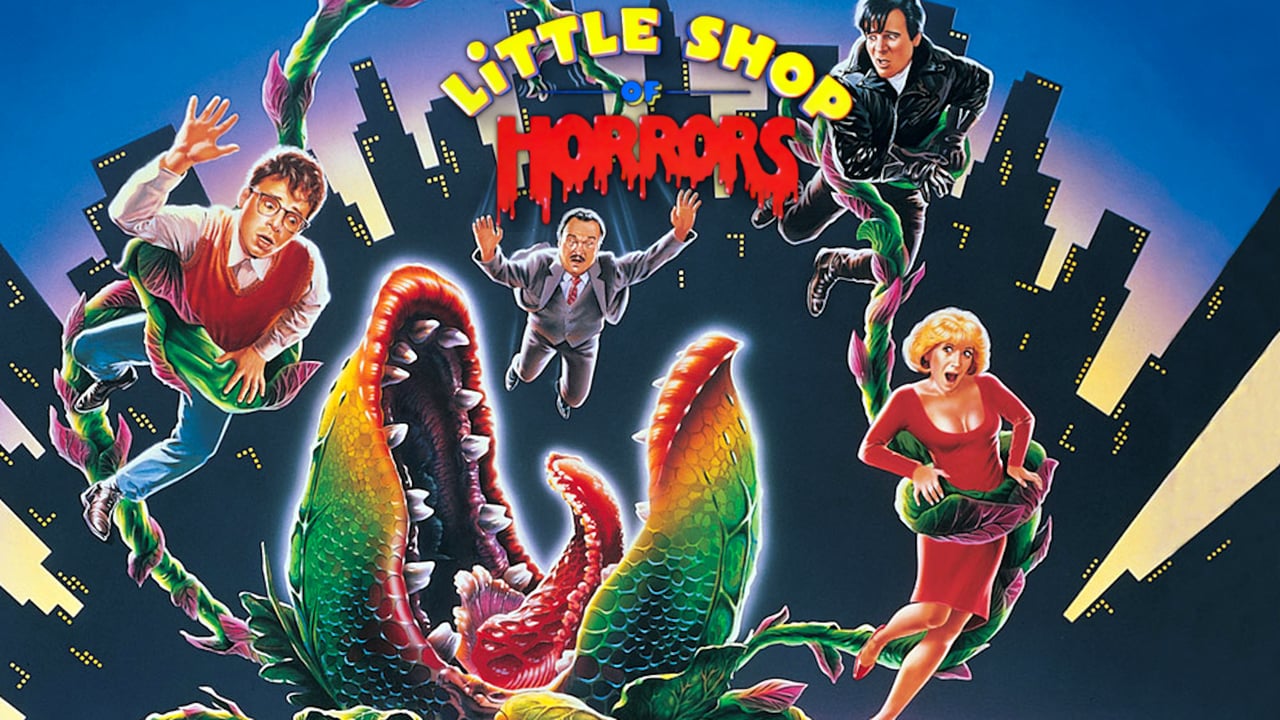
Alright fellow tapeheads, slide that well-worn copy of Little Shop of Horrors into the VCR, adjust the tracking just so, and let’s talk about one of the most wonderfully bizarre, toe-tapping, man-eating plant movies ever committed to celluloid. Forget gentle green thumbs; picture a creature with the soulful baritone of a Motown legend and an appetite that demands more than Miracle-Gro. Hitting video store shelves in 1986, its vibrant, slightly menacing cover promised something utterly unique, a blast of weird energy perfect for a late-night watch party. And goodness, did it deliver.

Skid Row Serenade
Directed by the masterful Frank Oz – yes, the genius puppeteer who brought Yoda and Miss Piggy to life, and also directed gems like Dirty Rotten Scoundrels (1988) – Little Shop bursts onto the screen with a vibrant, slightly grimy energy. We're dropped into the downtrodden world of Skid Row, where meek floral assistant Seymour Krelborn (Rick Moranis, perfectly cast as the lovable nerd) pines for his coworker Audrey (Ellen Greene, reprising her iconic stage role with heartbreaking vulnerability and powerhouse vocals). Their lives, under the thumb of the perpetually grumpy Mr. Mushnik (Vincent Gardenia), are going nowhere fast until Seymour discovers a "strange and interesting plant" during a total eclipse of the sun. Naming it Audrey II, he soon finds this isn't your average Venus flytrap. This thing craves blood, grows exponentially, and sings like Levi Stubbs of The Four Tops (because, well, it is voiced by him!).
The plot unfolds like a Faustian bargain set to a killer beat. As Audrey II grows, so does Seymour's fame and fortune, finally giving him a chance with the sweet, dreaming Audrey. But the plant's demands escalate from drops of blood to... well, you know. It's a glorious collision of genres: 50s sci-fi monster movie, dark comedy, Broadway musical, and even a touch of romance. Oz navigates this tonal tightrope with incredible skill, keeping the energy high and the songs infectious, thanks to the brilliant duo of composer Alan Menken and lyricist Howard Ashman (who would soon sprinkle their magic over Disney's animation renaissance with The Little Mermaid and Beauty and the Beast).

The Mean Green Mother From Outer Space
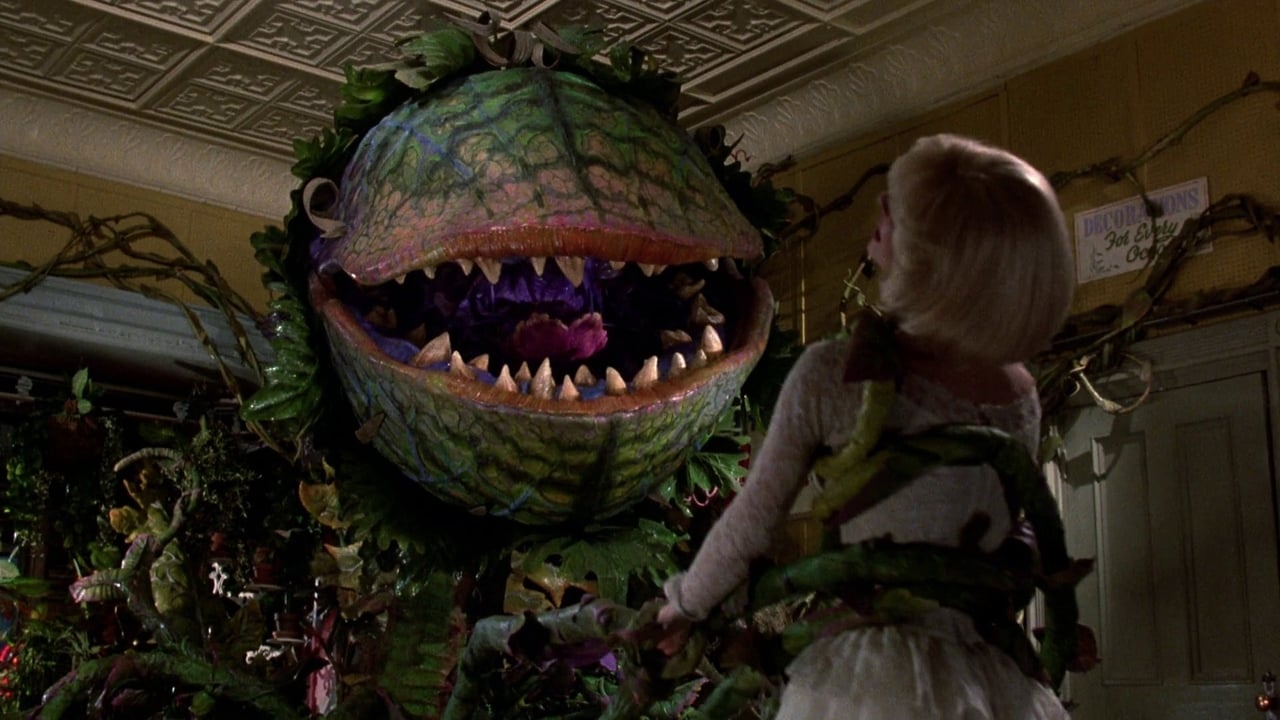
Let's be honest, the practical effects work on Audrey II is the stuff of legend, especially viewing it through our VHS-era eyes. Forget smooth, weightless CGI; this plant had presence. Bringing Audrey II to life was an incredible feat of engineering and puppetry, arguably Oz's most complex technical challenge. Multiple versions of the plant were built, growing progressively larger and more intricate. The largest iteration, used for the climactic "Mean Green Mother from Outer Space" number, reportedly needed up to sixty puppeteers crammed inside its base, sweating profusely to synchronize lip movements, tendril twitches, and menacing snaps to Stubbs' booming voice.
To get those fast, fluid movements, they often filmed the puppet sequences at a slower speed (12 or 16 frames per second) and then played them back at the standard 24 fps. While visually stunning, this meant poor Rick Moranis had to perform his interactions with the plant in slow motion – a process he apparently found incredibly frustrating but sold perfectly on screen. Remember watching those scenes, maybe leaning closer to the fuzzy CRT screen, utterly convinced that this massive, singing plant was real? That tangible quality, the sheer physicality of Audrey II, is something special, a hallmark of that golden age of practical effects that digital creations often struggle to replicate.

Suddenly Seymour, Suddenly Trivia!
The film is packed with memorable performances beyond the leads. Who could forget Steve Martin's deliriously sadistic dentist, Orin Scrivello, D.D.S.? His performance is pure comedic electricity, a character you love to hate. A fun bit of trivia: Martin reportedly wore contact lenses that dulled his vision significantly to achieve the character’s slightly unfocused, menacing gaze. And then there's Bill Murray's brilliant, largely improvised cameo as the masochistic dental patient Arthur Denton – a scene requested by Murray himself as he was a huge fan of the stage show. Talk about scene-stealing!
While the film feels quintessentially American East Coast, much of it was actually shot on the massive 007 Stage at Pinewood Studios in England, requiring intricate set construction to recreate Skid Row. The production wasn't without its famous behind-the-scenes drama, either. The most significant piece of Little Shop lore involves its original ending. Oz initially filmed a spectacular, $5 million finale faithful to the bleak ending of the off-Broadway musical, where Audrey II triumphs, devours Seymour and Audrey, and its offspring begin taking over the world, Godzilla-style. However, test audiences hated seeing the beloved lead characters meet such a grim fate. The studio balked, and the happier (and cheaper) ending we commonly know, where Seymour defeats the plant and gets the girl, was shot instead. Though the original director's cut eventually surfaced, its initial suppression shows just how much audiences connected with Moranis and Greene's heartfelt performances.
Feed Me Again!
Little Shop of Horrors wasn't a runaway blockbuster upon release (grossing around $39 million on a $25 million budget), but its infectious energy, brilliant songs, and unforgettable central creature quickly cemented its status as a cult classic, especially on home video. It’s a film that perfectly captures a certain kind of 80s movie magic – ambitious, slightly weird, unapologetically entertaining, and crafted with tangible, hands-on artistry. The blend of doo-wop, horror, and humor remains unique and utterly charming.
Rating: 9/10
Justification: A near-perfect execution of a wild concept. Stellar performances (Greene is definitive), unforgettable songs, groundbreaking practical effects that still impress, and masterful direction balancing horror and comedy. The reshot ending slightly softens the original dark satire, but the resulting film is pure, rewatchable joy.
Final Word: A vibrant, viciously funny musical monster mash powered by puppetry perfection and killer tunes – pop this tape in, and you’ll still be humming "Suddenly Seymour" long after the static fades.