Okay, fellow tapeheads, let’s talk about a real head-scratcher from the back shelves of the video store, a film that feels like it was assembled during a fever dream after someone spiked the eggnog. I’m talking about Norman J. Warren’s wonderfully bizarre 1987 offering, Bloody New Year (sometimes known as Time Warp Terror). Forget your slick, predictable slashers for a moment; this is a gloriously messy slice of British seaside weirdness that feels like The Twilight Zone got mugged by the cast of Grange Hill on an abandoned film set.
### Party Like It's 1959... Forever
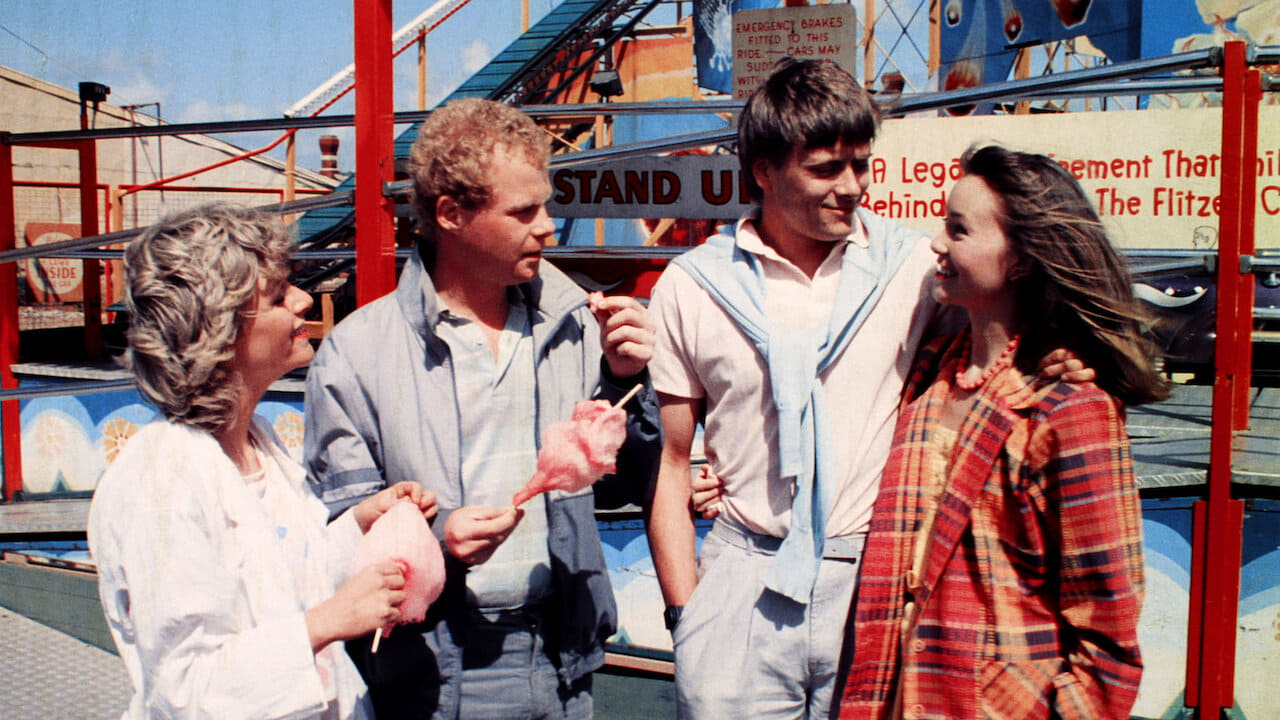
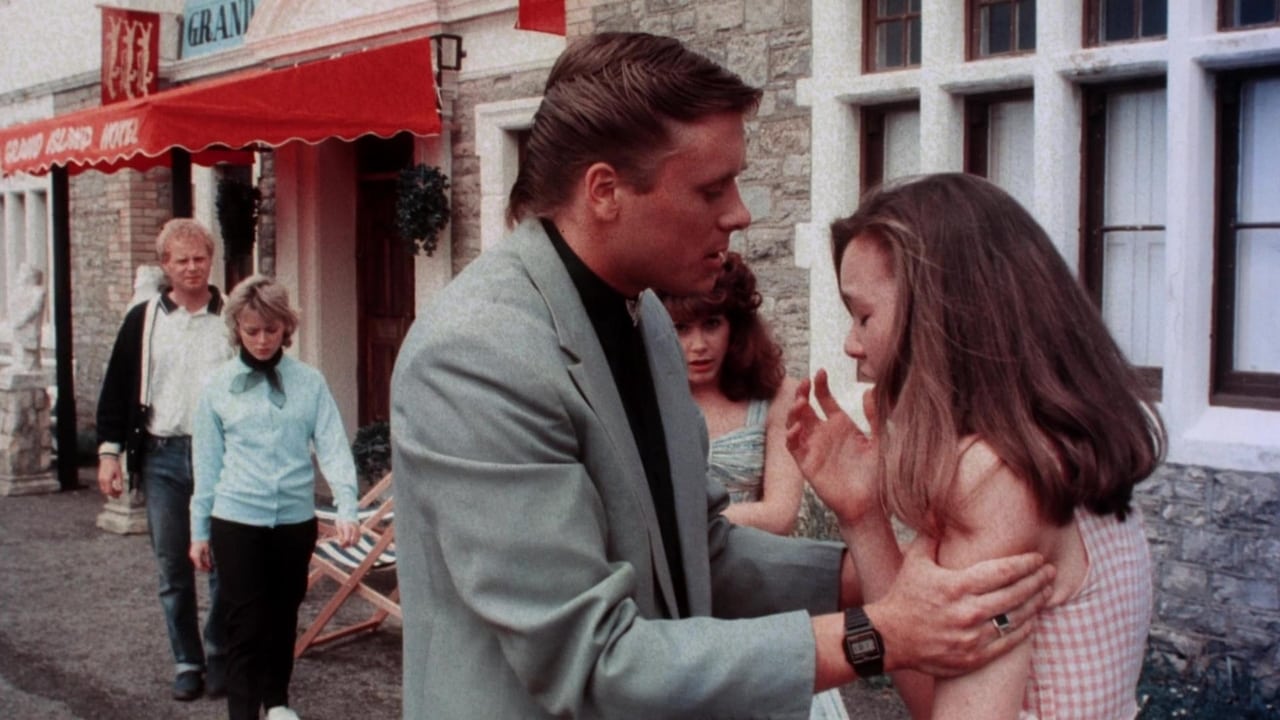
The setup is pure B-movie gold: five young pals out for a jolly time find themselves shipwrecked after a run-in with a strangely aggressive funfair (Retro Fun Fact: filmed at the iconic Barry Island Pleasure Park in Wales, looking suitably windswept and slightly forlorn even then). They wash ashore on a remote island, only to discover the Grand Island Hotel, decked out for a New Year's Eve bash... despite it being the middle of summer. The calendars are stuck on 1959, the decorations are gathering dust, and there’s not a soul in sight. Well, not living souls, anyway. What follows is less a coherent plot and more a cascade of increasingly strange and hostile events as the island, seemingly trapped in a time loop from a disastrous party decades prior, decides these newcomers are decidedly not on the guest list.
This film thrives on its atmosphere of off-kilter dread and surreal surprises. Director Norman J. Warren, a veteran of the UK's low-budget exploitation scene known for gritty efforts like Prey (1977) and Terror (1978), brings a certain workmanlike energy, but the narrative often feels delightfully unhinged. One minute it’s a haunted house flick, the next a creature feature (watch out for that possessed fishing net!), then veering into something almost abstractly menacing. Retro Fun Fact: The atmospheric Grand Island Hotel itself was largely filmed at Friars Court, a historic manor house in Oxfordshire, giving it that authentic, slightly crumbling grandeur perfect for a place unstuck in time.
### Practical Poltergeists and Low-Budget Charm
Let's be honest, the budget here wasn't funding Hollywood pyrotechnics. But that's part of the Bloody New Year charm! The strangeness is delivered via earnest, practical means. Ghostly figures appear and disappear with simple editing tricks, objects fly via wires (sometimes visibly!), and spectral hands burst through walls. There’s a certain tangible quality to the chaos – a sheet ghost attack feels more like a prank gone wrong than a genuine threat, yet it adds to the film's overall bizarre tapestry. Remember how tangible those effects felt back then, even the slightly dodgy ones? There's a scene involving a character merging horrifically with a wooden panel that, while not terrifying by today's standards, has a grotesque, physical unpleasantness that CGI often struggles to replicate.
The young cast, including Suzy Aitchison (yes, daughter of British sitcom legend Terry Scott – Retro Fun Fact!), Nikki Brooks, and Colin Heywood, give it their all with the somewhat disjointed script. They embody that classic 80s horror trope: generally likeable young people thrust into inexplicable terror. Their reactions often mirror the audience's: confusion, punctuated by brief moments of terror, then back to confusion. It’s not Shakespeare, but they sell the bewilderment well enough to keep you invested in their increasingly doomed plight.

### A Relic of Its Time
Bloody New Year landed towards the tail end of the British horror film boom, a period when the industry was struggling, and many genre films went straight-to-video. Retro Fun Fact: It was produced by Warren's own company, Filmtracts PLC, likely operating on the kind of shoestring budget that forces creative solutions (or just plain weirdness). It never made a huge splash theatrically and gained its cult following precisely because it was the kind of oddity you'd discover on VHS, maybe rented on a whim because the cover looked intriguing. Critics at the time were likely baffled, but for fans digging for something different, its sheer eccentricity was, and remains, its main draw. Was it trying to be a serious ghost story? A slasher? A surrealist experiment? Probably a bit of all three, stirred together in a bucket with some leftover tinsel.
The film's internal logic is, shall we say, flexible. Why does that happen? How did they get there? Don't ask too many questions. Just soak in the weirdness – the hostile furniture, the phantom rock 'n' roll band, the general sense that reality is fraying at the edges. It captures a specific kind of late-night VHS discovery feeling – slightly fuzzy, definitely confusing, but strangely memorable.
### VHS Heaven Rating: 6/10
Justification: Bloody New Year is undeniably flawed. The plot meanders, the acting is variable, and some effects are more amusing than scary. However, giving it a lower score feels unfair to its sheer, unadulterated weirdness and ambition within its obvious low-budget constraints. It scores points for its unique atmosphere, genuinely surreal moments, its status as a quirky British horror artifact, and the undeniable fun factor for viewers attuned to its bizarre wavelength. It’s not traditionally ‘good’, but it’s far more interesting and memorable than many slicker, more generic horrors of the era. It’s the kind of film that makes you grin at its audacity.
Final Thought: This isn't just a movie; it's a time capsule of weird, late-80s British genre filmmaking trying something… different. Pop this one in when you’re tired of predictable scares and want a New Year’s party where the hangover is existential dread mixed with baffling supernatural shenanigans. You might not know what hit you, but you probably won't forget it.