Some places hold onto pain. You can feel it seep from the concrete, stain the rusted iron bars, echo in the unnatural silence. Creedmore Penitentiary, resurrected from decay in Renny Harlin's 1987 supernatural chiller Prison, isn't just a setting; it's a vessel brimming with decades of condensed misery, waiting for a spark to ignite the spectral residue. And ignite it does, unleashing a wave of cold, methodical vengeance that feels less like a ghost story and more like the building itself is exacting its bloody toll.
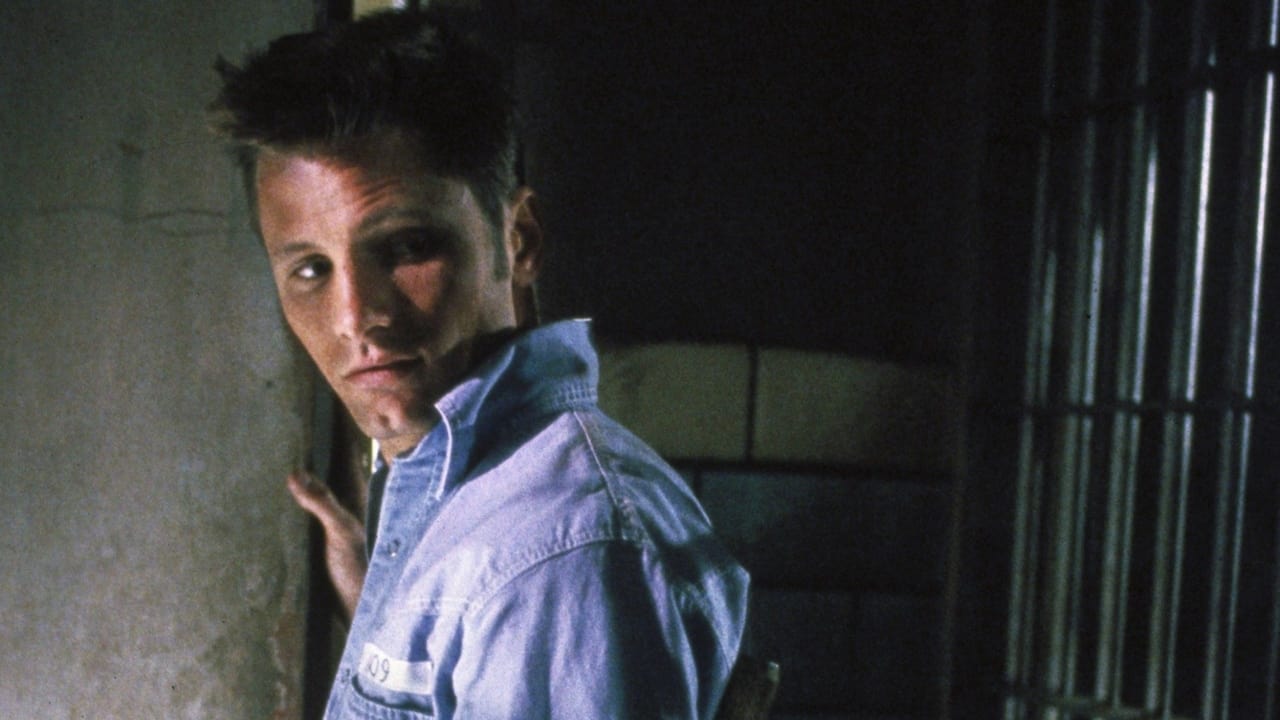
This wasn't just some Hollywood backlot dressed up to look grim. Prison owes a massive debt to its primary location: the genuinely imposing, and reportedly haunted, Wyoming Frontier Prison in Rawlings. Decommissioned in 1981 after nearly 80 years housing the state's most dangerous criminals (including operating a gas chamber), the place was a ready-made pressure cooker of dread. You can almost smell the damp chill and desperation through the screen. Harlin, cutting his teeth here before launching into bigger action spectacles like Die Hard 2 (1990) and Cliffhanger (1993), masterfully uses the inherent claustrophobia and crumbling architecture to amplify the film's mounting terror. Stories abound from the set about crew members feeling uneasy, encountering strange phenomena – fuel for the fire of the film's central haunting. It lends an authenticity, a weight that studio sets rarely achieve.
Echoes of Execution
The plot, penned by C. Courtney Joyner from a story conceived with producer Irwin Yablans (who knew a thing or two about profitable horror after producing Halloween), is brutally simple. Warden Eaton Sharpe (Lane Smith) reopens the long-abandoned Creedmore prison, notorious for its violent past. Sharpe, however, has a dark secret tied to the prison's history: years ago, he framed inmate Charlie Forsythe for murder, leading to Forsythe's horrific execution in the electric chair – an execution Sharpe personally oversaw. When prisoners accidentally breach the wall sealing the old execution chamber, Forsythe's vengeful spirit is unleashed, not as a wispy phantom, but as a malevolent force manipulating the prison itself to pick off inmates and guards in increasingly gruesome ways.
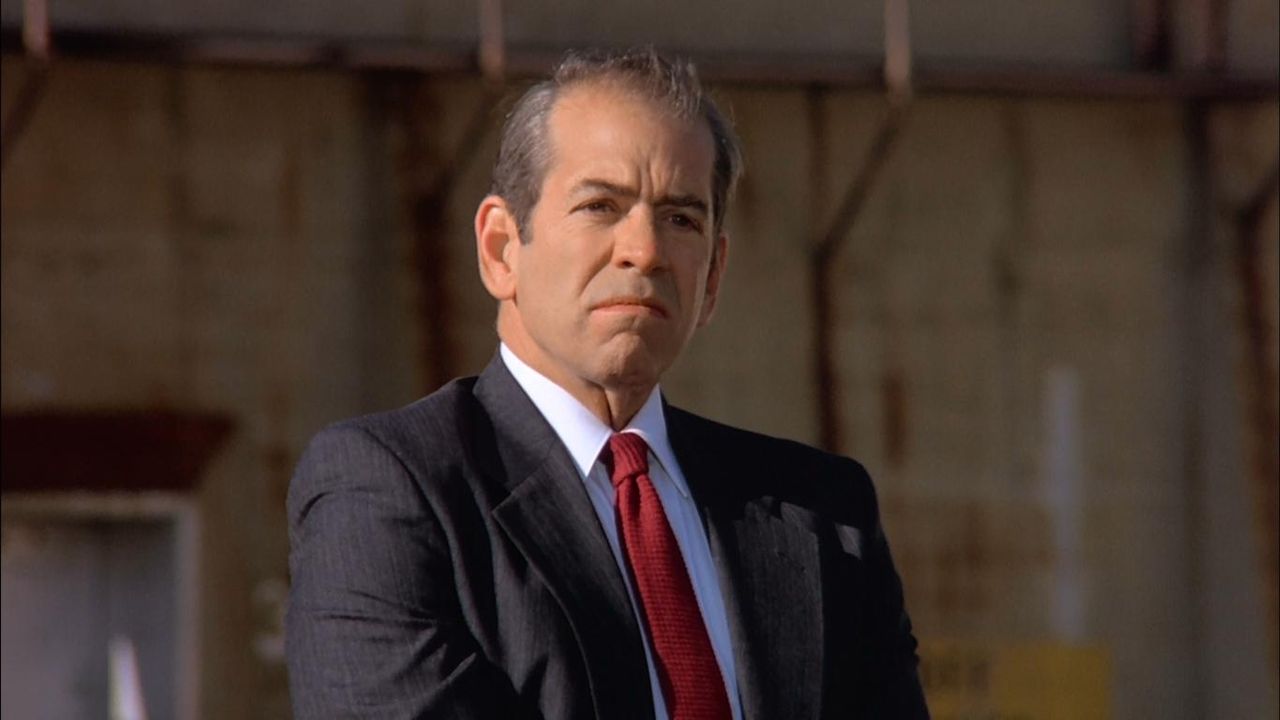
Lane Smith absolutely owns the role of Sharpe. He’s not just a warden; he’s the embodiment of petty tyranny and simmering guilt, his face a mask of barely contained cruelty. You despise him instantly, which makes the ghost's targeted torment feel almost like grim justice. Watching his authority crumble under supernatural siege is one of the film's dark pleasures. Opposite him, a startlingly young Viggo Mortensen brings a quiet intensity to the role of Burke, one of the inmates caught in the crossfire. Even this early in his career, Mortensen has that captivating screen presence, a stoic resilience that makes Burke a compelling anchor amidst the chaos. Chelsea Field adds a necessary touch of humanity as Katherine Walker, a member of the prison board trying to understand the escalating violence, though her character feels somewhat secondary to the central conflict between Sharpe and the spectral Forsythe.
Practical Poltergeists and Prison Grunge
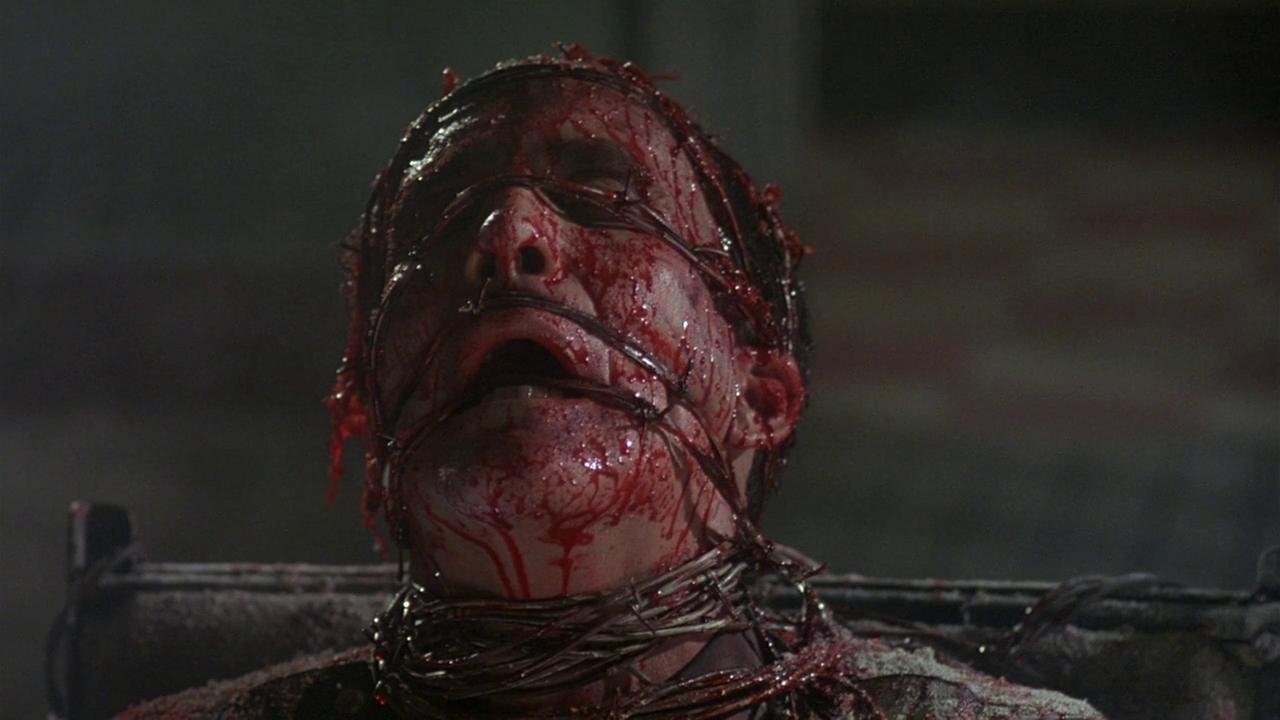
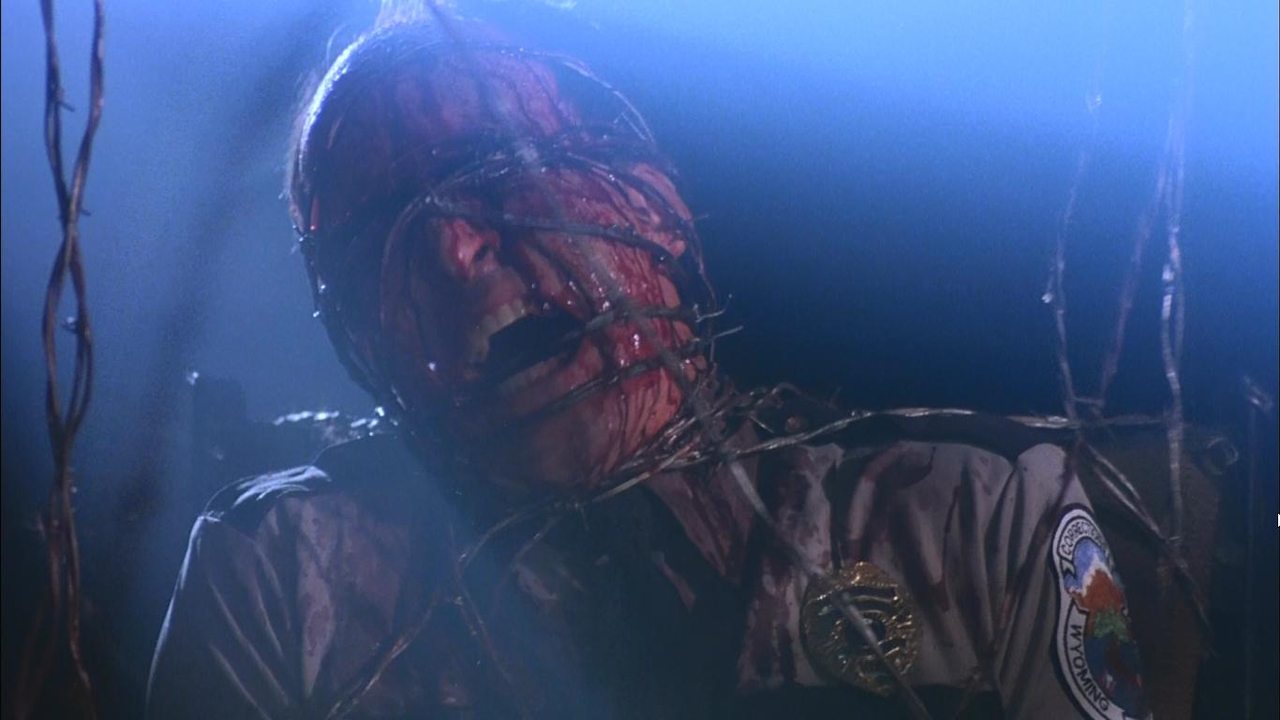
What makes Prison resonate, especially for those of us who wore out our VCRs on flicks like this, is its commitment to tangible, often brutal, practical effects. Forsythe's ghost rarely appears directly; instead, it manifests through the prison's infrastructure. Barbed wire coils come alive like metallic snakes, cell doors slam with impossible force, machinery malfunctions with deadly intent. One particularly memorable sequence involving animated barbed wire strangling a prisoner sticks in the mind – it’s graphic, inventive, and feels painfully real in that specific way 80s effects often did. They might look a little less seamless now, but there's a visceral quality to these physical gags that CGI often struggles to replicate. The film reportedly cost around $4 million, and you can see where the money went – creating a gritty, tactile nightmare.
The atmosphere is thick enough to choke on. Harlin leans into the grime and decay. The flickering lights, the echoing drips, the constant sense of surveillance even when no one is visibly watching – it all contributes to a pervasive unease. The score, a mix of industrial sounds and ominous synths, further tightens the screws. This isn't a film reliant on jump scares; it builds its horror through sustained tension and the grim inevitability of the next "accident." It taps into that primal fear of being trapped, helpless, in a place where the very walls are hostile.
Legacy in Lockdown
Prison wasn't a massive box office hit upon release, finding its true audience, like so many genre gems of the era, on home video shelves. It arrived during a strong period for supernatural horror but managed to carve out its own niche with its unique setting and grounded approach to spectral vengeance. It feels like a grittier, meaner cousin to films like A Nightmare on Elm Street 3: Dream Warriors (released the same year), swapping surreal dreamscapes for oppressive institutional reality. Does anyone else recall seeing that menacing VHS cover art staring back at them from the rental store shelf? It promised a certain kind of gritty, unforgiving horror, and for the most part, it delivered.
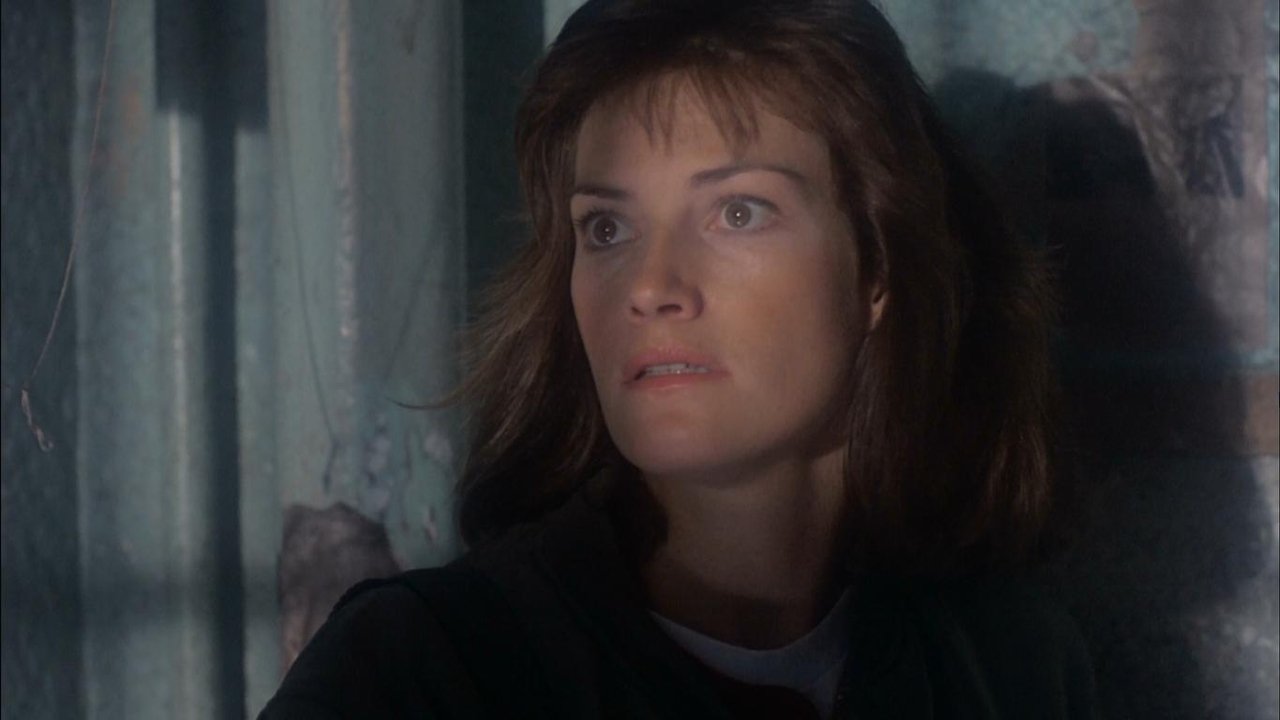
While perhaps not as widely celebrated as some of its contemporaries, Prison remains a potent slice of 80s horror. Its strengths lie in its phenomenal location, Lane Smith's perfectly despicable performance, Harlin's atmospheric direction, and its dedication to unnerving practical effects. It might feel a little slow in places by modern standards, and some character motivations remain thin, but the core concept and execution are undeniably effective.
Rating: 7/10
This score reflects the film's exceptional atmosphere, the power of its real-world location, a standout villain performance, and some genuinely nasty practical effects work. It loses a few points for occasional pacing issues and some underdeveloped supporting characters, but the overall package delivers solid supernatural dread. Prison is a grim, claustrophobic reminder that some walls hold more than just inmates – they hold grudges, and payback can be hell, especially when the building itself is on the ghost's side. A must-watch for fans of gritty 80s horror who appreciate atmosphere over cheap shocks.