The air hangs thick and heavy, smelling faintly of rust and something else... something primal. That’s the feeling Slaughterhouse (1987) conjures, a sticky, unsettling residue that clings long after the tape has whirred to a stop. It’s not the pristine, studio-polished horror that came later; this is grimy, backwoods terror, cooked up with a low budget and served raw. It feels like something unearthed, a forbidden tape passed hand-to-hand, its cover art promising brutal, straightforward mayhem.
Blood and Bacon
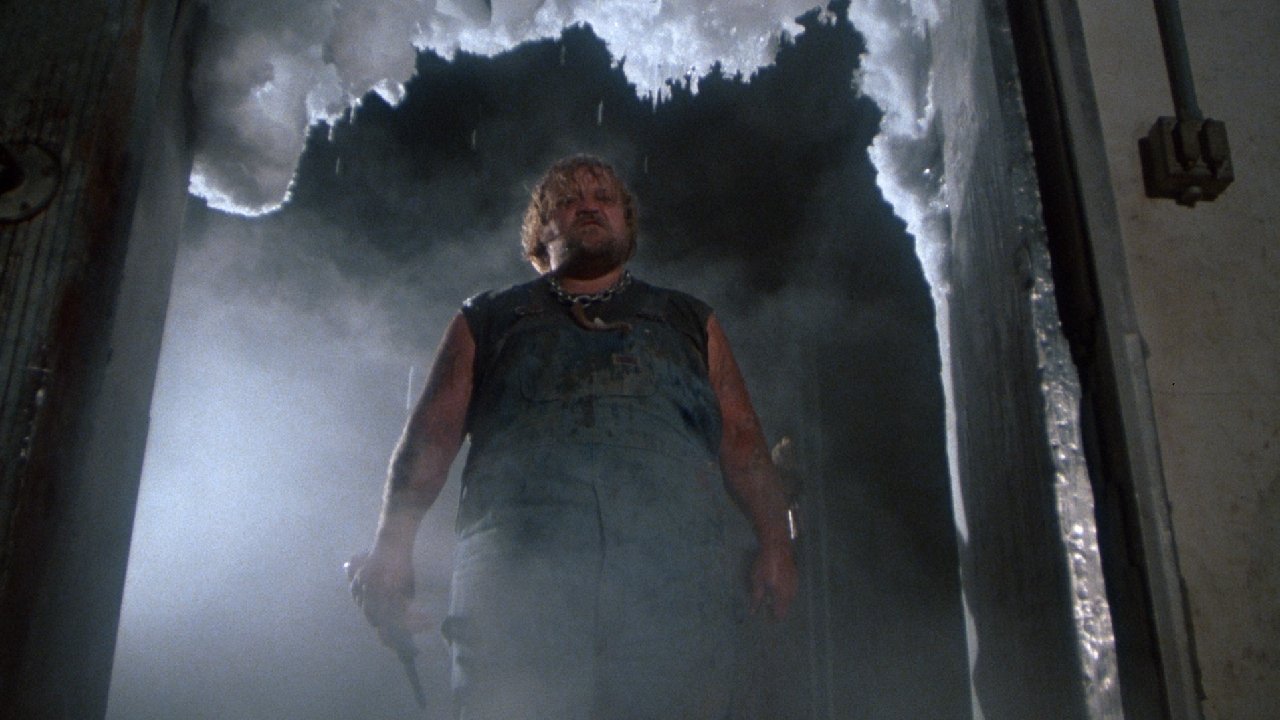
The premise is pure Southern Gothic slasher: Lester Bacon (Don Barrett) is losing his family slaughterhouse to foreclosure, pushed out by modernizing forces in the small town. He’s bitter, nostalgic for the "old ways" of killing, and fiercely protective of his… son. Buddy Bacon, played with genuinely unnerving physicality by the imposing Joe B. Barton, isn't quite right. He's huge, childlike, communicates mostly in pig-like squeals, and happens to be lethally proficient with a meat cleaver nearly the size of a surfboard. When a group of local teens decides the abandoned slaughterhouse is the perfect place for a prank-gone-wrong video shoot, Lester sees an opportunity for bloody vengeance, unleashing Buddy upon them.
The Shadow of the Cleaver
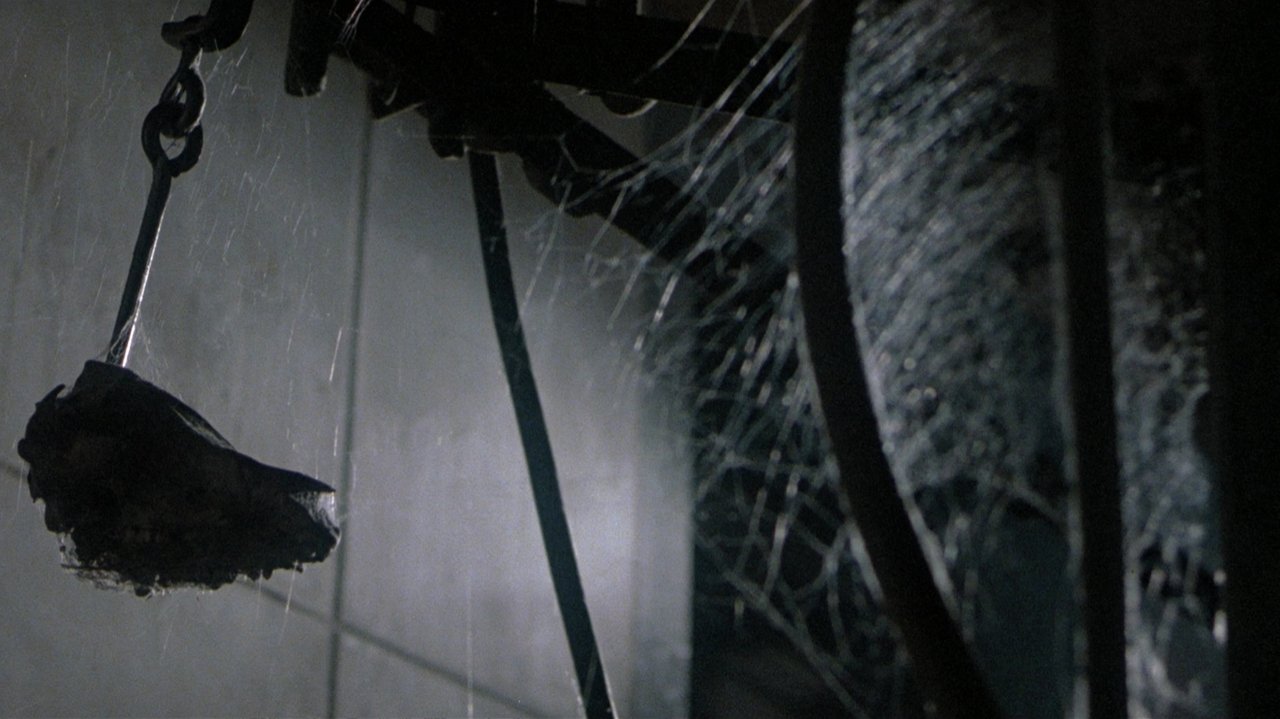
What elevates Slaughterhouse beyond just another Texas Chain Saw Massacre riff – and let's be honest, the influence is undeniable – is the sheer presence of Buddy. Joe B. Barton, reportedly a gentle giant off-set who some claim actually worked in a slaughterhouse before filming (a detail that adds a layer of chilling authenticity if true), embodies the character completely. He doesn't just lumber; he moves with a terrifying weight and purpose. The simple pig mask becomes iconic, less about hiding identity and more about projecting animalistic fury. His squeals and grunts are more effective than any stilted dialogue could be. Doesn't that guttural sound still echo faintly when you think about this film? Buddy feels less like a man in a mask and more like a force of nature unleashed by resentment and neglect.
Grindhouse Atmosphere on a Dime
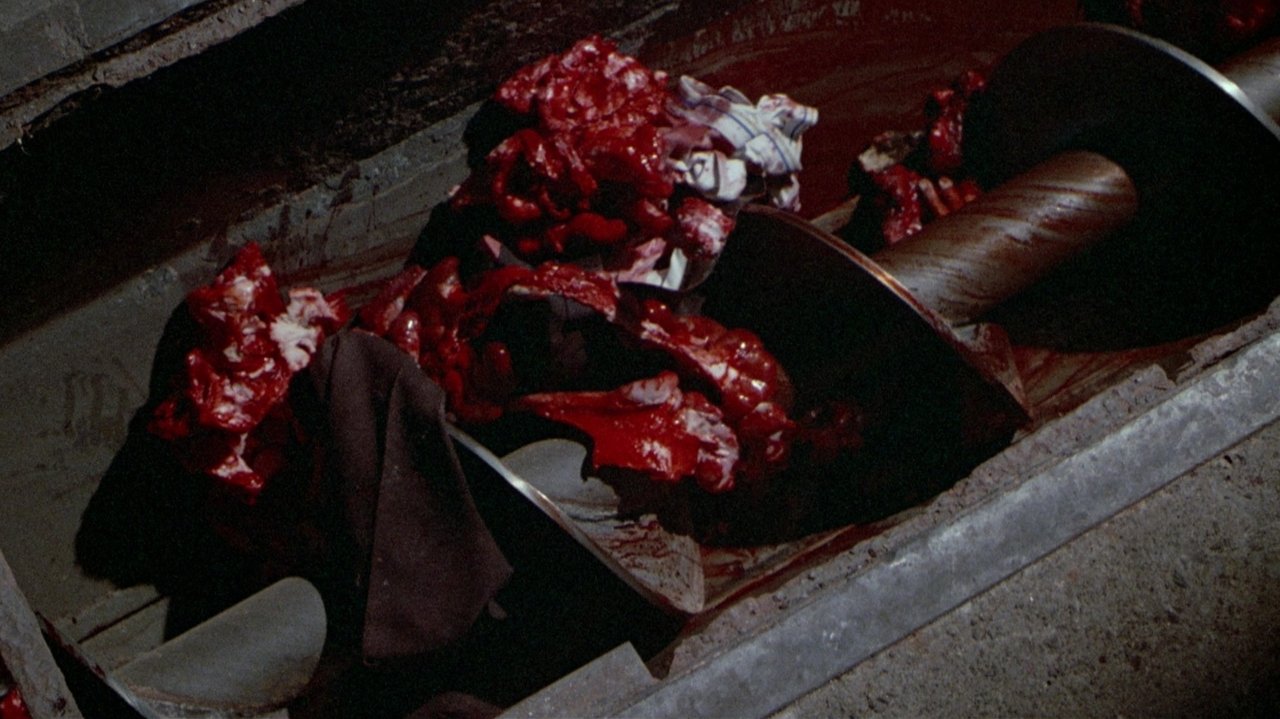
Director Rick Roessler, who also wrote the screenplay and poured his own money into this passion project (reportedly made for somewhere between $250,000 - $350,000, eventually grossing a respectable $2.5-$3 million), masterfully uses his limitations. The film feels cheap, but in a way that enhances the dread. The lighting is often harsh, the sets look genuinely run-down and dangerous – filming took place in Lakeside, California, near actual, operational slaughterhouses, adding an inescapable verisimilitude to the stench and decay implied on screen. You can almost smell the blood and fear soaked into the walls. The practical gore effects, while perhaps dated by today's CGI standards, have a tangible, visceral quality that felt disturbingly real on grainy VHS. Remember how shocking that infamous "pig scene" felt? It’s that commitment to grimy, physical horror that earned the film an initial X rating from the MPAA, necessitating cuts for its eventual R-rated release – a common battle scar for indie horror flicks of the era.
Familiar Cuts, Unexpected Flavor
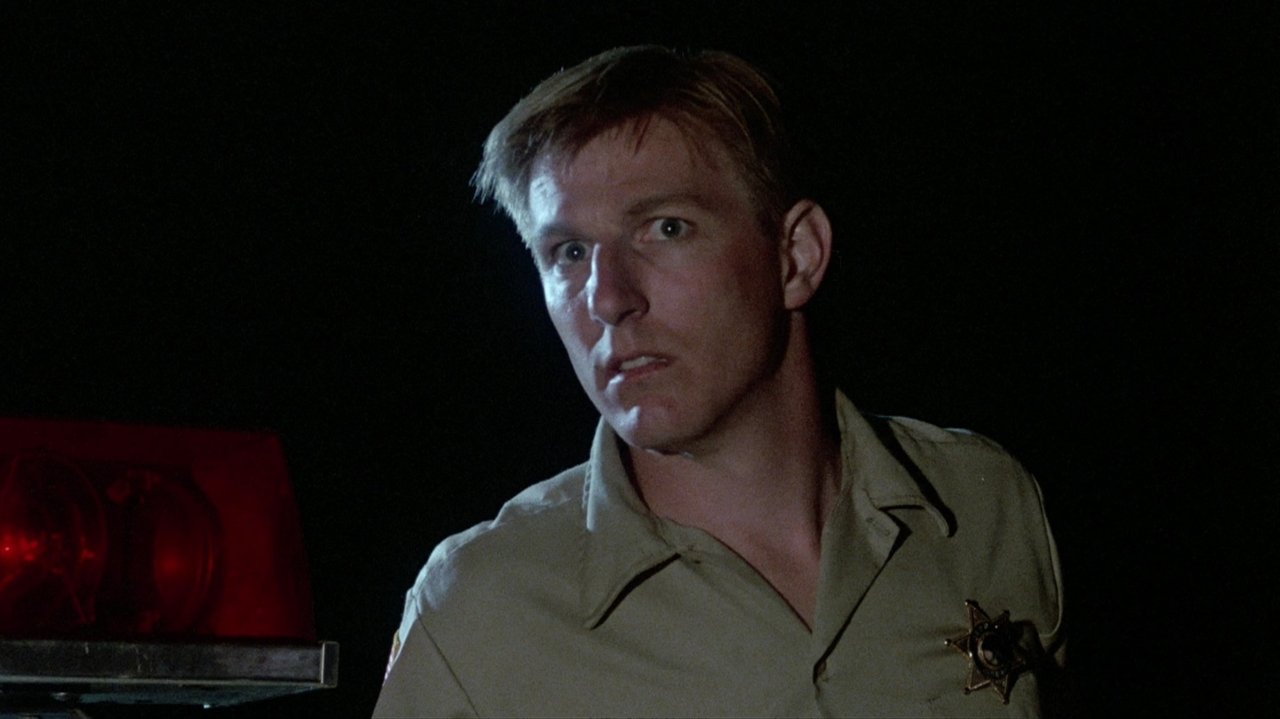
Sure, the plot hits many familiar slasher beats. We have the resourceful final girl, Liz Borden (Sherry Leigh, yes, the name is intentional), the clueless victims making questionable decisions, and the escalating body count. But Roessler injects moments of surprisingly dark humor, often stemming from Lester's bizarre pronouncements or the sheer absurdity of Buddy's rampage. The film knows what it is – a down-and-dirty exploitation flick – and leans into it with a certain grubby charm. The taglines alone ("Bring home the Bacon... in body bags!", "The Chop Just Don't Stop!") tell you everything you need to know about its gleefully unsubtle approach. It might tread familiar ground, but it does so with a rusty, oversized cleaver swinging wildly.
Still Hanging on the Hook
Slaughterhouse wasn't a game-changer like Halloween (1978) or Friday the 13th (1980), but it carved out its own nasty little niche in the late-80s slasher cycle. It was a video store staple, that slightly menacing cover promising something raw and forbidden. I distinctly remember renting this one late at night, the low hum of the VCR adding to the oppressive atmosphere pouring from the CRT screen. Talks of a sequel, Slaughterhouse II, surfaced over the years, fueled by Roessler himself, but like so many promised follow-ups from the era, it sadly never materialized, leaving Buddy Bacon as a memorable one-off menace.
---
Rating: 6.5 / 10
Justification: Slaughterhouse earns points for its genuinely unnerving killer, Buddy Bacon, brought to life by Joe B. Barton's imposing presence. Its grimy, low-budget atmosphere and commitment to practical gore capture the specific feel of late-80s indie horror effectively. However, it loses points for its derivative plot heavily borrowing from TCM and its reliance on standard slasher tropes. The acting outside of Barton and Don Barrett is often rudimentary, and the pacing occasionally lags. Still, it delivers memorable kills and a uniquely unsettling villain, making it a worthwhile watch for fans of the era's rougher edges.
Final Cut: A greasy, mean-spirited, yet oddly charming piece of 80s slasher exploitation. Slaughterhouse may not be prime cut horror, but its unforgettable villain and palpable atmosphere ensure it remains a grisly favorite for those who remember pulling its blood-splattered VHS box off the rental shelf. It’s the kind of film that reminds you why you fell in love with this gritty corner of the genre in the first place.