The crackle of fireworks. The crisp snap of a flag unfurling in the breeze. Symbols meant to inspire pride, twisted here into portents of dread. Some horrors don't just lurk in the shadows; they drape themselves in the Stars and Stripes and march right down Main Street. That’s the unsettling territory staked out by 1996’s Uncle Sam, a film that arrived late in the VHS boom, feeling both like a throwback and a strange, angry commentary wrapped in slasher viscera. It's the kind of movie you might have stumbled upon, bleary-eyed, deep into a Fourth of July weekend rental binge, leaving you with a lingering unease that had little to do with patriotism.
Red, White, and Blood
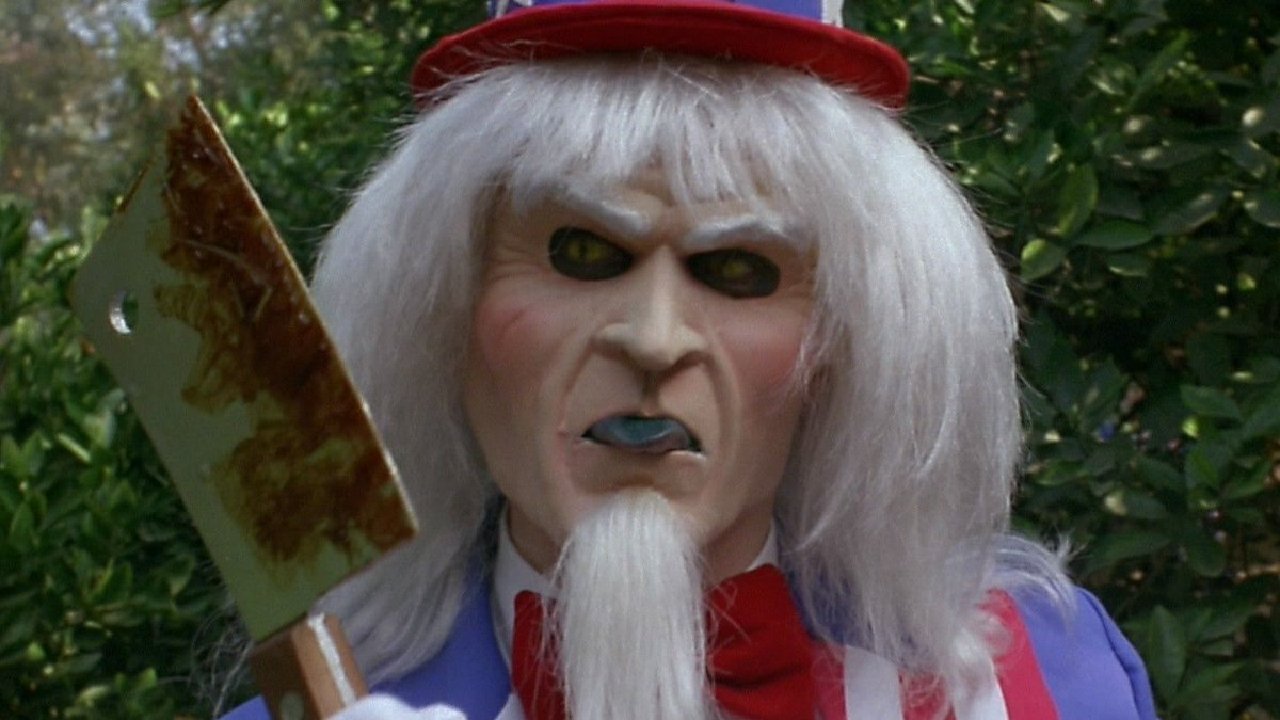
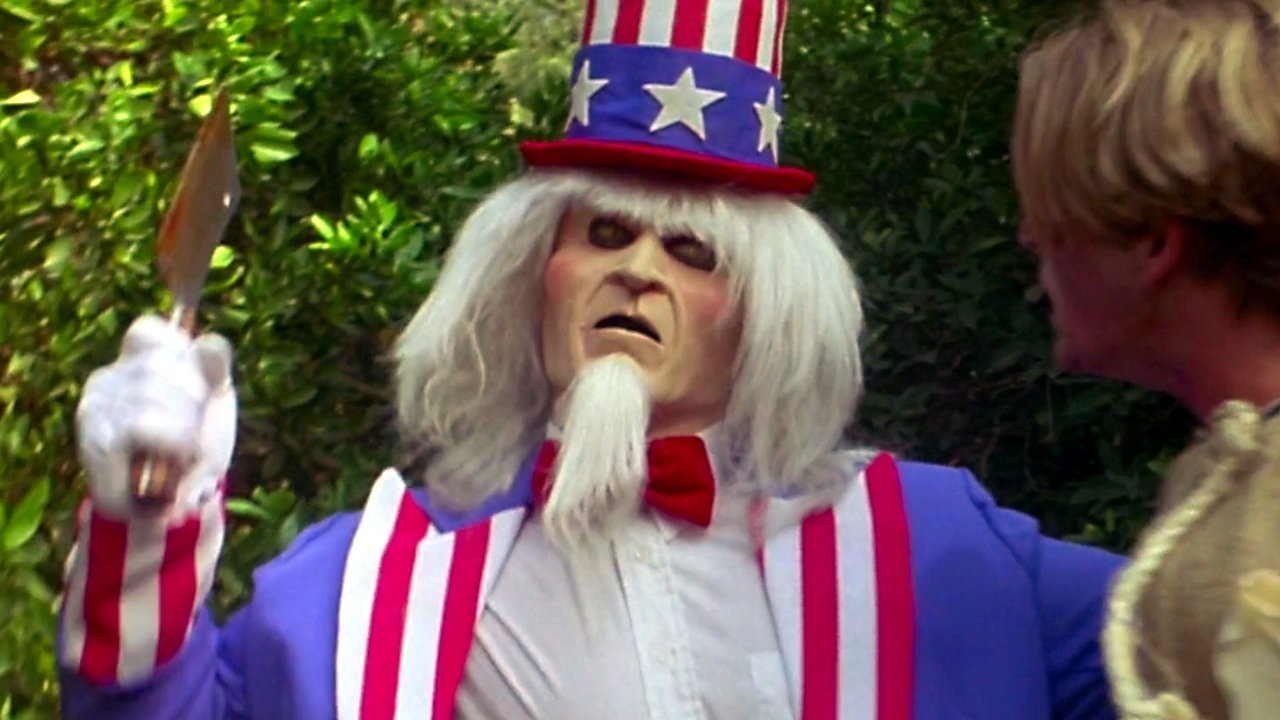
Penned by the legendary Larry Cohen (It's Alive, Q: The Winged Serpent) and directed by stalwart genre craftsman William Lustig (Maniac, Vigilante), Uncle Sam reunites the key creative forces behind the Maniac Cop series. And you can feel that pedigree. Cohen’s signature blend of high-concept absurdity and biting social satire is present, though perhaps wielding a sledgehammer where Maniac Cop used a scalpel. The premise is pure Cohen: Master Sergeant Sam Harper, a supposed Gulf War hero killed by friendly fire, returns from the dead, dons a decaying Uncle Sam costume, and begins slaughtering the "unpatriotic" citizens of his small hometown during their Independence Day celebration.
It's a setup ripe for exploitation thrills, and Lustig delivers a certain grungy, direct-to-video efficiency. The film wastes little time establishing its killer and his motive, however warped. Sam targets draft dodgers, flag burners, tax cheats, and even disrespectful teenagers with a grim, almost mechanical determination. There's a palpable sense of mid-90s cynicism baked in, a reaction, perhaps, to the jingoism surrounding the Gulf War.
A Cast of Familiar Faces and Fiends
Part of the perverse charm here is the cast. We get the inimitable Isaac Hayes (yes, Chef himself!) as Jed Crowley, a disabled veteran confined to a wheelchair who seems to be the only one truly grasping the supernatural horror unfolding. Hayes brings a surprising gravity to the role, a weary counterpoint to the surrounding mayhem. And then there’s William Smith (Any Which Way You Can, Red Dawn), perfectly cast as the hard-nosed, skeptical Major. Seeing these genre veterans adds a layer of comforting familiarity, even as the film spirals into absurdity. The titular killer, Sam Harper, is physically portrayed by stuntman David 'Shark' Fralick, hidden beneath makeup and the iconic suit for most of the runtime, embodying the monstrous perversion of a national symbol.
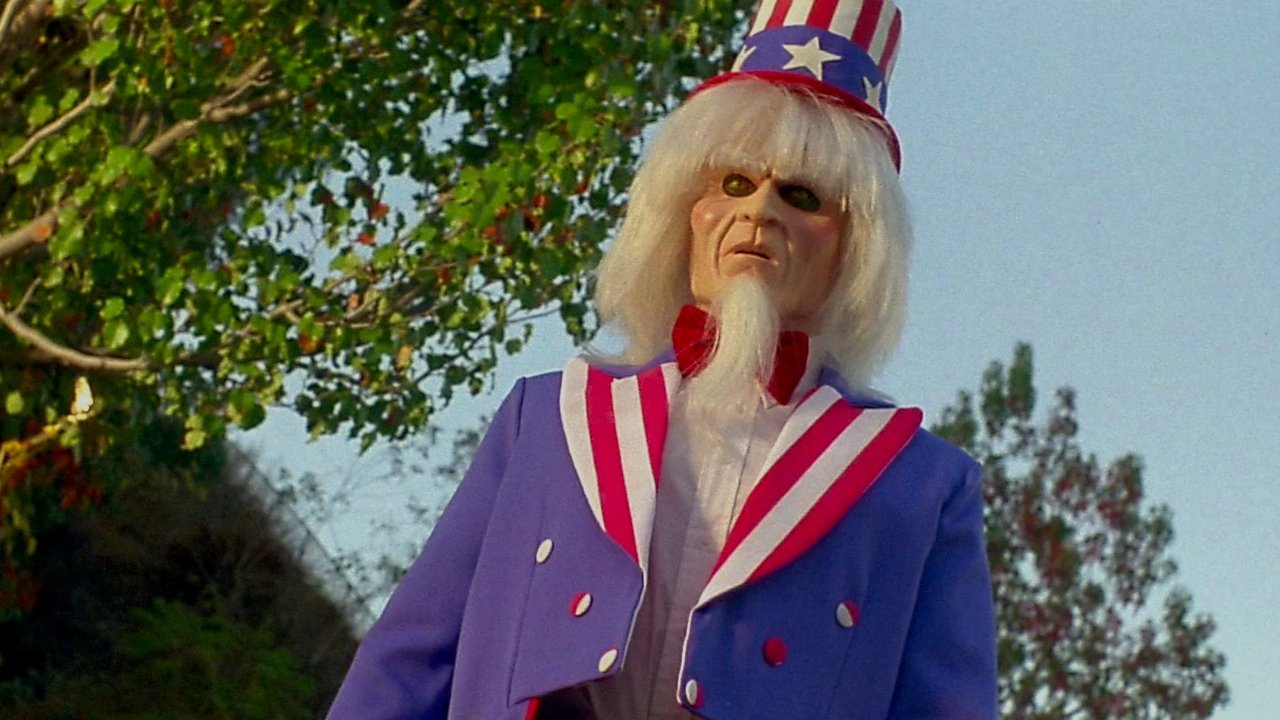
Lustig himself has reportedly described the film as more of a dark comedy, and viewed through that lens, it certainly functions differently. The kills, while sometimes brutal, often lean into the outlandish – death by fireworks, impalement on a flagpole, a stilt-walker meeting a grisly end. It's horror by way of political cartoon, exaggerated and unsubtle. Did it always land? Perhaps not. Some viewers found the satire too broad, the horror undercut by the inherent silliness. I remember renting this tape from the local video store, the box art alone promising something lurid and strange, and finding the tonal shifts jarring but weirdly compelling.
Behind the Mask and Mayhem
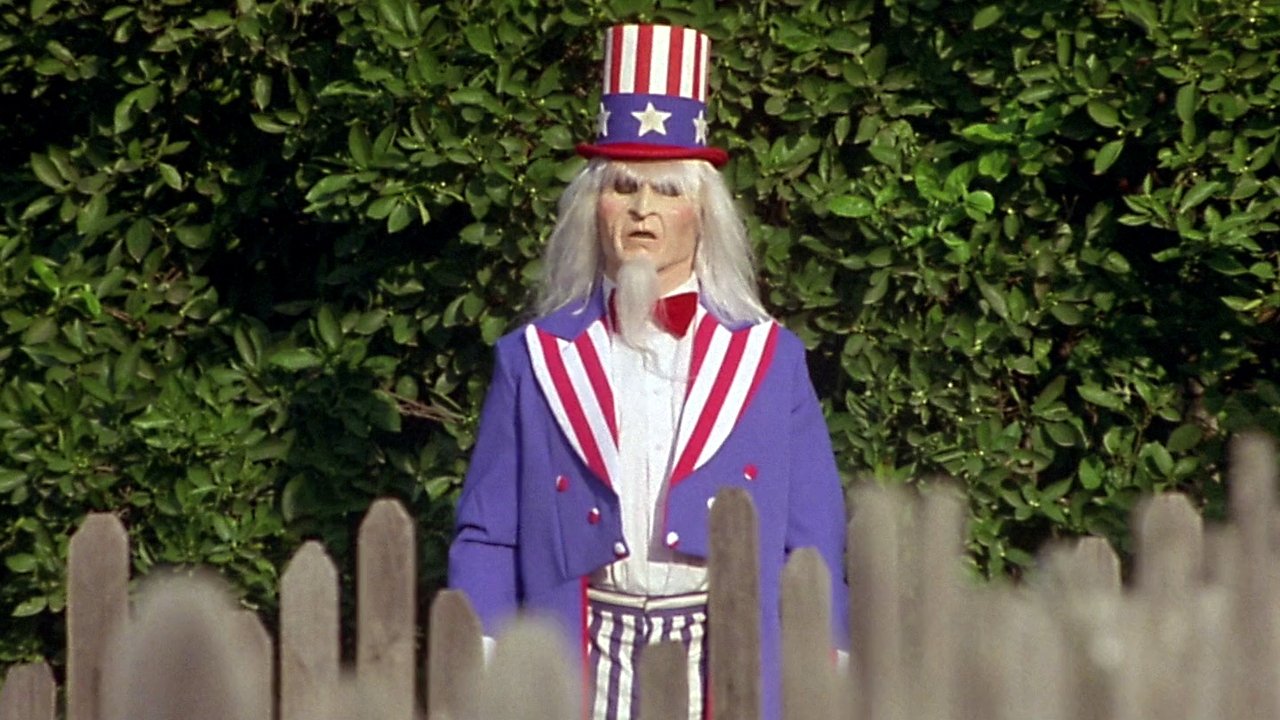
Shot on location in Southern California, Uncle Sam carries that distinct late-era VHS aesthetic. The practical effects, while not always seamless, have that tangible quality we miss today. The decaying Uncle Sam makeup is effectively gruesome, a grotesque mockery of the wholesome icon. Reportedly, Cohen conceived the idea years earlier, but the timing felt particularly pointed in the mid-90s. It was a film wrestling, however clumsily, with ideas of patriotism, heroism, and the darkness that can hide behind nationalistic fervor. It didn't exactly set the box office alight (being primarily a direct-to-video release), but like many Lustig/Cohen collaborations, it quickly found its niche among horror fans who appreciated its strange brew of gore and commentary. Remember seeing those slightly warped Uncle Sam masks pop up in Halloween stores afterwards? Maybe just a coincidence... or maybe this slice of patriotic horror left a minor, peculiar mark.
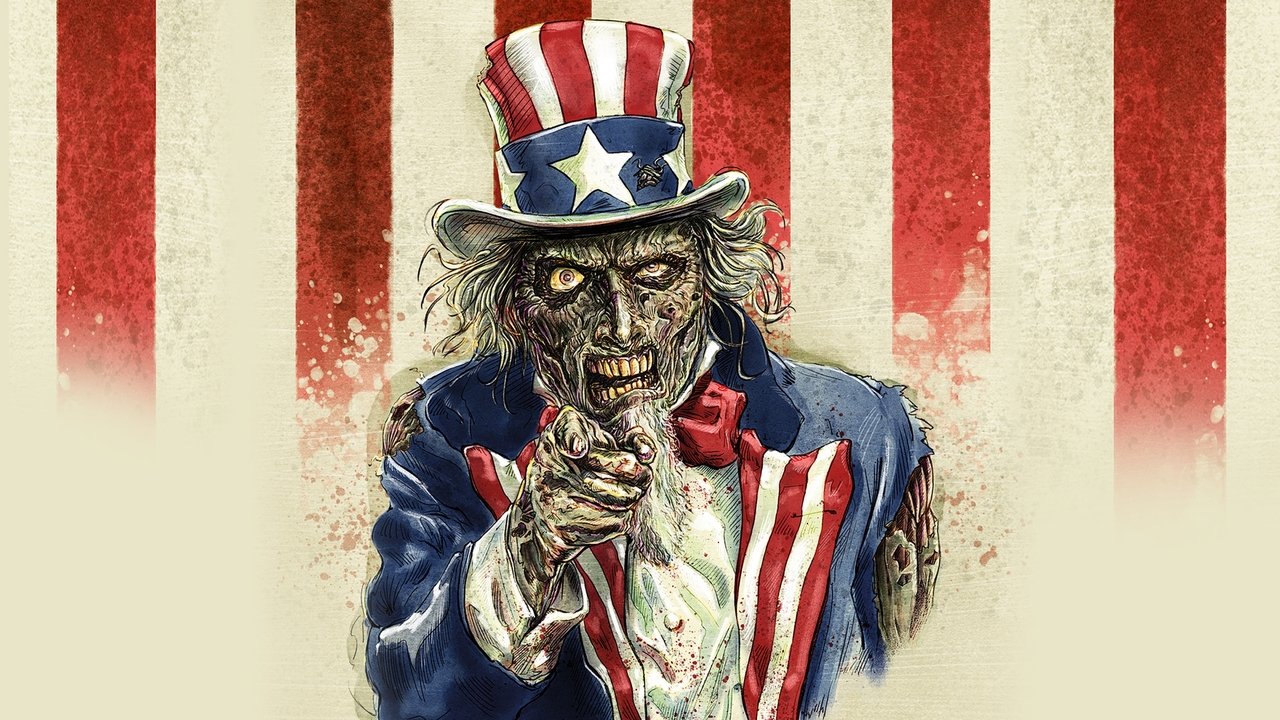
The film’s power, such as it is, lies less in outright scares and more in its unsettling central conceit. The idea of a beloved national symbol becoming a vessel for vengeful rage taps into a primal sort of discomfort. It weaponizes iconography, turning celebration into slaughter. Doesn't that central image – the rotting, murderous Uncle Sam – still feel unnerving in its own right, even divorced from the sometimes-clunky execution?
Final Verdict
Uncle Sam is undeniably a product of its time – a mid-90s, direct-to-video slasher fueled by Larry Cohen’s satirical rage and William Lustig’s competent, if not groundbreaking, direction. It’s clunky, heavy-handed, and occasionally veers into outright camp. Yet, there's an undeniable energy to it, a willingness to be provocative and strange that feels distinctly of the VHS era. The performances from Isaac Hayes and William Smith add weight, and the central concept remains potent and disturbing. It’s not sophisticated horror, nor is it subtle satire, but it’s a memorable slice of patriotic B-movie mayhem.
Rating: 6/10
Why this score? Uncle Sam earns points for its audacious concept, the Lustig/Cohen pedigree, memorable cameos, and its status as a cult curiosity. It delivers some creative kills and maintains a certain grungy charm. However, it loses points for its often heavy-handed satire, uneven tone that sometimes undermines the horror, and production values that scream "straight-to-video." It’s a fascinating, flawed experiment that’s essential viewing for Cohen/Lustig completists and fans of bizarre 90s horror oddities.
It might not be the first film you reach for on the Fourth of July, but Uncle Sam lingers – a weird, angry ghost rattling its chains in the attic of 90s horror cinema.