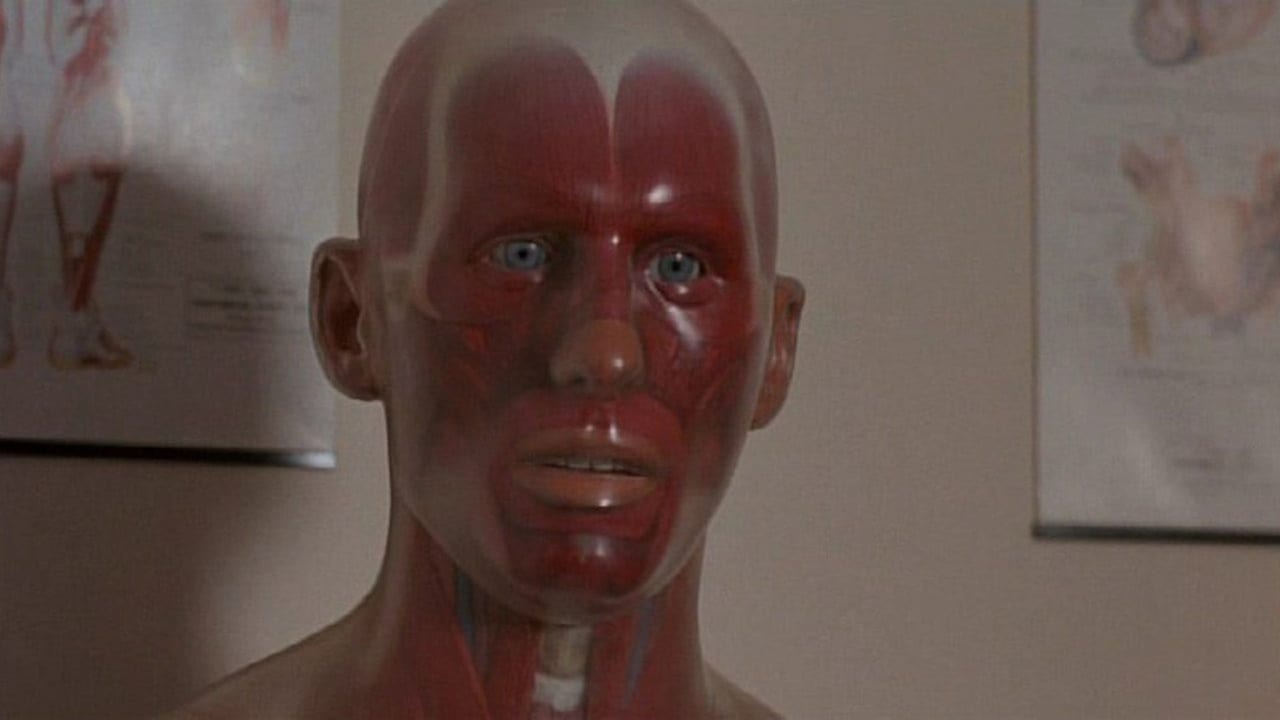
Some childhood objects offer comfort, a tangible link to innocence. Others… stare back. In the quiet, shadowed corners of late 80s horror, nestled between the chainsaw massacres and creature features stacking up on rental shelves, sits Pin (1988). This Canadian gem understands the profound unease generated not by a fanged monster, but by a disturbingly lifelike, anatomically correct medical doll and the fractured mind that gives it a voice. Forget jump scares; Pin trades in the slow, creeping dread of watching a psyche unravel within a house sealed by secrets and suffocating propriety.
A Dollhouse of Disquiet
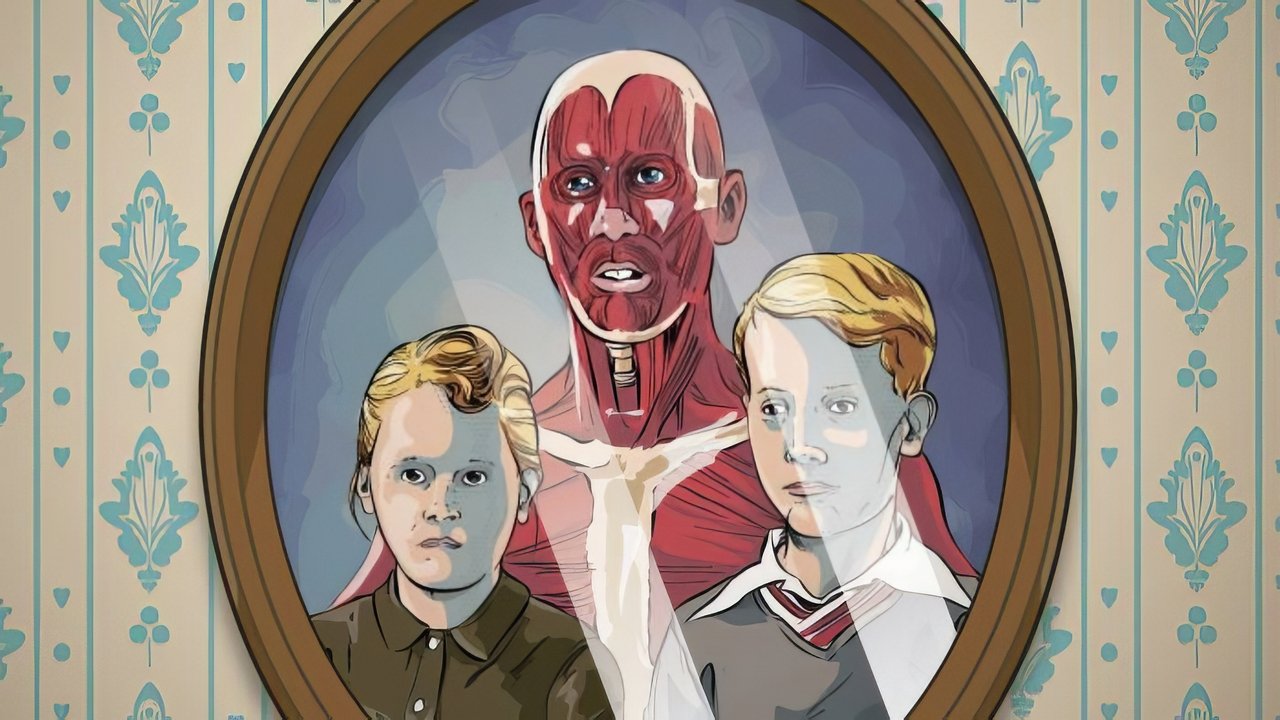
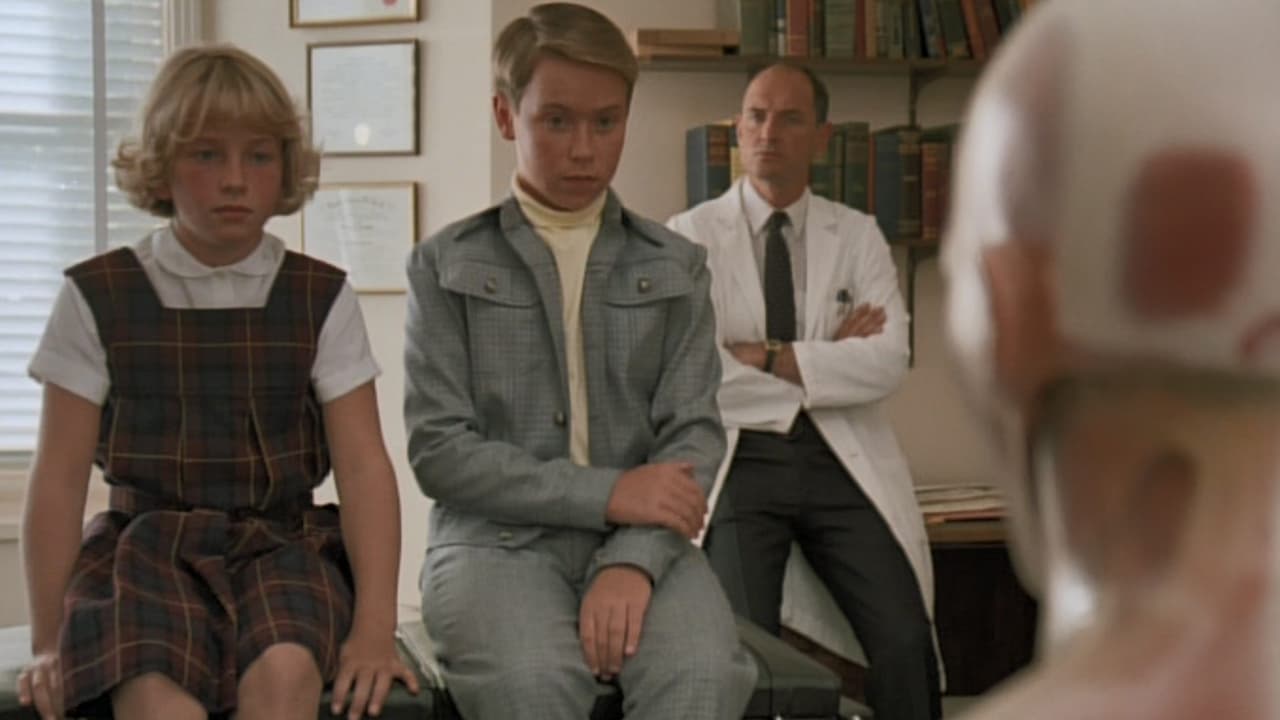
We enter the Linden household, a place seemingly pristine but emotionally sterile. Dr. Linden (Terry O'Quinn, years before his iconic turn in Lost), a man of cold precision, educates his young children, Leon and Ursula, about the human body using "Pin," a transparent medical demonstration dummy. But there's a twist: Dr. Linden is also a skilled ventriloquist, and he imbues Pin with a distinct personality, using the doll as a mouthpiece for intimate discussions and stern pronouncements. It’s a deeply unsettling dynamic from the outset, establishing a foundation of repressed sexuality and unhealthy attachment that feels chillingly plausible. O'Quinn delivers a performance of controlled authority that makes the father's bizarre methods feel disturbingly normalised within the family unit.
The Puppet Master's Descent
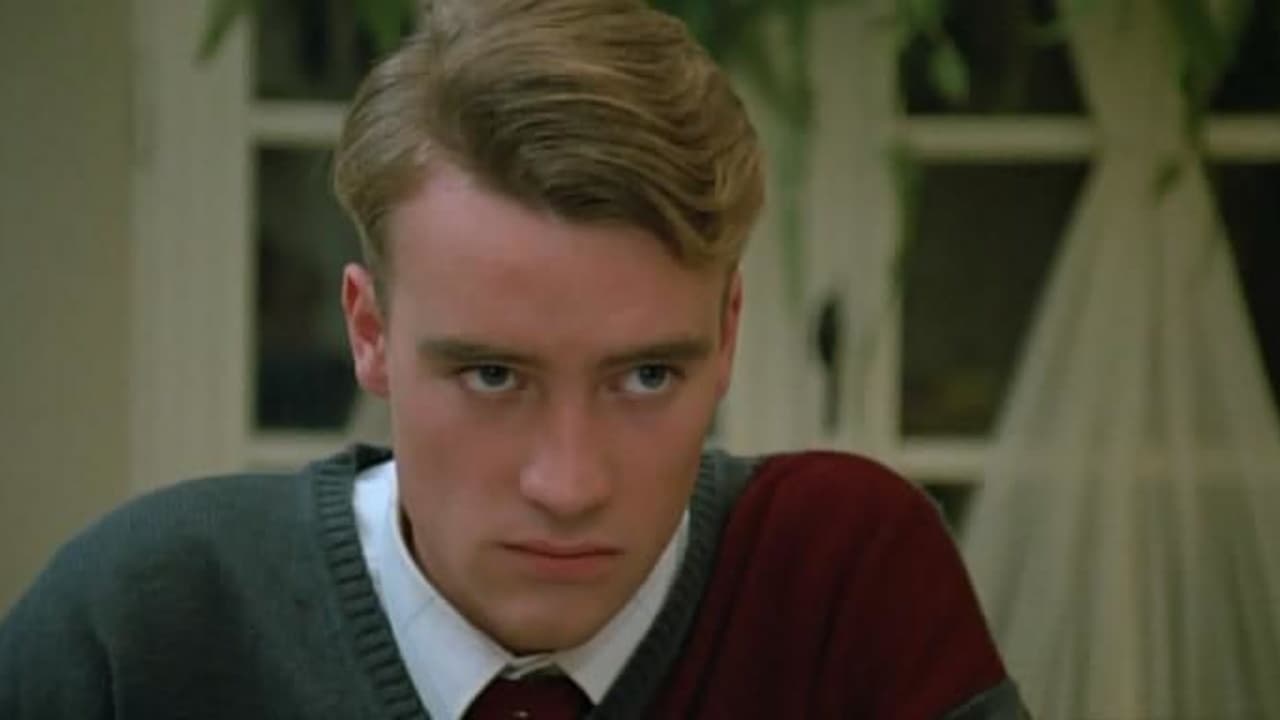
Following the abrupt, tragic death of their parents, the now-adolescent siblings are left alone. Ursula (Cynthia Preston) longs for normalcy, boyfriends, a life outside the oppressive stillness of their home. Leon (David Hewlett), however, retreats further inward, his bond with Pin warping into something far more consuming and sinister. He continues the ventriloquism, convinced Pin speaks to him, advises him, judges outsiders. The doll itself, perpetually seated, passively observing, becomes an object of intense psychological horror. Its immobility is its power; the horror lies not in what it does, but in what Leon believes it does. This central conceit, born from Andrew Neiderman's novel, is the dark heart of the film.
David Hewlett delivers a career-making performance here, long before achieving sci-fi stardom in series like Stargate Atlantis. He masterfully navigates Leon's terrifying tightrope walk between pitiable vulnerability and outright menace. You see the damaged boy beneath the burgeoning psychosis, making his quiet conversations with the impassive doll all the more skin-crawling. Watching him meticulously care for Pin, dressing him, positioning him, whispering secrets to him... it taps into a primal fear of the uncanny. Did that twist involving Pin genuinely shock you back in the day? It relied entirely on suggestion and Leon’s crumbling sanity.
Crafting Claustrophobia
Director Sandor Stern, who notably penned the screenplay for the hugely successful haunted house flick The Amityville Horror (1979), proves adept at building suspense within domestic confines. Having adapted the novel himself, Stern understands that Pin's horror is internal. He uses the sprawling, yet isolating Linden house – actually filmed on location in Montreal, Quebec – to great effect. Shadows linger, rooms feel empty yet watched, and the claustrophobia stems not from tight spaces, but from the psychological entrapment Leon imposes on himself and his increasingly terrified sister. The film was a relatively low-budget Canadian production (around $2.5 million CAD), which necessitated a focus on character and atmosphere over flashy effects – a limitation that ultimately serves as its greatest strength. There's a patience to the filmmaking, letting the unease steep rather than resorting to cheap jolts. The score subtly underscores the tension, avoiding intrusive stingers in favour of a more mournful, unsettling soundscape.
An Underrated Psychological Chill
Pin wasn’t a massive box office hit upon release, often overshadowed by the era's more bombastic horror offerings. Yet, it cultivated a dedicated following on VHS, finding viewers who appreciated its measured pace and psychological depth. It feels more akin to Hitchcockian thrillers or early Polanski than the slasher fare dominating the shelves. Its exploration of isolation, grief, and the dangerous potential of repressed family dynamics feels disturbingly timeless. Cynthia Preston provides the crucial anchor of normalcy, her desperation palpable as she tries to escape Leon’s increasingly suffocating orbit. The tension between the siblings forms the narrative engine, driving towards an inevitably dark conclusion.
Interestingly, Stern reportedly found the Pin doll itself so inherently creepy during production that it genuinely unnerved some on set, lending an extra layer of authenticity to the palpable dread surrounding the inanimate figure. It wasn't just the actors reacting; the prop itself carried a disturbing weight.

Final Reckoning
Pin remains a potent and deeply unsettling psychological horror film. It burrows under your skin with its believable portrayal of mental disintegration and its masterful use of suggestion. The central performances from Hewlett and Preston are superb, carrying the weight of the disturbing premise with conviction. While its deliberate pacing might feel slow to modern audiences accustomed to faster cuts, its power lies in that slow burn, the gradual tightening of the psychological screws. It’s a film that understood fear could be found not in the monstrous, but in the disturbingly familiar contours of a human face – even a plastic one.
Rating: 8/10 – This score reflects Pin's exceptional atmosphere, standout lead performance by David Hewlett, and its successful cultivation of deep psychological dread. It might lack the gore or overt scares of its contemporaries, but its quiet intensity and chilling central conceit make it a standout cult classic of the VHS era, proving that sometimes the most terrifying monsters are the ones we create ourselves. Doesn't that passive, plastic face still feel unnerving after all these years?