You can almost feel the heat radiating off the screen from the opening frames of The Hot Spot. It’s not just the oppressive Texas sun beating down on a dusty, forgotten town; it's the simmering discontent, the barely concealed desires, and the palpable sense of lives stuck in neutral, waiting for something—anything—to break the monotony. Watching it again now, decades after first sliding that worn VHS tape into the VCR, that sticky, languid atmosphere remains its most potent quality, a character in itself meticulously crafted by director Dennis Hopper.
A Drifter Walks In
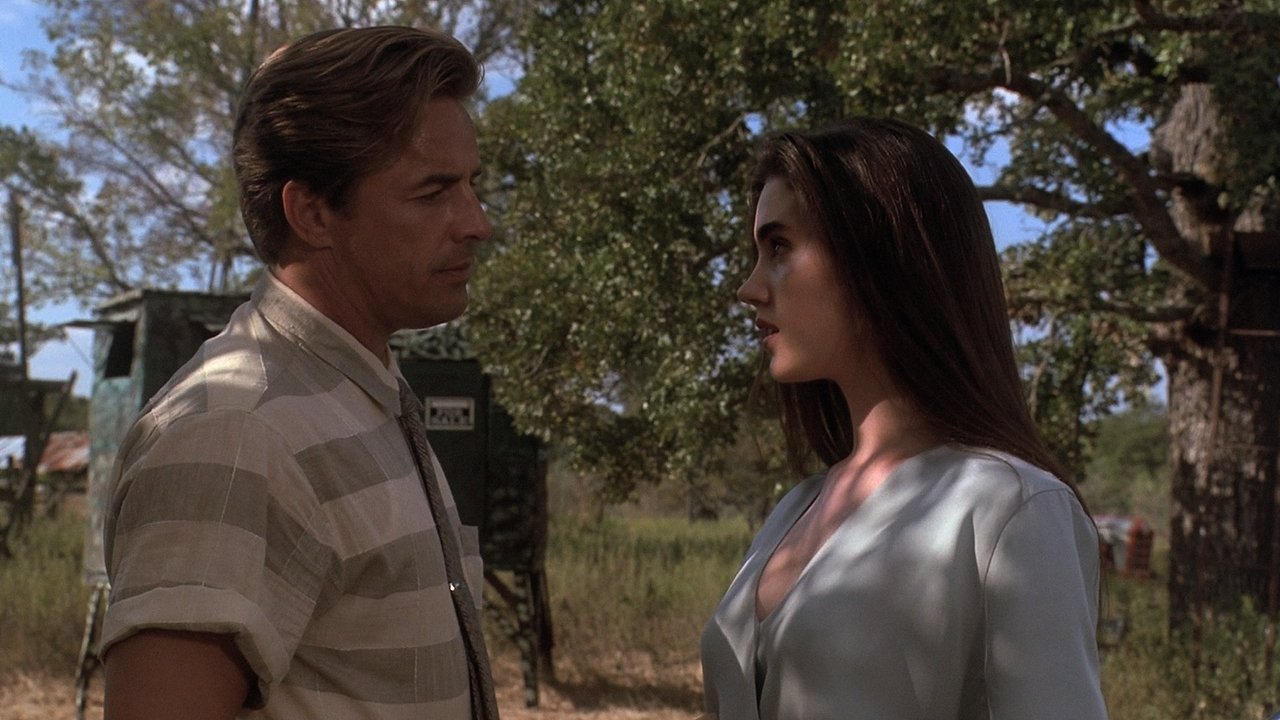
Into this sweltering pressure cooker strolls Harry Madox, played with a laid-back, seen-it-all charisma by Don Johnson, then riding high on his Miami Vice fame. Madox is a classic noir archetype: the handsome, rootless drifter with a quick mind and flexible morals, looking for an angle, a score, anything to move on to the next town, maybe with fuller pockets. He lands a job as a used car salesman, seemingly innocuous enough, but in this town, nothing stays simple for long. It’s a place where secrets fester behind closed doors and everyone seems to be watching everyone else. You get the sense immediately that Madox isn’t just passing through; he’s stepping into a web.
Two Sides of Temptation

The strands of that web are woven by two utterly captivating and contrasting women. There’s Dolly Harshaw (Virginia Madsen), the boss's wife, a bored, calculating femme fatale who practically drips sensuality and danger. Madsen’s performance is iconic; she embodies Dolly with a confident predatory grace, fully aware of her power over men and utterly unafraid to wield it. Her scenes, particularly one famously involving a lakeside encounter, burned themselves into the memory of many a young viewer back in the day, pushing the boundaries of mainstream eroticism for 1990. It’s a performance that feels both timelessly noir and distinctly of its era.
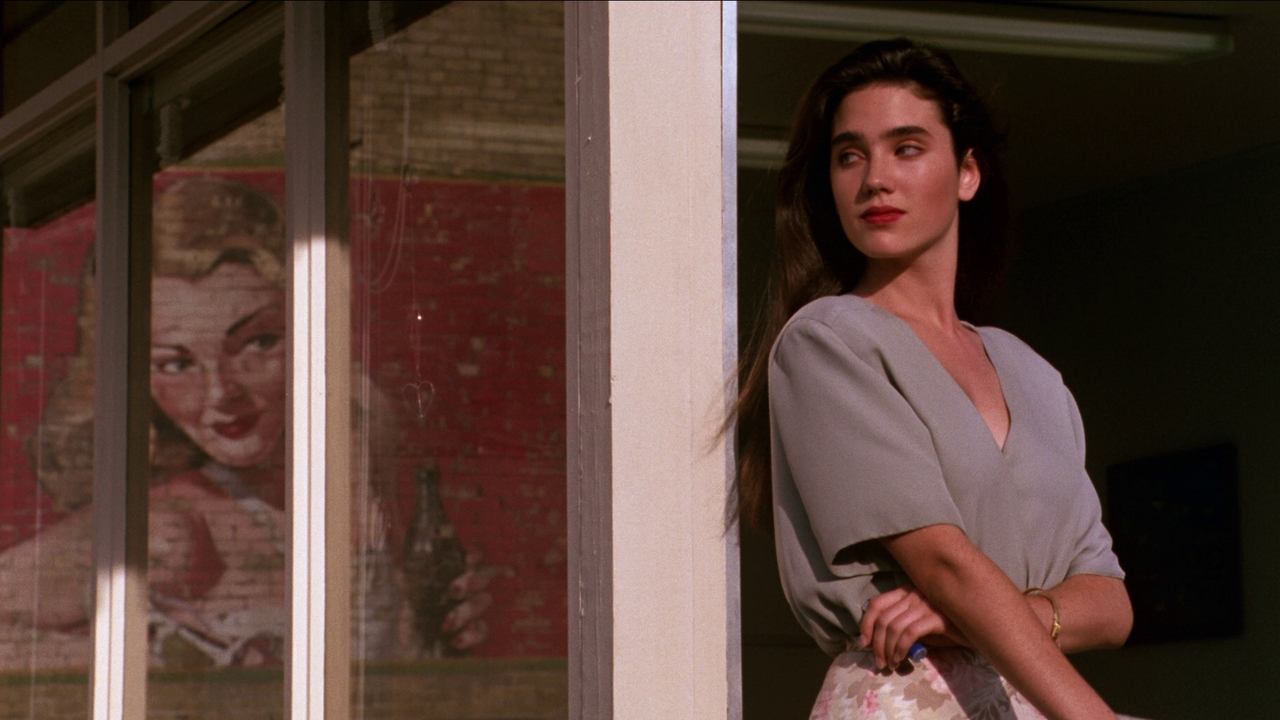
On the other side is Gloria Harper (Jennifer Connelly), the naive-seeming accounts clerk at the dealership. Connelly, so young here but already possessing that magnetic screen presence, offers a different kind of allure – an apparent innocence that Madox feels drawn to protect, yet hinted at depths that keep him, and the audience, guessing. Is she truly vulnerable, or is there another layer to her quiet demeanor? The push and pull between these two women becomes the central tension driving Madox’s increasingly perilous situation.
Hopper's Long Simmering Vision

What makes The Hot Spot more than just a standard potboiler is the unmistakable directorial stamp of Dennis Hopper. This wasn't some quick studio assignment; Hopper had reportedly nursed the ambition to adapt Charles Williams' 1952 novel Hell Hath No Fury for nearly two decades before finally getting the chance. You can feel that long-held passion in the film's deliberate pacing, its attention to atmosphere over intricate plotting, and its willingness to let moments linger. Hopper, no stranger to exploring the darker undercurrents of American life (Easy Rider, Blue Velvet), paints this small Texas town (primarily filmed in Taylor, Texas, adding authentic grit) as a microcosm of simmering greed, lust, and desperation.
The film's visual style enhances this mood – sun-bleached exteriors clash with shadowy interiors, mirroring the hidden desires lurking beneath the surface. And the soundtrack? Pure auditory gold. Featuring legends like John Lee Hooker (who also makes a brief cameo), Miles Davis, and Taj Mahal, the bluesy score is perfectly integrated, not just background music but the very soul of the film’s sultry, melancholic vibe. It deepens the noir feel, connecting it back to the genre's roots while feeling uniquely Texan.
Retro Fun Facts: From Novel to Neon
It's fascinating to think this project simmered for so long. Hopper's persistence paid off, even if the film didn't exactly light up the box office upon release (grossing a mere $1.2 million against a reported $10 million budget). Like many films we cherish on VHS Heaven, its reputation grew slowly, finding its audience on home video where viewers could appreciate its mood and performances away from initial commercial pressures. The source novel itself had a pulpy history, perfectly fitting the noir aesthetic Hopper captured. Knowing Hopper chased this story for years adds a layer of appreciation – it feels less like a job and more like a personal statement, albeit one wrapped in genre conventions.
An Imperfect, Seductive Heat
Is The Hot Spot a perfect film? Perhaps not. The pacing can feel meandering to some, and the plot machinations, involving blackmail, robbery, and secrets, occasionally strain credulity. Madox, despite Don Johnson's undeniable charm, remains something of an enigma – driven by impulses that aren't always fully explored. Yet, these aren't fatal flaws. They feel almost part of the film's DNA, contributing to its dreamlike, slightly unhinged quality. It's a film less concerned with tightly wound plotting than with evoking a feeling – that oppressive heat, the allure of danger, the inevitability of choices leading to ruin.
What lingers most after the credits roll isn't necessarily the twists and turns, but the faces: Madsen's coolly appraising gaze, Connelly's wide-eyed vulnerability, Johnson's roguish smirk hiding a growing desperation. It’s the sweat on their brows, the blues drifting through the lazy afternoon air, the sense that this small town is a trap disguised as an opportunity. Doesn't that feeling—of being caught between desire and consequence—resonate even now?

Rating: 8/10
The Hot Spot earns its 8 for being a masterclass in mood and atmosphere, driven by Dennis Hopper's distinct vision and three magnetic central performances. While the plot might occasionally wobble, the sultry tension, the evocative Texas setting, the killer blues soundtrack, and especially Virginia Madsen's unforgettable femme fatale make it a standout neo-noir from the era. It perfectly captures that late-night, slightly dangerous vibe that made certain VHS discoveries feel so special.
It’s a film that sweats, bleeds, and smolders – a potent reminder of how atmosphere and performance can elevate genre filmmaking into something uniquely memorable, sticking with you long after the tape finishes rewinding.