Alright, fellow tapeheads, dim the lights, adjust the tracking, and let that familiar hum of the VCR transport you back. Tonight, we're pulling a gem – or perhaps a particularly shiny piece of cubic zirconia – from the glorious glut of early 90s straight-to-video action: Sam Firstenberg's 1992 blade-fest, American Samurai. If that title alone doesn't conjure images of headbands, katanas wielded in unlikely places, and dialogue delivered with granite-jawed intensity, you might need to rewind your memory banks. This film arrived precisely when the video store action shelf was a battleground of competing ninjas, kickboxers, and commandos, and it carved out its own bloody little niche.
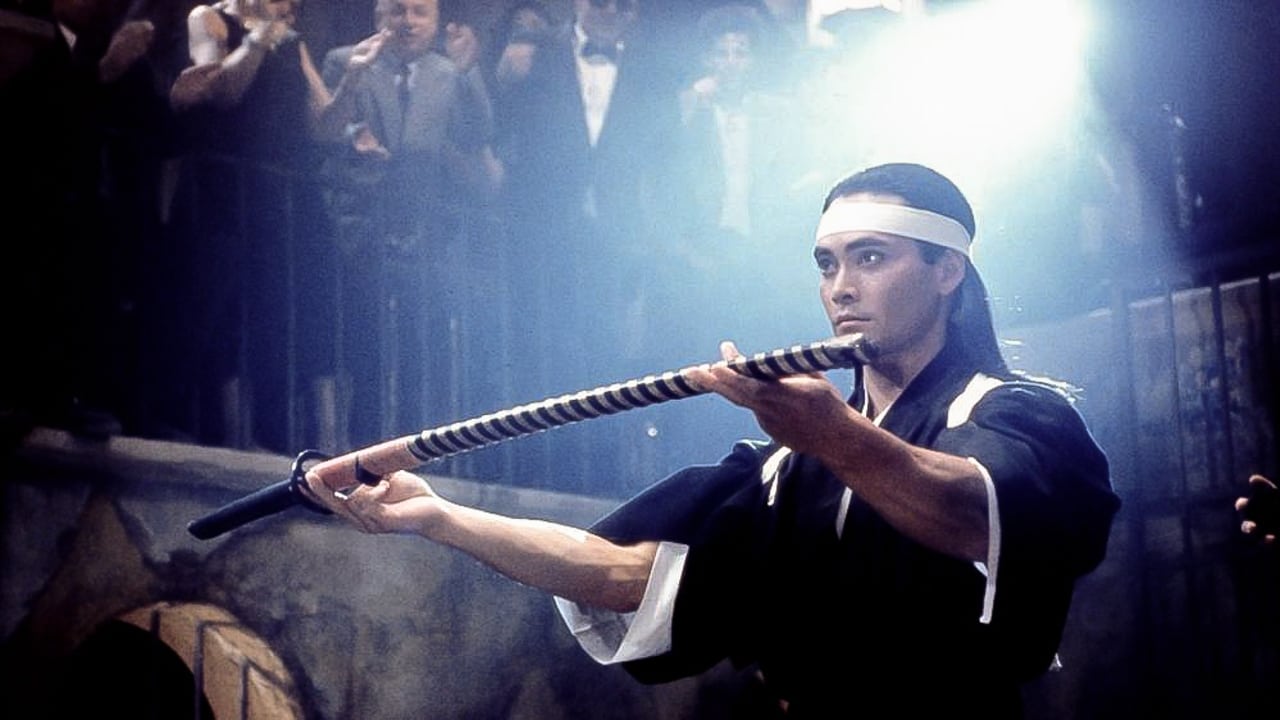
For many of us, seeing David Bradley on the cover was a signal. Having taken the reins from Michael Dudikoff in the American Ninja series (starting with part 3), Bradley had a certain… dependable, slightly stiff action hero presence. Here, he’s Drew Collins, an American journalist who, naturally, also happens to be a highly trained samurai warrior thanks to being adopted and raised by a wise Japanese master (Terry O'Quinn in a brief but welcome appearance!) after a childhood plane crash. Yeah, just roll with it. The plot kicks into gear when Drew’s past catches up, specifically his psychotic adoptive Yakuza brother, Kenjiro (Mark Dacascos), who feels Dad liked Drew best and now runs a deadly underground sword-fighting tournament in Turkey to prove his dominance and reclaim a sacred family sword. It’s classic Cain and Abel, seasoned with shurikens and sake.
### Swords, Sweat, and Sam Firstenberg
Let's talk Sam Firstenberg. This is the man who gave us American Ninja (1985) and its arguably even more iconic sequel American Ninja 2: The Confrontation (1987), not to mention the cult classic Breakin' 2: Electric Boogaloo (1984). Firstenberg knew how to deliver bang for your buck on a tight budget, and American Samurai is pure, uncut Firstenberg. Forget intricate plotting or nuanced character arcs; the name of the game is forward momentum, punctuated by frequent, brutal action. The film feels like it was shot fast and edited faster, focusing entirely on getting to the next clash of steel. You can almost feel the gritty efficiency. Much of the film was shot on location in Israel, a common cost-saving measure for producers like Cannon Films (though this was PM Entertainment, the spirit is similar), giving the Turkish-set scenes a certain dusty, sun-baked authenticity, even if geography feels a bit… flexible.

The real draw here, especially watching it now, is the kinetic energy and the sheer physicality of the fights. Mark Dacascos, just before he'd explode onto the scene with Only the Strong (1993), is electric as the villainous Kenjiro. His speed, agility, and genuine martial arts prowess are undeniable. He moves with a predatory grace that makes Kenjiro a genuinely intimidating presence, even when saddled with some truly over-the-top villain dialogue. Bradley holds his own, more stoic and grounded, relying on a rugged determination that contrasts well with Dacascos' flashy menace. Their eventual showdowns are the movie's raison d'être.
### That Sweet, Sweet Practical Mayhem
Remember how real those sword fights felt back then? American Samurai delivers that visceral thrill. We're talking sparks flying from actual metal blades (or convincing props, anyway!), stunt performers taking hard falls, and a satisfying thwack when swords connect. There's a sequence involving Drew fighting off attackers in a cramped apartment kitchen that feels genuinely dangerous, using everyday objects alongside his blade. The underground tournament itself is a parade of diverse fighting styles and weaponry – nunchaku, sais, brute strength – leading up to the inevitable katana duel. Sure, some of the choreography might look a bit stagey compared to modern wire-fu epics, but there's an undeniable weight and impact here that CGI often smooths over. You feel the effort, the sweat, the potential for things to go genuinely wrong, which cranks up the tension.
Of course, it wouldn't be a true early 90s action flick without some charmingly dated elements. The synth-heavy score pulses with urgency, the editing sometimes feels abrupt, and the romantic subplot involving fellow journalist Janet (Valarie Trapp) feels somewhat obligatory, a brief pause for breath between bouts of bloodshed. The dialogue? Let's just say it serves its purpose, efficiently conveying threats, exposition, and the occasional attempt at tough-guy banter. It’s functional, sometimes unintentionally hilarious, but always earnest in its delivery. Was this high art? Absolutely not. Did it deliver exactly what you wanted on a Friday night with a pizza and a two-liter bottle of soda? You bet your rental membership it did.
The film didn’t exactly set the world on fire critically upon release – these DTV actioners rarely did. But it found its audience, the folks scanning the aisles for the next adrenaline rush. It’s a movie built on a high-concept title and the promise of skilled performers kicking butt, and on that level, it succeeds admirably. It’s a snapshot of a specific era in action filmmaking: lean, mean, and focused on delivering the goods without apology.
Rating: 6.5 / 10
Justification: While hampered by a predictable plot, sometimes clunky dialogue, and obvious budget constraints, American Samurai delivers solidly on its promise of martial arts action. Mark Dacascos is a magnetic villain, the practical sword fights have a satisfying crunch, and Sam Firstenberg directs with an efficient, no-nonsense energy perfect for the genre. It loses points for underdeveloped characters and moments of pure 90s cheese, but gains them back for sheer B-movie enthusiasm and delivering the kind of straightforward, physical action that defined the VHS era.
Final Word: For pure, unadulterated early 90s swordplay silliness with surprisingly solid fight choreography, American Samurai is a reminder that sometimes, all you needed was a cool title, two guys with katanas, and a director who knew how to point the camera at the action. Track it down if you crave that specific, wonderfully raw flavor of straight-to-video spectacle.