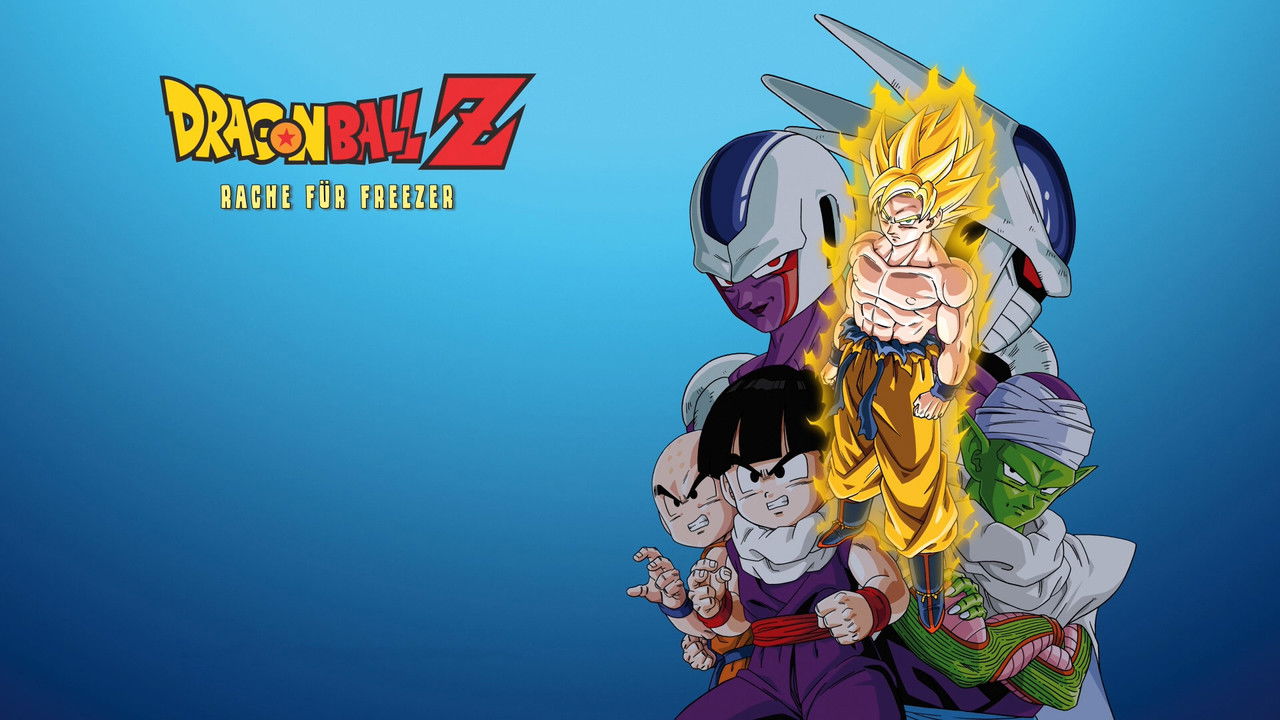
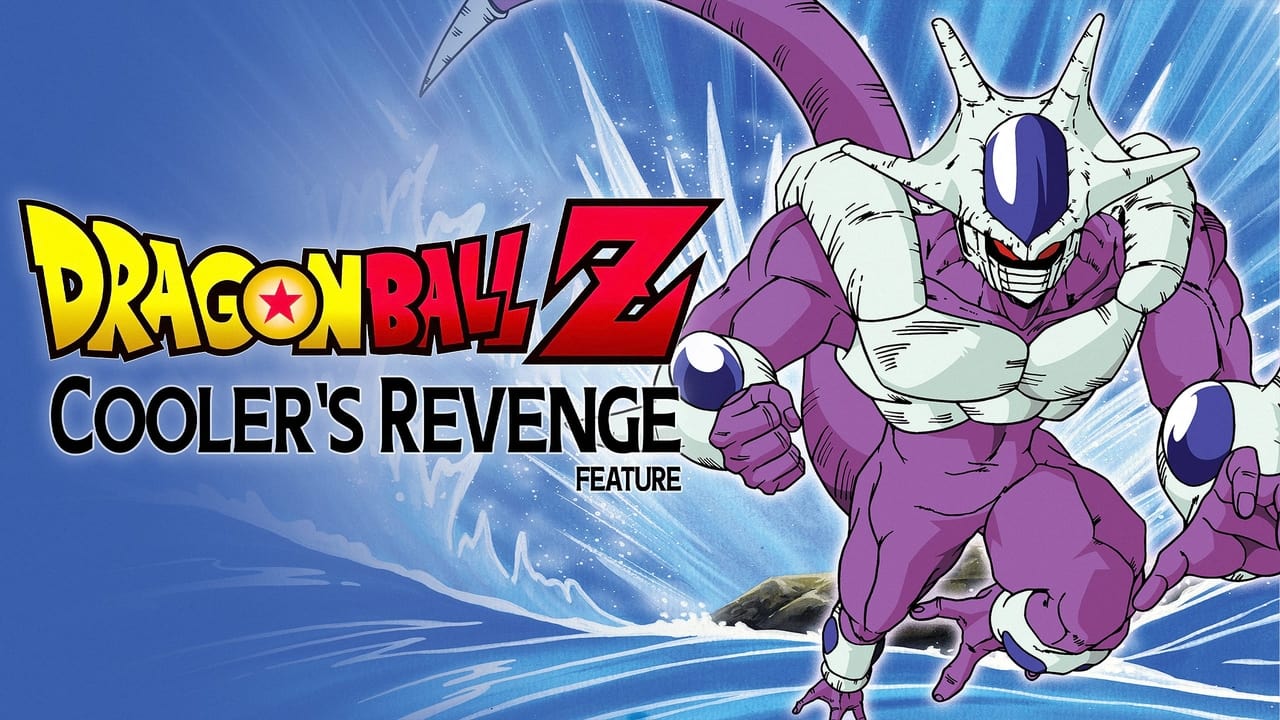
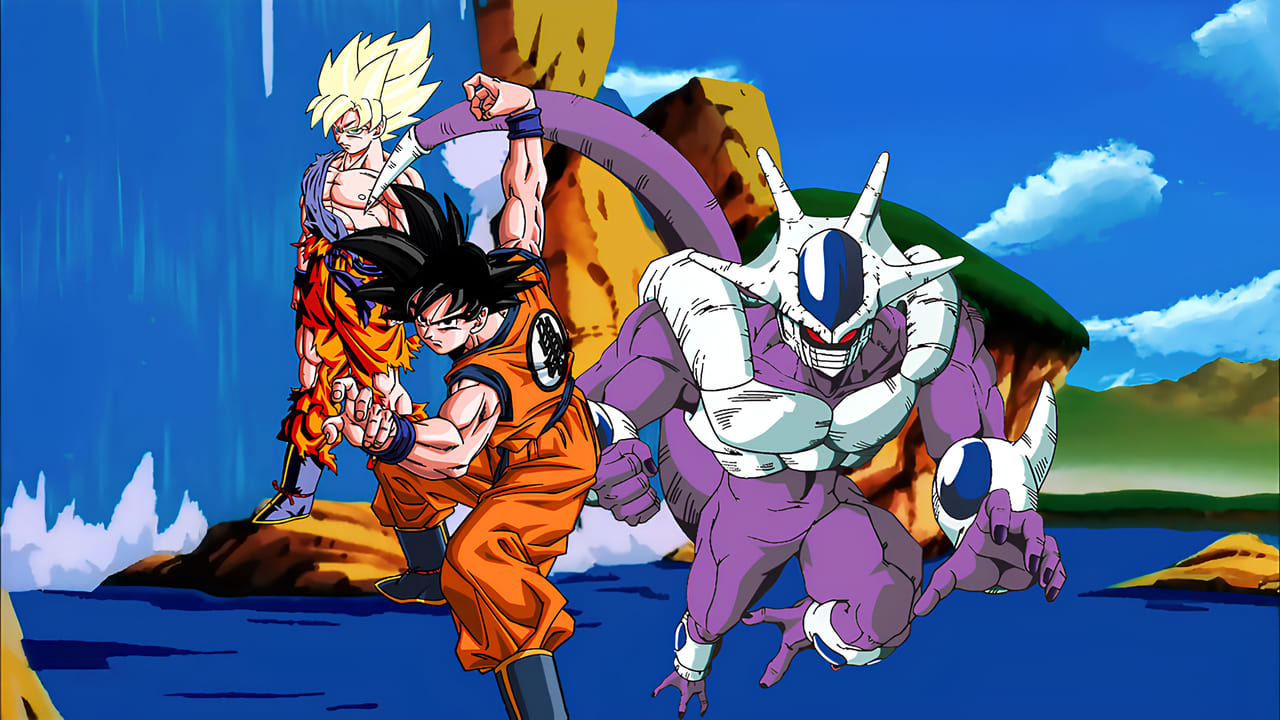
Alright, settle in, grab your Hi-C Ecto Cooler (if you can still find it!), and let’s rewind the tape. Remember that feeling? Scanning the shelves at Blockbuster or the local mom-and-pop video store, your eyes landing on that cover – Goku, golden-haired and furious, facing off against a menacing purple figure you knew spelled trouble. That's the energy surrounding Dragon Ball Z: Cooler's Revenge (originally Dragon Ball Z: The Incredible Strongest vs. Strongest in Japan, 1991), a movie that hit Western shores on VHS and felt like pure, concentrated DBZ adrenaline beamed directly into your VCR.
### Big Brother's Bad News
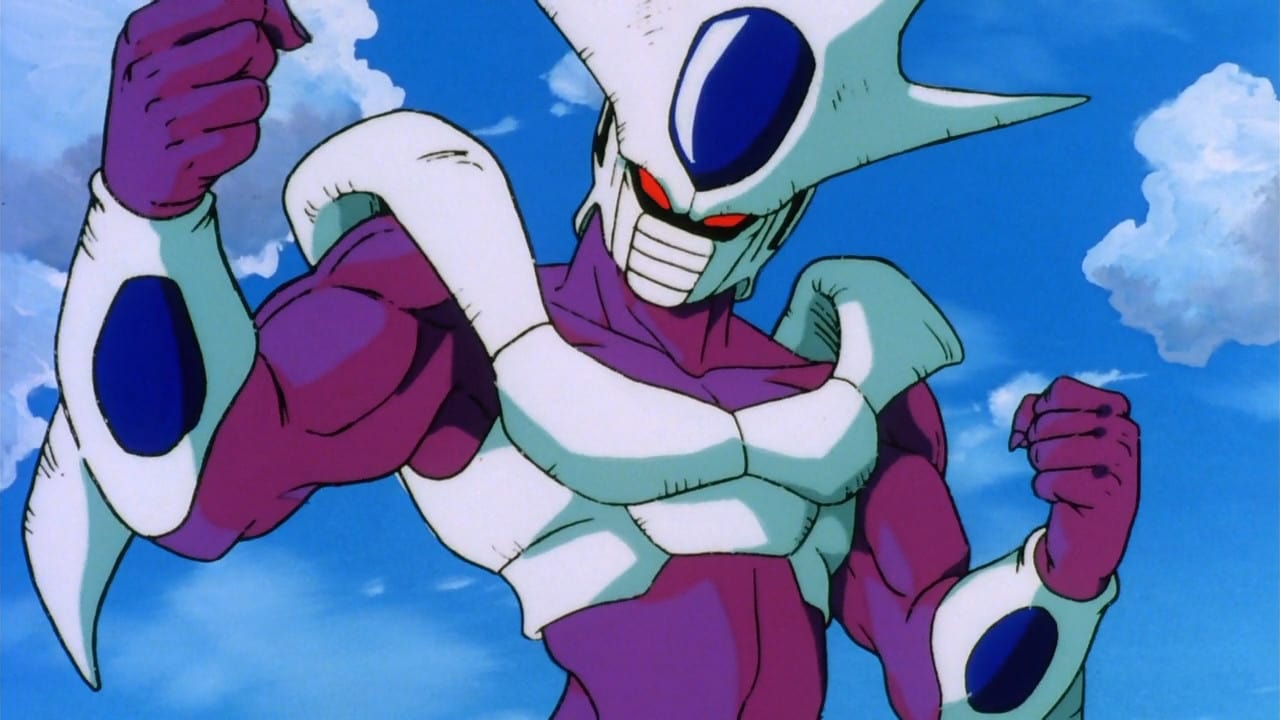
Forget long, winding plot setups. This movie, like many of the classic DBZ films helmed by veterans like director Mitsuo Hashimoto (who steered several DBZ ship sorties) and writer Takao Koyama (a name synonymous with countless DBZ scripts), gets right down to business. After a surprisingly peaceful opening with Goku, Gohan, Krillin, and Oolong on a camping trip (a classic calm-before-the-storm trope), the tranquility is shattered by the arrival of Cooler, Frieza's hitherto unknown older brother, and his Armored Squadron. His motivation? Simple, brutal, and perfectly DBZ: avenge the family name sullied by that upstart Saiyan. You gotta appreciate the efficiency!
Cooler himself was an instant hook. He looked like Frieza, sure, but meaner, somehow more regal and imposing in his base form. Akira Toriyama, the mastermind creator, wasn't directly involved in crafting these movie-exclusive villains, but his design DNA is unmistakable. Cooler felt like a legitimate threat, a dark reflection of the tyrant we already knew, and the reveal of his own transformation later? Chef's kiss. It tapped right into that "what if Frieza could transform again?" speculation we all had. His Armored Squadron – Salza, Neiz, and Dore – provided the perfect warm-up act, showcasing their own unique abilities and giving characters like Piccolo a chance to shine before the main event. Remember Piccolo stepping in to absolutely wreck Dore? Classic.
### Hand-Drawn Haymakers
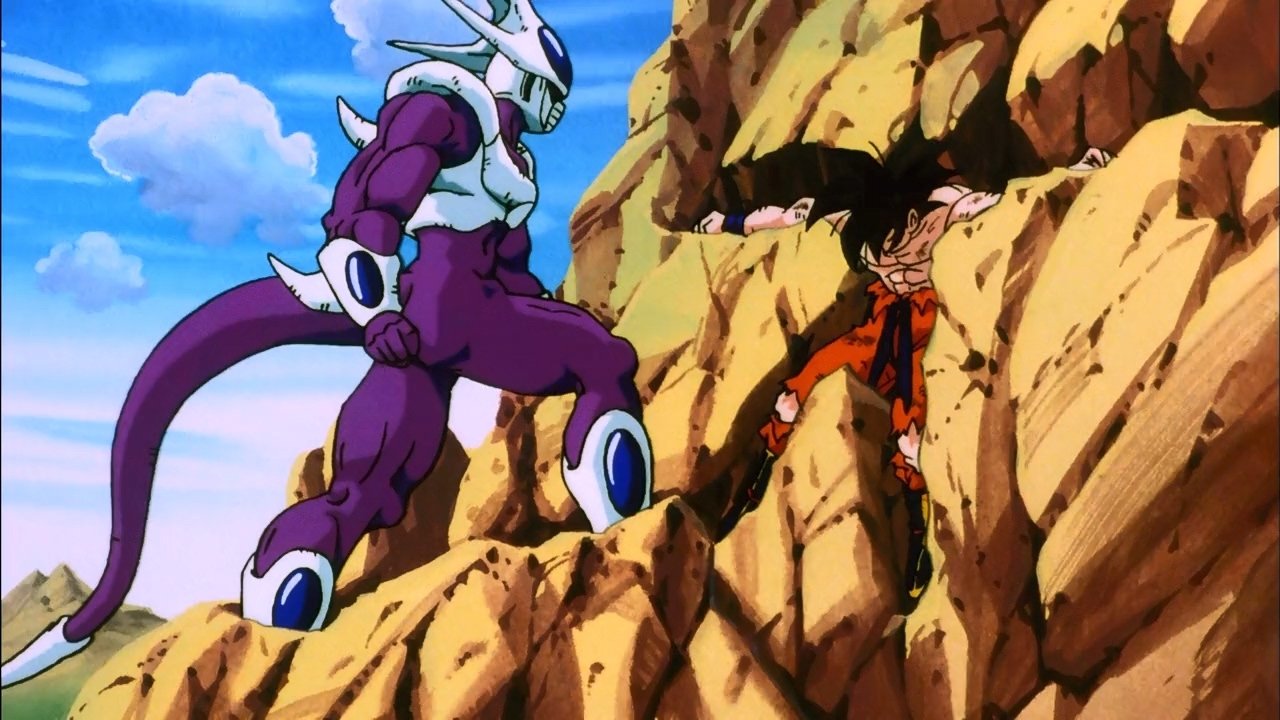
Let's talk action, because that's the pulsing heart of Cooler's Revenge. This isn't the ultra-smooth, digitally polished animation of today. This is raw, hand-drawn, cel-animated fury! Watching this on a CRT, maybe with the tracking slightly off, there was a kinetic energy that felt incredibly visceral. Every punch landed, every energy blast crackled with unstable power. Think about those speed lines, the impact frames where the screen practically explodes – that’s the animator's equivalent of a stuntman setting himself on fire. It felt dangerous because you could almost sense the sheer effort poured into every frame.
The choreography, while fitting the established DBZ style, felt particularly tight here. The initial skirmish, Goku taking a devastating hit protecting Gohan (a recurring theme, poor Gohan!), Piccolo’s dramatic intervention against Cooler's henchmen – it all builds beautifully. And then, the main course: Goku vs. Cooler. It’s a brutal slugfest showcasing Cooler’s power and ruthlessness. He doesn’t just want to beat Goku; he wants to destroy him. This film was actually part of the Toei Anime Fair in Japan, often shown as a double or triple feature with other anime films, hence its lean, mean runtime (under 50 minutes!). No filler, just pure combat bliss.
### Voices from the Past & Rocking Riffs
For many of us who caught this on VHS in the West, our introduction likely came via the Funimation English dub. While the original Japanese cast, featuring the legendary Masako Nozawa as Goku, Toshio Furukawa as Piccolo, and Mayumi Tanaka as Krillin, delivered the definitive performances, the Funimation dub brought its own specific energy. It often came packaged with a hard-rocking soundtrack that, love it or hate it, became inextricably linked to the visuals for a generation of fans. Hearing bands like Deftones or Disturbed kick in as Goku powers up? Pure, unadulterated 90s/early 00s edge, and undeniably part of the nostalgic package for many. Finding these movies, sometimes through bootleg fansub tapes before official releases, felt like uncovering hidden treasures, expanding the DBZ universe beyond the weekly TV grind.
### Why It Still Slams
Cooler's Revenge isn't high art, and it doesn't drastically rewrite the DBZ mythos. It follows the established movie formula: new powerful villain appears, Z-Fighters struggle, Goku eventually saves the day (often going Super Saiyan). But here, the formula works perfectly. Cooler is a compelling villain with a personal connection to the main saga. The animation is dynamic and impactful. The pacing is relentless. It delivers exactly what you want from a Dragon Ball Z movie: incredible fights, high stakes (even if contained to the film's runtime), and that signature blend of action and melodrama. It even gave us one of the most iconic Super Saiyan transformations, fueled by righteous fury after seeing a bird needlessly vaporized by Cooler. Only in DBZ, right?
Rating: 8.5/10
Justification: This score reflects the film's success as a concentrated blast of classic DBZ action. It delivers a memorable villain, top-tier (for the era) animation and fight choreography, and perfectly captures the spirit of the series. While somewhat formulaic, it executes that formula with exceptional energy and style, making it a standout among the DBZ films and a beloved piece of 90s anime nostalgia. The slight deduction acknowledges its relatively simple plot and adherence to established tropes.
Final Thought: Cooler's Revenge is like finding that perfectly worn-in VHS tape – maybe a little fuzzy, definitely loud, but packed with the kind of raw, hand-drawn energy that feels electrifying even today. It’s a potent shot of 90s anime action that reminds you why DBZ conquered the world, one energy blast at a time. Still absolutely worth watching? You bet your Dragon Balls it is.