Okay, fellow tapeheads, let's rewind to a specific flavour of early 90s comedy that might have caught your eye nestled between the action blockbusters and horror flicks down at the local video store. I'm talking about Ricky & Barabba (1992), a title that probably brings a flicker of recognition, especially if you had a soft spot for European comedies or just grabbed anything with a wacky cover. Finding this one felt like uncovering a slightly offbeat gem, the kind you’d pop in late on a Saturday night, maybe with the tracking slightly fuzzy, ready for some unapologetically broad laughs.
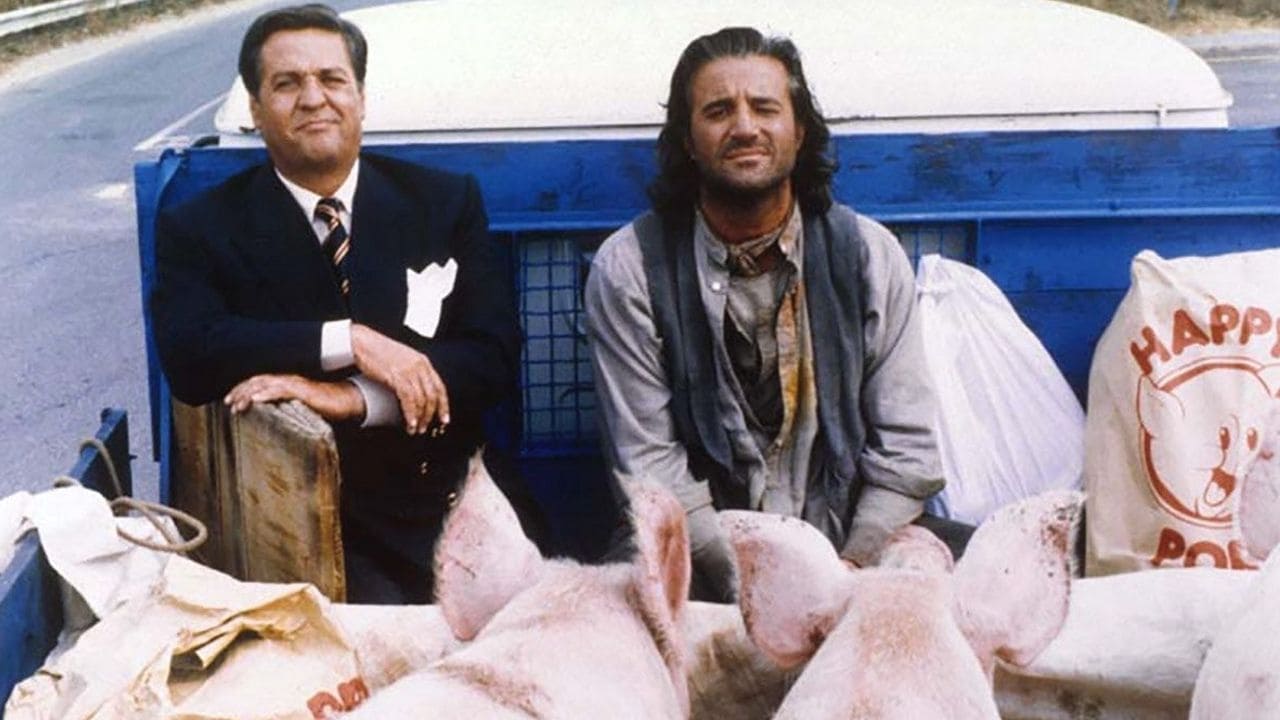
This wasn't your typical Hollywood high-concept fare, but it tapped into a familiar, beloved trope: the odd couple thrown together by circumstance. And what a couple! On one side, you have Christian De Sica – yes, son of the legendary Vittorio De Sica, but by the 90s a massive comedy star in Italy in his own right – playing Riccardo 'Ricky' Morandi. Ricky's a Milanese industrialist, impeccably dressed, living in absurd luxury, but secretly drowning in debt and contemplating a drastic exit. On the other side? The inimitable Renato Pozzetto as Barabba, a scruffy, street-smart homeless man whose accidental intervention saves Ricky's life, only to then cheerfully invade it.
An Italian Twist on a Classic Formula
The premise itself – down-and-out character revitalises the life of a depressed rich guy – certainly echoes Hollywood hits like Trading Places (1983) or Down and Out in Beverly Hills (1986). But Ricky & Barabba filters it through a distinctly Italian lens. De Sica, who not only stars but also directs and co-writes (alongside talents like Giovanni Veronesi, who later penned major Italian hits), leans into the broad, almost Vaudevillian energy that characterised much of Italian popular comedy of the era. It’s less about subtle satire and more about situational chaos and the clash of personalities.
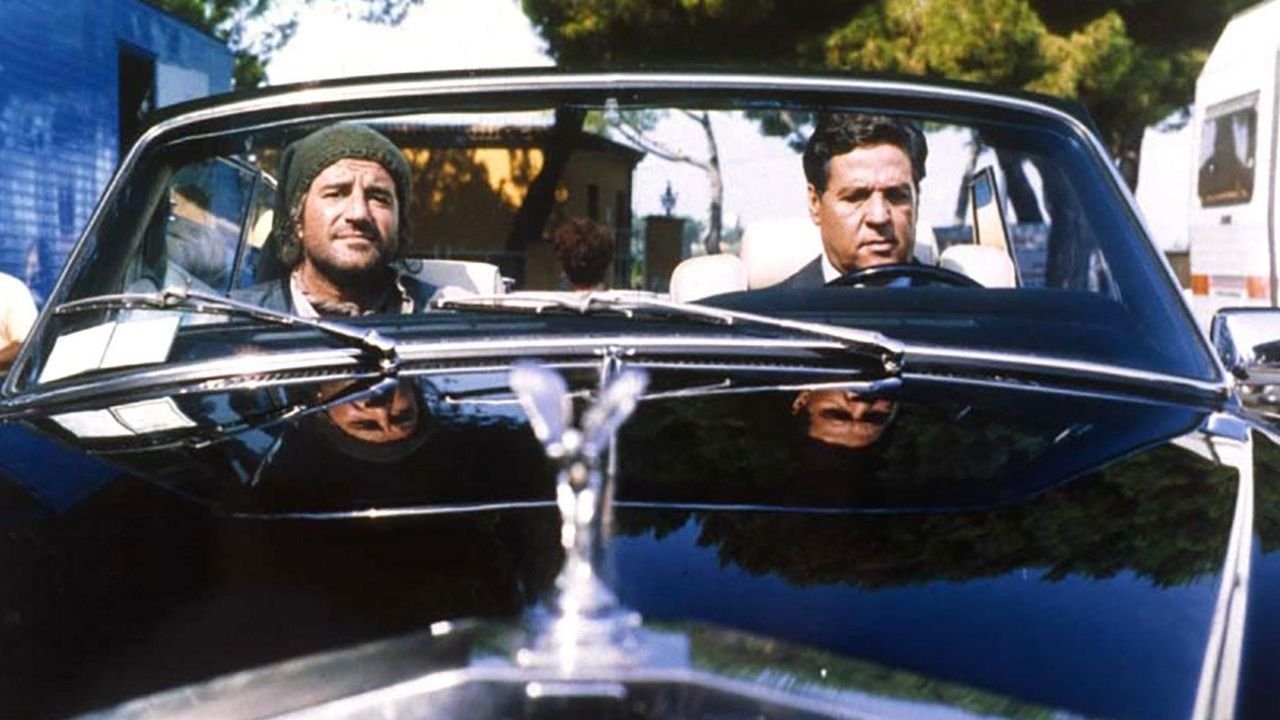
Seeing De Sica and Pozzetto together was a big part of the draw back then. They were titans of Italian comedy from slightly different schools. De Sica, often playing suave but flustered characters, frequently anchored the popular Vacanze di Natale (Christmas Vacation) film series, becoming synonymous with a certain kind of mainstream Italian humour. Pozzetto, meanwhile, was a master of surreal, deadpan delivery, a veteran whose unique style made films like Il ragazzo di campagna (1984) absolute cult classics in Italy. Their on-screen chemistry here is the film's engine: Pozzetto’s blissful ignorance clashing with De Sica’s mounting panic creates some genuinely funny moments, even if the jokes sometimes feel like they were written on the back of a napkin during lunch.
Milanese Mayhem and 90s Style
The film paints a picture of early 90s Milan – all sharp suits, lavish villas contrasted with the rougher edges of the city where Barabba makes his home under a bridge. There’s a certain visual flair to the depiction of Ricky's opulent world, soon to be turned upside down by Barabba’s complete lack of decorum. Supporting players like Francesca Reggiani as Ricky’s exasperated, possibly unfaithful wife add to the comedic friction. Filming took place across Milan and Rome, capturing that specific glossy-yet-grounded feel common in Italian productions of the time.
Watching it now is like opening a time capsule. The fashion, the bulky car phones, the whole vibe screams early 90s Italy. The humour is often physical, relying on Pozzetto’s uncanny ability to seem completely oblivious while causing maximum disruption, and De Sica’s talent for escalating frustration. A fun little tidbit: the film actually did quite well at the Italian box office, pulling in around 6 billion Lire (roughly €3 million back then, adjusted for inflation it's a decent chunk of change!), proving the enduring appeal of these two stars and the familiar odd-couple setup for local audiences. It wasn't aiming for international arthouse acclaim; it was aiming squarely at the funny bone of the Italian public, and largely succeeded.
Does the Humour Still Track?
Look, let's be honest. Some of the gags haven't aged like fine wine. The pacing can feel a bit leisurely compared to modern comedies, and certain jokes might land differently outside their original cultural context. It’s definitely a product of its time – think broad slapstick, misunderstandings piling up, and that particular brand of light social commentary (rich vs. poor, city vs. street) that was common in Italian comedies.
But there’s an undeniable charm to it, largely thanks to the leads. Pozzetto’s Barabba isn't just a caricature; there’s a strange sweetness to his chaos. And De Sica manages to make Ricky sympathetic even amidst his initial arrogance and despair. It’s comfort food cinema, predictable perhaps, but delivered with a certain gusto by performers who knew exactly what their audience wanted. Popping this tape into the VCR felt like settling in for something reliably silly and warm-hearted.
VHS Heaven Rating: 6/10
Justification: The film rides heavily on the charisma and established comedic personas of its two leads, Renato Pozzetto and Christian De Sica. While the plot borrows familiar beats and some humour feels dated, their chemistry delivers enough genuine laughs and charm to make it an enjoyable watch, especially for fans of Italian comedy from this era. It’s a solid example of the kind of accessible, star-driven European comedy that often found its way onto video store shelves. The production values are decent for its time and place, and the direction by De Sica keeps things moving, even if it rarely surprises. It’s not a lost masterpiece, but it’s a pleasant, nostalgic slice of early 90s Italian pop cinema.
Final Thought: Ricky & Barabba is pure 90s video store fodder in the best way – an uncomplicated, star-powered comedy that delivers exactly what it promises. It might not change your life, but like finding an old favourite mixtape, it’s guaranteed to bring a smile of recognition, especially if you remember the days when Italian comedy kings reigned supreme on the rental shelves.