It’s a curious thing, the way certain films dominate the cultural conversation while others, wildly successful in their homelands, barely make a ripple internationally. Sometimes, stumbling across one of these regional phenomena years later feels like uncovering a hidden frequency, a broadcast meant for other ears that somehow found its way to yours. Such is often the case with the unique cinematic world of Francesco Nuti, and his late-90s Italian box office smash, Mr. Fifteen Balls (original title: Il signor Quindicipalle) from 1998. This wasn't a tape likely gathering dust on every Blockbuster shelf stateside, making its discovery now a specific kind of retro pleasure – finding a forgotten channel on the dial.
The Man Behind the Cue
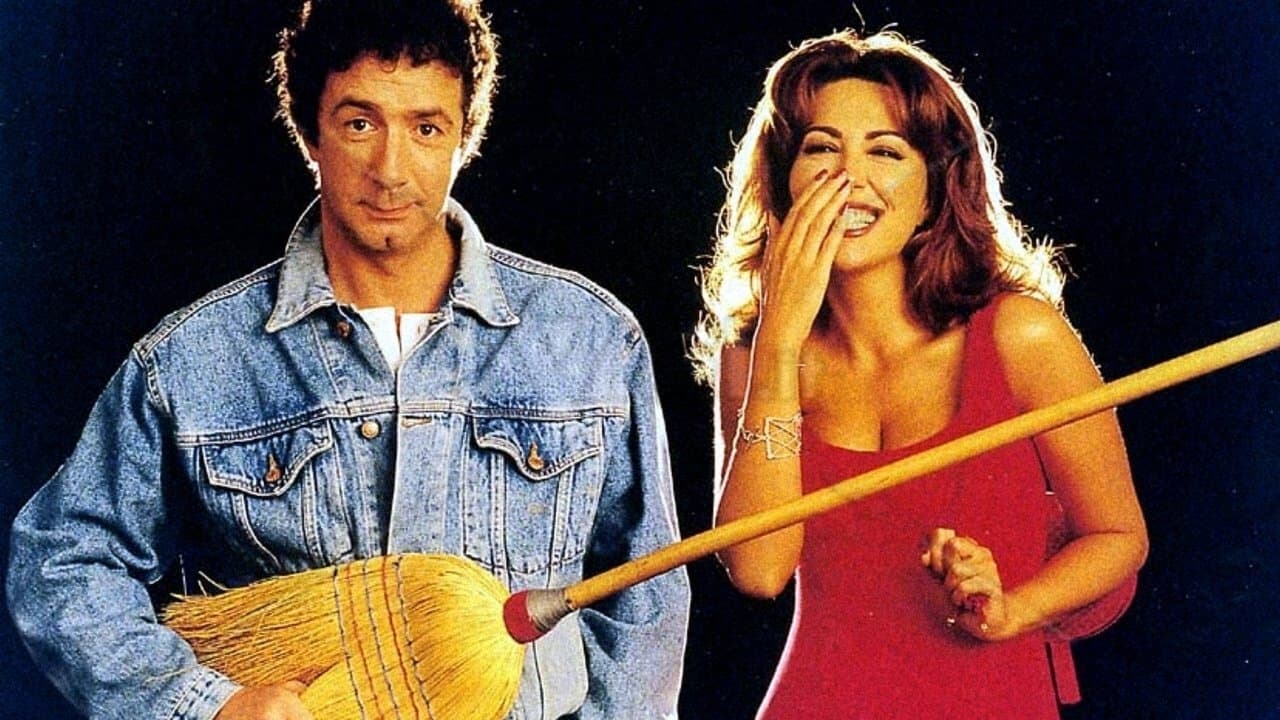
The premise itself is pure Nuti: Francesco, played by the director-writer-star himself, is a billiards virtuoso, a champion revered as "Mr. Fifteen Balls." He possesses an almost supernatural talent at the table, executing shots with balletic grace and impossible precision. Yet, away from the green felt, he’s crippled by an almost pathological shyness, particularly around women. His life is a carefully constructed world of routine, practice, and the comforting click of billiard balls, managed by his ever-present, slightly eccentric father figure (played by the wonderful Novello Novelli, a frequent Nuti collaborator). This fragile equilibrium is shattered by the arrival of Sissi (Sabrina Ferilli), a beautiful and enigmatic prostitute who enters Francesco's life and forces him to confront the very anxieties he’s spent years avoiding.
More Than Just Laughs
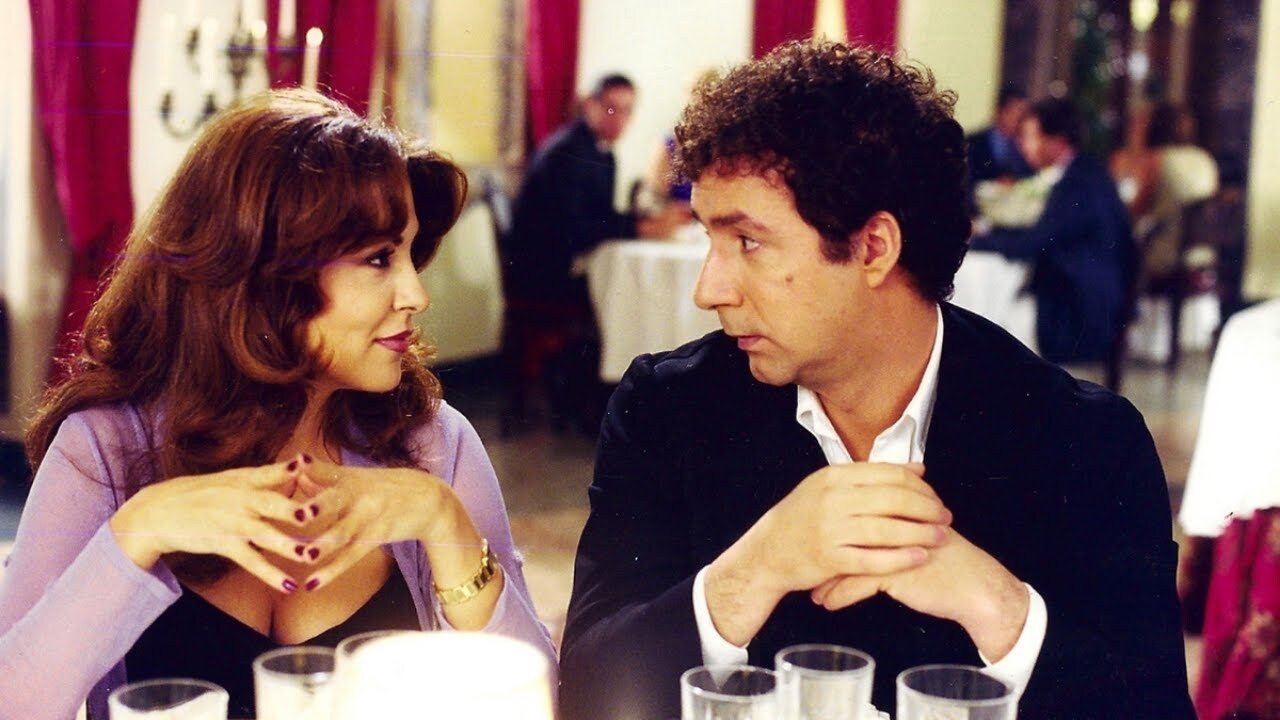
While billed as a comedy, and certainly containing moments of levity and Nuti’s trademark physical awkwardness, Mr. Fifteen Balls resonates more deeply through its pervasive melancholy. Nuti, throughout his career (think Casablanca, Casablanca (1985) or Tutta colpa del paradiso (1985)), perfected a specific screen persona: the gentle dreamer, the romantic naïf bruised by the world, masking insecurity with a veneer of quirky charm. Here, that persona feels particularly raw. Francesco isn't just shy; he's deeply wounded, his billiards mastery a shield against emotional vulnerability. The film explores themes of isolation, the pressures of talent, and the often-painful quest for genuine human connection. Can skill in one arena ever truly compensate for deficiency in another? It's a question that lingers long after the credits.
Sparks Fly, Angles Calculated
The dynamic between Nuti and Sabrina Ferilli forms the film's core. Ferilli, a major star in Italy, brings a warmth and earthy sensuality to Sissi that acts as both catalyst and counterpoint to Francesco's tightly wound anxieties. She’s not merely a plot device; she has her own complexities and vulnerabilities. Their interactions oscillate between tentative tenderness, comedic misunderstanding, and moments of genuine emotional friction. You see Francesco trying to calculate the angles of human interaction with the same precision he uses on the billiard table, only to find the geometry infinitely more complex. Ferilli’s performance grounds the film, preventing Francesco’s eccentricities from floating entirely into caricature.
Behind the Italian Phenomenon
For Francesco Nuti, Mr. Fifteen Balls was more than just another film; it represented a significant comeback. After facing personal hardships and a dip in his cinematic fortunes earlier in the decade, this project, which he co-wrote with Ugo Chiti and Giovanni Veronesi, proved a triumphant return. Reportedly made for around 7 billion lire (roughly €3.6 million or ~$4 million USD at the time), it became a domestic sensation, grossing over 20 billion lire (around €10 million / ~$11 million USD), making it one of Italy's biggest hits of the 1997-98 season. Nuti's real-life passion for billiards undoubtedly fueled the project, and the sequences showcasing the game are filmed with a loving eye, capturing the quiet intensity and geometric beauty of the sport. While not packed with intricate stunts, the focus is on the psychological game, mirroring Francesco’s internal struggles. Much of it carries the distinct flavour of Tuscany, a region often central to Nuti's cinematic identity, lending a specific sense of place.
A Bittersweet Charm
Watching Mr. Fifteen Balls today, it feels undeniably of its time – the late 90s Italian aesthetic, the particular blend of broad comedy and sudden emotional depth. Some of the humour might feel culturally specific, and the pacing occasionally meanders. Yet, there’s an undeniable sincerity to it, largely thanks to Nuti’s vulnerable central performance. He directs himself with an understanding of his own strengths and limitations, allowing the camera to linger on the unspoken anxieties flickering across Francesco’s face. It avoids easy answers, acknowledging the messiness and uncertainties of connection.
It might not have the universal recognition of other 90s comedies, but perhaps that's part of its appeal now. It’s a reminder of a different kind of mainstream filmmaking, one less polished, perhaps, but often more personal and idiosyncratic. Finding this film feels like finding a well-loved regional LP – maybe the production isn't slick, maybe some tracks are growers, but the artist's voice is clear, authentic, and speaks to something true.
Rating: 7/10
Justification: Mr. Fifteen Balls earns its score through Francesco Nuti's compelling and signature blend of comedic timing and deep melancholy, a central performance that anchors the film. The surprising box office success in Italy speaks to its resonance there, and the unique premise centered around billiards offers a fresh backdrop. Sabrina Ferilli provides a strong counterpoint, and the film explores its themes of shyness and connection with sincerity. It loses points for pacing that sometimes lags, humour that might not translate perfectly, and a certain narrative predictability common to the romantic comedy genre, even one tinged with sadness. Its relative obscurity outside Italy also makes it less of a shared nostalgic touchstone, but a worthy discovery nonetheless.
Final Thought: What lingers most is the film's bittersweet core – the image of a man who can command fifteen balls with perfect control, yet finds the complexities of a single human heart utterly baffling. Doesn't that say something profound about where true mastery lies?