It arrives with a title that immediately sparks curiosity, a name hinting at a cultural collision: Caruso Pascoski (di padre polacco). Released in 1988, this isn't your typical Hollywood fare, the kind that dominated the shelves of Blockbuster. Instead, it's a distinctly Italian creation, steeped in the specific sensibilities of its writer, director, and star, Francesco Nuti. Watching it now, decades later, feels like uncovering a slightly dusty, yet intriguing cassette tucked away in the 'Foreign Language' section of a long-gone video store – a poignant reminder of a time when cinema offered such diverse, geographically specific flavours.
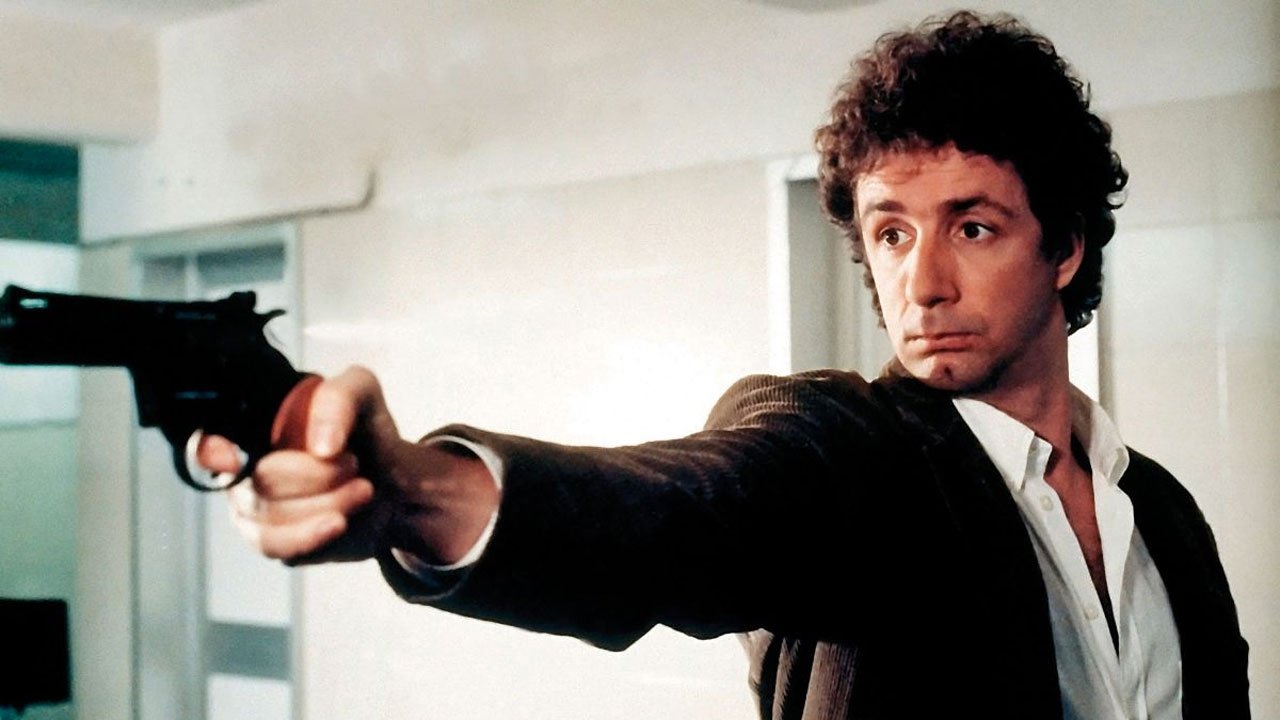
The Analyst on the Edge
At its heart, Caruso Pascoski is a character study, anchored entirely by Nuti's portrayal of the eponymous psychoanalyst. But this isn't a tale of a wise, detached observer guiding patients through their turmoil. No, Caruso Pascoski is a man deeply, almost cripplingly, entangled in his own neuroses. He's haunted by the suicide of his mother and fixated on the identity of his Polish father, a figure shrouded in mystery and absence. This internal chaos constantly threatens to overwhelm his professional life, leading to sessions where the line between therapist and patient blurs into a fascinating, often darkly comic, haze. Nuti, a huge star in Italy during the 80s known for films like Io, Chiara e lo Scuro (1983) and Casablanca, Casablanca (1985), embodies Caruso with a captivating blend of manic energy, profound vulnerability, and surprising moments of charm. It’s a performance that feels deeply personal, tapping into the melancholic clown archetype Nuti often explored.
Florence, Freud, and Finding Yourself
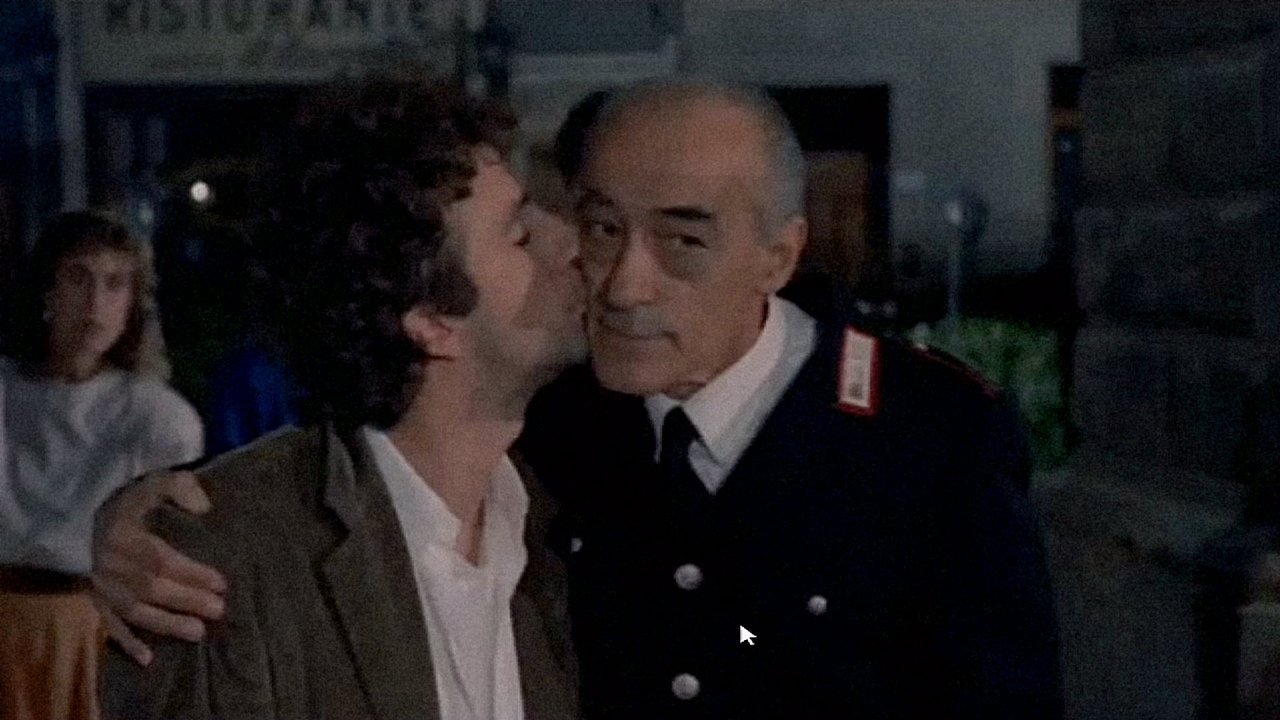
The narrative weaves between Caruso's increasingly bizarre therapy sessions, his complicated romantic entanglements – particularly with Giulia, played by American actress Clarissa Burt – and his obsessive quest to understand his past. The film uses Florence not merely as a picturesque backdrop, but as a space reflecting Caruso's inner state – beautiful, historic, yet somehow carrying a weight of unspoken history and melancholy. Co-written with frequent collaborator Giovanni Veronesi, the script finds humor in the absurdity of Caruso's situation, yet it rarely feels cheap. The laughs often emerge from the uncomfortable truth of human frailty and the often-ludicrous ways we try to cope with pain. Ricky Tognazzi, son of the legendary Ugo Tognazzi and a fine actor/director in his own right, appears as a friend, offering a more grounded counterpoint to Caruso's whirlwind existence.
Unearthing Retro Context
Understanding Caruso Pascoski requires appreciating Francesco Nuti's stature in 1980s Italy. He wasn't just an actor; he was a phenomenon, directing and starring in a string of hits that captured a specific Italian zeitgeist – films blending laughter with a certain existential ache. Caruso Pascoski came after several major successes, carrying considerable expectation. While perhaps less universally known today than some of his earlier works, it represents a key moment in his exploration of complex, flawed protagonists. The decision to cast Clarissa Burt, an American model and actress, adds an interesting layer, perhaps reflecting the international aspirations of Italian cinema at the time, or simply providing a contrasting presence against Nuti's very Italian energy. The film’s very title, specifying the Polish father, immediately signals its concern with identity, roots, and the feeling of being slightly adrift – themes that resonate beyond national borders. It’s worth noting that Nuti’s own father was Tuscan, making the specific Polish element a deliberate creative choice to emphasize this theme of otherness and fractured heritage.
Beneath the Quirks
While presented often through a comedic lens, the film touches on genuinely serious themes. The weight of parental actions, the search for identity detached from lineage, the difficulty of forging healthy relationships when burdened by trauma – these are the currents running beneath the surface. Does Caruso truly help his patients, or does he merely see reflections of his own unresolved issues? The film doesn't offer easy answers, preferring to explore the messy reality of psychological struggle. It's this willingness to sit with discomfort, to blend the funny and the deeply sad, that elevates Caruso Pascoski beyond simple farce. It asks us, perhaps, how much of our parents' stories inevitably become our own, and whether true self-understanding is ever fully possible.
The Nuti Enigma
Ultimately, the film lives and breathes through Francesco Nuti. His performance is the engine, driving the narrative through its tonal shifts. He makes Caruso's self-absorption strangely compelling, his vulnerability palpable even amidst the character's sometimes frustrating behaviour. You feel the desperation simmering beneath the quick remarks and the frantic energy. It's a performance that feels lived-in, authentic in its portrayal of a man perpetually on the verge of coming undone. While some elements, particularly the pacing, might feel characteristic of its era, Nuti's central turn remains magnetic.
VHS Heaven Rating: 7/10
Caruso Pascoski (di padre polacco) is a rewarding find for anyone interested in exploring the landscape of 80s European cinema beyond the usual suspects. Its strength lies in Francesco Nuti's compelling central performance and its nuanced blend of comedy and melancholy. While perhaps not as universally accessible as some comedies, its exploration of identity, trauma, and the absurdity of the human condition feels surprisingly resonant. It might require a bit more patience than a standard Hollywood flick, but it offers a unique flavour and a poignant central character study that justifies the rating. It’s a film that reminds us of the rich, specific voices that thrived in national cinemas during the VHS era.
It leaves you contemplating the intricate, often contradictory nature of the self, and the long shadows cast by the figures who shape our earliest years.