Alright, fellow tapeheads, let’s rewind to a time when Hong Kong cinema wasn’t just about heroic bloodshed and intricate kung fu, but also about a unique brand of comedic insanity that often left Western audiences bewildered, delighted, or both. Picture this: it’s late, the tracking on the VCR is slightly fuzzy, and you’ve popped in a tape procured from that one specific aisle in the rental store, or maybe even a treasured copy from a Chinatown expedition. The film? 1993’s Flirting Scholar (Tang Bohu Dian Qiu Xiang / 唐伯虎點秋香), and buckle up, because normal just left the building.
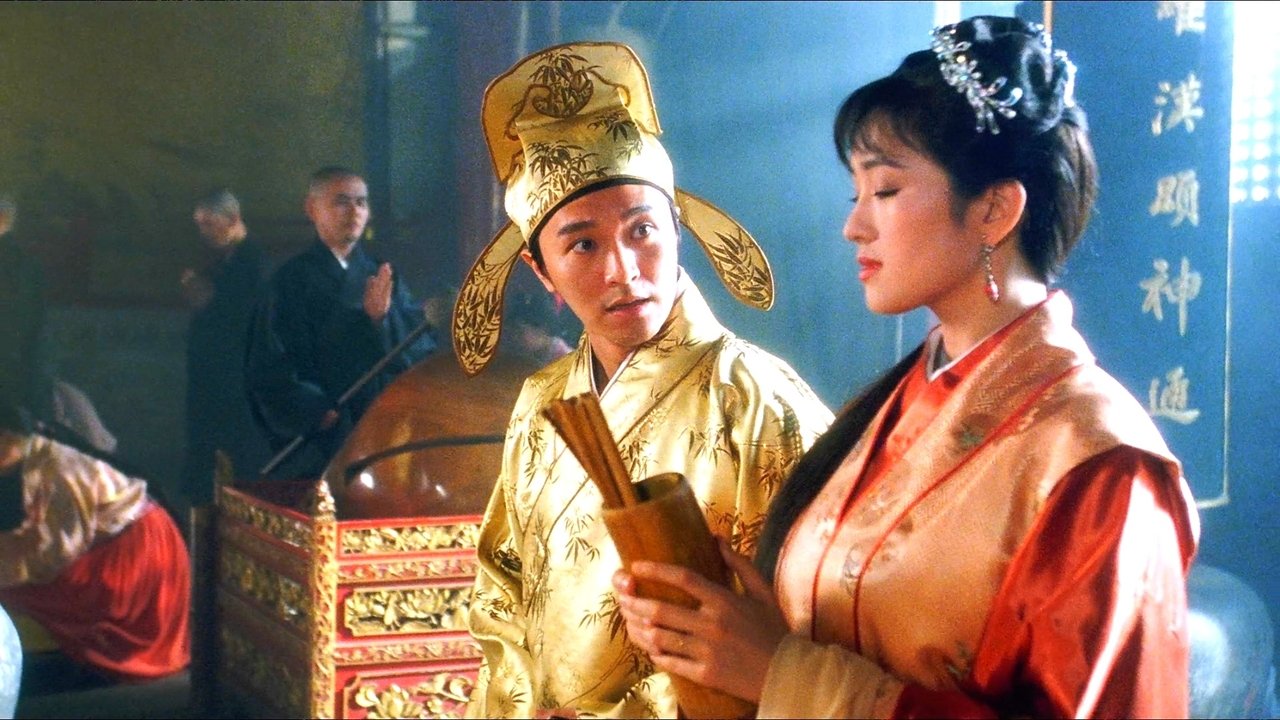
This isn't just any comedy; it's prime Stephen Chow, the undisputed king of mo lei tau (無厘頭) – that glorious "makes no sense" comedic style that throws logic out the window in favour of rapid-fire puns, anachronistic gags, fourth-wall breaks, and sheer, unadulterated silliness. And Flirting Scholar is arguably one of the purest, most concentrated doses of his genius from that golden era.
### When Genius Plays the Fool
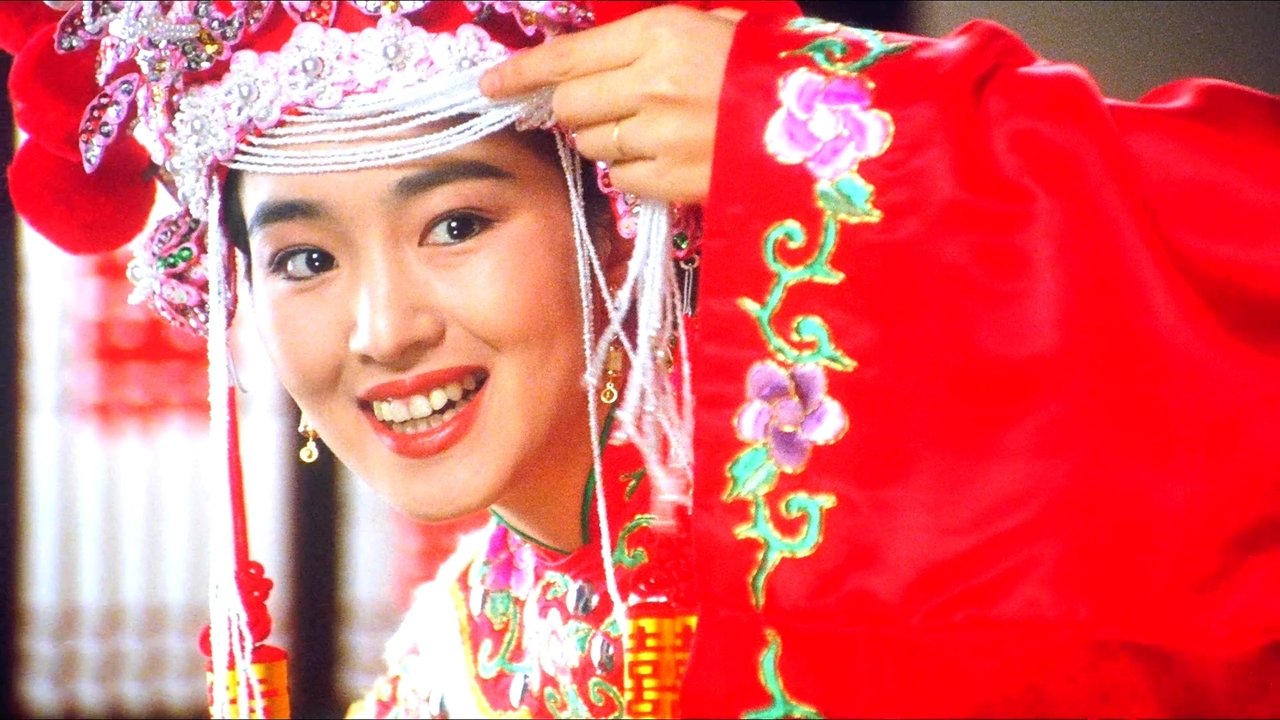
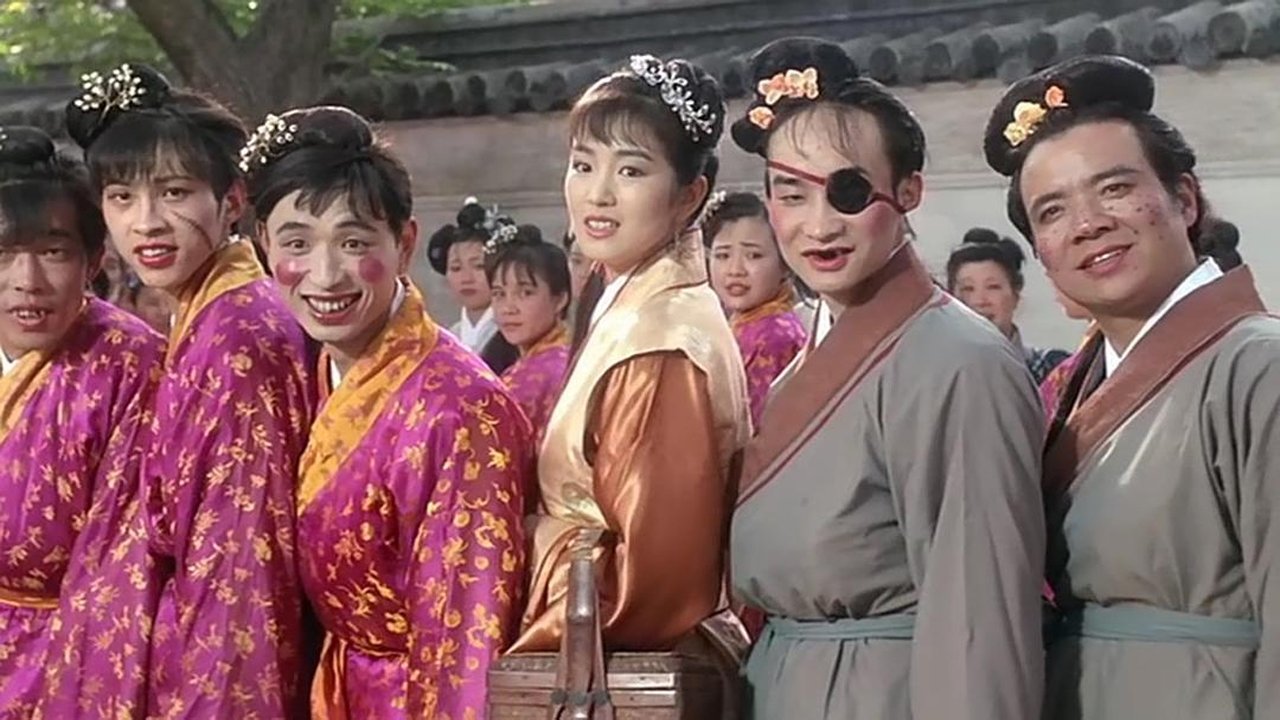
Stephen Chow plays Tong Pak Fu (based loosely on the real Ming Dynasty scholar Tang Yin, also known as Tang Bohu), a celebrated poet, painter, and scholar who seemingly has it all – wealth, fame, eight wives who are more interested in mahjong than him. But he yearns for true love. He finds it in Chow Heung (Gong Li), a beautiful and virtuous maidservant in the formidable household of Madam Wah. The catch? To get close to her, Tong Pak Fu must infiltrate the household disguised as a lowly servant, hiding his immense talents while navigating a minefield of bizarre characters and escalating absurdity.
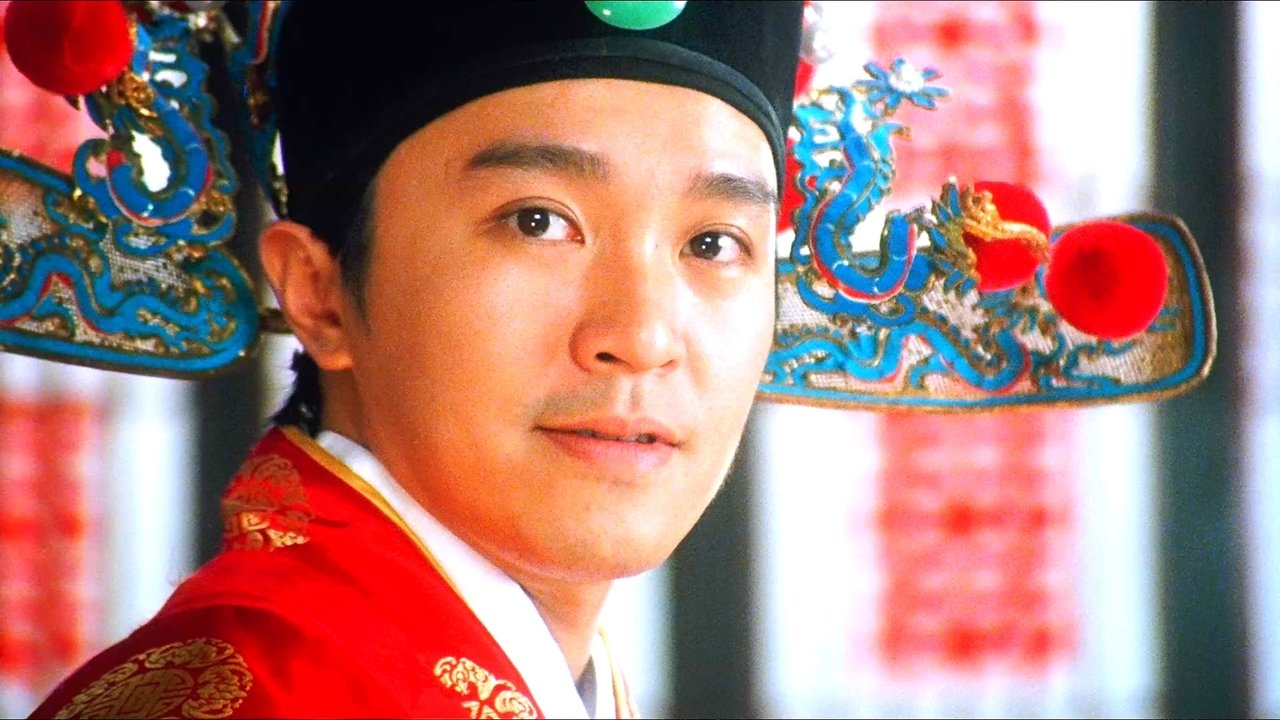
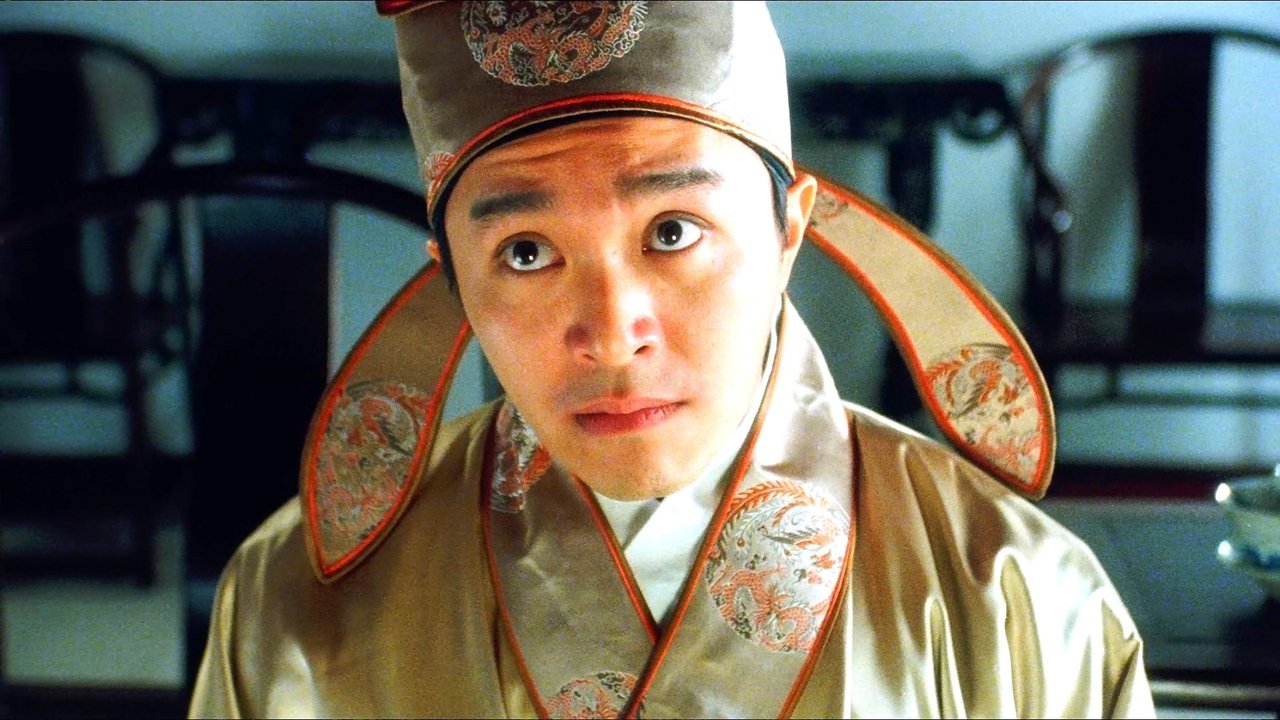
Chow is simply magnetic. His rubber-faced expressions, lightning-fast verbal delivery (even through subtitles, you feel the rhythm), and commitment to the most ridiculous physical comedy are unparalleled. He can switch from sophisticated wordplay to infantile slapstick in a nanosecond, and it all feels perfectly natural within the film's hyper-stylized world. This wasn't just acting; it was comedic performance art, cranked up to eleven. It's a testament to his star power that the film became one of Hong Kong's highest-grossing movies in 1993, cementing his reign.
### East Meets West (Sort Of) in the Wah Household
The casting of Gong Li, fresh off acclaimed mainland dramas with Zhang Yimou like Raise the Red Lantern (1991), was fascinating. Her graceful, more classically trained presence provides a stark contrast to the manic energy surrounding her. There’s a delightful friction there. Retro Fun Fact: Rumour has it that Gong Li, unfamiliar and perhaps slightly taken aback by the extreme mo lei tau style, was hesitant to participate in some of the more outrageous gags. For instance, the scene where Chow Heung is supposed to be made up to look hideous reportedly used a body double because Gong Li wasn't comfortable with it. Whether true or not, her slightly more grounded performance acts as an anchor (or maybe the straight man?) amidst the chaos, making the surrounding absurdity even funnier.
And what chaos it is! The supporting cast is a gallery of Hong Kong comedy veterans firing on all cylinders. Natalis Chan as fellow scholar Zhu Zhishan, whose artistic "flair" involves unconventional methods, is hilariously inept. But the scene-stealer is arguably the legendary martial arts actress Cheng Pei-pei (iconic from King Hu's Come Drink With Me (1966)) as the formidable, kung-fu wielding Madam Wah. Seeing her apply her martial arts prowess to comedic situations, including a truly unforgettable confrontation involving poison, was a genius move and a delightful surprise for fans who knew her from her serious wuxia roles.
### The Practical Magic of Nonsense
Directed by Lee Lik-Chi, a frequent collaborator with Chow who also helmed classics like God of Cookery (1996), the film moves at a breakneck pace. Forget subtle humour; this is a sensory assault of gags. The "action" here isn't gritty realism, but wildly inventive comedic set pieces. Remember those poetry battles that escalate into visual absurdity? Or the invention of ridiculously overpowered weapons like the "Without Equal" poison?
This was the era before CGI smoothed everything out. The comedy relied on clever editing, impeccable timing, physical performance, and practical ingenuity. Think wirework used not just for flying kicks but for impossible comedic leaps and falls. Think visual puns constructed through props and performance – like the scene involving competing forms of self-promotion that spirals into utter madness. It felt handmade, tangible, even in its most fantastical moments. The sheer density of jokes – verbal, visual, cultural (many riffing on Chinese history and literature in ways that might fly over some heads but add layers for those in the know) – is staggering. Watching it on VHS, maybe with those charmingly iffy subtitles, felt like deciphering a wonderful, energetic code.
### More Than Just Jokes?
Beneath the relentless gags, Flirting Scholar has a playful charm. It’s a parody of historical periods, romantic tropes, and even martial arts film conventions. Its energy is infectious. While some of the humour is deeply rooted in Cantonese wordplay and specific cultural references, Chow's universal talent for physical comedy and the sheer visual inventiveness shine through, making it accessible even if you don't catch every nuance. It’s a film that wears its silliness as a badge of honour.
Finding gems like Flirting Scholar on tape felt like uncovering a secret frequency of pure fun, completely different from the Hollywood comedies of the day. It was louder, faster, stranger, and often, much funnier in its own unique way. I distinctly remember the bewildered joy of watching Chow unleash his comedic arsenal for the first time – it was unlike anything else.
VHS Heaven Rating: 9/10
Justification: For fans of Stephen Chow and Hong Kong's unique mo lei tau comedy, Flirting Scholar is an absolute peak. It's relentlessly inventive, hilariously performed by a stellar cast (especially Chow and Cheng Pei-pei), and packed with unforgettable gags. While Gong Li feels slightly adrift at times (which itself becomes part of the humour), and some cultural jokes might require context, the sheer comedic force is undeniable. It loses a point only because its specific brand of humour, while brilliant, is undeniably an acquired taste for some.
Final Take: Flirting Scholar is a glorious time capsule of comedic anarchy, a whirlwind of wit and slapstick delivered with the kind of practical, high-energy mania that feels like pure lightning captured on magnetic tape. Still hilariously potent today.