There's Good Weather in Deribasovskaya, Or It's Raining Again in Brighton Beach
Alright, fellow tapeheads, dim the lights, maybe adjust the tracking just so on that mental VCR of yours. Tonight, we're digging into a truly unique artifact from the twilight of the Soviet Union and the dawn of the new Russia, a film that landed on shelves just as the world was frantically rewriting its maps: Leonid Gaidai's final cinematic caper, There's Good Weather in Deribasovskaya, Or It's Raining Again in Brighton Beach (1993). Now, this isn't your typical Stallone slugfest or Schwarzenegger explosion-rama, but strap in, because it’s a fascinating ride nonetheless – a spy comedy filtered through a distinctly Russian lens, trying on some American action tropes for size.
Finding this tape back in the day felt like uncovering a weird transmission from another dimension. Here was a film directed by Leonid Gaidai, the absolute king of Soviet comedy – the guy who gave us timeless laugh riots like The Diamond Arm (1969) and Operation Y and Shurik's Other Adventures (1965). Seeing his name attached to a Russian-American co-production set largely in the USA, featuring KGB agents and CIA operatives teaming up against the Russian mob... well, it was certainly different.
From Moscow with Laughs
The premise is pure Cold War thaw zaniness: top KGB agent Fedor Sokolov (Dmitry Kharatyan, a massive heartthrob in Russia back then) is dispatched to New York. His mission? To liaise with CIA agent Mary Star (Kelly McGrill) and take down a slippery Russian mafia boss known only as "Artist" (Andrey Myagkov), who’s threatening a crucial summit between the US and Russian presidents. Artist is a master of disguise, leading to a classic comedy-of-errors setup that Gaidai excelled at.
Kharatyan, looking impossibly young and channeling a sort of earnest, Soviet James Bond vibe, plays Sokolov with charm. Kelly McGrill, an American actress stepping into this unusual cultural mix, holds her own as the capable, slightly bewildered CIA partner. But the real scene-stealer is Andrey Myagkov. Known primarily for iconic, often melancholic roles in Soviet classics like The Irony of Fate (1976), Myagkov clearly relishes playing the slippery, theatrical villain. His transformations are genuinely funny, embodying the film's playful spirit.
Gaidai Goes Stateside (Sort Of)
Now, let's talk "action." Don't expect Lethal Weapon levels of mayhem. This is Gaidai action – think elaborate slapstick, cleverly timed gags, and chases that are more about comedic absurdity than white-knuckle tension. There’s a certain charm to its practical approach, though. You won't find slick CGI here; when someone gets comically bonked on the head or takes a tumble, it feels grounded in that slightly cartoonish reality Gaidai perfected. Remember how physical comedy felt more… well, physical back then? That's the vibe.
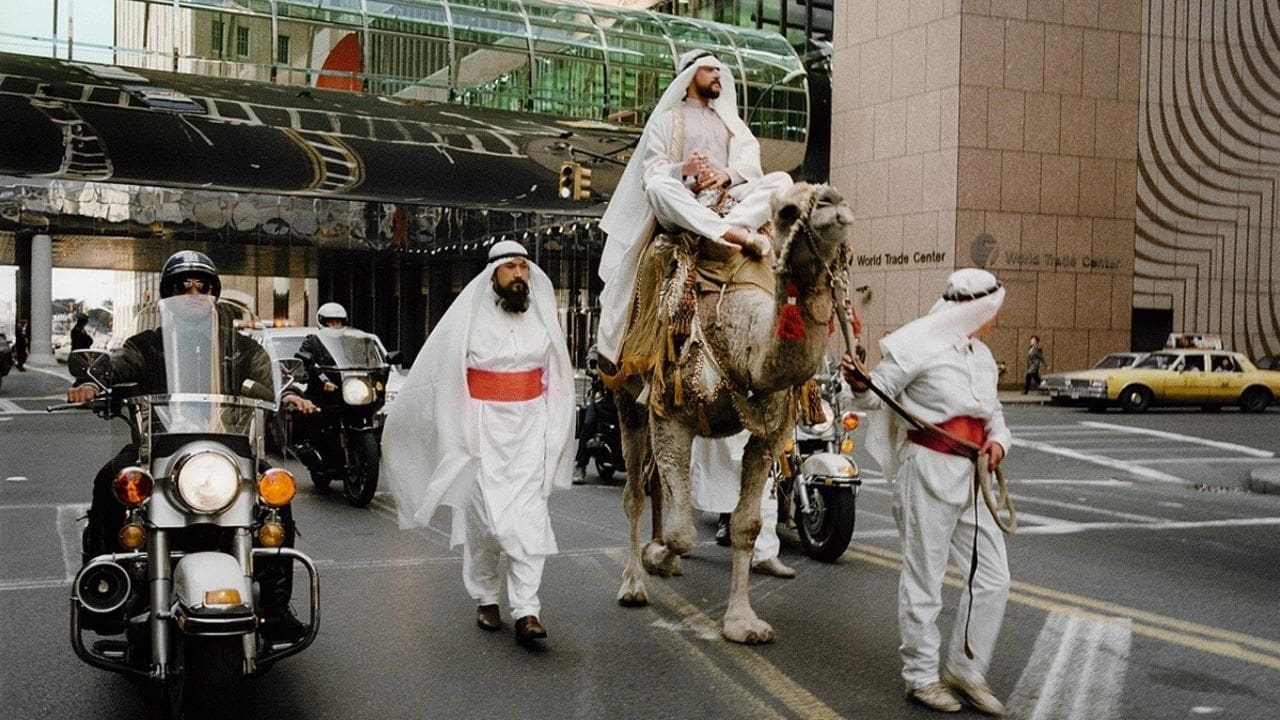
One of the film's biggest draws, especially for Russian audiences at the time, was seeing America through Gaidai's eyes. A significant portion was actually filmed on location – a logistical feat in the early 90s! There are scenes shot in New York City, offering glimpses of Times Square and, of course, the titular Brighton Beach, the heart of the Russian-speaking community. Perhaps the most gloriously dated and fascinating location is the Trump Taj Mahal casino in Atlantic City, captured in all its gaudy, pre-bankruptcy splendor. It serves as the backdrop for a key sequence involving Sokolov trying to gamble (badly) and encountering the mafiosi. Seeing that specific slice of Americana preserved on film is a retro fun fact in itself.
A Swan Song in a Strange New World
This film occupies a strange place. It’s unmistakably a Gaidai comedy, filled with his trademark wordplay (some lost in translation, admittedly), visual gags, and eccentric supporting characters. Yet, it’s also grappling with a new reality. The Cold War is over, but stereotypes linger playfully on both sides. The Russian mafia is presented as a cartoonish, almost operatic threat. There’s an almost naive optimism about Russian-American cooperation, mixed with a bewildered look at Western excess. It feels like Gaidai, nearing the end of his incredible career (he sadly passed away shortly after the film's release), was trying to make sense of this rapidly changing world using the comedic tools he knew best.
Did it land perfectly? Maybe not entirely. The pacing can feel a bit uneven, and the blend of Russian comedic sensibilities with attempts at American-style pacing doesn't always gel seamlessly. Some jokes probably hit harder if you grew up with Gaidai's earlier work. For Western audiences stumbling upon it, it might have felt downright bizarre. But its heart is in the right place, and its unique historical context makes it a compelling watch. It wasn't a massive international hit, remaining more of a curiosity outside of Russia, where it was met with affection, albeit perhaps tinged with the sense that it wasn't quite the classic Gaidai of old.
VHS Heaven Rating: 6/10
Why the score? This isn't a hidden action masterpiece, nor is it peak Gaidai comedy. However, it earns points for its sheer uniqueness, its historical snapshot quality, Andrey Myagkov's delightful performance, and the undeniable charm of seeing a Soviet comedy legend take his final bow with a quirky foray into American settings. It’s a genuinely fascinating artifact of its specific moment in time. The humor is hit-or-miss, and the "action" is more amusing than thrilling, but the curiosity factor is high.
Final Take: Deribasovskaya is like finding a dusty postcard from 1993, depicting a world figuring itself out. It’s clumsy in places, undeniably dated, but radiates a peculiar warmth and historical fascination. Definitely worth seeking out if you enjoy cinematic oddities and want to see the final flicker from one of Russia's comedy giants navigating the weird, hopeful, slightly confusing landscape of the early post-Soviet era. It’s a quirky slice of Russian-American cinematic history, best enjoyed with a sense of humor and an appreciation for the era's charming awkwardness.