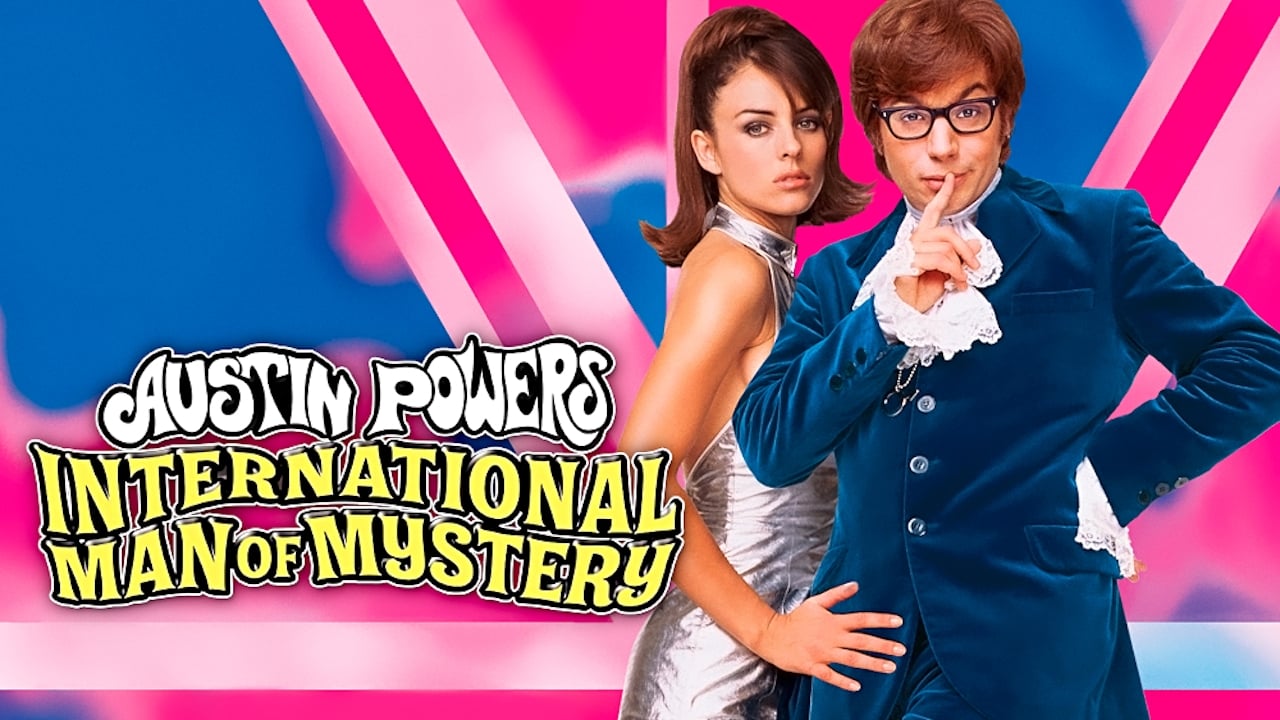
Austin Powers: International Man of Mystery
Okay, cats and kittens, let’s rewind the tape. Slide that slightly worn Austin Powers: International Man of Mystery cassette into the VCR, ignore the slightly fuzzy tracking lines for a second, and get ready. Because back in 1997, who knew that this technicolor blast of goofy spy parody, steeped in cheeky 60s nostalgia but filtered through a distinctly 90s lens, would become such a shagadelic phenomenon? It felt like it came out of nowhere, a vibrant splash of absurdity in a decade sometimes leaning into grunge cynicism.
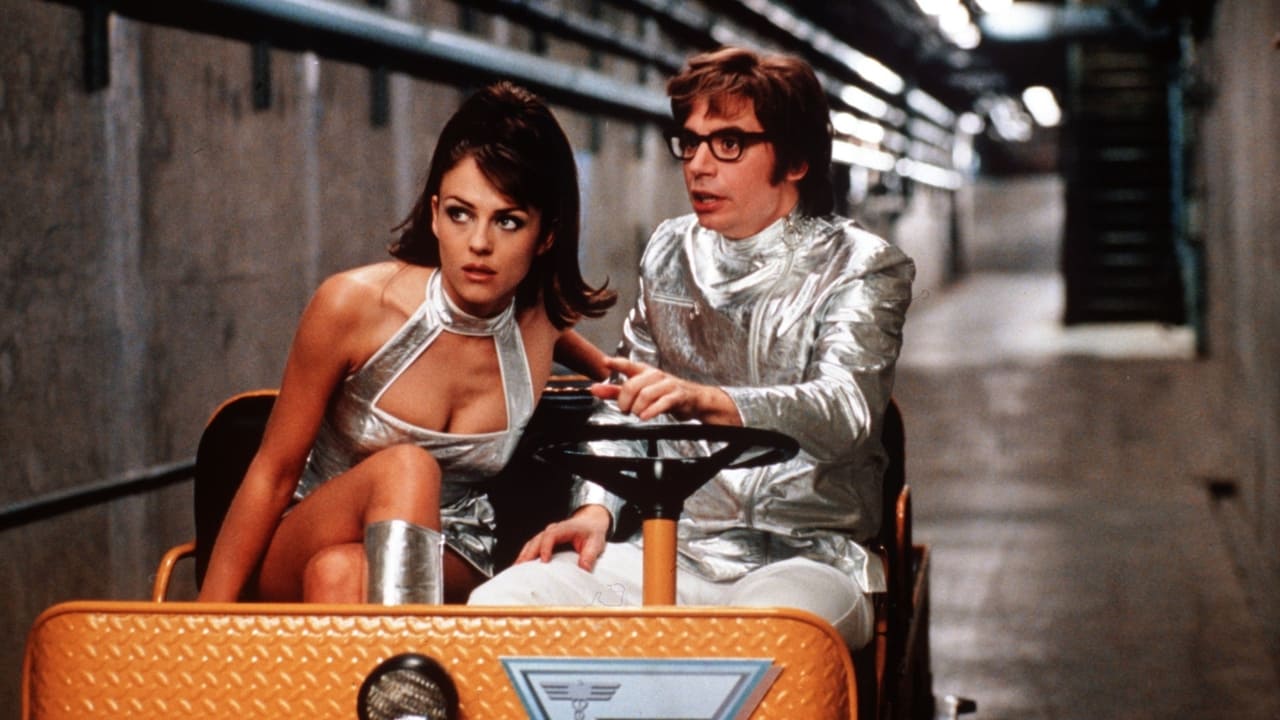
Yeah, Baby, Yeah! A Spy Thawed Out
The premise is pure gold: Austin Powers (Mike Myers), Britain's most groovy (and dentally challenged) secret agent from 1967, is cryogenically frozen to pursue his arch-nemesis, Dr. Evil (also Mike Myers, pulling brilliant double duty). When Dr. Evil returns in 1997, Austin is thawed out, a walking, talking, ruffleshirted anachronism unleashed upon the comparatively drab landscape of the late 20th century. Partnered with the capable, modern Vanessa Kensington (Elizabeth Hurley, effortlessly cool and often the perfect straight woman), Austin must adapt to this baffling new world while stopping Dr. Evil's ridiculously convoluted world domination plots.
It's a classic fish-out-of-water setup, but Myers, who also penned the script, elevates it beyond simple gags about confusing CDs for coasters. The comedy isn't just about Austin's dated slang and free-love ethos clashing with 90s sensibilities; it's a loving, laser-focused parody of the entire swinging 60s spy genre, particularly the James Bond films, Our Man Flint, and shows like The Avengers. Remember how over-the-top those old spy capers could be? Myers remembers, and he turns the dial up to eleven, maybe twelve.
Myers Makes Magic (Twice)
Let's be honest, this film is Mike Myers. His portrayal of Austin, bursting with catchphrases and an infectious, slightly clueless libido, is iconic. But it's his Dr. Evil that arguably steals the show. The clipped voice, the pinky gesture, the sheer pettiness of his evil schemes ("sharks with frickin' laser beams attached to their heads!") became instantly legendary. Myers drew heavily on his Saturday Night Live experience, particularly the Lorne Michaels-inspired mannerisms for Dr. Evil, but also poured personal affection into it – Austin was reportedly inspired by his own British-born father's love for the very spy films being spoofed.
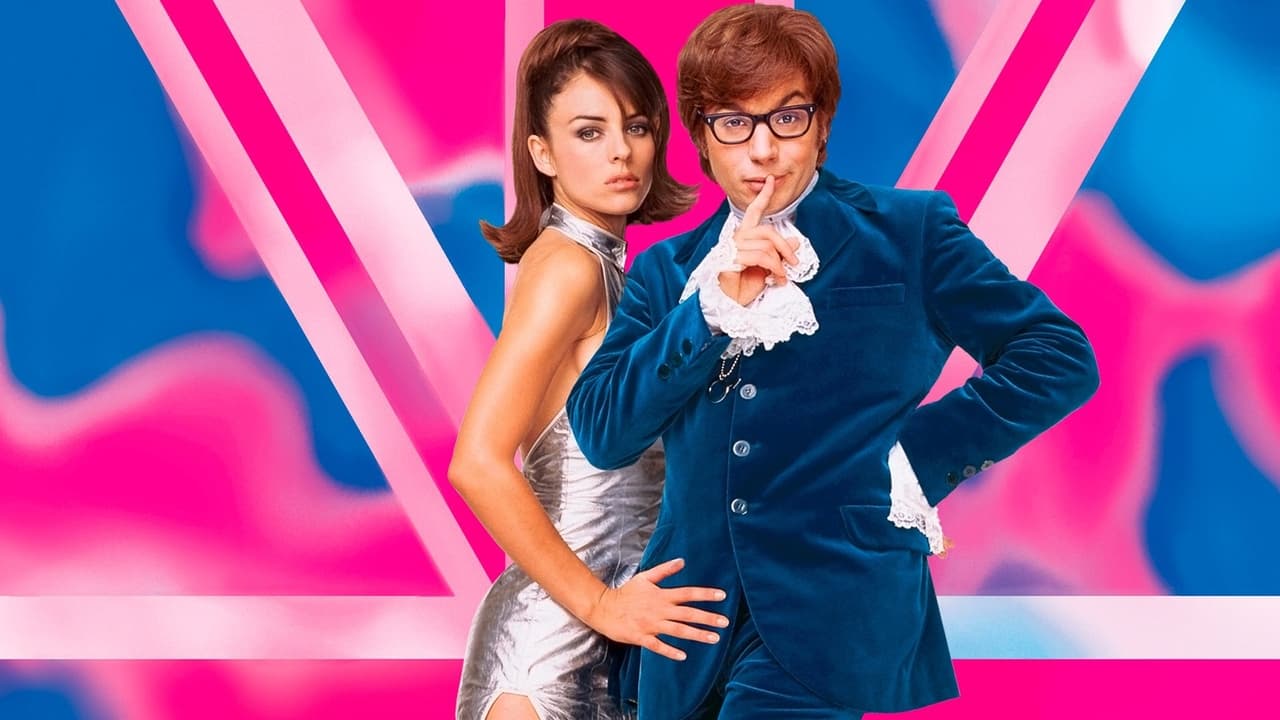
The supporting cast clicks perfectly. Elizabeth Hurley is more than just eye candy; Vanessa grounds the film, her exasperation and eventual affection for Austin providing a relatable anchor. Michael York as Basil Exposition delivers exposition... hilariously. And who could forget Robert Wagner as the stoic Number Two, or a young Seth Green as the alienated, grunge-era son Scott Evil, constantly rolling his eyes at his father's theatrical villainy? It's a tight comedic ensemble. A fun bit of trivia: the legendary Carrie Fisher pops up in an uncredited cameo as the group therapist trying to mediate between Dr. Evil and Scott – a scene added relatively late in production that became a fan favorite.
Groovy Style, 90s Budget
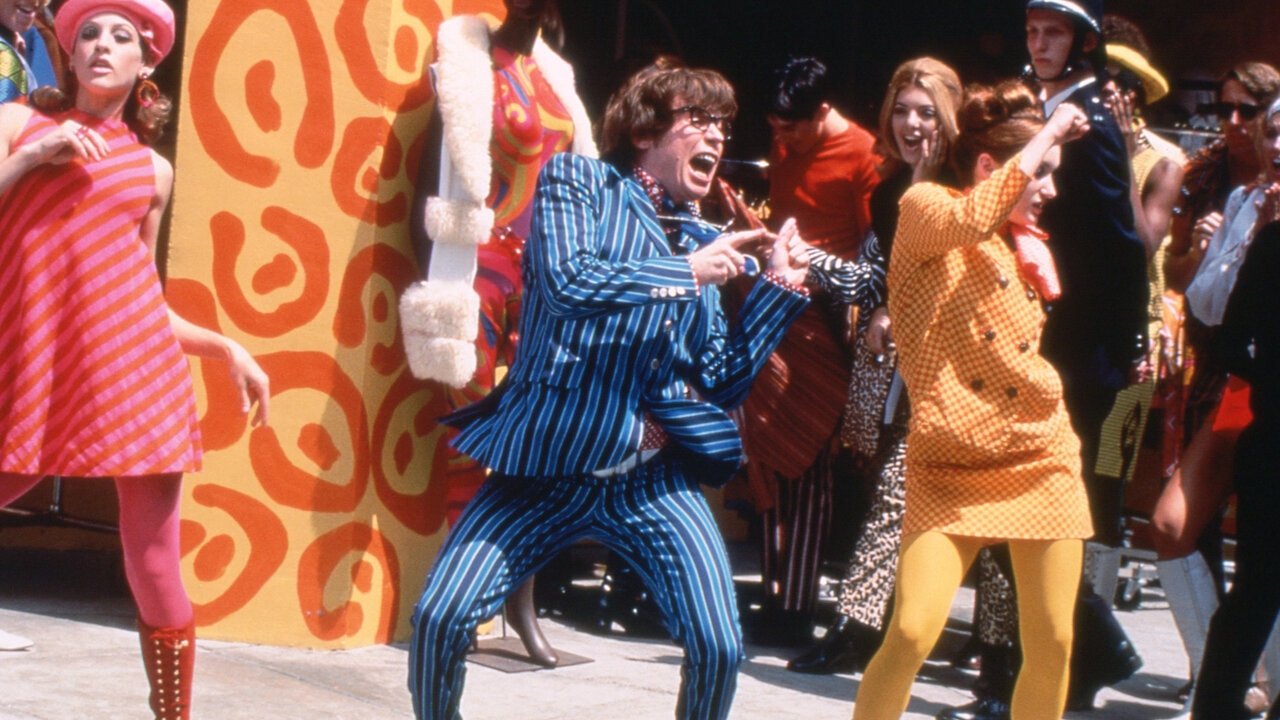
Visually, the film is a treat. Director Jay Roach, who would later helm hits like Meet the Parents (2000), embraced the camp aesthetic wholeheartedly. The vibrant sets, the outrageous costumes (designed by Deena Appel), the cheeky zooms and wipes – it all screams 60s pastiche. Yet, it feels distinctly 90s in its self-aware irony and pop-culture riffing. The budget wasn't huge – around $16.5 million – but they squeezed every penny's worth of visual flair out of it. This wasn't about gritty realism; it was about capturing a feeling, a hyper-stylized fantasy world where fembots have machine gun jubblies and villains demand ONE MILLION DOLLARS with comical intensity.
The music is another key element, from the instantly recognizable Quincy Jones-penned theme "Soul Bossa Nova" (originally from 1962!) to the contributions from the fictional band Ming Tea – which actually featured Myers alongside Susanna Hoffs of The Bangles and musician Matthew Sweet. It cemented the film's unique soundscape.
More Than Just Jokes
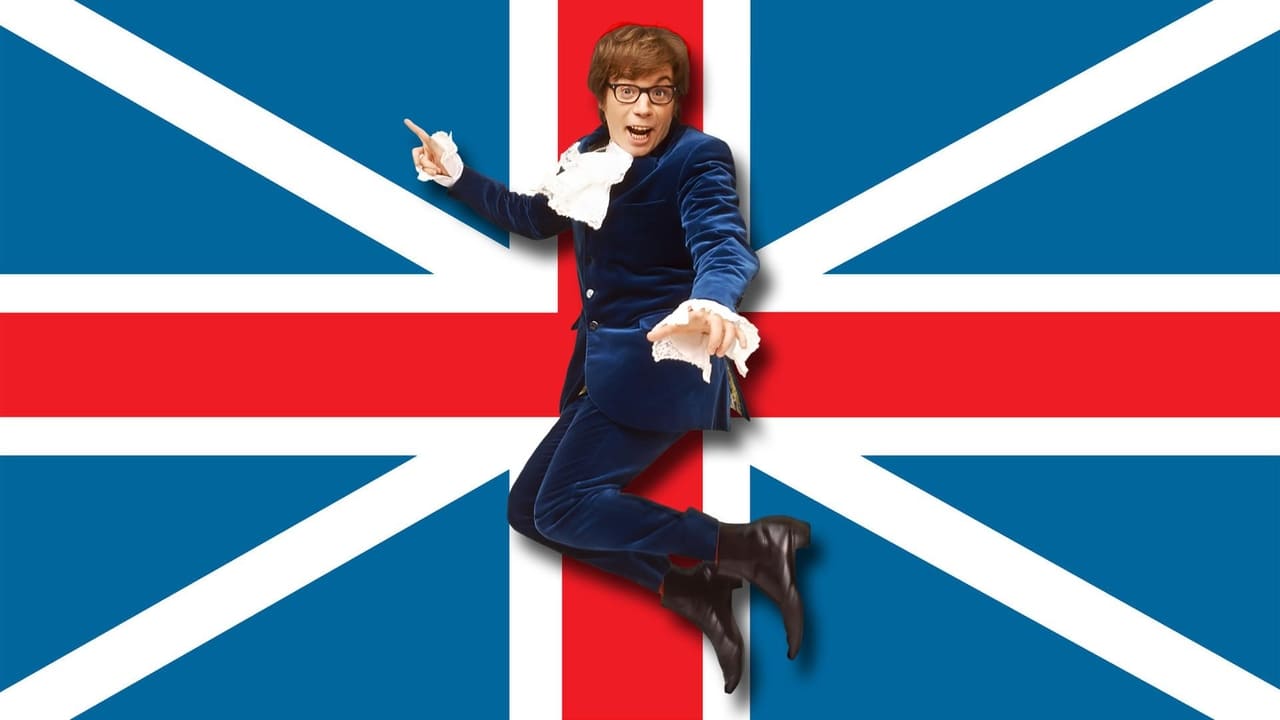
While relentlessly silly, Austin Powers works because its parody comes from a place of genuine affection. It skewers spy tropes but clearly loves them. The humour ranges from clever wordplay and visual gags (the infamous blocking sequence!) to outright absurdity and fourth-wall breaks. Some jokes haven't aged perfectly, sure – it's definitely a product of its time in places – but the sheer density of gags means many still land beautifully. It wasn't an immediate critical darling across the board, but audiences latched onto its quotable lines and sheer fun, turning it into a sleeper hit ($67.7 million worldwide gross) and a certified VHS rental champion. I definitely remember wearing out my copy back in the day.
Its success, of course, spawned two even bigger sequels, The Spy Who Shagged Me (1999) and Goldmember (2002), solidifying Austin Powers as a cultural touchstone. Catchphrases like "Yeah, baby!", "Oh, behave!", and "Shagadelic" entered the lexicon, proof of its surprising impact.
Rating: 8.5/10
Justification: While some humour feels dated, the sheer creativity, Mike Myers' powerhouse dual performance, the perfect parody of its genre, and its undeniable cultural footprint make this a standout 90s comedy. It’s smart, incredibly silly, and endlessly quotable. The film’s energy and visual flair captured lightning in a bottle, feeling both nostalgic for the 60s and perfectly timed for the 90s.
Final Take: Austin Powers is pure, unadulterated fun captured on magnetic tape – a groovy time capsule that reminds you how a clever parody, bursting with personality and genuine affection for its subject, could feel like the freshest thing in the video store aisle. Oh, behave!