What happens when potential lies dormant, buried under circumstance or self-doubt, only needing an unlikely spark to ignite it? That quiet, persistent question seems to beat at the heart of Penny Marshall’s 1994 film, Renaissance Man. It arrived perhaps without the usual fanfare accompanying a Danny DeVito vehicle of the era, offering something gentler, more introspective than audiences might have expected. Watching it again now, removed from the immediate context of its release, allows its unassuming charm and surprising sincerity to resonate more clearly.

From Boardroom to Barracks
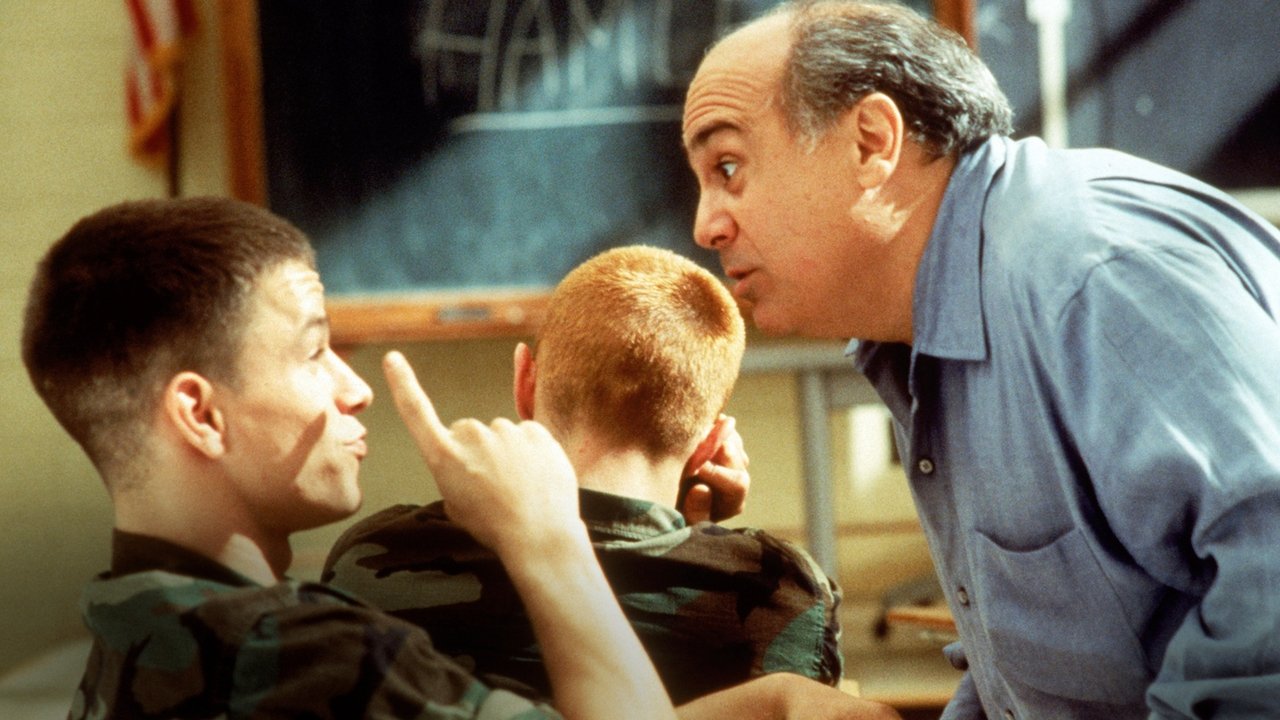
The premise finds Bill Rago (DeVito), a down-on-his-luck advertising executive, losing his job and struggling to find another. A bureaucratic mix-up lands him a temporary teaching position at a nearby U.S. Army base, tasked with improving the basic comprehension skills of a platoon of underperforming recruits – the self-proclaimed "Double D's" (Dumb as Dog Doo-Doo). Initially cynical and utterly out of his depth, Rago stumbles upon an unconventional approach: using Shakespeare, specifically Hamlet, to engage his students. It’s a setup that could easily lean into broad comedy or saccharine cliché, yet Marshall, working from Jim Burnstein’s semi-autobiographical script, steers it toward something more grounded and emotionally honest.
The Unlikely Professor

DeVito, often celebrated for his larger-than-life comedic personas (Twins, Batman Returns), delivers a performance here marked by a crucial vulnerability. His Bill Rago isn't instantly lovable; he's defeated, sarcastic, and initially motivated purely by desperation. The transformation isn't sudden but gradual, born from the slow realization that these young men and women aren't just statistics or disciplinary problems, but individuals with dreams, fears, and untapped intelligence. DeVito subtly conveys Rago’s dawning respect and, eventually, genuine affection for his students. It’s a performance that relies less on gags and more on quiet reactions and the weight of unspoken feeling, reminding us of his dramatic range.
Finding the Spark in the Ensemble
Supporting DeVito is a strong ensemble cast, crucial to the film’s effectiveness. The late, great Gregory Hines brings his characteristic warmth and gravitas to Sergeant Cass, the stern but fair drill sergeant who initially clashes with Rago’s methods but comes to respect his impact. James Remar also makes an impression as the more traditional Captain Murdoch. But the real heart lies with the recruits themselves. Actors like Mark Wahlberg (in one of his earliest roles, credited as Marky Mark), Kadeem Hardison, Stacey Dash, Lillo Brancato Jr., and Khalil Kain embody the diverse personalities of the platoon. They manage to portray the initial resistance, the gradual engagement, and the burgeoning self-belief without resorting to caricature. Their collective journey feels earned, anchored by moments of quiet connection and shared discovery, particularly as they grapple with the complexities of Shakespearean verse and find parallels to their own lives.


Beyond the Double D's: A Deeper Look
What elevates Renaissance Man beyond a simple 'inspirational teacher' narrative is its understated exploration of potential and the transformative power of education, even in the unlikeliest settings. The film doesn't shy away from the recruits' backgrounds – poverty, lack of opportunity, past mistakes – but it refuses to define them solely by these circumstances. Rago’s unorthodox methods, particularly using Hamlet, aren’t just a quirky plot device; they serve as a metaphor for looking beyond the surface and finding universal human experiences – doubt, duty, betrayal, ambition – within seemingly complex texts. The film subtly suggests that intellectual curiosity and emotional depth aren't the exclusive province of the privileged or formally educated.
Retro Fun Facts: The Story Behind the Story
The authenticity underpinning the film stems directly from screenwriter Jim Burnstein's own experiences. In the mid-80s, while facing a career slump similar to Rago's, Burnstein actually took a job teaching remedial English to U.S. Army recruits at Selfridge Air National Guard Base in Michigan, using Shakespeare to connect with them. This real-life inspiration lends the narrative a core of truthfulness.
Interestingly, the project wasn't initially conceived for Danny DeVito. Harrison Ford was reportedly considered early on, which would have resulted in a vastly different film. DeVito’s casting brought a specific blend of world-weariness and underlying warmth that defines Rago.
The young actors playing the recruits underwent a demanding two-week boot camp prior to filming to ensure authenticity in their military bearing and drills. This shared experience reportedly fostered a strong bond among the cast, translating into believable on-screen camaraderie. The film, originally titled "Army Intelligence," was changed to Renaissance Man – a title that better reflects the themes of broad intellectual awakening and discovering hidden talents. Budgeted around $40 million, it wasn't a massive box office hit ($24.3 million domestic gross), perhaps struggling to find its audience amidst the summer blockbusters, but it developed a quiet following on home video – a true VHS discovery for many.
The Quiet Resonance
Renaissance Man isn't a flashy film. Its pacing is deliberate, its emotional beats are earned rather than forced, and its humor is often gentle, arising from character interactions rather than set pieces. Penny Marshall directs with a steady, unobtrusive hand, focusing on the performances and the relationships. There's a lack of cynicism here that feels refreshing; the film genuinely believes in the possibility of second chances and the power of finding one's voice, whether through iambic pentameter or simply learning to articulate one's worth. Does it sometimes skirt predictability? Perhaps. But its sincerity and the strength of its central performances, particularly DeVito's nuanced turn, give it a lasting, quiet impact.
VHS Heaven Rating: 7/10
This rating reflects a film that succeeds admirably in its heartfelt intentions, anchored by strong performances and a genuinely touching core concept derived from real life. Danny DeVito excels in a more subdued role, and the ensemble cast shines. While the narrative arc might follow some familiar 'inspirational teacher' beats, the specific context, the use of Shakespeare, and the overall sincerity prevent it from feeling stale. It lacks the sharp edges or comedic highs of some contemporaries, leading to a slightly less dynamic overall experience, but its emotional honesty and thoughtful exploration of potential make it a worthwhile and often moving watch, especially for those who appreciate character-driven stories.
Renaissance Man remains a testament to the idea that inspiration can bloom in the most unexpected places, a quiet gem from the mid-90s that reminds us, much like Rago taught his recruits, to look beyond the surface.