It starts, as these things often do, with a death. But unlike the profound existential weight carried by much of Krzysztof Kieślowski's monumental Decalogue series, the tenth and final installment, Decalogue X (1989), takes an altogether unexpected turn. What unfolds isn't a somber meditation, but a darkly funny, almost absurdist dive into the maelstrom of human greed, sparked by the most innocuous of objects: postage stamps. Watching it again, perhaps years after first discovering this Polish television masterpiece on a slightly worn VHS tape likely sourced from a discerning rental shop or a university film society, the film's unique blend of sharp observation and near-farcical situations feels both surprising and deeply insightful.

An Inheritance of Obsession
The premise is deceptively simple. Two brothers, the pragmatic, somewhat cynical Artur (Jerzy Stuhr) and the younger, more impulsive rock musician Jerzy (Zbigniew Zamachowski), inherit their recently deceased father's meager apartment. Amidst the clutter and lingering scent of old tobacco, they discover his secret passion: an astonishingly valuable stamp collection. Neither brother previously cared a whit about philately – Artur barely knew his father, and Jerzy was busy with his punk band – but the sheer monetary value, hinted at by shifty dealers and obsessive collectors lurking in the shadows, quickly ignites a fire. This isn't just about wealth; it's about the sudden, consuming nature of desire itself, a perfect, if darkly comic, illustration of the tenth commandment: "Thou shalt not covet thy neighbour's goods."
The Brothers Karamazov... Sort Of
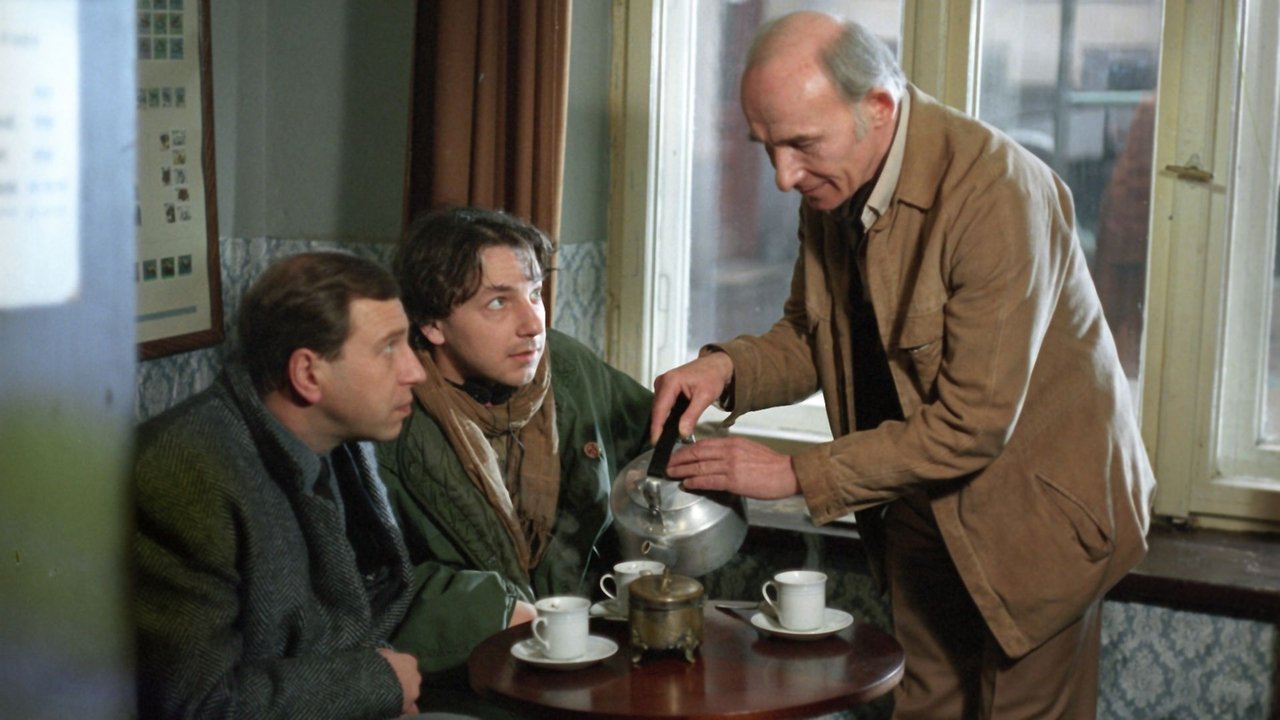
What makes Decalogue X truly sing is the electric pairing of Stuhr and Zamachowski. Their transformation from estranged siblings united by mild grief to paranoid, mutually suspicious guardians of perforated paper squares is utterly compelling. Stuhr, often the face of moral ambiguity in Polish cinema (and later reuniting with Zamachowski and Kieślowski for the equally compelling, comedically tinged Three Colors: White (1994)), perfectly embodies the older brother whose initial skepticism melts into calculating obsession. Zamachowski, radiating a nervous energy, captures the younger brother swept up in the fervor, his punk rock ideals hilariously clashing with the meticulous world of stamp collecting. Their shared glances, their bickering, their moments of shared, manic purpose – it all feels painfully, funnily real. You see the absurdity, but you also understand the pull. How quickly can a shared goal curdle into suspicion when immense value is involved?
Kieślowski's Comic Eye
While known primarily for his profound dramas like The Double Life of Veronique (1991) or the other, often heavier entries in the Decalogue (all co-written with his indispensable collaborator Krzysztof Piesiewicz), Kieślowski proves remarkably adept at black comedy here. The film is rich with visual humor – the brothers guarding the apartment with makeshift alarms, Jerzy trying to trade his band's gear for a rare stamp, the increasingly bizarre lengths they go to protect their newfound treasure. Yet, Kieślowski’s characteristic visual precision remains. The cramped apartment becomes a character in itself, a pressure cooker for their escalating mania. The shadowy figures of the stamp collecting underworld add a layer of low-key menace that perfectly balances the comedy. It's a testament to his directorial control that the shift in tone within the larger Decalogue project feels earned, offering a necessary, almost cathartic release through laughter, albeit dark laughter.


It's fascinating to consider this film emerging from late 1980s Poland, a time of immense societal change. While not overtly political, the sudden confrontation with potential vast wealth and the consuming materialism it triggers certainly resonates with a society on the cusp of embracing capitalism after decades of communism. The stamps, intrinsically almost worthless pieces of paper, become imbued with immense power solely through collective agreement and desire – a potent metaphor, perhaps?
Sticking Points and Lasting Impressions
Finding authentic rare stamps for the production reportedly posed its own challenges, a behind-the-scenes detail that mirrors the brothers' own desperate search within the film's narrative. Though originally made for Polish television, the entire Decalogue series gained significant international acclaim through festival circuits and, crucially for many of us, home video releases. Discovering Decalogue X nestled among its more famous siblings on VHS felt like uncovering a slightly mischievous secret within a revered work.
Does the film feel dated? Perhaps in its depiction of technology or fashion, sure. But the core themes? The allure of sudden riches, the corrosive effect of greed on family bonds, the sheer human folly of elevating objects to life-altering status – these feel remarkably timeless. It asks us, with a wry smile, what we truly value and how easily that valuation can spiral out of control. What lengths would we go to for a perceived fortune, even one represented by tiny, colorful squares?
Rating: 9/10
Decalogue X earns this high mark for its masterful blend of black comedy and sharp human insight, anchored by two phenomenal lead performances. It's a unique entry in Kieślowski's filmography and the Decalogue series, proving his versatility and keen eye for the absurdities lurking beneath the surface of everyday life. The film doesn't just depict obsession; it makes you understand its seductive, dangerous allure, all while eliciting knowing chuckles.
It leaves you pondering the arbitrary nature of value and the often-comical fragility of human relationships when faced with temptation – a fittingly complex and surprisingly funny final thought from a truly monumental series.