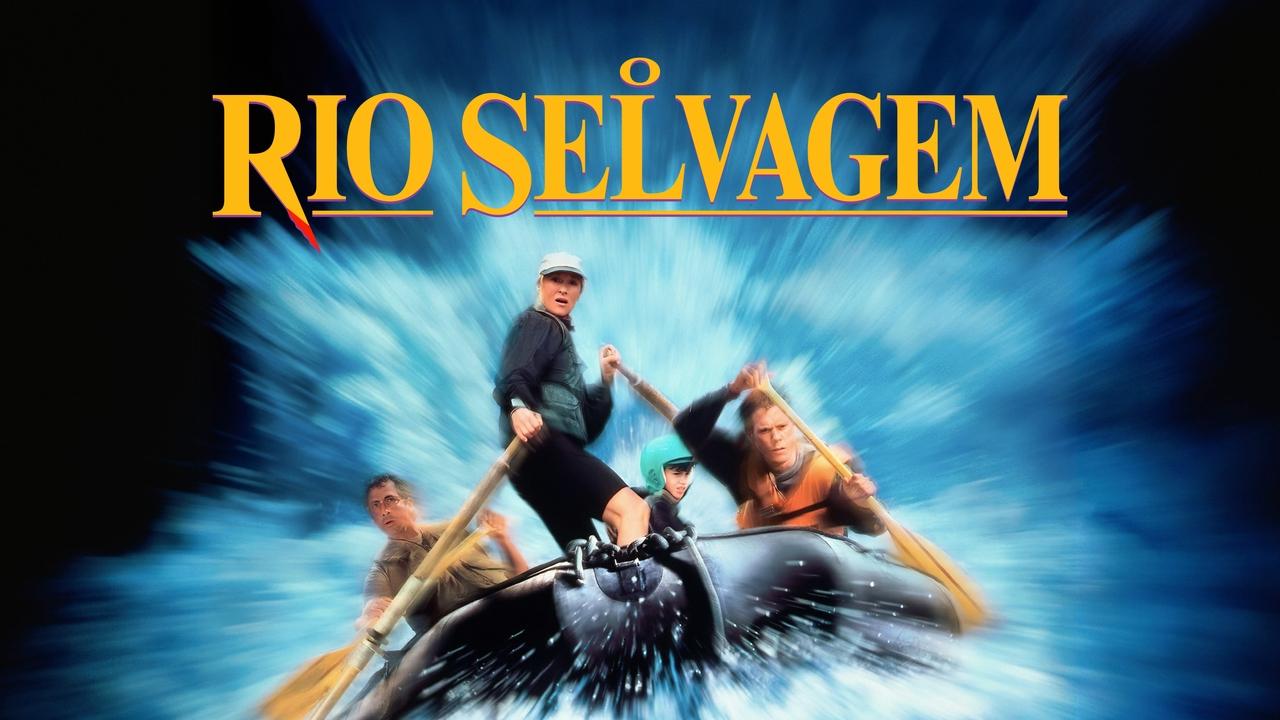
The roar of the water is the first thing you remember. Not just sound, but a presence – vast, indifferent, and utterly untamable. It’s the deceptive promise and the lurking threat that defines The River Wild (1994), a film that plunges a family vacation into the churning heart of a nightmare, leaving a residue of unease that felt particularly potent flickering on a CRT screen late at night. This wasn't just another thriller; it felt grounded, terrifyingly plausible, stripping away the veneer of civilization one rapid at a time.
Beneath the Surface Calm
The setup feels almost idyllic, doesn't it? Gail (Meryl Streep), a former river guide trying to reconnect with her architect husband Tom (David Strathairn) and young son Roarke (Joseph Mazzello), embarks on a white-water rafting trip down a river she knows intimately. It’s meant to be a healing journey, a return to something pure and fundamental. But the wilderness holds more than just natural dangers. The arrival of Wade (Kevin Bacon) and Terry (John C. Reilly), seemingly affable fellow rafters, injects a discordant note almost immediately. Bacon, fresh off playing complex characters but perhaps dialing up a different kind of intensity here, masterfully flips the switch from charming rogue to chilling predator. His smile tightens, his eyes harden, and suddenly the vast, open wilderness feels terrifyingly claustrophobic. Remember that slow-burn realization, the dawning horror as their friendly facade dissolves? It’s a masterclass in controlled menace.
Hanson Guides the Current
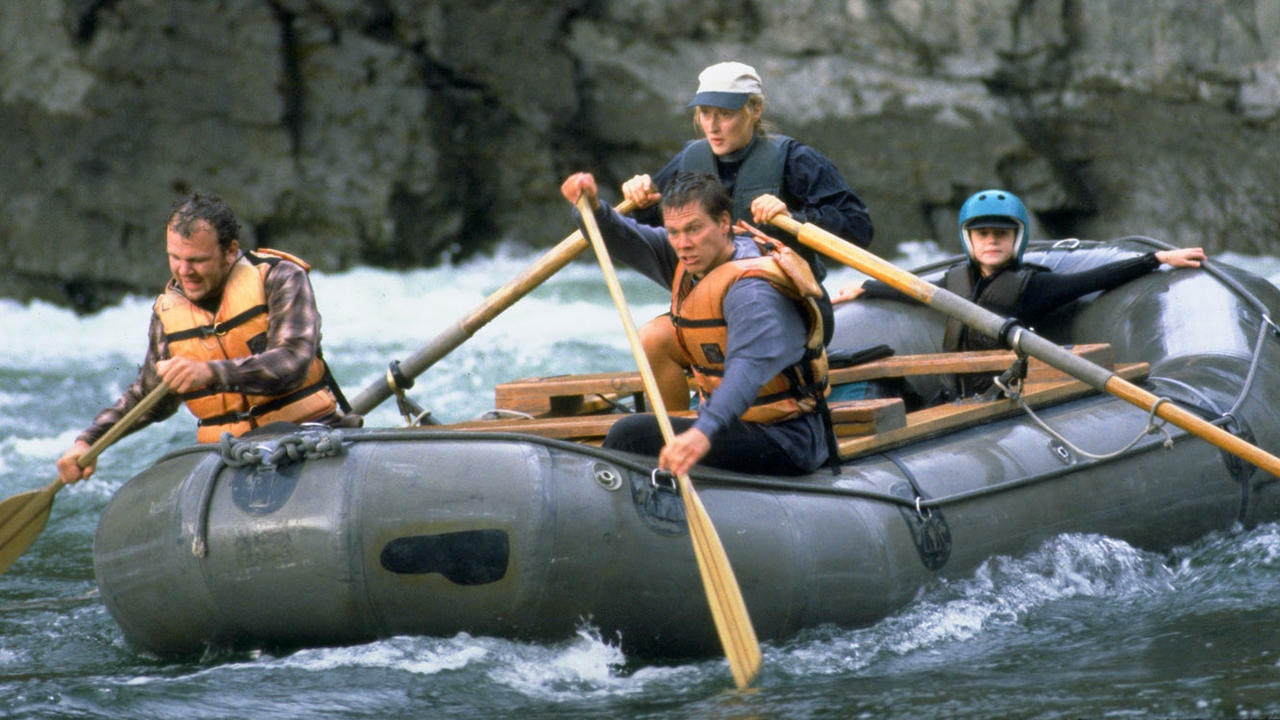
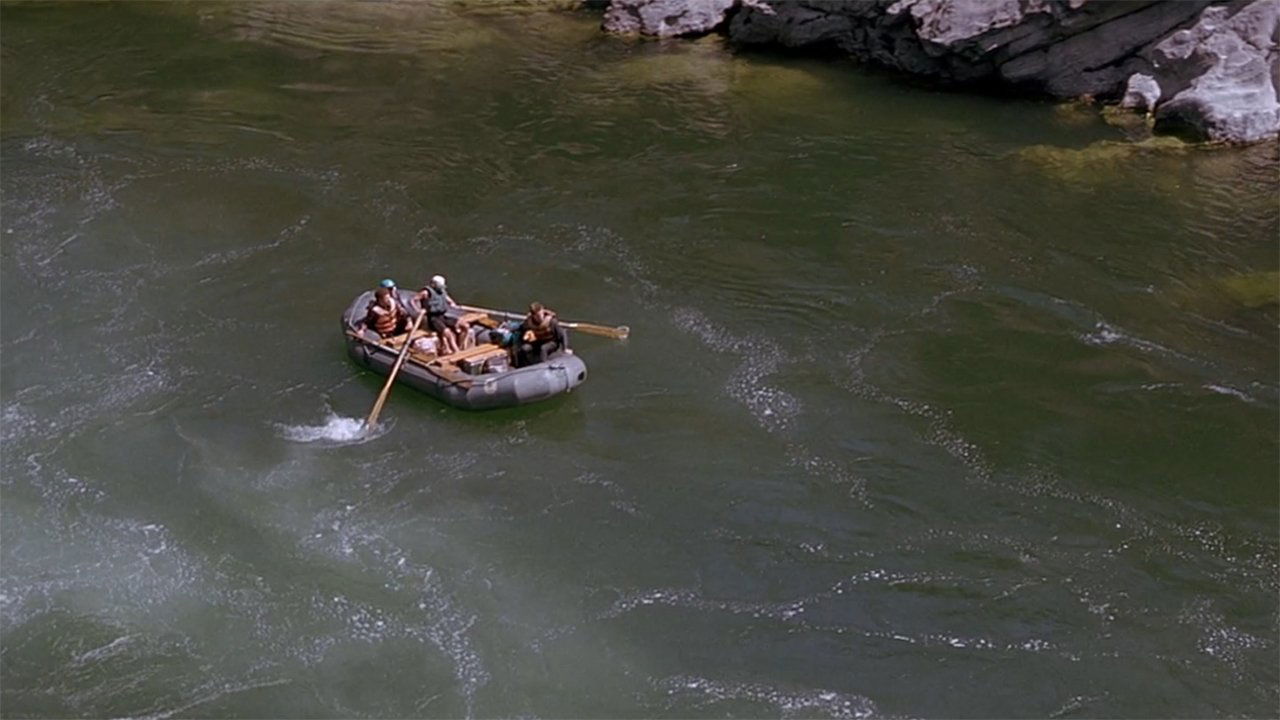
Director Curtis Hanson, who would later gift us the intricate neo-noir masterpiece L.A. Confidential (1997), proves his versatility here, crafting a thriller that leverages its environment to maximum effect. He understands that the true terror isn't just the armed robbers forcing Gail to navigate treacherous waters, but the relentless, impersonal power of the river itself. The rapids sequences feel genuinely perilous, shot with a kinetic energy that puts you right there in the raft, battling the spray and the rocks. This wasn't CGI spectacle; it felt visceral, achieved through daring practical stunt work and filming on location on the Kootenai River in Montana and the Rogue River in Oregon. The sheer difficulty of capturing these scenes, wrestling with unpredictable currents and weather, translates into palpable tension on screen.
Streep Takes the Oars
Let's be honest, seeing Meryl Streep, the titan of dramatic acting, headline a physically demanding action-thriller felt like something of an event back in '94. And she absolutely commits. Gail isn't a superhero; she's a capable woman pushed to extraordinary limits by desperation and maternal instinct. The fear in her eyes is real, but so is the steel that emerges as she draws on her past experience to navigate both the lethal rapids and the human monsters sharing her raft. It’s a performance defined by grit and resilience.
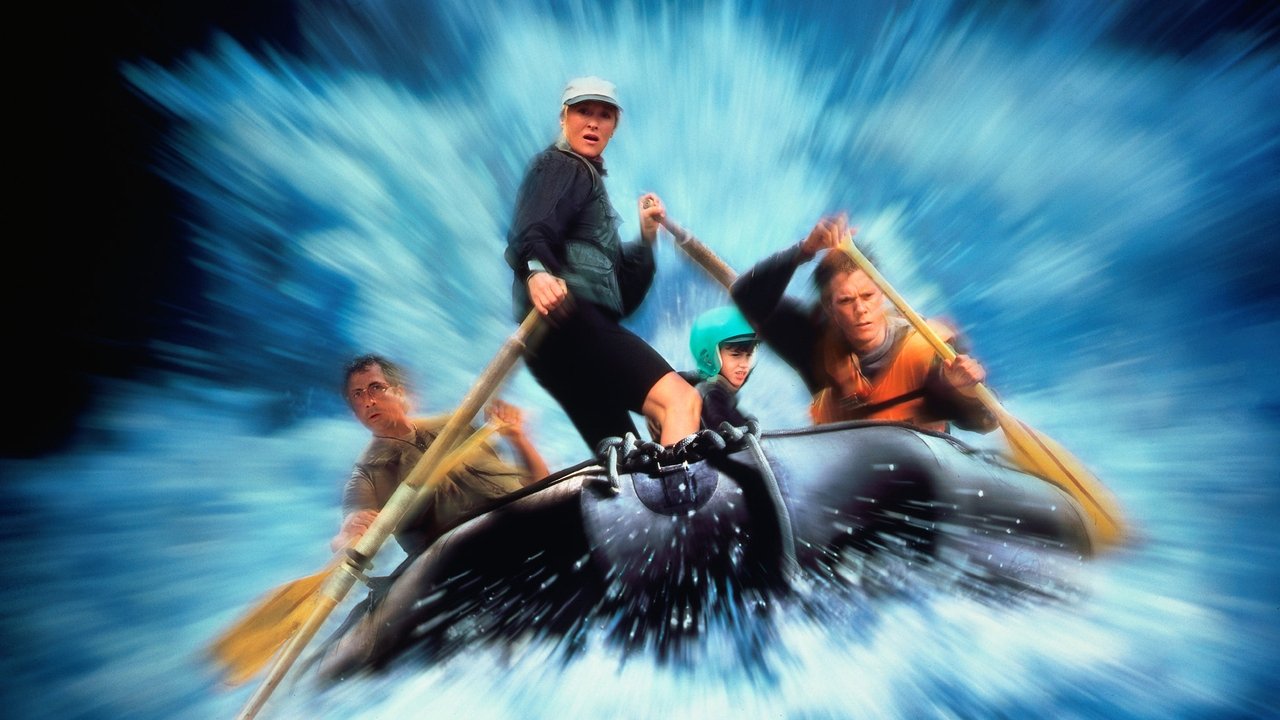
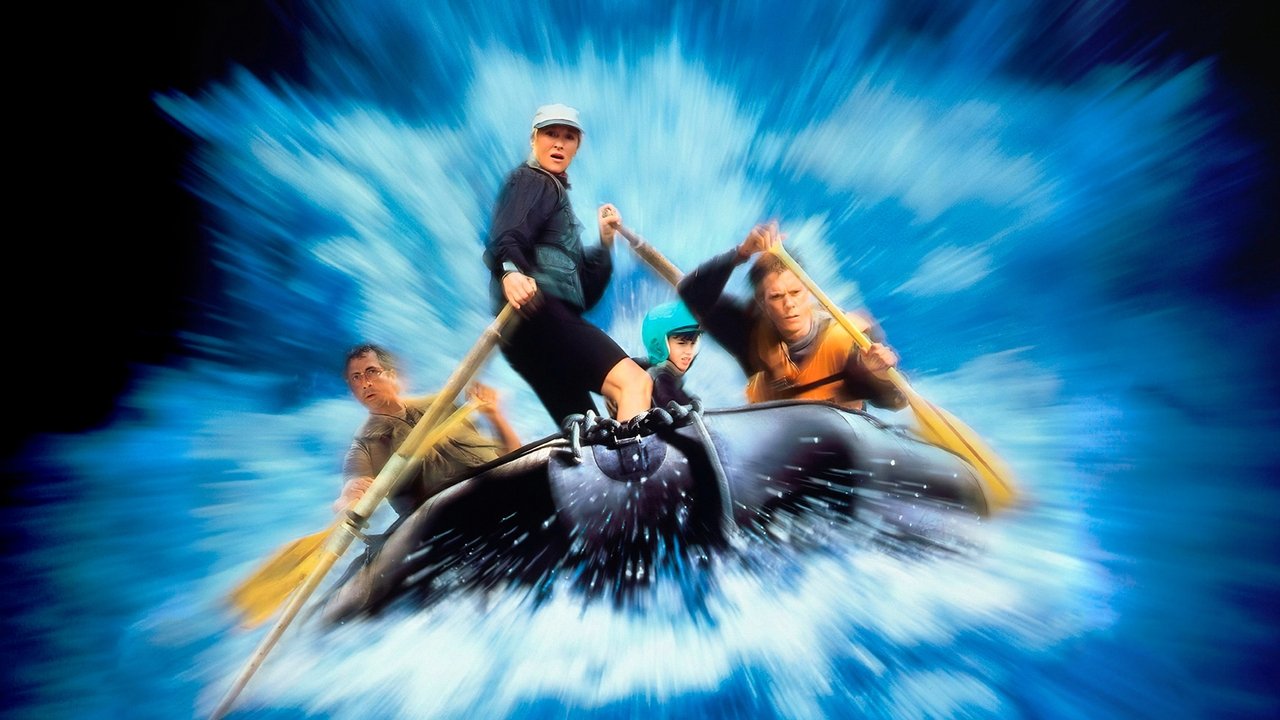
Digging into the production history reveals just how demanding this role was. Streep, determined to lend authenticity to the part, insisted on performing many of her own stunts in the turbulent waters. This commitment famously led to a terrifying incident where, after a long day of shooting multiple takes in exhausting conditions, she was swept off the raft and nearly drowned, reportedly prompting her to tell Hanson, "From now on, you can take the ride!" That brush with real danger undoubtedly informs the harrowing authenticity of her performance. You see the exhaustion, the terror, but ultimately, the unwavering resolve. It's a testament to her dedication, transforming what could have been a standard damsel-in-distress role into a compelling portrait of survival.
The Unseen Character
Beyond the human drama, the river itself functions as a powerful character. DP Robert Elswit (who would later win an Oscar for There Will Be Blood) captures both its breathtaking beauty and its terrifying indifference. The roar of the 'Gauntlet,' the final, near-mythic stretch of rapids Gail must conquer, becomes synonymous with the impossible choice she faces. The production design feels authentic – the worn gear, the functional raft, nothing feels overly Hollywoodized. It enhances the sense of realism, making the threat feel immediate and tangible. Even the score by the legendary Jerry Goldsmith understands this dynamic, often letting the natural sounds of the river provide the most potent source of tension before swelling to underscore the moments of high peril.
Navigating the Legacy
The River Wild wasn't necessarily a game-changer for the thriller genre, but it stands as a remarkably solid and effective entry from the era. It successfully blended family drama with high-stakes action, anchored by committed performances and masterful use of its setting. It performed respectably at the box office, pulling in over $94 million worldwide against its $45 million budget, proving Streep's star power could translate even to the rapids. Does it hold up? Absolutely. The core tension remains effective, Bacon's villainy is still unnerving, and Streep's fierce performance feels timeless. It perfectly captures that specific 90s brand of adult-oriented thriller – glossy but grounded, thrilling but character-focused. It might lack the intricate plotting of some modern thrillers, but its primal struggle for survival against both man and nature still resonates. It's the kind of film that made you think twice about that scenic rafting trip advertisement.
Rating: 8/10
This score reflects the film's undeniable strengths: Streep's powerful and physically committed performance, Bacon's chilling turn as the antagonist, Hanson's taut direction, and the incredible practical stunt work that makes the river sequences so terrifyingly real. The tension builds expertly, and the use of the natural environment as both backdrop and threat is superb. It earns its high marks for sheer visceral impact and compelling character work within the thriller framework. It might follow some familiar beats, but it executes them with exceptional skill and intensity.
The River Wild remains a potent reminder of how effective practical filmmaking and strong central performances could be in generating genuine suspense. It’s a ride that, even decades later, still leaves you feeling the spray and the fear.