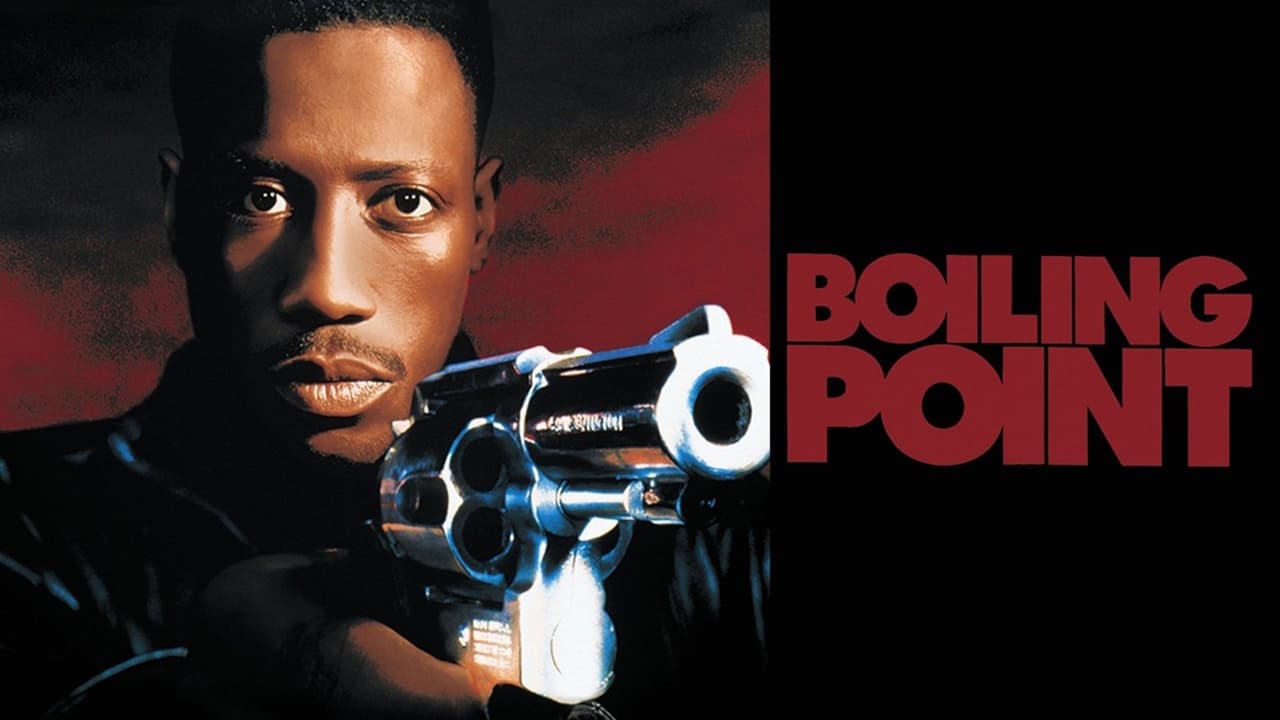
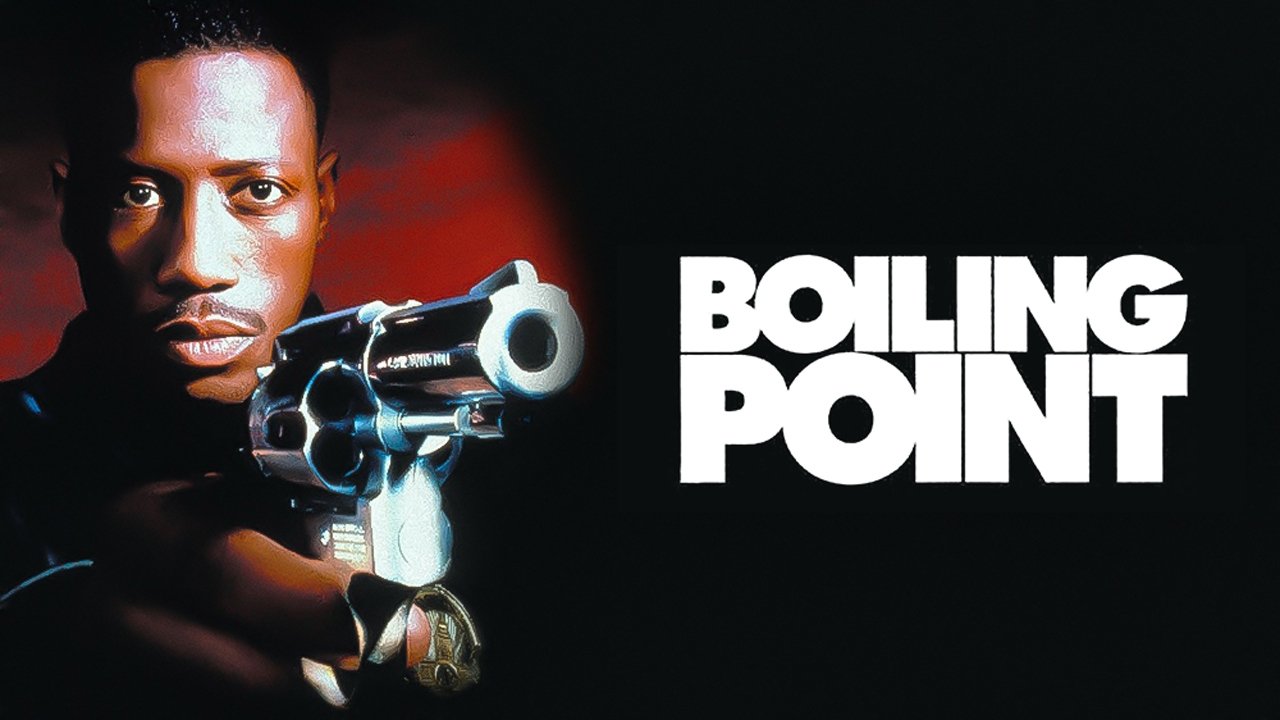
The air in this film feels thick, heavy with the kind of pre-thunderstorm humidity that presses down on your chest. Los Angeles, often depicted as sun-drenched and glamorous, here becomes a purgatory of simmering resentments and desperate schemes, where the heat isn't just meteorological; it's radiating from the characters themselves, pushing them closer and closer to an inevitable flashover. 1993's Boiling Point doesn't explode immediately; it lets the pressure build, crafting a mood piece disguised as a crime thriller, something that felt uniquely potent flickering on a CRT screen late at night.
Under Pressure
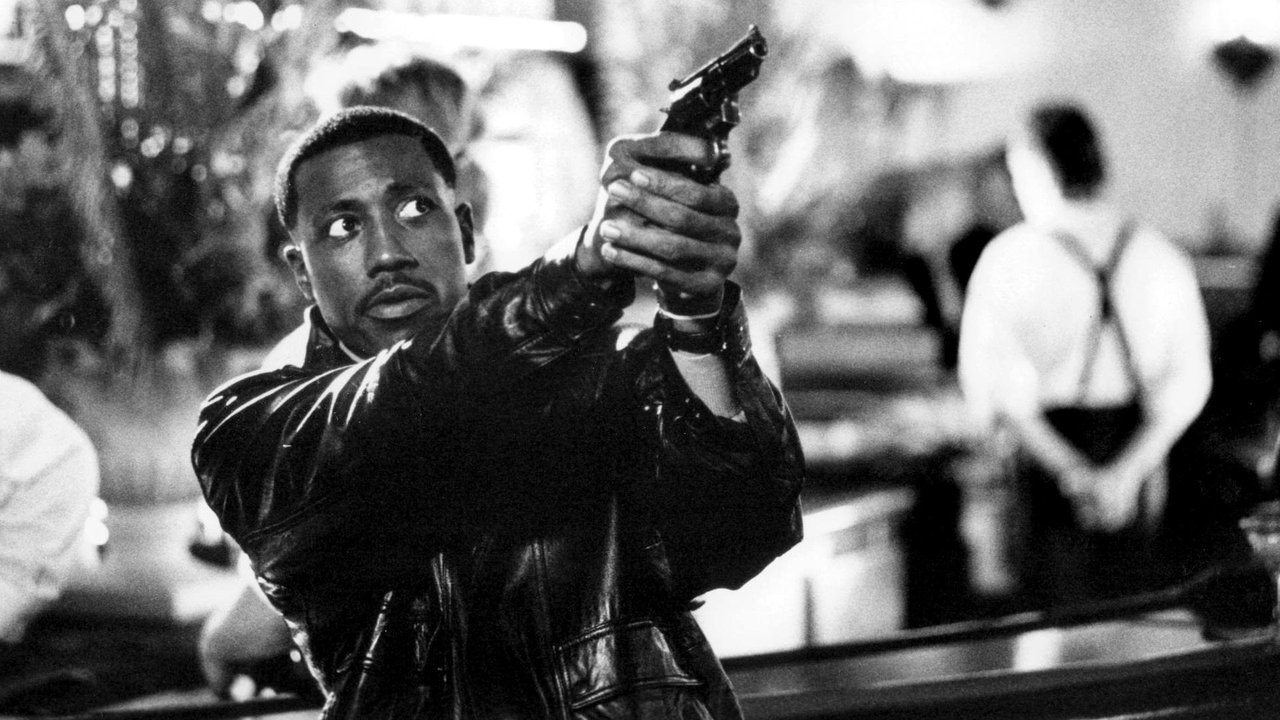
We follow Treasury Agent Jimmy Mercer (Wesley Snipes), a man operating under a cloud of grief and professional scrutiny after his partner is gunned down during an undercover operation gone wrong. Snipes, then riding high on more overtly action-packed roles like Passenger 57 (1992), dials it way down here. Mercer is coiled, watchful, burdened by a quiet intensity that speaks volumes more than any explosive outburst might. His target is the network of counterfeiters responsible, a trail that leads circuitously to Rudolph "Red" Diamond, played with that signature unpredictable menace only Dennis Hopper could deliver. Red isn't a criminal mastermind; he's a dangerously slippery small-timer, recently out of prison and already pulling scams with his volatile young partner, Ronnie (Viggo Mortensen, years before Middle-earth). The plot isn't about intricate twists; it’s about the slow, deliberate tightening of the net and the volatile reactions of those caught within it.
From the Pen of Petievich
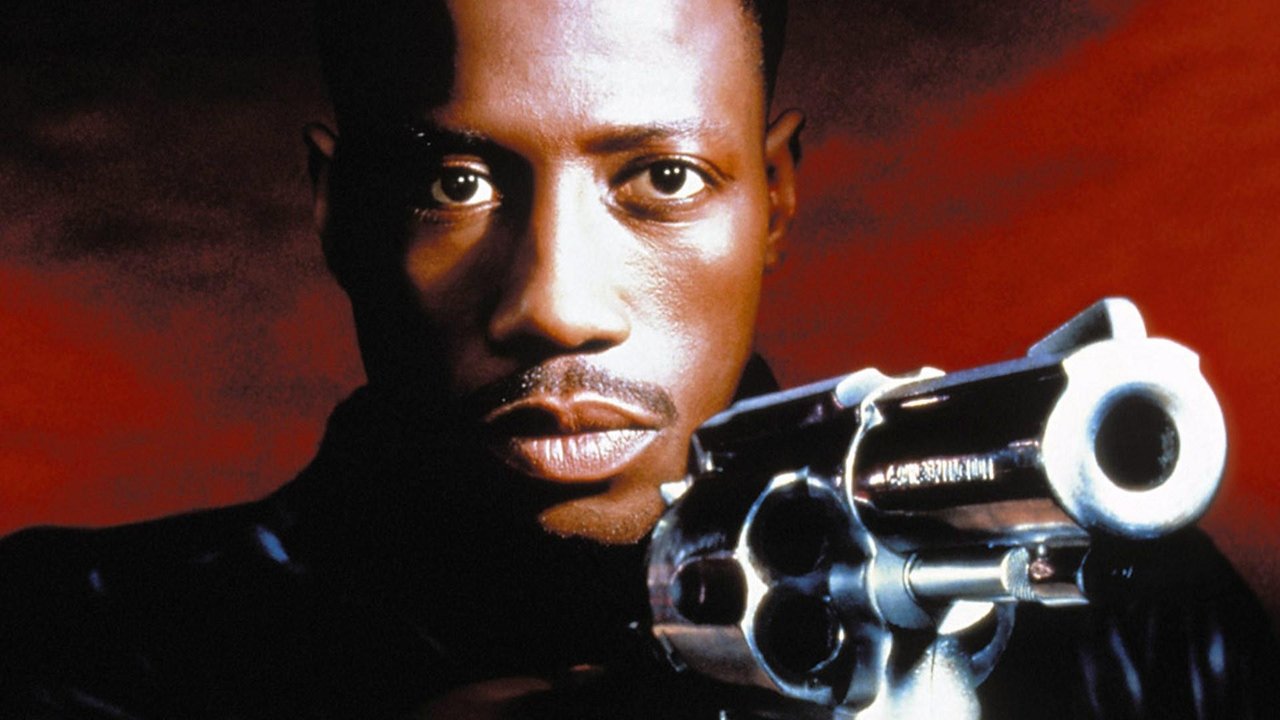
If the gritty, street-level view of law enforcement and criminality feels authentic, it's likely because the screenplay, adapted by director James B. Harris, stems from the novel "Money Men" by Gerald Petievich. Petievich, a former Secret Service agent himself, penned the novel that became William Friedkin's scorching 1985 thriller To Live and Die in L.A.. That pedigree is evident here – the focus on procedural detail, the morally ambiguous characters operating in shades of grey, the sense that violence is an ugly, inevitable consequence of this world, not just a stylized plot point. Boiling Point lacks the relentless pace and stylistic flash of Friedkin's film, opting instead for something more meditative, almost melancholic.
A Director's Pedigree
The measured pace and focus on character over pyrotechnics might also stem from the director. James B. Harris isn't a name typically associated with 90s thrillers, but his early career is fascinating: he was Stanley Kubrick's producing partner on hard-hitting classics like The Killing (1956) and Paths of Glory (1957), even directing the tense Cold War thriller The Bedford Incident (1965). You can feel that influence – a certain classical structure, an interest in the psychological toll on the characters, a refusal to rush the simmering tension. It gives Boiling Point a slightly more mature, almost old-fashioned feel compared to its contemporaries, which might explain why it didn't exactly set the box office alight, reportedly making back just slightly more than its $10 million budget. It wasn't the high-octane vehicle some might have expected from Snipes at the time.
That VHS Glow
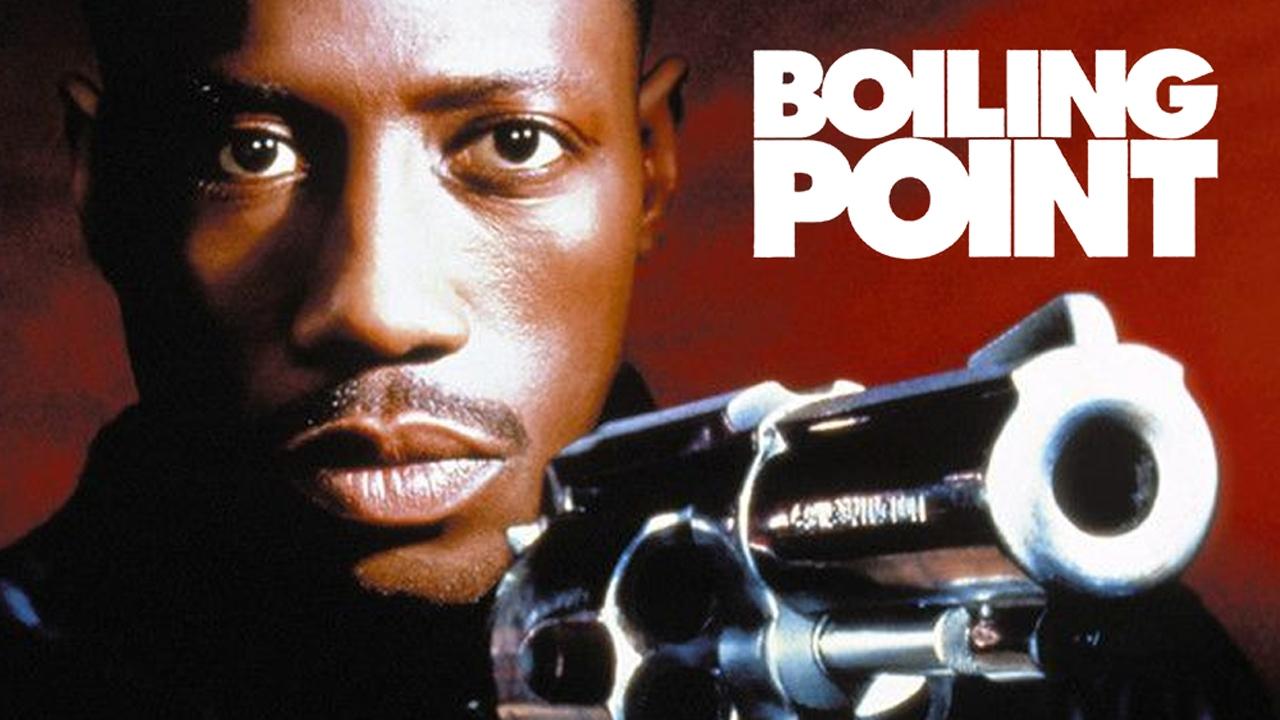
Watching this on tape back in the day felt... right. The slightly fuzzy resolution, the way the darkness seemed deeper, somehow enhanced the film's noirish atmosphere. Hopper's leering grin seemed more menacing emerging from the shadows, and the quiet desperation of characters like Vikki (Lolita Davidovich), a high-class call girl entangled with Red but drawn to Mercer, felt more intimate. There’s a palpable sense of weariness hanging over everyone. Snipes's Mercer isn't a superhero cop; he’s a guy doing a dangerous job, navigating departmental politics and his own simmering desire for justice, or maybe just closure. Hopper’s Red isn’t a cackling villain; he’s a relic, dangerous precisely because he’s cornered and running out of time. Their eventual confrontation feels less like a blockbuster showdown and more like an inevitability born of bad choices and desperation. Doesn't Hopper just embody that kind of unpredictable, 'past-his-prime but still deadly' energy perfectly?
The Slow Burn Legacy
Boiling Point isn't flashy. It doesn't have the iconic set pieces or quotable lines of some other 90s staples. What it offers instead is mood, a pervasive sense of dread punctuated by moments of sharp, unglamorous violence. The performances are grounded, the direction is patient, and the atmosphere is thick enough to cut with a knife. It’s the kind of film you might have rented on a whim, nestled between the louder action flicks, and found yourself unexpectedly gripped by its low-key intensity. It’s a solid piece of neo-noir craftsmanship that benefits from the presence of its two leads, each bringing their distinct screen energy to the table.
---
Rating: 6.5/10
Justification: Boiling Point earns points for its thick atmosphere, committed performances (especially Hopper's unsettling turn), and its grounded, procedural approach rooted in Petievich's source material. Harris's steady direction lends it a certain gravitas. However, the deliberate pacing, while contributing to the mood, can occasionally feel slow, lacking the propulsive energy found in the era's top-tier thrillers. It doesn't quite reach the heights of To Live and Die in L.A., but it holds its own as a moody, character-driven piece.
Final Thought: It might not have exploded at the box office, but Boiling Point remains a potent example of the kind of atmospheric, adult-oriented thriller that found a solid second life on VHS shelves – a simmering pot of 90s noir that still generates a satisfying heat.