There's a certain mood captured by the mid-90s erotic thriller, isn't there? A specific blend of rain-slicked city streets, dimly lit apartments promising intimacy and danger, and characters wrestling with desires that feel both forbidden and inevitable. Watching Peter Hall's Never Talk to Strangers (1995) again recently, that specific atmosphere washed over me, pulling me back to a time when these films were staples on the video store shelves, promising adult thrills wrapped in psychological intrigue. It wasn't just about the plot; it was about the feel of it, something this film delivers, even as it walks a very tricky narrative tightrope.
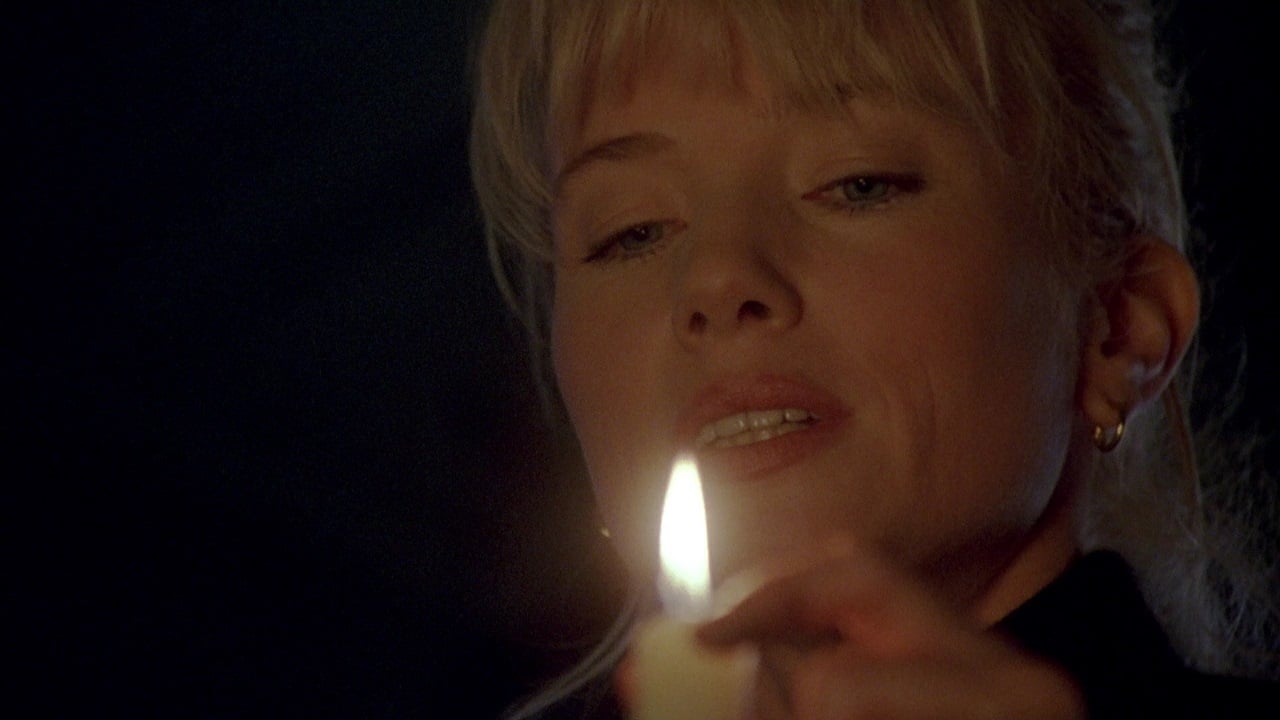
Shadows and Suspicions
The setup is classic genre territory. Rebecca De Mornay, who had already chilled audiences to the bone in The Hand That Rocks the Cradle (1992), stars as Dr. Sarah Taylor, a criminal psychologist seemingly coiled with repressed tension and professional control. Into her structured life walks Tony Ramirez, played by Antonio Banderas, who was absolutely smoldering on screen at this point in his career, fresh off films like Interview with the Vampire (1994) and heading straight into Desperado (released the same year). He's charming, mysterious, intensely passionate – everything the guarded Dr. Taylor perhaps secretly craves, and everything her profession tells her to distrust. Their whirlwind romance quickly escalates, but so does a campaign of unsettling harassment against Sarah. Is the charismatic stranger too good to be true? Or is something darker stirring closer to home?
Star Power Under Pressure
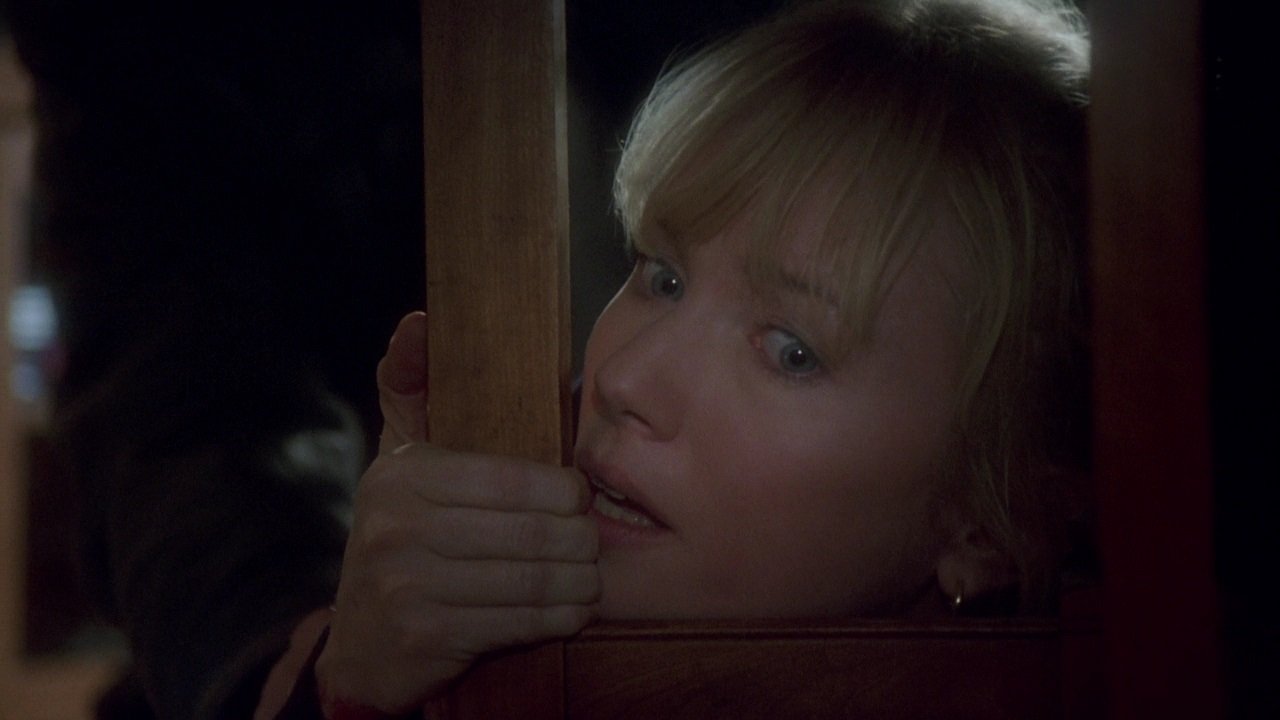
What immediately draws you in, much like it did back in '95, is the sheer wattage of the leads. De Mornay masterfully conveys Sarah's fragility beneath the professional veneer. You see the flicker of longing in her eyes, the vulnerability she tries so hard to mask. Her performance feels committed, grappling with the character's psychological complexities even when the script occasionally falters. Banderas, meanwhile, is pure magnetic presence. He leans into the inherent ambiguity of Ramirez – is he a devoted lover or a dangerous predator? That tension fuels much of the film's first two acts, and their chemistry, oscillating between tenderness and suspicion, is palpable. It's interesting to note that Peter Hall, the director, was primarily known for his incredibly distinguished career in British theatre, including founding the Royal Shakespeare Company. Bringing such a heavyweight theatre director to a Hollywood erotic thriller seems an unusual choice, perhaps signaling an ambition for something deeper than the genre typically offered. Unfortunately, the film didn't quite connect with audiences or critics at the time, grossing a mere $6.8 million in the US against its $11 million budget and garnering a frosty 15% on Rotten Tomatoes.
Casting Dennis Miller as Sarah's neighbour and perhaps overly attached ex-boyfriend, Cliff, was certainly… a choice. Known more for his stand-up comedy and sardonic Weekend Update segments on SNL, Miller brings an edgy, slightly off-kilter energy that adds another layer of potential threat, though it sometimes feels like he wandered in from a different, more cynical movie.
Navigating the Maze


The film spends considerable time building its atmosphere of paranoia. Anonymous gifts turn menacing, phone calls become threatening, and Sarah's carefully constructed world begins to crumble. Hall uses the Toronto locations (standing in for a generic North American city) effectively, emphasizing shadowy interiors and isolated moments. The score often swells with dramatic tension, sometimes effectively, sometimes laying it on a bit thick. It hits many of the expected beats of the genre – the steamy encounters juxtaposed with moments of genuine fear, the red herrings, the gradual psychological unraveling. You find yourself asking, along with Sarah, who can be trusted? It taps into that primal fear of letting someone new into your life, only to discover they might be the source of your deepest anxieties. Remember the marketing tagline? "Fear has arotic eyes." Pure 90s!
Retro Fun Facts
- The film's modest budget ($11 million) was fairly typical for mid-range thrillers of the era aiming for star power without blockbuster effects. Its poor box office performance sadly reflected a growing saturation and fatigue with the erotic thriller formula by the mid-90s.
- The choice of Peter Hall as director remains fascinating. While renowned for stage work, his feature film output was sporadic. One wonders what conversations led to him helming this particular project – perhaps a desire to explore complex character psychology within a commercial framework?
- Filming in Toronto was, and still is, a common practice for productions seeking versatile cityscapes while managing costs. It often doubles effectively for New York or Chicago, adding to that slightly anonymous, anywhere-urban feel prevalent in many 90s thrillers.
(Spoilers Ahead for a 29-Year-Old Film!)
The Twist That Defines It
Okay, let's talk about the elephant in the room: the ending. Never Talk to Strangers hinges entirely on its third-act reveal that Sarah herself, suffering from multiple personality disorder triggered by horrific childhood abuse (revealed in jarring flashbacks), is the one tormenting herself and has likely killed before. This twist certainly aims for shock value, and it retrospectively reframes everything we've seen. De Mornay commits fully to this dark turn, portraying Sarah's fractured psyche with disturbing intensity in the final confrontation.
But does it work? Well, it’s debatable. For some, it might feel like a cheat, pulling the rug out from under the audience and negating the carefully built external suspense. The clues are arguably there (her father issues, moments of dissociation), but they can feel more like convenient plot devices than organic psychological exploration upon reflection. It turns the film from an external threat narrative into an internal one, a move that feels abrupt rather than revelatory. It definitely provokes discussion, but perhaps not always for the reasons the filmmakers intended. Was this twist always the plan, or a later addition to spice things up? Without specific script history details, it's hard to say, but it certainly makes the film memorable, if controversial.
(End Spoilers)
Final Thoughts from the Reel
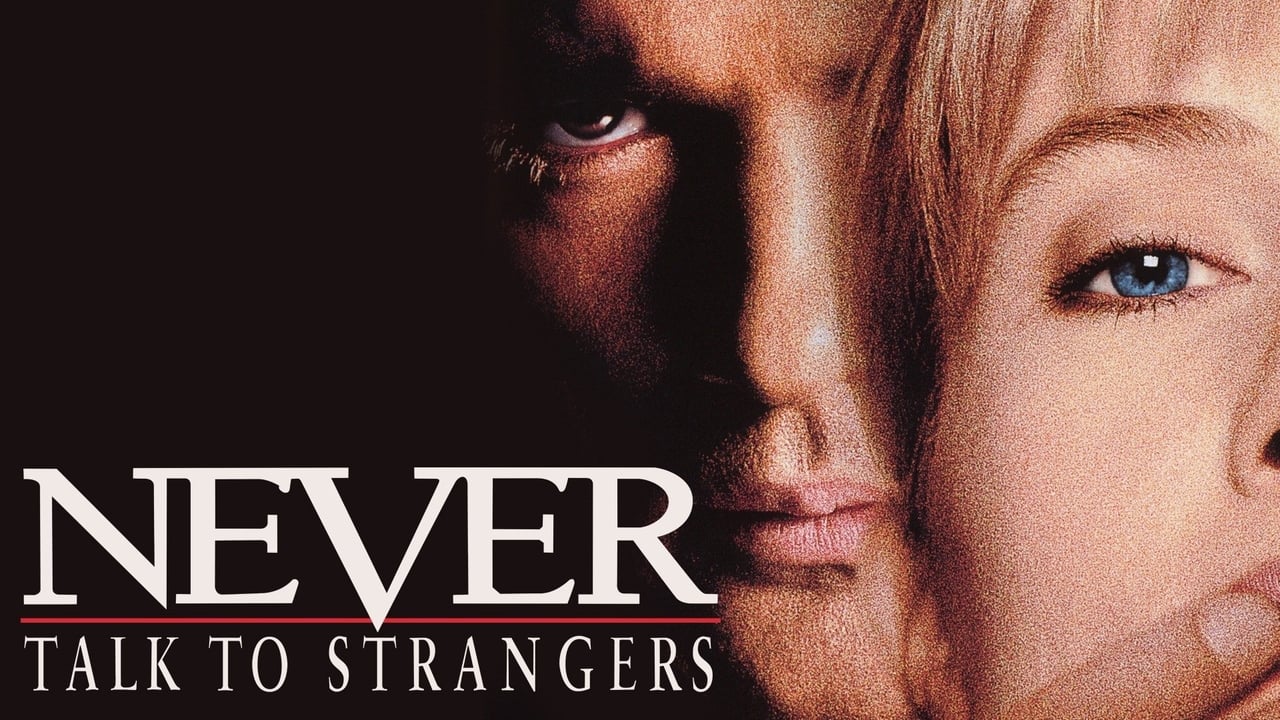
Never Talk to Strangers is a fascinating time capsule of the mid-90s erotic thriller. It boasts compelling lead performances, particularly from Rebecca De Mornay who gives her all to a demanding role, and the undeniable charisma of Antonio Banderas. It captures that specific moody, rain-soaked atmosphere effectively. However, its reliance on a divisive twist ending prevents it from reaching the heights of the genre's best. It feels like a film striving for psychological depth but ultimately settling for shocking revelation. Still, there’s an undeniable pull to it, a certain nostalgic appeal in its earnest commitment to its tropes and its star power. Pulling this tape off the shelf again wasn't about rediscovering a masterpiece, but about revisiting a specific moment in cinematic mood and style.
Rating: 5.5/10
The score reflects the strong performances and evocative atmosphere, somewhat undermined by a script that leans heavily on a potentially frustrating twist. It’s a quintessential high-concept 90s thriller – intriguing premise, star power, memorable (if divisive) ending – that perfectly encapsulates the kind of movie you’d grab for a weekend rental back in the day. It doesn't entirely hold together under scrutiny, but does it still offer a slice of genuine VHS-era intrigue? Absolutely.