Okay, fellow travelers on the magnetic tape highway, let's rewind to a time when the promise of adventure wasn't just on the big screen, but beamed directly into our living rooms, often courtesy of a blue robotic cat from the future. While maybe not a staple in every Western video store alongside Schwarzenegger or Stallone, the discovery of anime gems like 1996's Doraemon: Nobita and the Galaxy Super-express felt like uncovering a secret treasure map, promising worlds beyond our wildest imagining. This wasn't just another movie; it was a first-class ticket to pure, unadulterated wonder, delivered with that unique Doraemon charm.
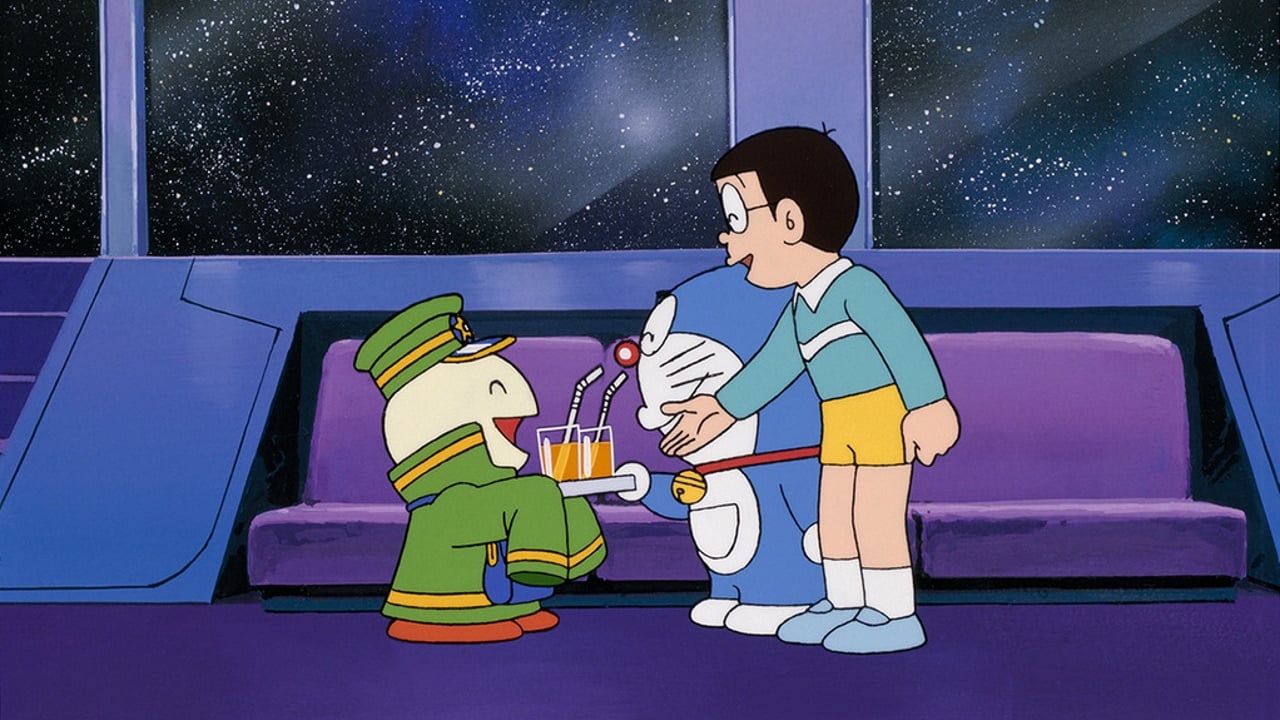
The premise itself is pure Fujiko F. Fujio magic – the legendary creator tapping into that universal childhood dream of impossible journeys. Nobita, our perpetually unlucky but good-hearted protagonist (voiced then, as for decades, by the irreplaceable Noriko Ohara), stumbles upon mysterious tickets for the Galaxy Super-express. Forget boring commutes; this train literally travels between the stars! Naturally, Doraemon (Nobuyo Ōyama, whose voice is Doraemon for generations), the ever-sensible Shizuka (Michiko Nomura), the boisterous Gian, and the sly Suneo are soon swept up in the excitement. There's an immediate sense of exhilaration, that feeling of "what amazing place will we see next?" that fueled so many late-night viewing sessions.
All Aboard for Cosmic Wonders
What truly sets Galaxy Super-express apart, even within the extensive Doraemon filmography, is the sheer imaginative force behind the train itself. Directed by Tsutomu Shibayama, a veteran helmer who guided many of the franchise's most beloved cinematic outings through the 80s and 90s, the film brings the concept to vivid life. The train isn't just transport; it contains the destinations. Each carriage holds a meticulously crafted miniature planet, offering different environments and experiences – from dinosaur parks to snowy landscapes, all accessible just by walking down the corridor. It's a concept so brilliantly simple yet boundless in its potential, perfectly capturing the limitless possibilities Doraemon’s pocket represents.
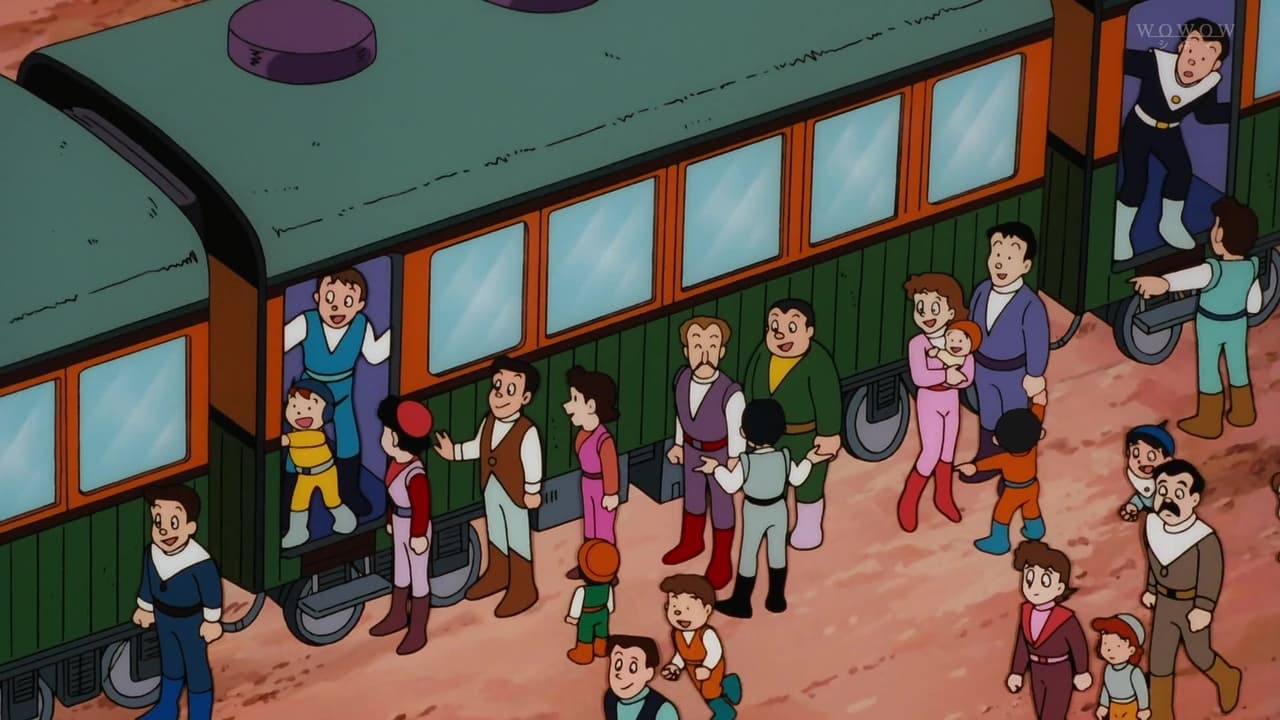
The animation, typical of mid-90s feature anime, bursts with color and character. It might lack the slick digital polish of today, but there's a warmth and hand-drawn expressiveness that feels incredibly nostalgic. You see the awe on the characters' faces as they explore each new world-carriage, and it’s infectious. Amplifying this is the wonderful score by the maestro Shunsuke Kikuchi, whose iconic themes are as synonymous with Doraemon (and other titans like Dragon Ball Z) as the gadgets themselves. His music instantly transports you, weaving threads of excitement, mystery, and heartwarming friendship.
Beyond the Scenery: A Space Western Showdown
Of course, it wouldn't be a proper Doraemon adventure without a healthy dose of peril. The main plot kicks in when the train makes a longer stop at a futuristic planet themed like the American Old West, complete with robot cowboys and dusty saloons. Here, our heroes encounter the Yadori, a sinister race of parasitic aliens seeking to take over the galaxy. Suddenly, the fun sightseeing trip becomes a fight for survival, forcing Nobita and his friends to summon their courage (with a hefty assist from Doraemon’s seemingly bottomless supply of 22nd-century gadgets, naturally).
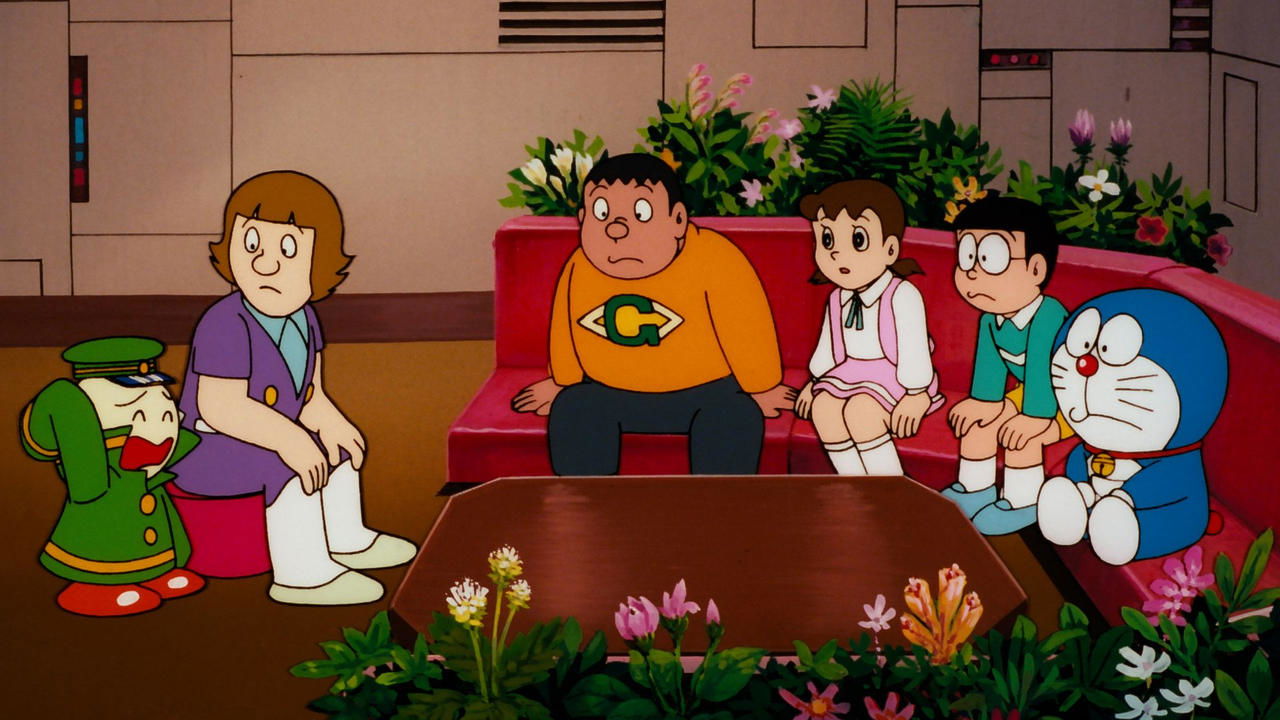
It’s fascinating how Fujiko F. Fujio's stories, even aimed at a younger audience, often incorporated slightly darker or more complex themes. The Yadori are genuinely creepy, possessing hosts in a way that might feel surprisingly intense amidst the usual lightheartedness. Yet, the core values always shine through: bravery isn't about not being scared (Nobita is terrified, as usual), but about facing your fears for your friends and for what's right. The film blends its sci-fi, adventure, and Western elements surprisingly well, creating a unique backdrop for the climactic showdown.
Retro Fun Facts & Enduring Appeal
Digging into the production adds another layer of appreciation. This was the 16th Doraemon feature film, based directly on Fujiko F. Fujio's corresponding Long Story manga, showcasing the incredible longevity and consistent quality of the franchise. Its Japanese box office success (around ¥1.65 billion) highlights how Doraemon remained a cultural phenomenon. For many outside Asia, accessing films like this in the 90s often involved tape trading, seeking out import shops, or catching fansubs – that feeling of discovering something special, slightly outside the mainstream, adds to the nostalgic charm. It felt like being part of a cool, secret club. The sheer dedication of the voice cast, many of whom embodied these characters for decades, grounded the fantastical elements in familiar, beloved personalities. Hearing Nobuyo Ōyama's distinctive Doraemon voice is like catching up with an old friend.
Doraemon: Nobita and the Galaxy Super-express might not have the complex narrative of some anime masterpieces, but its strength lies in its boundless imagination, its warmth, and its celebration of friendship. It perfectly encapsulates why Doraemon has endured: the promise that even the most ordinary kid can experience extraordinary adventures, especially with a loyal robotic cat by their side.
Rating: 8/10
This score reflects the film's sheer imaginative power, its successful blend of genres, and its perfect capture of the Doraemon spirit. It delivers exactly what fans hope for: thrilling adventure, heartwarming character moments, and wonderfully inventive concepts. While perhaps simple by some dramatic standards, its execution within its own framework is delightful and deeply satisfying for anyone fond of these characters or nostalgic for this era of anime.
Final Thought: This film is like finding a cherished postcard from a trip you always dreamed of taking – a vibrant, joyful reminder that sometimes, all you need for an unforgettable adventure is a ticket to the stars and your best friends by your side. All aboard!