It arrived like a transmission from a slightly skewed dimension, a promise whispered on the playground and glimpsed in dazzling, polarized-lens glory if you were lucky enough to catch it in theatres. Starchaser: The Legend of Orin (1985) wasn’t just another animated feature; it was an event, one of the very first animated films bold enough to plunge audiences into the then-novel territory of stereoscopic 3D. For many of us clutching our worn VHS copies later, the 3D was a distant rumour, but the sheer Saturday-morning-cartoon-on-steroids energy remained undeniably potent.
### Echoes in a Crystal Mine
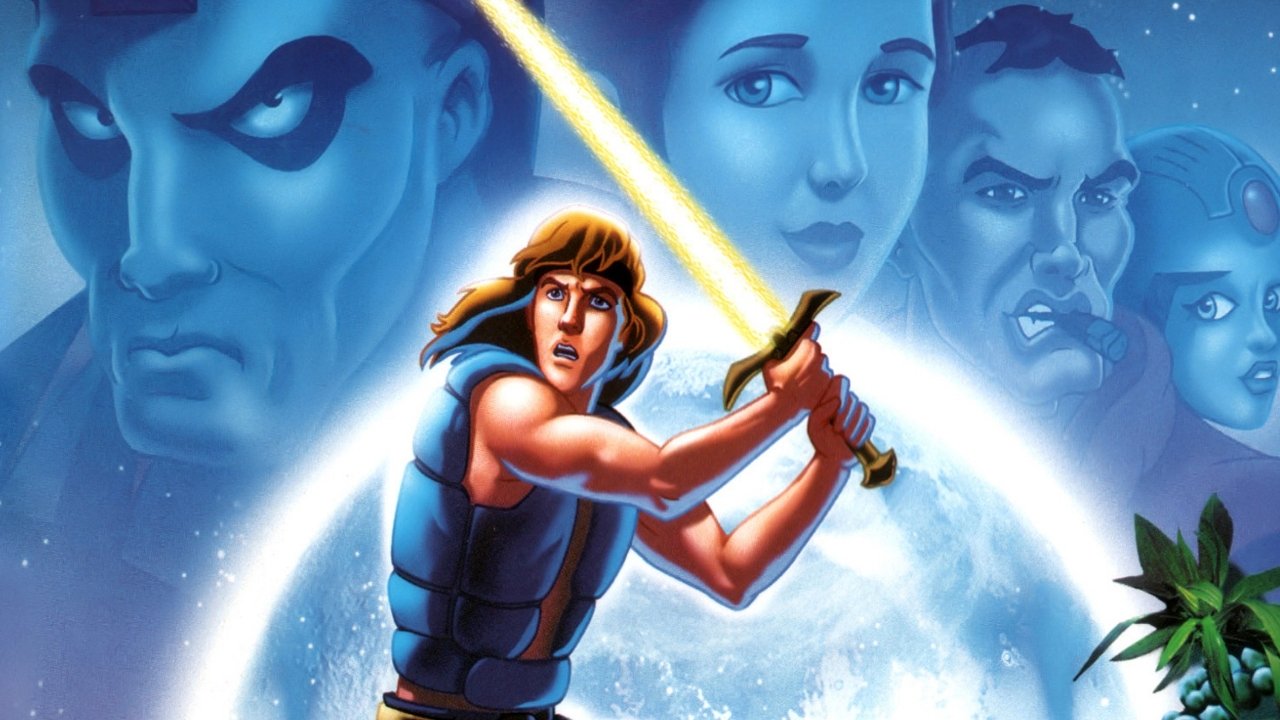
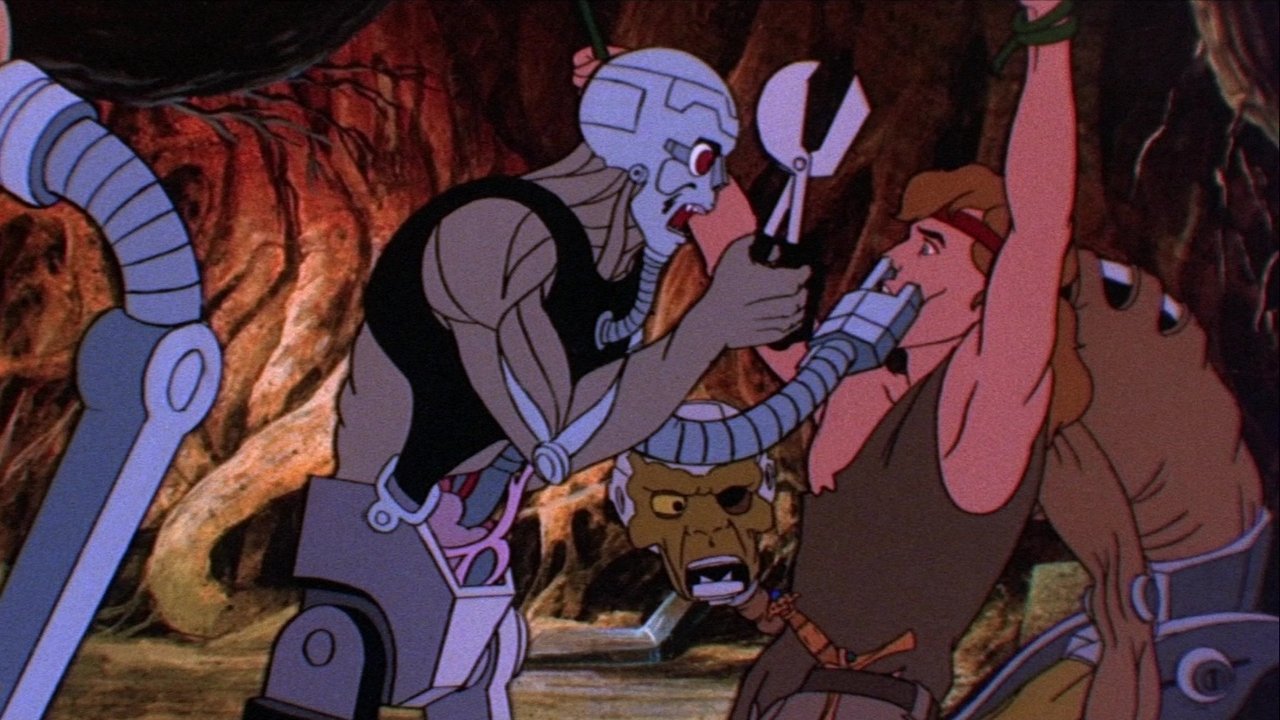
The setup hits familiar, comforting notes, like a well-loved space opera mixtape. We meet Orin (Joe Colligan), a young human slave toiling away in the subterranean crystal mines under the cruel robotic fist of Zygon. His discovery of a mystical sword hilt – one that projects a magical blade and speaks of a world beyond the rock and gloom – kicks off a classic hero's journey. Escaping the mines, Orin bursts into a galaxy teeming with smugglers, tyrants, and ancient prophecies. It’s a narrative roadmap that feels instantly recognizable, particularly if you’d spent any time wishing you had a lightsaber.
Director Steven Hahn and writer Jeffrey Scott (a name familiar to anyone raised on 80s cartoons, having penned episodes for Super Friends, Spider-Man and His Amazing Friends, and Muppet Babies) crafted a universe that feels both expansive and endearingly cobbled together. Scott’s background in episodic animation shines through in the film’s brisk pacing and clear archetypes, making it easy to jump aboard Orin’s quest. The animation itself, handled largely by South Korean studio Young Sung Production Co., has that distinct 80s look – occasionally fluid, sometimes a bit stiff, but bursting with colourful character designs and imaginative (if slightly derivative) ship concepts.
### A Smuggler, a Princess, and Some Chatty Droids
Orin quickly falls in with a motley crew essential to any spacefaring adventure. There's Dagg Dibrimi (Carmen Argenziano, bringing a gravelly charm), the cynical-but-good-hearted smuggler whose spaceship, the Starchaser, becomes their vessel. We also meet Princess Aviana (Noelle North), the requisite damsel who proves more capable than initially perceived, and the robotic sidekicks Arthur, a fussy golden protocol bot, and the repair drone Silica. Sound familiar? The parallels to a certain galaxy far, far away are, let's be honest, impossible to ignore. From the mystical energy blade to the evil overlord in black armour (Zygon) and the daring escape from oppressive forces, Starchaser wears its Star Wars influences proudly, almost like a badge of honour. While some critics at the time called it derivative, for many young viewers, this familiarity was part of the appeal – it felt like getting more of the adventure we already loved.
### The Third Dimension Gamble

What truly set Starchaser apart, however, was its ambitious leap into 3D. Making a feature-length animated film is labour-intensive enough; doing it in stereoscopic 3D in the mid-80s was a monumental undertaking. Each frame had to be drawn and painted twice, from slightly different perspectives, to create the illusion of depth when viewed through polarized glasses. It was a costly gamble, reflected in its fairly substantial (for the time) $12 million budget. Unfortunately, the spectacle didn't quite translate into box office gold, pulling in only around $3.4 million domestically. The 3D boom of the early 80s was already waning, and perhaps audiences weren't quite ready for animated depth perception on this scale.
Watching it now, especially on a standard 2D screen via a cherished VHS or DVD, you can still spot the moments designed for 3D impact – objects flying towards the camera, deep perspective shots, characters positioned in distinct foregrounds and backgrounds. It gives the film a unique visual signature, even without the glasses. You get a sense of the filmmakers constantly thinking, "How can we make this pop out of the screen?"
### Retro Fun Facts & Lasting Ripples
- Costly Vision: That $12 million budget in 1985 is roughly equivalent to over $34 million today – a significant investment for an independent animated feature aiming for a technological gimmick.
- Writer's Pedigree: Beyond the shows mentioned, Jeffrey Scott also worked on Challenge of the GoBots and Jim Henson's Muppet Babies, cementing his place in the pantheon of 80s kid-vid scribes. His experience likely helped shape Starchaser's accessible, adventure-driven plot.
- Home Video Haven: Like many films that didn't explode at the box office, Starchaser found its audience on home video. It became a common sight on rental shelves, a curio picked up for its cool cover art and sci-fi promise, introducing a generation to Orin's quest long after its theatrical run.
- Not Quite Disney: The animation style, while ambitious for its time and budget, distinctly lacks the polish of Disney features from the era, giving it that slightly rough-around-the-edges charm common to many non-Disney animated efforts of the 80s.
### A Flawed Gem in the VHS Dust
Is Starchaser: The Legend of Orin a cinematic masterpiece? Perhaps not. Its story treads heavily on ground already broken by George Lucas, and its characters, while likeable, are familiar archetypes. Yet, there's an undeniable sincerity and ambition to it. It represents a fascinating moment in animation history – a bold, expensive experiment in 3D storytelling that aimed for the stars, even if it didn't quite reach them commercially. For those of us who discovered it on a grainy VHS tape, maybe rented from a corner store with questionable lighting, it was pure escapism – a colourful, action-packed adventure with robots, spaceships, and a magic sword. What more could an 80s kid ask for?
Rating: 6/10
Justification: The score reflects the film's earnest ambition and nostalgic charm, particularly its pioneering (if commercially unsuccessful) use of 3D animation. However, it's docked points for its highly derivative plot and characters, which borrow heavily from Star Wars, and animation quality that, while decent for its budget and time, can feel uneven. It's a fun, fascinating piece of 80s animation history, but not quite a timeless classic.
Final Thought: Starchaser may be a footnote in the grand saga of sci-fi animation, but it’s a lovingly drawn, wonderfully earnest footnote – a testament to a time when even cartoons dared to reach for another dimension.