It starts with redundancy money and a desperate sort of hope, doesn't it? That sudden windfall that feels less like a blessing and more like a ticking clock. For Bimbo Reeves, recently laid off from his baking job in Roddy Doyle's Barrytown, that clock ticks loudest amidst the unexpected, euphoric roar of Ireland's fairytale run in the 1990 World Cup. What do you do when your nation is celebrating, but your own future feels distinctly uncertain? You buy a van, of course. A greasy, clapped-out chipper van.
A Partnership Forged in Batter
The Van (1996), directed by the versatile Stephen Frears (who gave us everything from the punk-edged My Beautiful Laundrette (1985) to the sharp Dangerous Liaisons (1988)), is the third cinematic visit to Doyle’s fictional Dublin suburb, following The Commitments (1991) and The Snapper (1993). It’s a film that might have initially felt like a slightly lesser echo of its predecessors when pulled from the shelves of the local video store, perhaps lacking the immediate musical hook of the first or the sharp familial focus of the second. Yet, revisiting it now, The Van reveals itself as a quietly potent study of male friendship under pressure, anchored by wonderfully authentic performances.
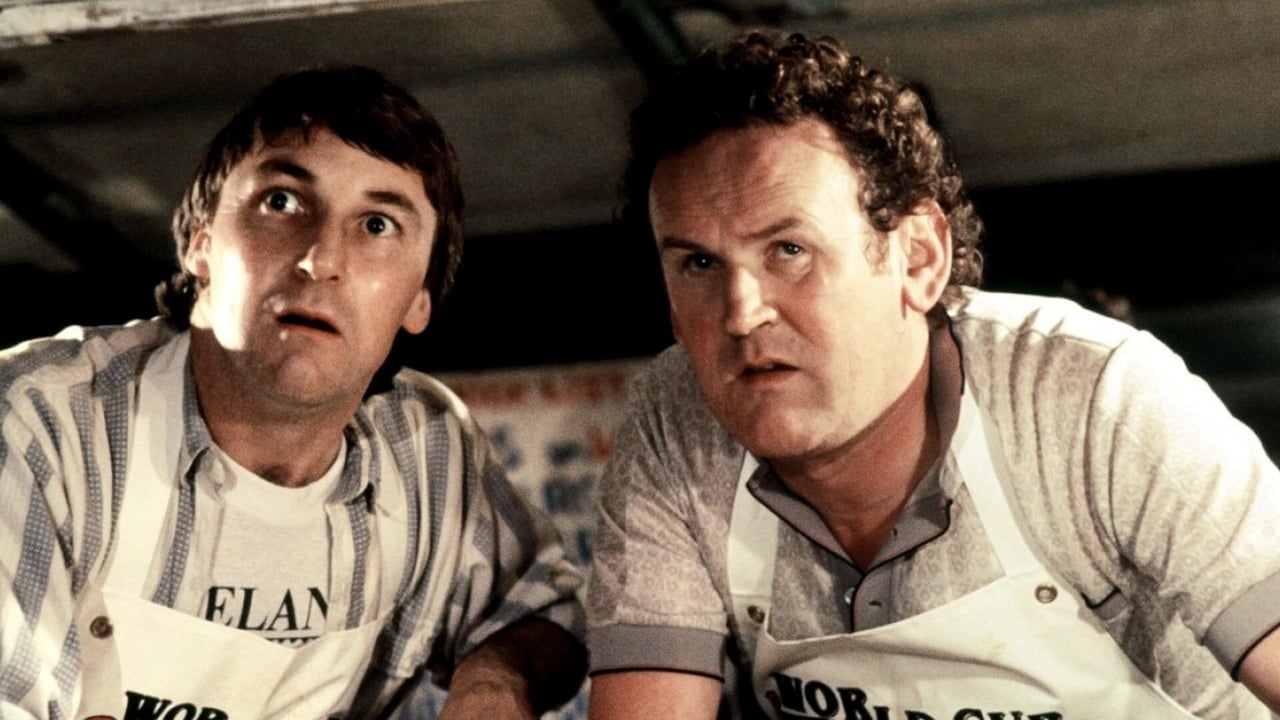
Colm Meaney, a familiar face from the previous two films as the patriarch Jimmy Rabbitte Sr., takes centre stage here as Bimbo. It’s a fascinating shift, seeing Meaney embody a different kind of Barrytown resident – optimistic, initially enthusiastic, the driving force behind the venture. His best mate, Larry (Donal O'Kelly), joins him, initially grateful just to be escaping the crushing boredom of the dole queue. Their initial excitement, fueled by pints and the promise of quick cash serving drunk, happy football fans, is infectious. Frears captures the specific energy of Dublin during Italia '90 – the green jerseys, the packed pubs, the collective gasp and groan with every kick of the ball – grounding the story in a real, tangible moment of Irish history.
When Business Gets Personal
But the greasy reality of running a chip van soon sets in. The cramped space, the long hours, the endless smell of frying food... it becomes a microcosm of the stresses that test any partnership. Frears and Doyle expertly chart the subtle, painful erosion of Bimbo and Larry’s lifelong friendship. Bimbo, having put up the capital, naturally slides into the role of ‘boss,’ while Larry chafes under the perceived hierarchy. Little resentments fester – who cleans the van, who handles the money, who gets the slightly less stained apron.
It's here the performances truly shine. Colm Meaney is superb as Bimbo, capturing the well-intentioned heart beneath the burgeoning small-businessman arrogance. You see his pride in the venture, but also his frustration and insecurity as things unravel. Donal O'Kelly, perhaps less known internationally but a formidable actor, is equally compelling as Larry. He conveys the slow burn of resentment, the feeling of being undervalued, and the quiet desperation of a man struggling to maintain his dignity. Their chemistry is undeniable, making the moments of humour genuine and the fractures in their relationship all the more poignant. Remember those arguments that start small but snowball into something much bigger? Doyle’s dialogue nails that dynamic with uncomfortable accuracy.
Behind the Fryer: Retro Fun Facts
- Barrytown Shuffle: The decision to have Colm Meaney play Bimbo, rather than reprising his role as Jimmy Rabbitte Sr. from The Commitments and The Snapper, was Roddy Doyle's own. Meaney had become so iconic as Rabbitte, but Doyle wanted to ensure the focus remained on the Bimbo/Larry dynamic central to his novel. It allows Meaney to explore a different facet of working-class Dublin life.
- On Location Authenticity: Stephen Frears insisted on filming in and around Kilbarrack, Dublin, the real-life inspiration for Barrytown. This commitment to location shooting adds immensely to the film’s grounded feel. You can almost smell the chip grease and stale beer.
- The Van Itself: Imagine filming lengthy dialogue scenes inside a hot, cramped, functional chip van! Reports from the set often highlighted the challenges and lack of glamour involved, forcing a certain intimacy and realism onto the actors' interactions.
- Musical Surprise: The score was provided by none other than Eric Clapton. While perhaps an unexpected choice for a Dublin-set comedy-drama, his bluesy undertones subtly underscore the melancholy beneath the surface humour.
- Festival Recognition: Despite sometimes being seen as the 'other' Barrytown film, The Van was selected to compete for the prestigious Palme d'Or at the 1996 Cannes Film Festival, a testament to its quality and Stephen Frears's directorial pedigree.
More Than Just Chips
Watching The Van today, perhaps on a format far removed from the trusty VHS tapes we first encountered it on, its themes feel remarkably persistent. It’s about more than just a failing business; it’s about how easily economic pressure can poison personal relationships. It asks quiet questions about pride, self-worth, and what happens when shared dreams curdle into mutual recrimination. Doesn't the dynamic between Bimbo and Larry echo challenges many friendships face when money or status enters the equation?
It may lack the immediate, singalong appeal of The Commitments, but The Van offers something perhaps more lasting: a warm, funny, and ultimately melancholic portrait of ordinary lives navigating extraordinary pressures. It’s a reminder that even amidst national celebration, personal struggles continue, often unfolding in the cramped, unglamorous spaces where real life happens.
Rating: 7.5/10
This score reflects the film's strengths: stellar, authentic performances from Meaney and O'Kelly, Roddy Doyle's characteristically sharp and witty dialogue, and Stephen Frears's sensitive direction that perfectly captures a specific time and place. It captures the bittersweet reality of working-class aspiration and the fragility of friendship with humour and heart. While perhaps not as iconic as The Commitments, it's a deeply human story that resonates long after the fryer has cooled.