Here we are, rifling through the metaphorical stacks of tapes at the back of the store, past the big Hollywood blowouts, and finding something… different. What happens when the slick, often cynical, world of politics collides head-on with naive idealism? That collision is the unsettling, compelling core of Daniele Luchetti’s 1991 Italian drama, Il Portaborse (often found under the English title The Yes Man), a film that arrived like a quiet premonition just before Italy’s political landscape was seismically shaken by the Tangentopoli scandals. It’s not your typical VHS-era fare, perhaps, but its sharp insights feel remarkably potent, even decades later.
### Words as Weapons, Words as Chains
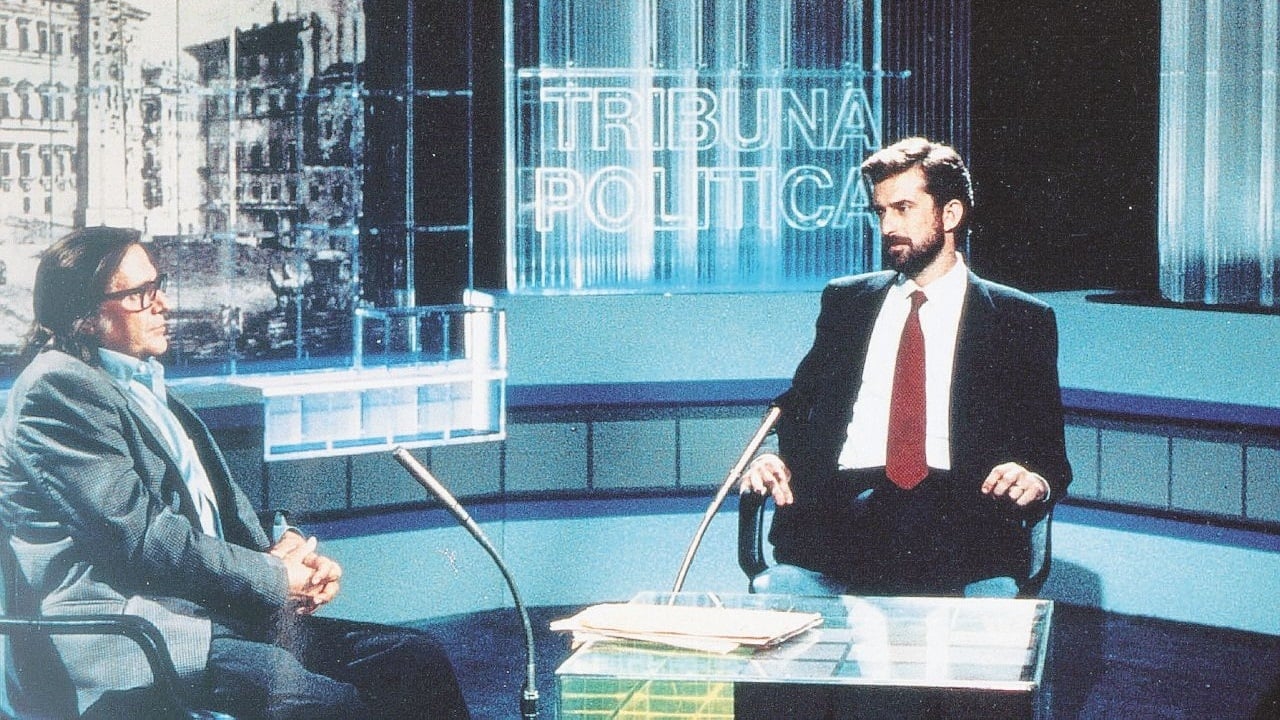
The film introduces us to Luciano Sandulli, played with a heartbreaking blend of earnestness and mounting anxiety by the brilliant Silvio Orlando. Luciano is a struggling literature professor, passionate about poetry, barely making ends meet. He’s the kind of intellectual who believes in the inherent power and purity of language. Then Cesare Botero enters his life – a charismatic, utterly ruthless government minister played against fascinating type by Nanni Moretti, a filmmaker usually known for his more introspective, often semi-autobiographical roles (like in his later Cannes winner The Son's Room (2001)). Botero needs a ghostwriter, someone to craft the soaring speeches and sharp articles that pave his path to power. He needs a portaborse – literally a ‘bag carrier,’ but figuratively, a fixer, a lackey, a yes man.
What unfolds is a gradual, painful descent. Luciano, initially dazzled by the access and the money, finds himself composing eloquent lies, polishing the image of a man whose actions grow increasingly suspect. The film masterfully portrays the insidious nature of compromise. How does one justify writing beautiful words for ugly purposes? Where is the line drawn, and what happens when you realize you crossed it miles back? Luchetti, along with co-writers Sandro Petraglia and Stefano Rulli (who would later script the acclaimed The Best of Youth (2003)), crafts a screenplay that feels less like a political thriller and more like a moral dissection.
### The Uncomfortable Mirror
Nanni Moretti is magnetic as Botero. He sheds his usual neurotic intellectual persona for something colder, sharper, yet undeniably charming. It’s a performance built on subtle calculations, the predatory gleam in the eye masked by a politician's practiced smile. It’s fascinating to watch him, especially knowing his usual directorial preoccupations with authenticity and personal integrity. Apparently, Moretti was initially hesitant about the role, precisely because Botero was so far removed from his typical screen image, but his chilling portrayal became one of the film's major talking points in Italy. It’s a testament to his range and his willingness to explore the darker facets of power.
Opposite him, Silvio Orlando delivers a performance of profound vulnerability. You see the initial flicker of hope in his eyes give way to crushing disillusionment. His increasingly frantic attempts to rationalize his choices, or to find some shred of meaning in the empty rhetoric he produces, are deeply affecting. There’s a quiet desperation in his work that grounds the film’s political satire in genuine human cost. We also get a strong supporting turn from Angela Finocchiaro as Luciano’s wife, who serves as a moral compass and witnesses his gradual erosion with growing alarm.
### Echoes from a Different Time, Yet Familiar
Watching Il Portaborse now feels like uncovering a time capsule, but one whose contents haven't aged into irrelevance. Filmed just before the massive corruption scandals broke in Italy, it possesses an eerie prescience. The cynicism about political maneuvering, the transactional nature of relationships, the way language itself can be weaponized or hollowed out – doesn't it all feel disturbingly familiar? It wasn't a huge budget picture (exact figures are tricky for Italian productions of the era, but it certainly wasn't a blockbuster), yet its impact in Italy was significant, sparking debate and hitting a nerve with audiences sensing the rot beneath the surface.
Luchetti’s direction is understated but effective. He avoids flashy techniques, focusing instead on the actors and the suffocating atmosphere of moral compromise. There are scenes set in sterile ministry offices, opulent but soulless apartments, and chaotic political rallies – each location underscoring the widening gap between Luciano’s ideals and the world he’s entered. The film doesn't offer easy answers or neat resolutions. It leaves you with a lingering sense of unease, questioning the price of ambition and the ease with which principles can be traded away.
One fascinating tidbit: the script apparently went through several drafts as the writers tried to capture the specific flavour of political doublespeak prevalent at the time. They were aiming for authenticity in the speeches Luciano writes for Botero, making them sound convincingly persuasive yet utterly devoid of substance – a challenge in itself!
Final Thoughts & Rating:
Il Portaborse might not have been the tape you grabbed every Friday night from Blockbuster, especially Stateside. It’s a more challenging, reflective piece, a European political drama with sharp teeth hidden beneath its quiet surface. But its exploration of idealism versus cynicism, propelled by two outstanding central performances, makes it a rewarding find for anyone interested in powerful, character-driven cinema from the era. The film digs deep into the human cost of political games, forcing us to confront uncomfortable questions about integrity and complicity.
Rating: 8/10
Justification: The film earns this score through its incisive script, Luchetti's assured direction, and particularly the powerhouse performances from Moretti and Orlando. Its timely (and timeless) themes, coupled with its specific capture of a pre-scandal political climate in Italy, give it lasting significance. It’s a potent, thought-provoking drama that stays with you.
It leaves you pondering: in the corridors of power, real or metaphorical, how many Lucianos are still carrying the bags, writing the words, and slowly losing themselves? A sobering thought from a standout piece of early 90s cinema.