Alright, pop that tape in, maybe hit tracking just right, and settle in. Because we’re diving headfirst into a movie that landed like a neon-splattered meteor in the late 90s: Paul Verhoeven’s wild, wonderful, and utterly savage Starship Troopers (1997). I distinctly remember grabbing this off the shelf at Blockbuster, drawn by the promise of futuristic warfare and giant bugs. What I got was... well, a whole lot more. It felt like someone spiked the blockbuster Kool-Aid with pure, unadulterated satire, and the resulting sugar rush combined with shellshock left an indelible mark.
### Service Guarantees Citizenship! (And Glorious Mayhem)
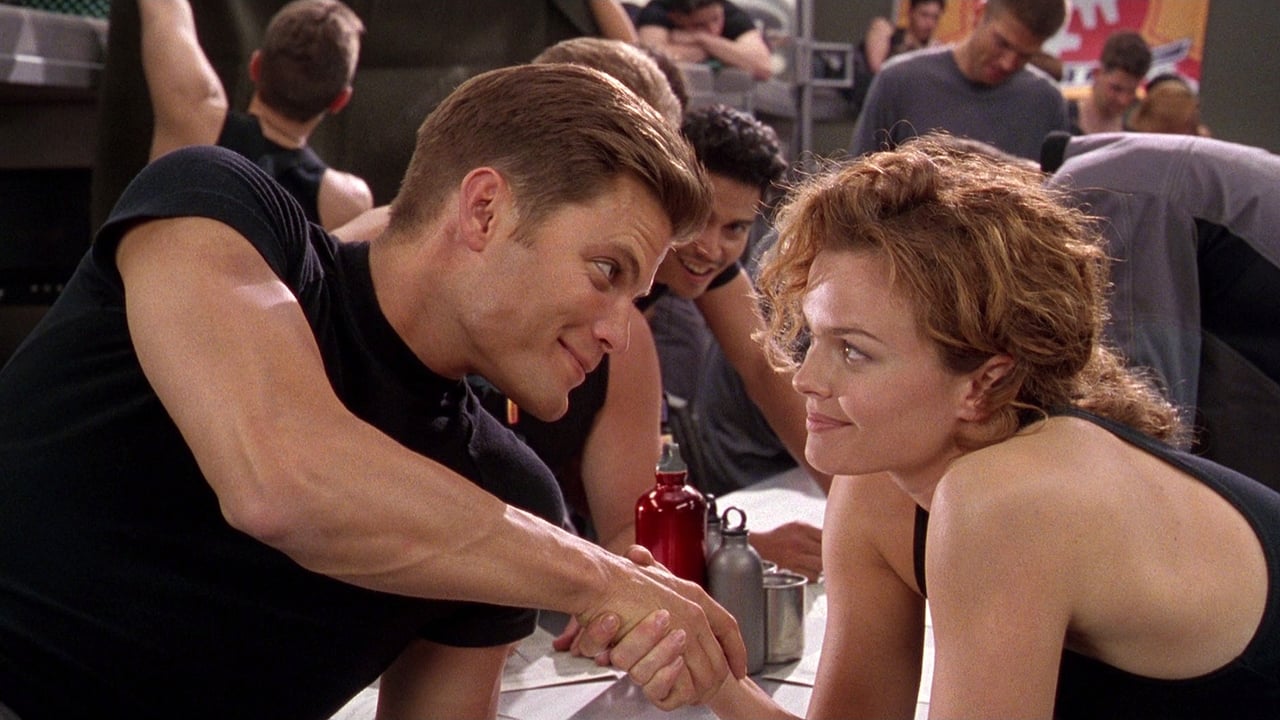
Let's be honest, the initial pitch feels almost deceptively simple, borderline naive. We follow the impossibly gorgeous Johnny Rico (Casper Van Dien) as he joins the Mobile Infantry, primarily to follow his equally gorgeous girlfriend Carmen Ibanez (Denise Richards) into the service. Along for the ride is the tough-as-nails Dizzy Flores (Dina Meyer), harbouring an unrequited crush on Rico. They live in a future Buenos Aires that looks suspiciously like a California suburb, spouting lines about civic duty and franchise rights that sound straight out of a high school civics lesson produced by the military-industrial complex. It's all bright smiles, gleaming futures, and… oh yeah, giant alien Arachnids ripping colonists limb from limb on distant planets.
This clean-cut, almost soap opera vibe juxtaposed with the brutal reality of war is where Verhoeven, reteaming with RoboCop writer Edward Neumeier, works his magic. It’s a brilliant, biting satire of fascism, militarism, and media manipulation, dressed up in the explosive package of a sci-fi action flick. It’s a layer many audiences (and critics) missed completely back in '97, leading to wildly mixed reviews. Some saw jingoistic propaganda, others saw mindless violence, but those who clicked with its wavelength recognized the razor-sharp parody. Retro Fun Fact: Verhoeven famously admitted he couldn't even finish Robert A. Heinlein's original 1959 novel, finding its militaristic themes troubling, which spurred him and Neumeier to take the film in a decidedly satirical direction.

### Bugs, Bugs, Glorious Bugs!
Okay, let's talk about the main event: the Bugs. And oh boy, did this movie deliver on the creature feature front. Forget elegant, Giger-esque aliens; these are hordes of giant, terrifying insects, beautifully realised by the legendary Phil Tippett and his team at Tippett Studio. The blending of large-scale practical puppets, animatronics, and cutting-edge (for 1997) CGI was groundbreaking. Remember the sheer scale of the Warrior Bugs swarming over the outpost on Klendathu? The way they moved, clicked, and impaled troopers felt genuinely overwhelming.
The action scenes here are pure, unadulterated Verhoeven chaos. Forget shaky-cam confusion; this is wide shots filled with carnage. The violence is graphic, almost gleefully so, but it serves the satire. The disposable nature of the troopers, chewed up and spat out by the war machine, is thrown right in your face. Those bullet hits, the sprays of neon bug blood mixed with human viscera – it had a tactile, messy reality that modern CGI often smooths over. It cost a hefty $105 million back then (around $180 million today!), and you can see every dollar on screen in the sheer scale of the bug armies and the fiery explosions. Retro Fun Fact: The live-fire training sequence used real ammunition blanks, adding a layer of tangible danger, and the actors underwent rigorous military-style training to make the Mobile Infantry look convincing (or perhaps convincingly naive).

### More Than Meets the Eye?
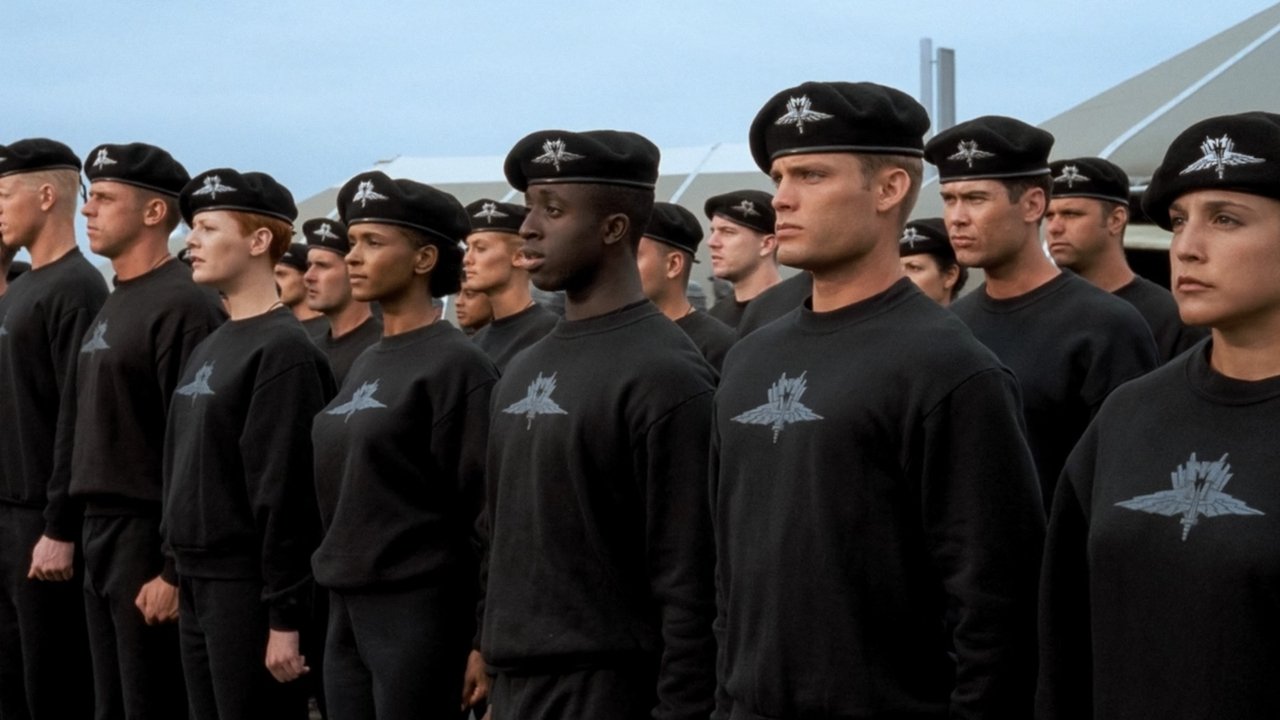
Beyond the spectacle, the performances are perfectly pitched for the film's tone. Van Dien, Richards, and Meyer embody that youthful, slightly naive, all-American (or rather, all-Federation) ideal, making their eventual disillusionment and brutalization all the more impactful. Clancy Brown (Kurgan from Highlander!) is terrifyingly effective as the drill sergeant Zim, and Michael Ironside brings his signature gravelly intensity to Lieutenant Rasczak. His battlefield lecture using a dismembered soldier's limb? Peak Verhoeven.
The film cleverly uses interspersed "Federal Network" newsreels – "Would you like to know more?" – that are pure propaganda gold. They’re hilarious, chilling, and perfectly mimic the way media can shape perception, especially during wartime. It’s this layer that elevates Starship Troopers beyond just a bug hunt. It’s asking questions, even if it couches them in hyper-violence and seemingly straightforward action tropes.
### The Verdict from the Foxhole
Starship Troopers wasn't a runaway smash hit initially. Its $121 million worldwide gross barely covered its production and marketing costs, and critical reception was decidedly split. But like so many great sci-fi films, its reputation grew over time, especially on home video (hello, VHS!). Viewers began to appreciate its savage wit, its spectacular practical effects, and its surprisingly complex themes hidden beneath the carnage. It spawned a few direct-to-video sequels and an animated series, none capturing the unique lightning-in-a-bottle of the original.
Was it cheesy in parts? Absolutely. Did the acting sometimes feel like it belonged on Melrose Place? You bet. But that was all part of the brilliant, subversive design. It’s a film that works on multiple levels – as a thrilling, effects-laden creature feature and as a scathing commentary that feels perhaps even more relevant today.

Rating: 9/10
The score reflects its near-perfect execution of ambitious practical/CG effects for the era, its genuinely thrilling action sequences, its audacious and successful satirical aims (even if misunderstood initially), and its enduring cult legacy. It loses a point perhaps for the slightly uneven pacing in the first act before the real action kicks in, but it’s a minor quibble.
Final Thought: Starship Troopers is peak 90s blockbuster bravado fused with subversive intelligence – a glorious, gory blast of sci-fi action that proves explosions and ideas can coexist, especially when viewed through the satisfying fuzz of a well-loved VHS tape. Would you like to know more? Yes. Yes, I think you would.