Do you remember the sound? That specific sequence of clicks, whirs, and digital handshakes as your modem dialed up, fighting its way onto the information superhighway? In 1998, that sound wasn't an annoyance; it was a portal. It was the sound of possibility, of connection, and for Kathleen Kelly and Joe Fox, the anonymous protagonists of Nora Ephron's You've Got Mail, it was the hesitant first note of a very modern, yet timeless, love song. Watching it again now, on a format far removed from the crispness of digital, there’s a warmth that radiates beyond the screen, a snapshot of a moment when the digital world felt smaller, more intimate, and brimming with romantic potential.

Anonymity and Anticipation
At its heart, You've Got Mail cleverly updates the premise of the 1940 Ernst Lubitsch classic The Shop Around the Corner (itself based on the play Parfumerie by Miklós László). Instead of handwritten letters exchanged between unwitting colleagues, we have emails, pinging back and forth via the then-ubiquitous America Online (AOL). Meg Ryan, America's sweetheart operating at peak charm, is Kathleen Kelly, owner of the whimsical independent children's bookstore, "The Shop Around the Corner". Tom Hanks, cementing his status as the effortlessly likable leading man following collaborations with Ryan in Joe Versus the Volcano (1990) and Ephron's own Sleepless in Seattle (1993), is Joe Fox, heir to the Fox Books superstore chain—a Barnes & Noble-esque behemoth poised to open across the street and crush Kathleen's cherished legacy.
Online, as "Shopgirl" and "NY152," they share their deepest thoughts, insecurities, and literary passions, completely unaware that in the real world, they are business rivals locked in a very personal battle for the soul of the Upper West Side. Ephron, co-writing with her sister Delia, masterfully plays with this dramatic irony. We, the audience, are in on the secret, watching with a mix of amusement and apprehension as their online intimacy blossoms while their real-world animosity escalates. It begs the question, doesn't it? How much of our 'true self' exists in these curated digital spaces, and how much in the messy, complicated interactions of daily life?

New York State of Mind
Nora Ephron didn't just direct movies set in New York; she captured New York, specifically a certain kind of cozy, autumnal, intellectual Manhattan. The city here isn't just a backdrop; it's practically a character. From the golden leaves in Riverside Park to the bustling Zabar's counter and the comforting clutter of Kathleen's shop (inspired by the real Books of Wonder, though filmed on a set), every frame feels lived-in and authentic. This specificity, this sense of place, grounds the relatively high-concept premise, making the burgeoning online relationship feel plausible within its carefully crafted world. Ephron’s lens finds the romance in the everyday – a shared love for bagels, the beauty of a crisp fall day, the unique energy of the city streets.
The Unmistakable Spark
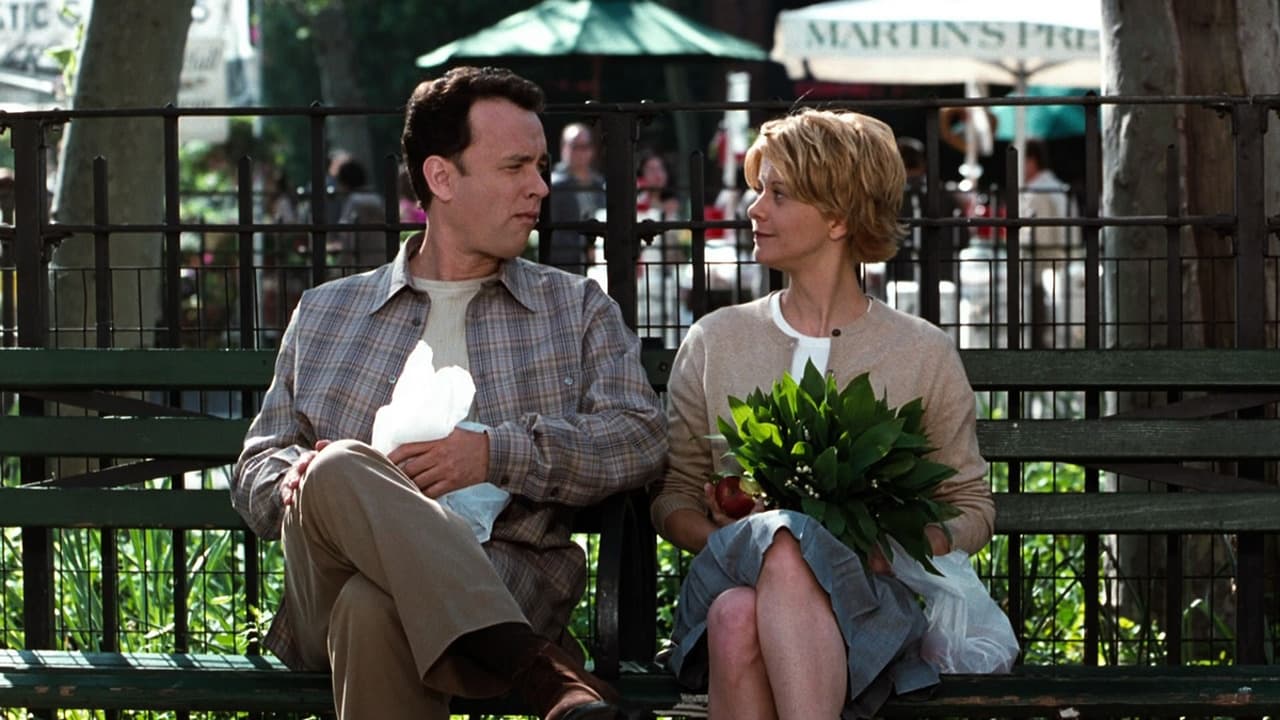

Let's be honest: a huge part of why You've Got Mail still resonates is the sheer, undiluted star power and palpable chemistry of Hanks and Ryan. This was their third pairing, and the anticipation was high. They possess that rare ability to convey volumes with a glance, a hesitant smile, or the subtle inflection in their voiceover readings of the emails. Ryan embodies Kathleen's warmth, optimism, and vulnerability, making her fight for her small store feel deeply personal. Hanks navigates Joe's journey from corporate shark (albeit a charming one) to someone genuinely questioning his own values with remarkable ease. He makes Joe’s eventual softening feel earned, not just scripted. Their antagonism crackles with an underlying energy that seamlessly transforms into attraction. You simply believe them, both as rivals and as soulmates-in-waiting. The supporting cast, including scene-stealers like Parker Posey as Joe's high-strung girlfriend and Greg Kinnear as Kathleen's well-meaning but pretentious partner, add perfectly pitched comedic friction.
Dial-Up Dreams and Dot-Com Dollars
Revisiting You've Got Mail is also a fascinating time capsule of late-90s technology and culture. The prominent AOL integration – reportedly a significant product placement deal where AOL provided the filmmakers with email accounts and technical support – feels both incredibly dated and strangely charming now. The bulky CRT monitors, the iconic "You've Got Mail!" notification sound, the sheer novelty of instant online communication... it all sparks a specific kind of nostalgia. This wasn't just background detail; it was integral to the plot, capturing a unique transitional moment before the internet became the ubiquitous utility it is today.
It's also interesting to consider the film's financial context. Made for a substantial (for the time) $65 million budget, it grossed over $250 million worldwide – roughly $470 million in today's money – proving the enduring appeal of a well-crafted romantic comedy powered by genuine star chemistry. Ephron knew precisely what audiences wanted, and she delivered it with wit and warmth. The film tapped into a collective fantasy: that amidst the burgeoning anonymity of the internet, true connection was still possible, perhaps even easier to find.
Beyond the Bytes
While undeniably a feel-good romance, the film doesn't entirely shy away from the melancholy undercurrent of Kathleen's predicament. The David vs. Goliath struggle between the independent shop and the corporate giant feels even more relevant today. There's a genuine sadness in seeing Kathleen's dream threatened, a reflection on the changing face of commerce and community that adds a layer of bittersweet depth. Ephron doesn't offer easy answers, acknowledging the loss even amidst the romantic resolution. What does it mean when progress comes at the cost of something cherished and personal? The film lets that question linger, even as Brinkley the golden retriever bounds towards a happy ending.

Rating: 8.5/10
This score reflects the film's undeniable charm, the powerhouse performances of Hanks and Ryan, Ephron's witty and warm direction, and its perfect encapsulation of a specific cultural and technological moment. It’s intelligent, funny, and deeply romantic, overcoming the inherent contrivances of its plot with sheer heart. While the tech feels ancient and the plot might seem predictable by today's standards, the core emotions – the longing for connection, the thrill of anonymity, the clash between ideals and reality – remain surprisingly resonant. It loses a point perhaps for the slightly idealized portrayal of the corporate 'villain' and the inevitable predictability, but the execution is near-flawless for its genre and era.
You've Got Mail is like pulling a beloved sweater out of storage – familiar, comforting, and imbued with the warmth of fond memories. It captures the hopeful dawn of the popular internet age, wrapping a classic story structure around a then-modern phenomenon, and reminds us that sometimes, the most meaningful connections begin with the simple click of a button.