Ah, the scent of possibility, mingled with the faint aroma of ozone from the CRT warming up. That’s the feeling Fanfan evokes, a film brimming with a very specific, almost audacious kind of romantic idealism that feels particularly potent when viewed through the lens of time. Released in 1993, it arrived on video store shelves like a breath of fresh, albeit complicated, Parisian air amidst the grungier, more cynical fare of the era. What lingers most strongly isn't just a plot point, but a question it poses with whimsical sincerity: Can love be preserved, like a butterfly under glass, by refusing to let it land?

A Courtship Built on Avoidance
The premise itself is delightfully, perhaps maddeningly, French. Our protagonist, Alexandre (Vincent Perez), is a young man terrified by the inevitable cooling of passion that he believes plagues all long-term relationships. Witnessing the comfortable, passionless state of his own parents and feeling the predictable slide towards domesticity with his fiancée, Laure (Marine Delterme), he concocts a radical plan upon meeting the vibrant, free-spirited Fanfan (Sophie Marceau). He decides he will love her eternally, platonically, ardently – but never consummate the relationship or even truly acknowledge it in conventional terms. His goal? To maintain the thrill of the chase, the exquisite tension of unfulfilled desire, forever. It’s a high-wire act of romantic theorizing, destined for complications.
The Incandescent Fanfan

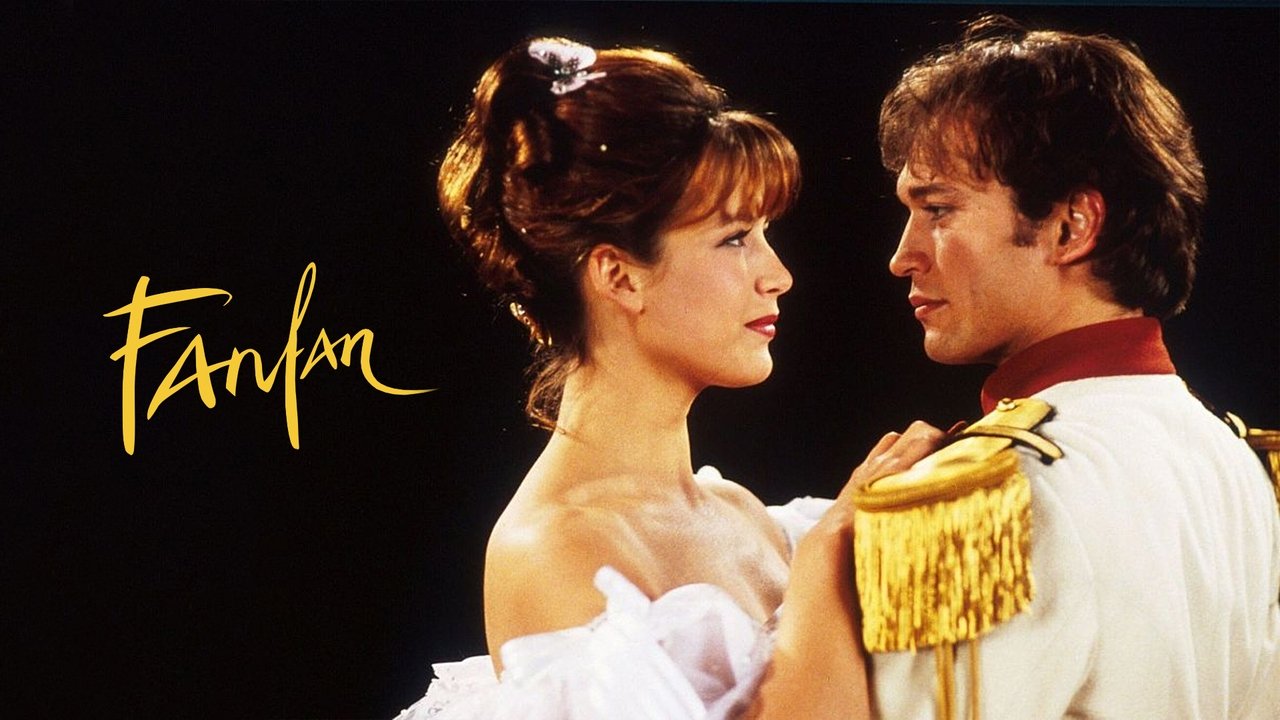
It's impossible to discuss Fanfan without focusing on Sophie Marceau. Already a major star in Europe since her teenage debut in La Boum (1980), Marceau embodies Fanfan with an effortless luminosity. She is impulsive, charming, slightly chaotic, and utterly captivating. Crucially, Marceau makes Fanfan more than just the object of Alexandre's bizarre experiment. She's a force of nature, possessing her own desires and agency, increasingly bewildered and hurt by Alexandre's elaborate games of proximity and distance. You feel her frustration as he orchestrates elaborate 'chance' encounters, buys the apartment next door to watch her through a one-way mirror, and showers her with attention that stops just short of actual commitment. Marceau sells Fanfan’s allure completely; you understand why Alexandre is drawn to her, even as you question his methods. Her performance is the film's vibrant heart, preventing the central conceit from becoming merely an intellectual exercise.
Alexandre's Paradox
Vincent Perez, fresh off notable roles in period dramas like Cyrano de Bergerac (1990) and the sweeping epic Indochine (1992), had the challenging task of making Alexandre sympathetic, or at least understandable. He portrays him not as a cruel manipulator, but as a deeply flawed idealist, genuinely believing his philosophical approach is the path to lasting happiness. Perez imbues Alexandre with a certain boyish charm mixed with intellectual arrogance. You see the appeal – the grand romantic gestures, the intense focus – but also the inherent selfishness and fear driving him. Does his fear of love’s decay resonate with a deeper human anxiety about permanence, or is it simply profound emotional cowardice dressed up in fancy ideas? The film leaves that question open for debate, and Perez navigates this ambiguity effectively.


A Novel Idea, Literally
One fascinating bit of context often missed by international audiences is that Fanfan was adapted and directed by Alexandre Jardin from his own best-selling novel of the same name. This perhaps explains the film's strong adherence to its central, slightly literary conceit. Jardin, directing his own material, maintains a light, almost fantastical tone throughout much of the film, even as the emotional stakes rise. The cinematography often emphasizes the picturesque aspects of Paris and the almost dreamlike quality of Alexandre’s obsession. There's a certain visual flair, a commitment to the romantic aesthetic, that feels very much of its time – think sun-drenched apartments, whimsical costumes, and lingering close-ups on expressive faces. Jardin isn't aiming for gritty realism; he's exploring an idea, albeit one with very real human consequences. This direct author-to-director pipeline gives the film a singular, focused vision, even if it occasionally feels constrained by its own premise.
Idealism vs. Reality
Ultimately, Fanfan is a cinematic thought experiment about the nature of love and desire. Can you truly love someone by keeping them at arm's length? Is the anticipation always better than the arrival? The film playfully explores these ideas, creating scenarios that are often charming and sometimes deeply uncomfortable. I remember renting this on VHS, likely from the 'Foreign Language' section, drawn in by Marceau's captivating cover image. It felt different from Hollywood romances – less formulaic, more willing to embrace ambiguity and a touch of philosophical eccentricity. It doesn’t offer easy answers, and the resolution might divide viewers on whether Alexandre truly learns anything or simply finds a new way to frame his obsession.
The charm lies in its commitment to its unusual premise and the undeniable chemistry between its leads. Marceau is radiant, Perez is compellingly conflicted, and the film possesses a certain European chic that still appeals. It’s a snapshot of a particular kind of early 90s filmmaking – earnest, stylish, and unafraid to be a little bit strange.
Rating: 7/10
This score reflects the film's undeniable charm, Marceau's magnetic performance, and its intriguing, if flawed, central concept. Perez effectively embodies the complexities of Alexandre, and Jardin's direction maintains a consistent, if sometimes overly whimsical, tone. It loses a few points for a premise that occasionally strains credulity and a third act that feels slightly less assured than the setup. However, its willingness to explore unconventional ideas about love within a visually appealing framework makes it a memorable watch from the VHS era.
It leaves you pondering: In our relentless pursuit of preserving the magic, do we sometimes forget that real love requires the courage to risk the ordinary? Fanfan doesn't definitively answer, but it asks the question with undeniable style.