It wasn't just a movie release; it felt more like a national event, didn't it? Back in 1994, you couldn't escape Forrest Gump. Its gentle drawl, iconic lines, and that endlessly drifting feather seemed to weave themselves into the very fabric of the year. Directed by Robert Zemeckis, already a wizard in our eyes from Back to the Future and Who Framed Roger Rabbit, this film landed with a quiet sincerity that somehow roared through pop culture, becoming a phenomenon that few could have predicted, least of all from its modest $55 million budget, which it famously recouped more than tenfold, eventually grossing over $678 million worldwide. Seeing it back then, probably on a slightly fuzzy CRT after popping that hefty double VHS into the VCR, felt like settling in for something truly special.

### A Feather on the Breeze of History
At its heart, Forrest Gump tells the deceptively simple story of a man with a low IQ but a heart full of unwavering goodness, as he inadvertently stumbles through some of the most pivotal moments of 20th-century American history. From meeting presidents and fighting in Vietnam to accidentally inventing the smiley face and becoming a ping pong diplomat, Forrest drifts through life with an earnestness that shapes events around him. The screenplay, adapted by Eric Roth from Winston Groom's more cynical 1986 novel, crafts a narrative that's part fable, part history lesson, and part deeply affecting human drama. It's a sprawling tale, carried along by Forrest's narration from that now-iconic bus stop bench (originally filmed in Chippewa Square, Savannah, Georgia, though the bench itself has since been moved to the Savannah History Museum – a true piece of movie history!).
### Tom Hanks IS Forrest

Let's be honest: this film lives and breathes through Tom Hanks. Already a beloved star, fresh off an Oscar win for Philadelphia, Hanks delivered a performance that transcended acting. He became Forrest. Eschewing caricature, he found the character's soul – the unwavering loyalty, the simple wisdom, the quiet pain beneath the surface. It’s hard to fathom now, but actors like John Travolta and Bill Murray reportedly turned down the role. Hanks, however, not only took it but famously waived his salary for percentage points, a gamble that netted him an estimated $40 million and, of course, his second consecutive Best Actor Oscar. His portrayal is the anchor, grounding the often fantastical events in genuine emotion. We believe in Forrest because Hanks makes him utterly, undeniably real.
### More Than Just Supporting Players
While Hanks is the center, the constellation of characters around him shines just as brightly. Robin Wright brings a haunting fragility to Jenny Curran, Forrest's lifelong love and restless counterpoint. Her journey is often heartbreaking, a stark contrast to Forrest's almost charmed existence, and Wright navigates Jenny's complexities with incredible grace. And who could forget Lieutenant Dan? Gary Sinise delivered a career-defining performance as the embittered, legless Vietnam veteran whose arc towards acceptance and friendship with Forrest provides some of the film's most powerful moments. The visual effects used to remove Sinise's legs were groundbreaking for the time, seamless and utterly convincing. Add in Sally Field's fierce love as Mama Gump and Mykelti Williamson's unforgettable turn as the shrimp-loving Bubba Blue, and you have a truly remarkable ensemble.

### Zemeckis' Digital Magic and Heartfelt Storytelling
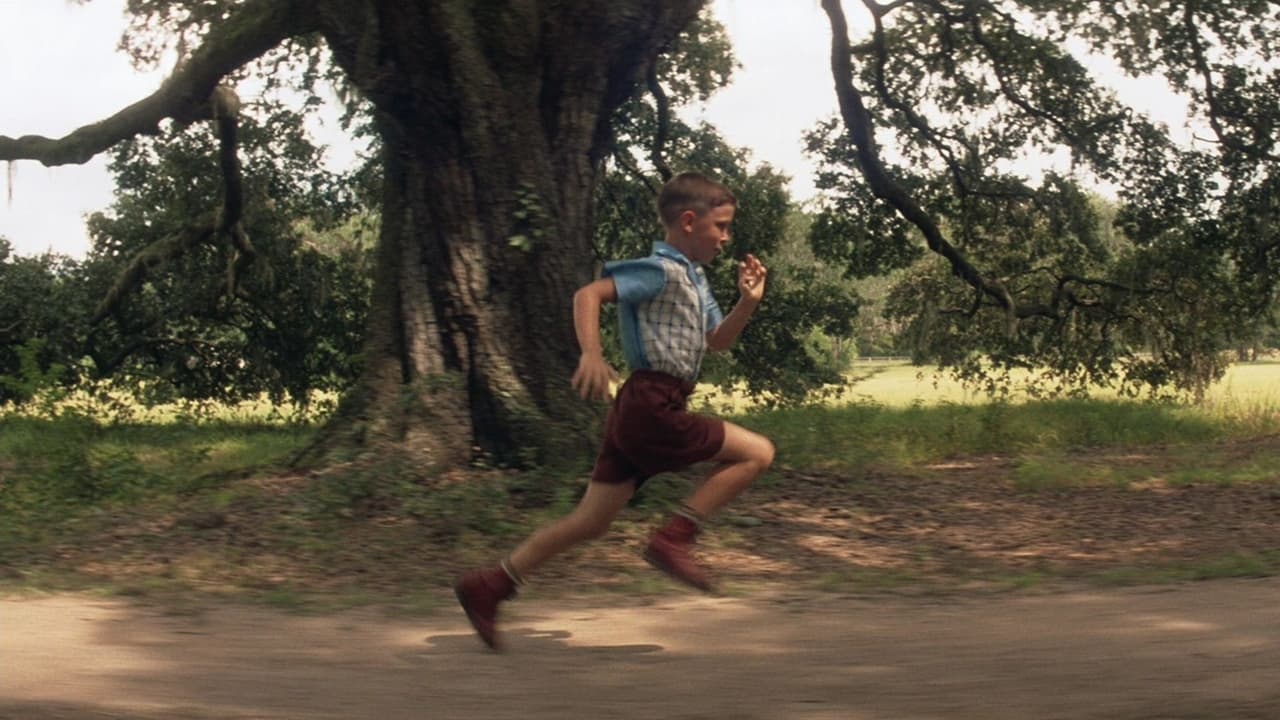
Robert Zemeckis masterfully blended cutting-edge (for 1994) digital effects with traditional storytelling. Inserting Forrest into archival footage – shaking hands with JFK, appearing on talk shows with John Lennon, standing near George Wallace – felt like pure movie magic back then. It wasn't just a gimmick; it served the story, visually representing Forrest's unlikely journey through history. Beyond the technical wizardry (including those astonishing ping pong sequences!), Zemeckis kept the focus firmly on the characters and the emotional core of the story. He knew precisely when to tug at the heartstrings and when to offer moments of gentle humor or profound quiet. The film's pacing, across its near two-and-a-half-hour runtime, feels perfectly judged, sweeping the audience along on Forrest's extraordinary life.
### Retro Fun Facts & Lasting Echoes
The film is packed with fascinating tidbits. Did you know Tom Hanks' younger brother, Jim Hanks, doubled for him during many of the cross-country running sequences? Or that the iconic line "My name is Forrest Gump. People call me Forrest Gump" was ad-libbed by Hanks? The soundtrack, a veritable jukebox of classic rock and pop hits that perfectly mirrored the eras Forrest traversed, was almost as successful as the film itself, selling millions of copies.
Forrest Gump wasn't just a box office smash and an Oscar darling (winning six Academy Awards, including Best Picture); it became a cultural touchstone. Its lines entered the lexicon ("Life is like a box of chocolates..."), its imagery became instantly recognizable, and it sparked endless conversations about its themes – innocence, fate, the American dream, and the interpretation of history. While some critics later debated its perceived sentimentality or political undertones, its enduring popularity speaks volumes. It captured a certain mood, a blend of nostalgia, hope, and melancholy that resonated deeply with audiences worldwide. It remains a film that can make you laugh, cry, and reflect, often all within the same scene.
***

VHS Heaven Rating: 9/10
This score reflects the film's masterful blend of technical innovation, Tom Hanks' iconic performance, its powerful emotional core, and its undeniable cultural impact. While some aspects might be debated today, the sheer cinematic craft, heartfelt storytelling, and unforgettable characters make it an enduring classic of the 90s. It earns its place as a near-perfect piece of filmmaking that defined a moment in time.
Forrest Gump is more than just a movie; it's a warm blanket of cinematic comfort food, a reminder that sometimes the simplest perspectives hold the most profound truths, kind of like finding an unexpected gem in that familiar box of chocolates.