The quiet hum after the storm – that’s what the end of the Shadow War should have felt like. A universe catching its breath, scarred but standing. But some silences are merely the pause before a different kind of scream. For those of us who lived and breathed Babylon 5 through its tumultuous five-year mission, the void left felt vast. Then came TNT, a new home, and with it, Babylon 5: A Call to Arms (1999), a promise of continuation that landed less like a gentle continuation and more like a klaxon sounding in the dead of night. It wasn't just more B5; it was the chilling realization that the darkness hadn't been vanquished, merely shifted its shape.

Echoes of Ancient Enemies
The film wastes little time reminding us that peace is a fragile thing. The Drakh, shadowy inheritors of their former masters' destructive technology, emerge not with warships aimed at shattering planets, but with something far more insidious: a plague unleashed upon Earth itself. There's a particular kind of dread in this setup, penned as always by the series architect J. Michael Straczynski (JMS). It trades the grand, operatic space battles of the Shadow War for a more intimate, terrifying threat – a biological clock counting down the lives of billions. The imagery of the Drakh ships, biomechanical nightmares scuttling through space, still carries an unsettling otherness, a disturbing legacy of designs glimpsed in the original series. Doesn't that creeping sense of an unseen, internal enemy feel particularly potent?
Forging a New Sword
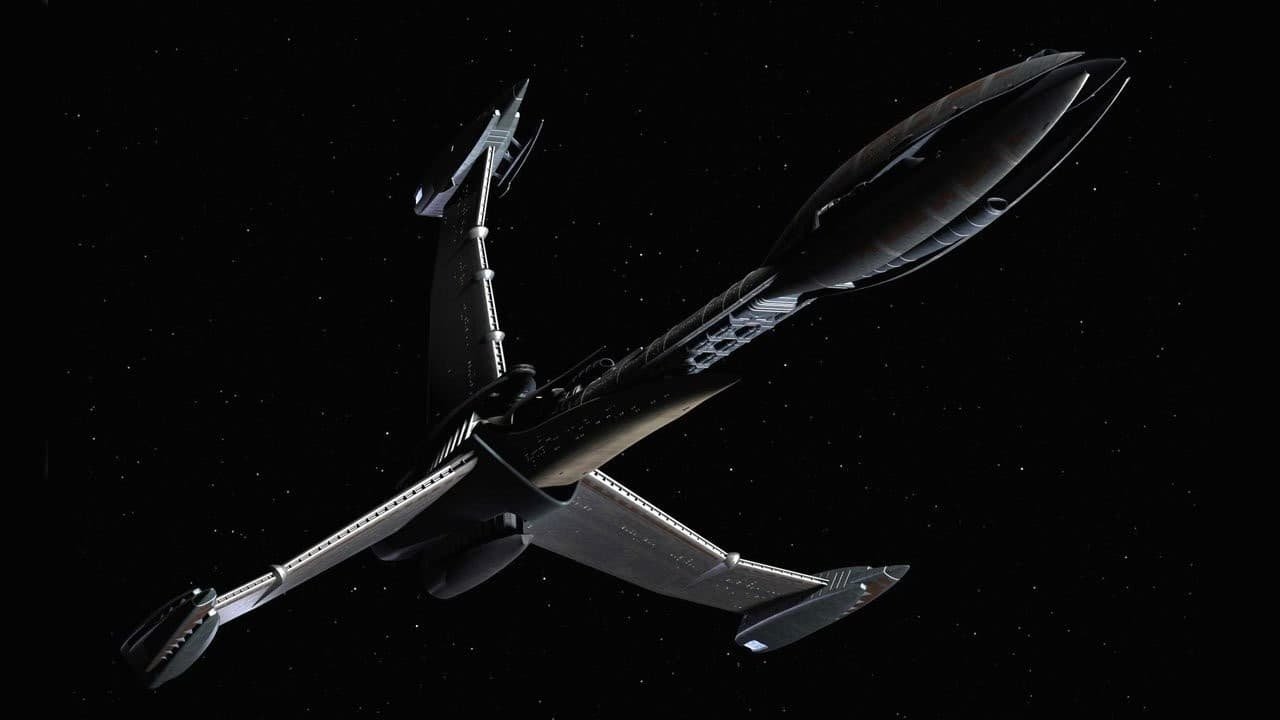
Faced with planetary extinction, President Sheridan (Bruce Boxleitner, settling back into the role with weary authority) spearheads a desperate gamble: the creation of the Excalibur. This ship, a synthesis of human, Minbari, and even forbidden Vorlon technology, represents hope, but also the dangerous path of fighting fire with fire. Its sleek, advanced design was a thrill to see back in '99, a tangible sign of progress within the B5 universe, even if the TV movie budget (around $3 million, ambitious for TV sci-fi F/X back then) meant the CGI, handled by Netter Digital who took over from Foundation Imaging, sometimes lacked the seamless polish of its progenitor series. Yet, the Excalibur feels right – a vessel born of necessity, crewed by familiar faces like the ever-reliable Zack Allan (Jeff Conaway, given more responsibility) and the cynical but dependable Michael Garibaldi (Jerry Doyle), alongside newcomers like the capable Captain Anderson (Michael Beck) and the mysterious technomage-adjacent thief Dureena Nafeel (Carrie Dobro). The inclusion of Dr. Franklin (Richard Biggs) and Lyta Alexander (Patricia Tallman) further anchors the story in the rich tapestry of the original show.
The Weight of Command
Mike Vejar, a seasoned hand at directing television sci-fi including episodes of Star Trek: TNG and DS9, keeps the narrative moving at a brisk pace. He understands the balance required for B5: the political maneuvering, the character beats, the sudden bursts of action. A Call to Arms functions primarily as a launchpad for the ill-fated spin-off series, Crusade, and you can feel it straining slightly under that dual purpose. It needs to re-establish the world, introduce the new threat, assemble the new crew, and tell a compelling story within its runtime. While mostly successful, certain character introductions feel geared more towards setting up future arcs than fully resonating within this specific film. Did the rush to establish the Crusade premise slightly undercut the immediate drama for you? I recall feeling the urgency, but also sensing the narrative gears shifting for what was meant to come next. JMS, ever the meticulous planner, had envisioned the Drakh plague arc playing out over years; here, its devastating introduction serves as a powerful, if somewhat condensed, catalyst.

Lingering Shadows and Lost Futures
Watching A Call to Arms today carries an extra layer of melancholy. Knowing that Crusade, the series it so capably set up, was cut down prematurely by network interference after just 13 episodes lends a bittersweet edge to the hope embodied by the Excalibur's mission. The search for a cure, the driving force established here, was never truly resolved on screen. Yet, the film itself stands as a solid piece of the Babylon 5 puzzle. It successfully translated the complex universe to a new network (TNT, after the show's original run on the Prime Time Entertainment Network), proved the concept had life beyond the initial five-year arc, and delivered a story with genuine stakes and that signature B5 feel. The score by Christopher Franke remains a vital component, instantly evoking the series' unique blend of grandeur and dread. It's a reminder of a universe rich with potential, even if some of that potential remained tragically unexplored.
Final Verdict & Rating
Babylon 5: A Call to Arms isn't peak Babylon 5, lacking the intricate plotting and slow-burn reveals of the main series' best arcs. However, as a bridge between the original show and its intended successor, and as a compelling sci-fi adventure in its own right, it succeeds admirably. It brought back beloved characters, introduced a chilling new threat, and launched one of the coolest ships in the B5 pantheon. The knowledge of Crusade's fate dims its launch trajectory somewhat in retrospect, but the film itself delivers tension, solid performances from the familiar cast, and expands the universe in intriguing ways. It was a welcome sight on the shelves of the video store or flickering on the late-night TV screen, a sign that the story wasn't over.
Rating: 7/10
It stands as a testament to JMS's expansive vision and a poignant 'what if' for the Crusade that should have been, successfully reigniting the Babylon 5 flame, even if the subsequent fire was tragically short-lived.