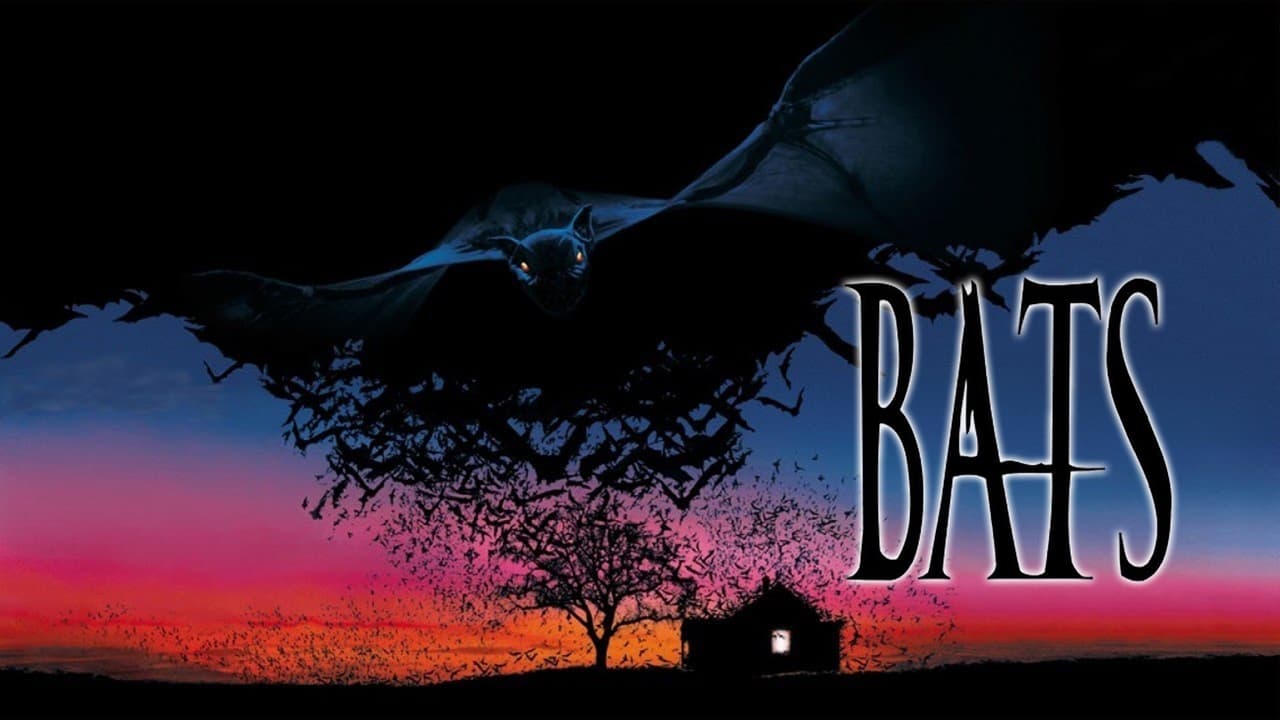
The quiet West Texas night isn't supposed to shriek like that. But in Gallup, Texas (or rather, Utah standing in admirably for it), the familiar desert landscape becomes a canvas for unnatural terror. It's the sound that gets you first – a high-pitched, chittering wave washing over the darkness, promising teeth and wings where only silence should be. This is the unsettling overture to Louis Morneau's 1999 creature feature, Bats, a film that arrived just as the 90s were drawing to a close, bringing with it a certain B-movie charm wrapped in aspirations of genuine dread.
Nature's Twisted Experiment
The setup is classic genre fare, the kind of story scribbled on a cocktail napkin during a fever dream, yet penned here by none other than John Logan – yes, the very same John Logan who would later give us the epic scope of Gladiator (2000) and the sharp intrigue of Skyfall (2012). Reportedly an early script of his, Bats posits a chillingly plausible (well, plausible for a late-night monster movie) scenario: Dr. Alexander McCabe (Bob Gunton, forever etched in our minds as the stern Warden Norton from The Shawshank Redemption (1994)) has genetically engineered bats to be smarter, stronger... and decidedly carnivorous towards humans. When these hyper-intelligent chiropterans escape near Gallup, it falls to visiting bat expert Dr. Sheila Casper (Dina Meyer, bringing the same tough competence she displayed in Starship Troopers (1997)) and the stoic local Sheriff Kimsey (Lou Diamond Phillips, a familiar face from 90s screens in films like Young Guns (1988) and La Bamba (1987)) to stop the swarm before it spreads.
The film wastes little time unleashing its titular menace. Those initial attack scenes, often shrouded in night, tap into a primal fear. Wings beat against windows, shadows flit across moonlit streets, and the sheer number of them feels overwhelming. This was the era where CGI was becoming more accessible but still had that slightly rubbery, unreal quality, especially in wide shots depicting massive swarms. Yet, Bats wisely leans on practical effects and animatronics for its close-up encounters. Remember those moments – a single, snarling creature lunging from the dark? Even if the wires might be subtly visible on a freeze-frame now, back then, squinting at a fuzzy CRT screen rented from Blockbuster (I distinctly remember the slightly menacing cover art beckoning from the horror aisle), those practical bats had a tangible, unsettling presence that digital effects sometimes lacked. Doesn't that slightly jerky, physical menace still hold a certain charm?
Phillips and Meyer vs. The Swarm
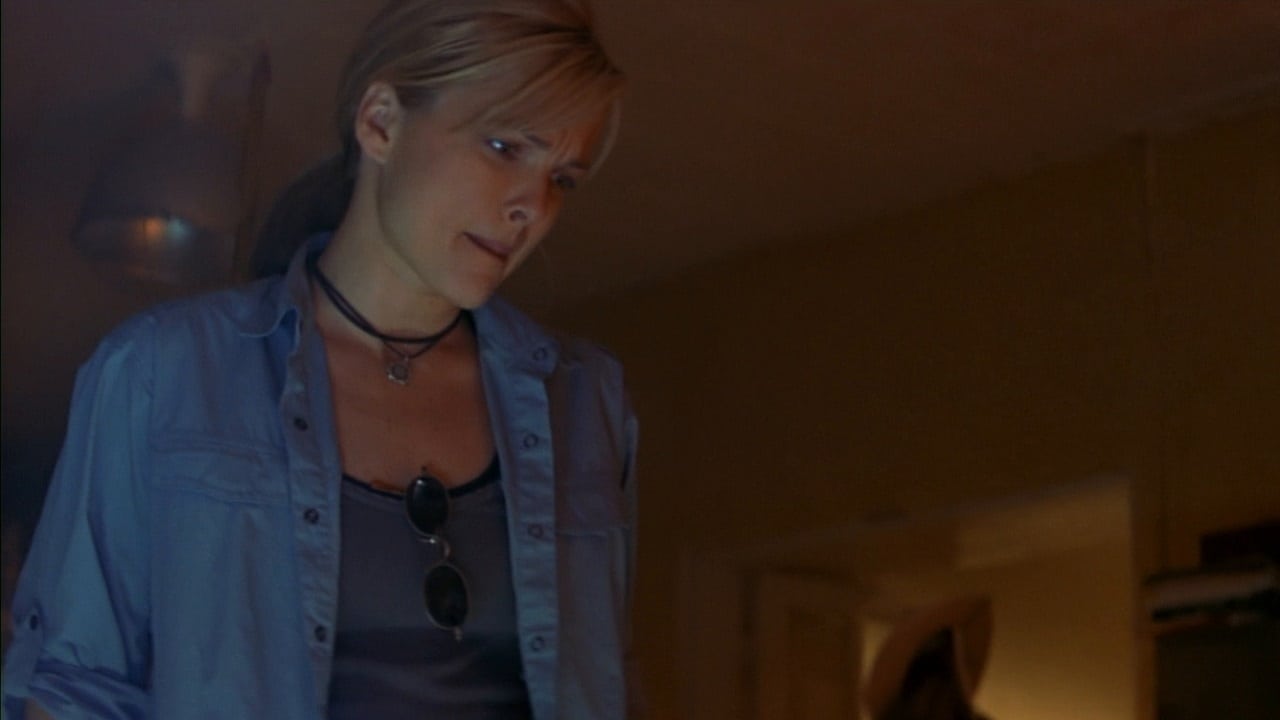
Lou Diamond Phillips plays Sheriff Kimsey with a world-weary seriousness that anchors the film. He’s the pragmatic local facing an unbelievable threat, and Phillips sells the determination, even when the dialogue occasionally dips into pure B-movie exposition. Dina Meyer, as the brilliant zoologist haunted by a past bat-related trauma (naturally), provides the scientific know-how and a capable counterpoint to Kimsey’s grounded lawman. Their chemistry is functional, if not electrifying, providing the necessary human element amidst the screeching chaos. Bob Gunton, meanwhile, clearly enjoys chewing the scenery as the unapologetically arrogant creator of this winged plague, delivering lines about ecological balance with a glint in his eye that screams "mad scientist."
Director Louis Morneau, who also gave us the quirky time-loop thriller Retroactive (1997), tries to imbue Bats with a sense of claustrophobia and relentless assault. The sequences inside the bat roost – inevitably a dark, dripping cave system – are where the film attempts its most atmospheric horror. Lit by flares and flashlights, the tunnels become a deadly labyrinth, leveraging darkness and sound design to suggest threats lurking just beyond the beam of light. The production design effectively creates a suitably grimy and dangerous environment for the final confrontation.
A Creature Feature Caught Between Eras
Bats landed in theaters with a modest budget (around $6.5 million) and managed to double its money at the box office ($10.2 million), suggesting audiences were still hungry for straightforward monster mayhem. It wasn't a smash hit, and critics at the time were largely unkind (Roger Ebert famously gave it one star), but it found its audience on home video – the perfect late-night rental. It even spawned a largely forgotten SyFy channel sequel, Bats: Human Harvest (2007), further cementing its place in the annals of creature feature history.
The film exists in that interesting late-90s space where practical effects were still king for close-up work, but CGI was making inroads for larger-scale spectacle. The blend isn't always seamless, and viewed today, some of the digital swarms look decidedly dated. Yet, there’s an earnestness to Bats. It takes its premise seriously, even when it borders on the absurd. It aims for scares and tension, and occasionally lands a decent jolt. It’s a film that knows exactly what it is: a lean, mean (well, mostly mean) monster flick designed to entertain for 90 minutes. Did it redefine the genre? Absolutely not. But does it offer a fun slice of nostalgic creature chaos? Undeniably.
VHS Heaven Rating: 5/10
Justification: Bats earns a solid 5 for its commitment to its B-movie premise, some effectively staged practical bat attacks, and earnest performances from Lou Diamond Phillips and Dina Meyer. The presence of Bob Gunton adds a touch of class, even in mad scientist mode. However, it loses points for its often-clunky dialogue, predictable plot beats, and dated CGI swarm effects that haven't aged gracefully. The atmosphere is decent in places (the cave sequence), but it never quite achieves genuine, lingering dread.
Final Thought: While it won't trouble the legacy of Jaws or Alien, Bats remains a fondly remembered (or perhaps half-forgotten) staple of the late-90s creature feature revival. It’s the kind of movie perfectly suited for a rainy Saturday night, a bowl of popcorn, and perhaps a knowing chuckle shared with fellow fans who remember when genetically altered bats felt like a genuinely terrifying threat.