Okay, settle back into that comfy armchair, maybe grab a Jammie Dodger, because we're digging out a real gem today – a tape that felt like discovering a secret level in the Doctor Who universe. Picture this: it's Red Nose Day, 1999. You're tuned in for the usual mix of celebrity sketches and heartfelt appeals, and then... BAM! The TARDIS materialises, but stepping out isn't any Doctor you quite recognise. It's Rowan Atkinson, Mr. Bean himself, playing the Time Lord. Welcome, friends, to the glorious, slightly bonkers, and utterly charming world of Doctor Who: The Curse of Fatal Death.
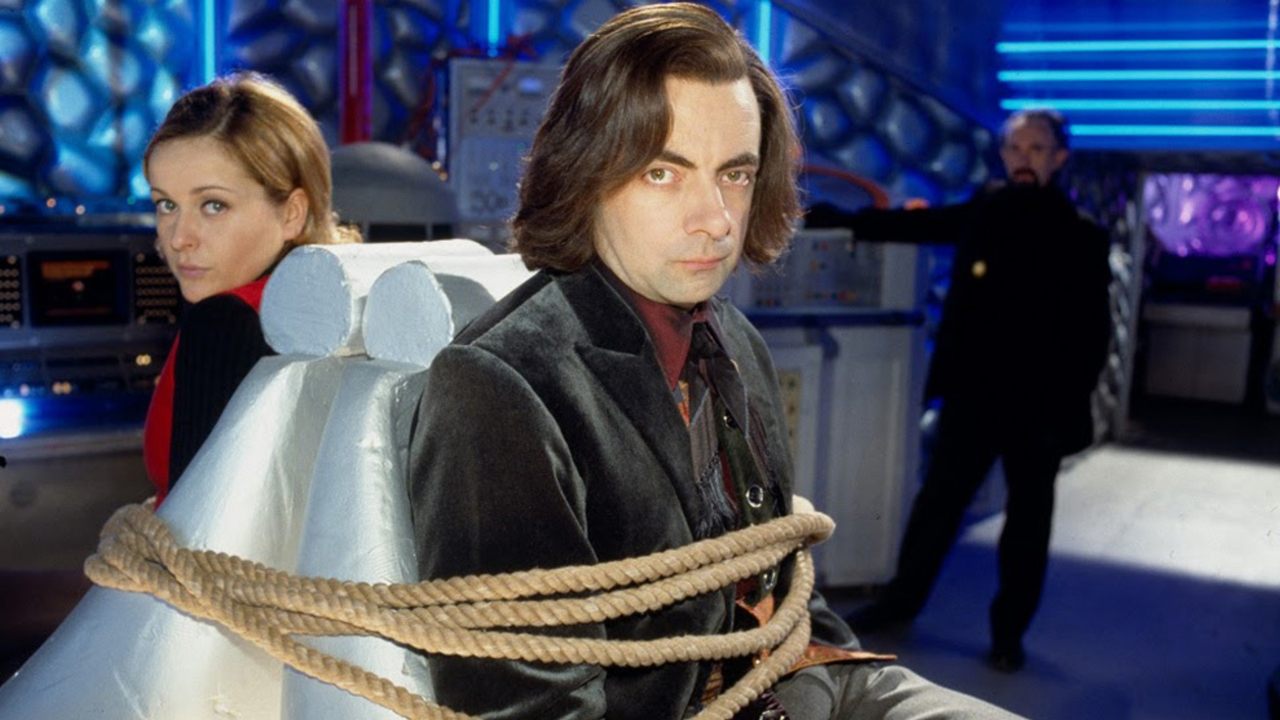
This wasn't some fan film cobbled together in a garage; this was a fully-fledged, BBC-produced special written by a name that would become legendary in Who circles: Steven Moffat. Yes, that Steven Moffat, years before he'd helm the revived series, cutting his teeth on this affectionate parody for Comic Relief. It’s a short, sharp burst of Whovian delight that somehow manages to both celebrate and gently poke fun at everything we loved (and occasionally rolled our eyes at) in the classic series. I distinctly remember catching this live, the sheer unexpectedness of it all adding to the magic – a feeling perfectly suited to the slightly unpredictable nature of finding hidden treasures on VHS.
### Not Quite Canon, But Who Cares?
Let's get this out of the way: The Curse of Fatal Death isn't part of the official Doctor Who continuity. But honestly, does it matter? What it is, is a brilliantly funny "what if?" scenario. The plot sees the Doctor (Atkinson, initially) finally ready to settle down with his companion Emma (Julia Sawalha, fresh off Absolutely Fabulous). He's even planning home improvements for the TARDIS console room! But, wouldn't you know it, his old nemesis The Master (a deliciously camp Jonathan Pryce, channeling pure Roger Delgado energy) crashes the party, leading to a confrontation on the planet Tersurus.
What follows is pure Moffat-esque timey-wimey shenanigans mixed with classic Who tropes turned up to eleven. There are Daleks (looking suitably clunky, bless 'em), sonic screwdrivers used for domestic chores, witty banter that crackles with foreshadowing of Moffat's later dialogue, and of course... regeneration. Oh boy, is there regeneration.
### A Cast You Wouldn't Believe
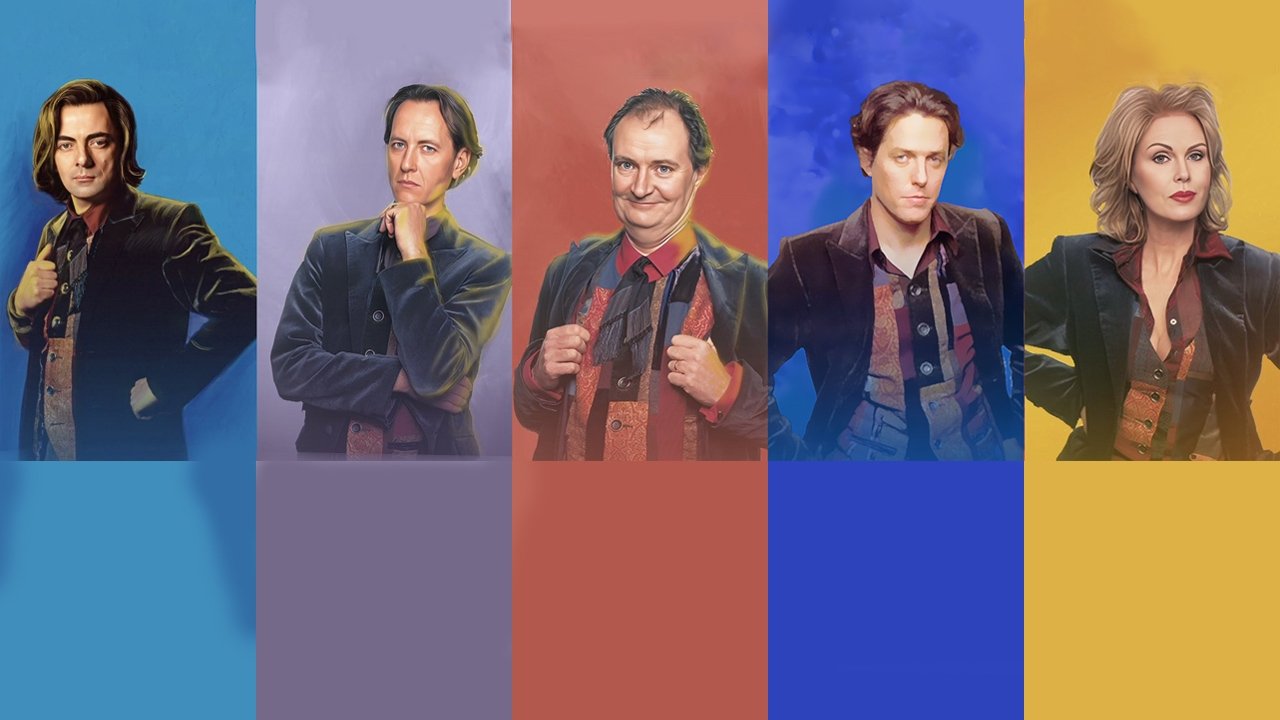
Part of the sheer joy of Curse is its jaw-dropping cast, assembled for charity but bringing their A-game. Atkinson's Ninth Doctor (as he's retroactively known in fan circles) is a wonderfully weary, slightly awkward take, less alien enigma and more middle-aged bloke tired of the running around. But when The Master inevitably gets the upper hand (or plunger), the fun really begins.
In rapid succession, we get Richard E. Grant (who would later play the Great Intelligence and an alternate Doctor) as the outrageously vain 'Shalka' Doctor, Jim Broadbent as a shy, Cilla Black-quoting Doctor, Hugh Grant as a devastatingly charming and smooth Doctor (pre-dating his own later career renaissance), and finally... Joanna Lumley as the Thirteenth Doctor! Yes, years before Jodie Whittaker officially broke that barrier, Curse gave us a female Doctor, played with characteristic fabulousness by Lumley. It was a throwaway gag then, but feels remarkably prescient now. Seeing all these British acting heavyweights gleefully step into the Doctor's shoes, even for mere minutes, is a delight. It's rumoured that Moffat had a list of dream actors and, thanks to the Comic Relief connection, pretty much got them all.
### Moffat's Early Playground
Watching this now, it's fascinating to see the seeds of Steven Moffat's later Doctor Who work. The witty, rapid-fire dialogue, the complex relationship dynamics (even played for laughs here between the Doctor and Emma, and the Doctor and the Master), the clever twists on established lore – it's all present. The Master's plan involving Zygons and sewers feels perfectly pitched between classic series absurdity and Moffat's knack for intricate plotting. Directed by John Henderson (who also directed Loch Ness (1996)), the special has a decent-for-TV-comedy look, capturing the feel of late 90s television production without the budget of a full series. The effects are simple, sure – the regeneration glows are basic, the Dalek movements familiar – but they work perfectly within the context of a loving parody. Remember how those practical Dalek bumps and shudders felt more real somehow than today's slick CGI?
### Regeneration Overdrive!
The central gag, of course, is the Doctor burning through regenerations at an alarming rate. Each new incarnation gets a brief moment to shine (or preen, or blush) before meeting another untimely end, usually at the hands of the Daleks or The Master's surprisingly effective traps. It's a hilarious deconstruction of a core Who mechanic, pushed to its logical, comedic extreme. The sheer pace of it feels like someone hitting fast-forward on a well-loved tape, cycling through favourite moments with giddy abandon.
The humour lands consistently, from the Doctor's exasperation at The Master's overly complicated plans ("Oh, Doctor, you didn't fall into my trap, you did something clever I hadn't thought of?") to the Daleks' surprisingly complex emotional state ("We hate the Dokter! We hate the Dokter! ...But we do respect his doctorate."). It's written by someone who clearly loves Doctor Who, warts and all.
Rating: 8/10
This rating reflects the sheer fun, clever writing, and incredible ensemble cast packed into this short special. It loses a couple of points purely because it is a non-canon parody sketch rather than a full story, and its production values are understandably modest compared to the main series (even of the classic era). However, as a piece of affectionate satire and a fascinating glimpse into Steven Moffat's early Whoniverse thoughts, it's practically perfect. The jokes hold up, the performances are a joy, and it captures a specific, warm-hearted moment in Doctor Who fandom history.
Final Thought: The Curse of Fatal Death is like finding an extra track hidden at the end of your favourite album on cassette – a brilliant, unexpected bonus that reminds you exactly why you loved the main event in the first place. An essential, hilarious oddity for any Whovian's collection, digital or physical.