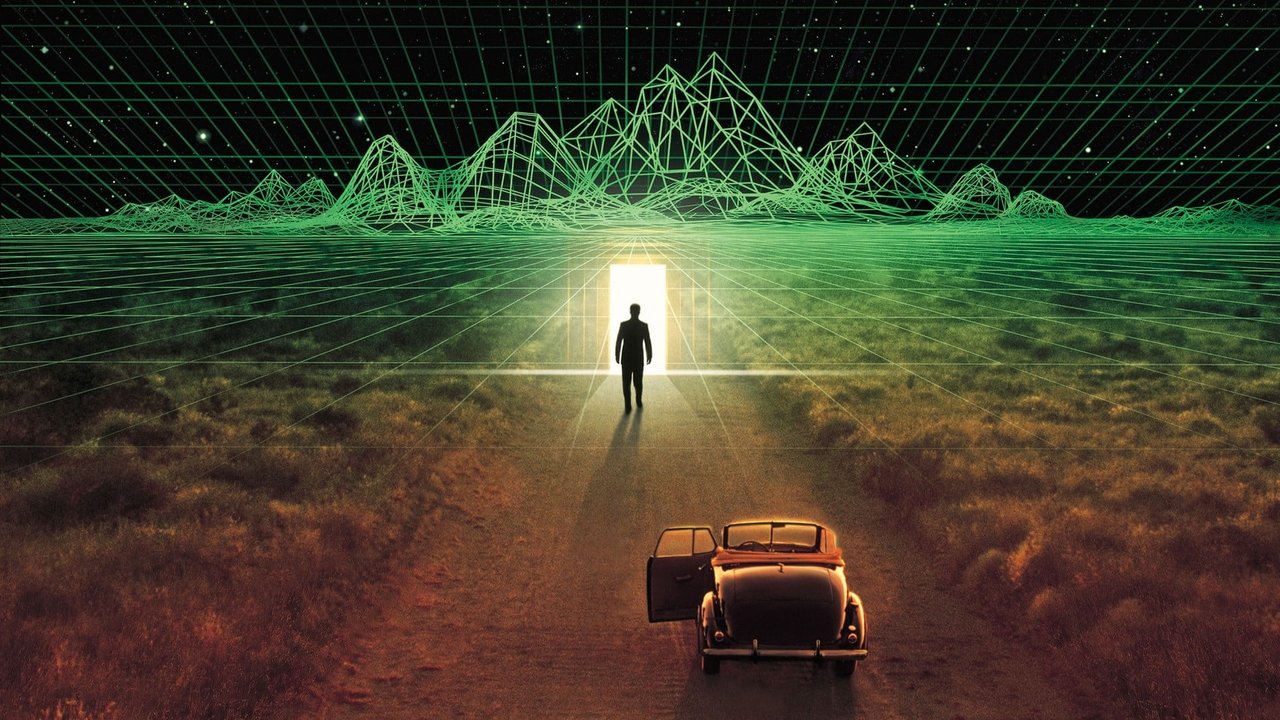
The rain streaks down a virtual window pane, reflecting neon city lights that might not truly exist. A man sits alone, a digital glass of something strong beside him, wrestling not with gangsters or dames in the traditional sense, but with the very fabric of existence itself. This isn't just another late-night tech thriller; this is the unsettling, rain-soaked echo chamber of Josef Rusnak's The Thirteenth Floor, a film that arrived in 1999, whispering existential dread while another, louder film was shouting about rabbit holes and kung fu.
Worlds Within Wires
Based on Daniel F. Galouye's 1964 novel Simulacron-3 – a cornerstone text of simulated reality fiction that also inspired Rainer Werner Fassbinder's ambitious TV miniseries World on a Wire (1973) – The Thirteenth Floor weaves a compelling, noir-infused narrative. We follow Douglas Hall (Craig Bierko) and his colleague Whitney (Vincent D'Onofrio, unsettling even in a smaller role) who, alongside the aging tech guru Hannon Fuller (Armin Mueller-Stahl), have crafted a breathtakingly real simulation of 1937 Los Angeles. Fuller uses it for nostalgic indulgence, 'jacking in' to live out simpler, albeit programmed, fantasies. But when Fuller is murdered shortly after leaving Hall a cryptic message inside the simulation, Hall finds himself the prime suspect, haunted by fractured memories of the night in question.
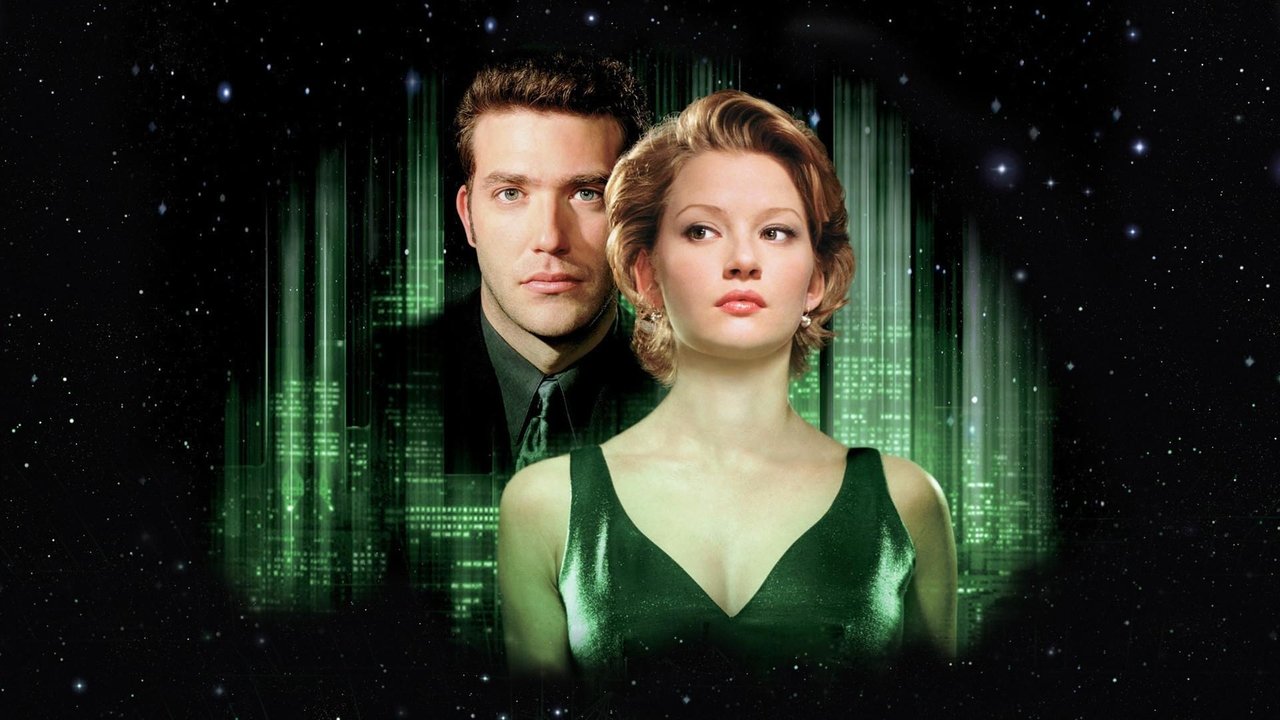
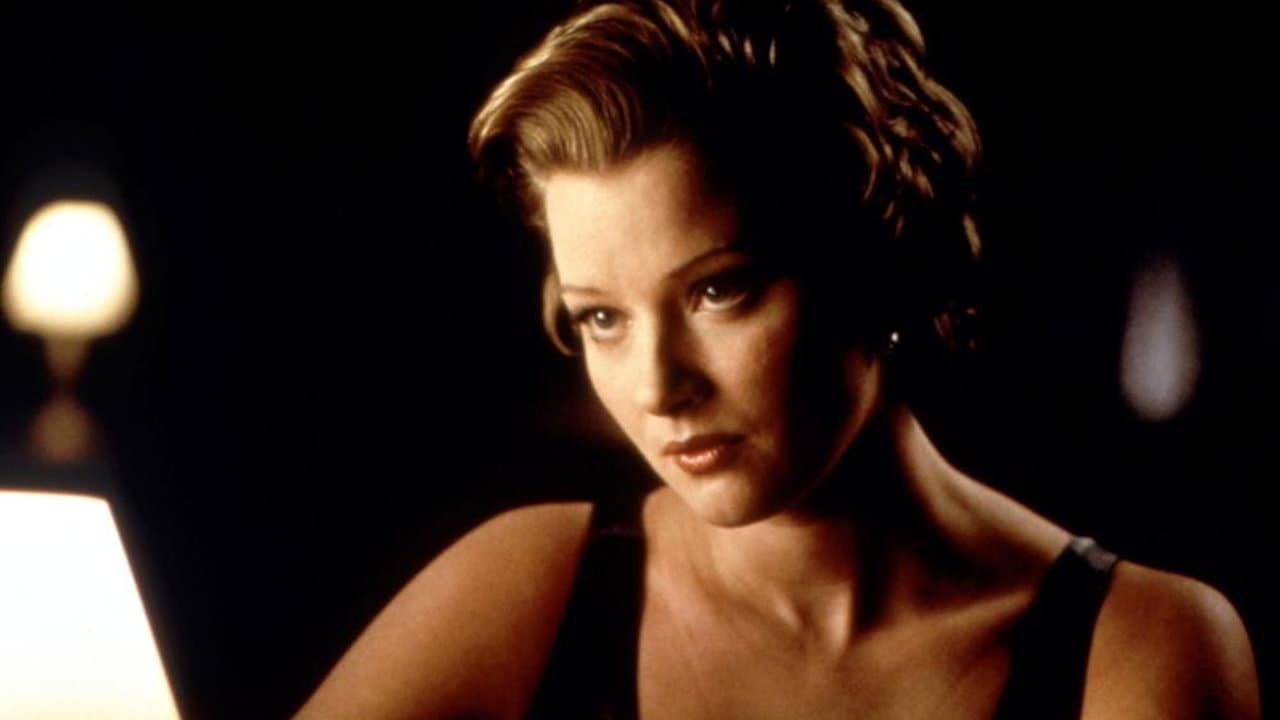
The mystery deepens with the arrival of Jane Fuller (Gretchen Mol), claiming to be the dead man's estranged daughter. Mol, who brought a similar enigmatic energy to films like Rounders (1998), perfectly embodies the femme fatale archetype dropped into a cyberpunk scenario. Is she seeking truth, inheritance, or something far stranger? Hall must navigate both the sleek, corporate landscape of 1999 Los Angeles and the meticulously recreated, sepia-toned world of 1937 within the machine to clear his name and unravel Fuller’s secrets. Doesn't that collision of aesthetics – the cold chrome of the 'present' versus the art deco nostalgia of the past – still feel visually potent?
Style Over Spectacle
Where The Thirteenth Floor truly distinguishes itself, especially when viewed through the lens of its louder contemporaries, is its commitment to atmosphere and mood over bombastic action. Rusnak, working with a relatively modest $16 million budget, crafts a film that feels like classic noir filtered through a technological lens. The score broods, the lighting emphasizes shadows and paranoia, and the pacing allows the philosophical questions to simmer. The contrast between the two worlds is handled beautifully – the 1999 segments feel clean, almost sterile, while the 1937 simulation pulses with a life that’s both alluring and unnervingly artificial. It’s less about the how of the technology (though the transference process has a certain retro-futuristic charm) and more about the why, and the devastating what if.
Craig Bierko, perhaps better known for lighter fare, carries the film admirably, navigating the difficult task of portraying a man losing his grip on reality, and subtly shifting his performance when inhabiting his 1937 counterpart. Armin Mueller-Stahl, a veteran whose gravitas elevates any project (Shine, Eastern Promises), lends crucial weight to the film's foundational mystery as Hannon Fuller. His weariness feels less like acting and more like the genuine exhaustion of a man who has peered too deeply into the abyss of his own creation.
Lost in the Glitch of '99
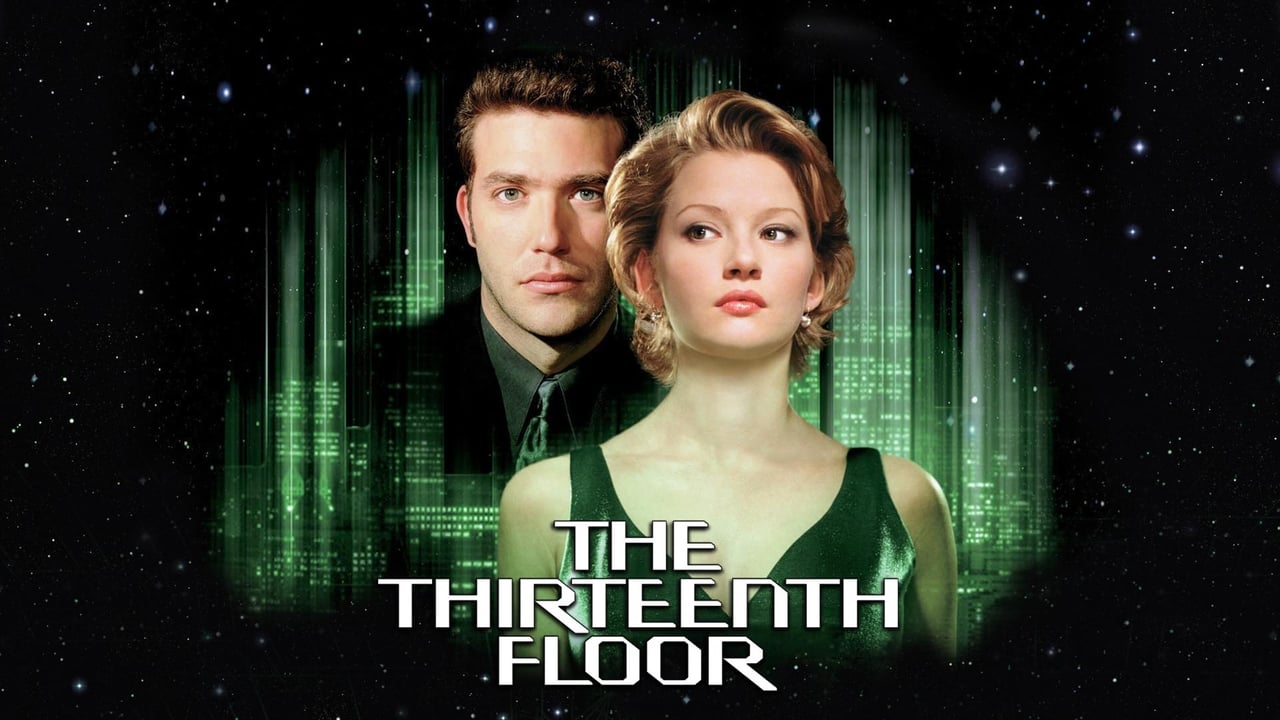
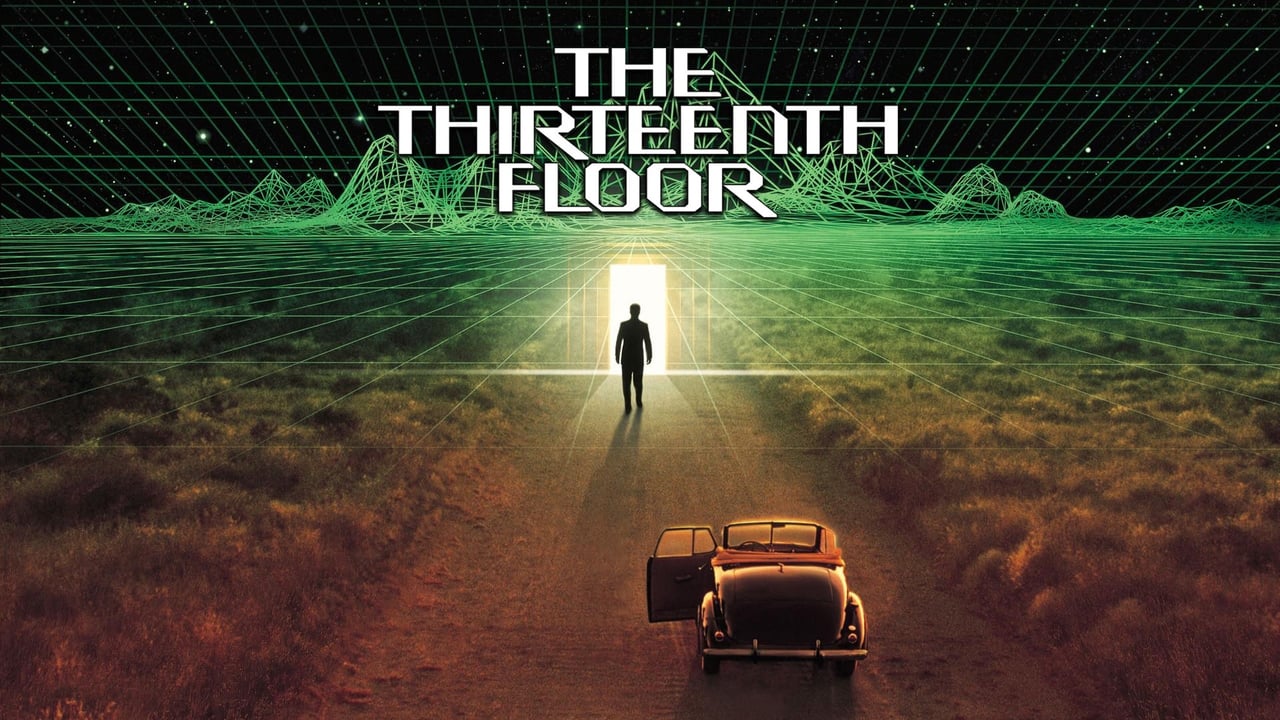
It's impossible to discuss The Thirteenth Floor without acknowledging the colossal shadow cast by The Matrix, released just two months prior. Both films tackled simulated realities, questioning the nature of existence. Add David Cronenberg's equally brilliant, biologically-focused eXistenZ (released between them in April '99), and you had a perfect storm that unfortunately drowned out Rusnak's moodier, more deliberately paced film. While The Matrix offered dazzling visuals and revolutionary action, The Thirteenth Floor opted for psychological tension and a slow-burn reveal. Consequently, it underperformed dramatically, grossing just over $18.5 million worldwide – a whisper lost in the digital roar. I distinctly remember renting this from Blockbuster a few months after the Matrix frenzy, the cover art promising something darker, more introspective. It felt like discovering a hidden track on a favorite album.
The film’s central mystery unfolds cleverly, layering twists upon twists. While savvy viewers today might anticipate some developments, the way the film peels back the layers of reality, forcing Hall (and the audience) to constantly re-evaluate everything they thought they knew, remains effective. The dread isn't about killer robots or sentient programs, but the horrifying realization that your entire world, your memories, your very identity, might be nothing more than lines of code designed for someone else's entertainment or research. The final revelations (Spoiler Hint: The simulation isn't just one layer deep) still pack a chilling punch, forcing a re-contextualization of everything that came before.
Still Worth Jacking Into?
The Thirteenth Floor might lack the iconic status or groundbreaking effects of its 1999 brethren, but it possesses a quiet intelligence and a pervasive noir atmosphere that lingers. It’s a film more interested in the philosophical implications and the human cost of simulated existence than in digital pyrotechnics. Its roots in earlier sci-fi literature give it a narrative depth that rewards attention. While some plot mechanics might feel familiar now, the execution, the performances, and especially the brooding visual style make it a standout piece of late-90s sci-fi cinema. It's a film that perhaps resonates even more strongly today, in an era saturated with virtual worlds and questions about digital identity.
---
Rating: 7.5/10
Justification: The Thirteenth Floor earns its score through its masterful noir atmosphere, compelling central mystery rooted in classic sci-fi, strong performances (particularly from Bierko and Mueller-Stahl), and effective visual distinction between its worlds. It successfully explores deep philosophical themes with intelligence. It loses points primarily for being overshadowed by its contemporaries, leading to an unfair lack of recognition, and perhaps a central twist that feels slightly less shocking in a post-Matrix world, though the layered nature of the reveals still works well. Its deliberate pacing, while fitting the noir mood, might test the patience of some viewers expecting more action.
Final Thought: A stylish, thought-provoking slice of sci-fi noir that deserved far more attention than it received, trapped as it was on the wrong floor of cinematic history in the crowded elevator of 1999. A true VHS gem for those who prefer their reality checks served cold and existential.