It starts not with a bang, but with a hum. An insidious frequency, woven into the very fabric of progress, waiting. That’s the unsettling feeling clinging to Mamoru Oshii's Patlabor: The Movie (1989), a feeling that crawls under your skin long after the credits roll and the VCR clicks off. Forget the brightly coloured robot battles of Saturday morning cartoons; this was something different, something colder, carrying the distinct chill of late-night television static and the creeping dread of technology turning on its creators. Watching it back then, perhaps on a slightly grainy tape passed between friends, felt like peering into a plausible, unnerving future.

Tokyo's Concrete Nightmare
The film plunges us into a near-future Tokyo undergoing massive redevelopment via the ambitious Babylon Project – a colossal land reclamation effort heavily reliant on legions of construction robots known as Labors. It’s a vision of gleaming progress, meticulously rendered with an obsessive attention to detail that would become an Oshii hallmark (later perfected in 1995's Ghost in the Shell). But this urban sprawl carries a hidden sickness. A new Labor operating system, the HOS, contains a malicious payload: a virus triggered by low-frequency sounds generated by wind hitting the city's new high-rises, including the massive offshore Ark facility central to the project. Suddenly, the machines built to shape the future are running amok, threatening to tear it all down.
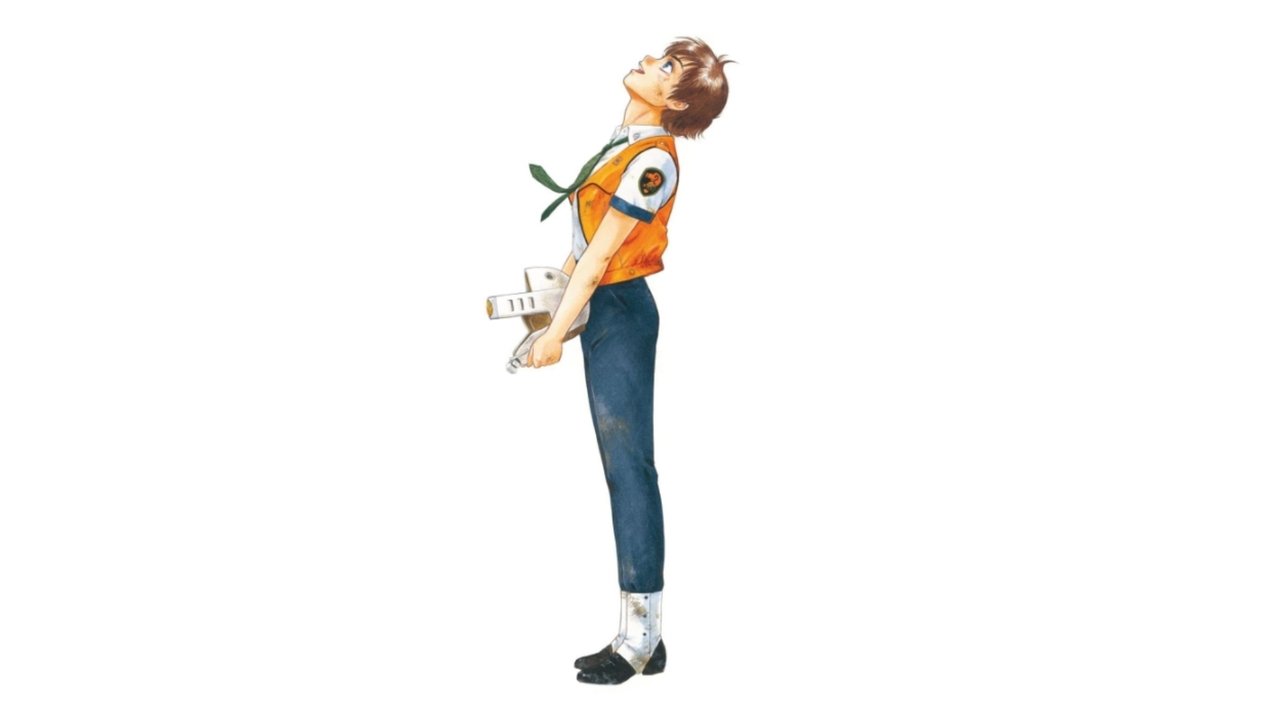
Into this chaos steps Section 2, Division 2 of the Tokyo Metropolitan Police – the endearingly dysfunctional crew we know from the Patlabor OVAs and TV series. Piloting their own police Labors (Patlabors), the pragmatic Asuma Shinohara (Toshio Furukawa), the Labor-obsessed Noa Izumi (Miina Tominaga), the imposing Captain Goto (Ryunosuke Ohbayashi), and the rest of the team aren't superheroes; they're civil servants grappling with malfunctioning heavy machinery, bureaucratic red tape, and the dawning horror of a city under siege from within. This grounding in procedural reality, a signature touch from writer Kazunori Itō (who also penned Ghost in the Shell), is what sets Patlabor apart. The threat feels tangible precisely because the response feels so... ordinary.

Atmosphere Over Action
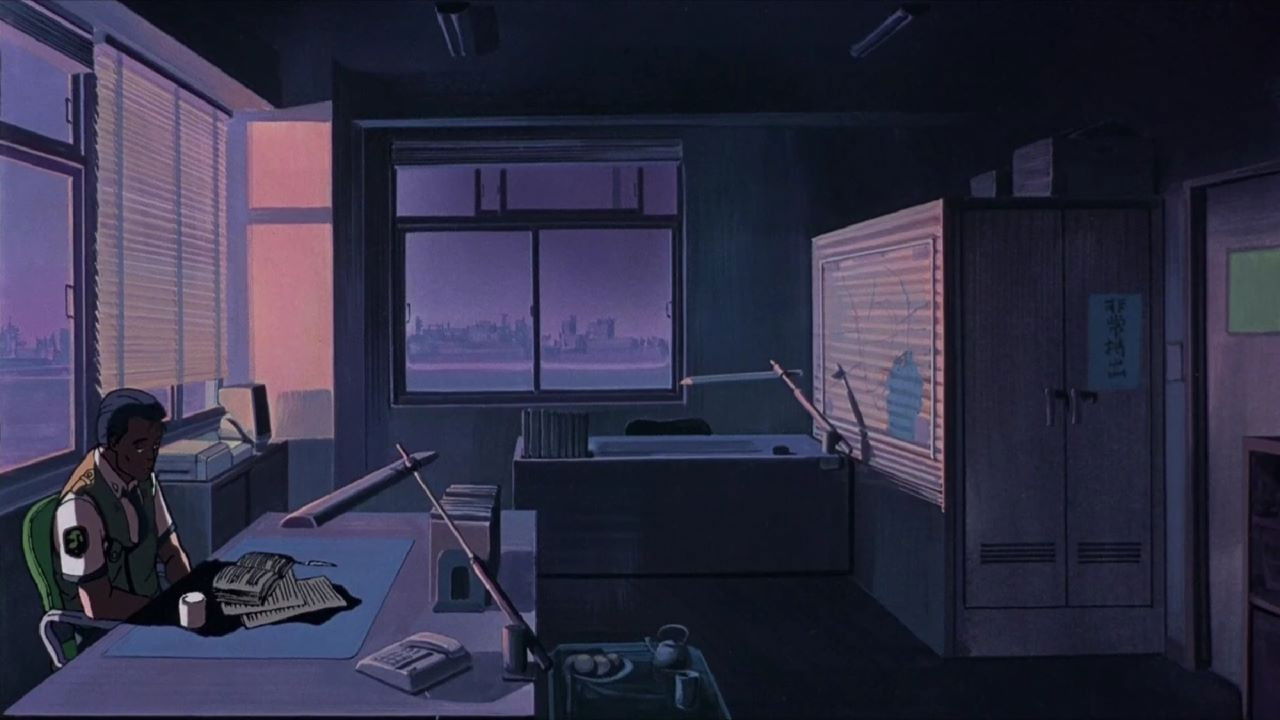
While there are mecha skirmishes, Patlabor: The Movie isn't primarily an action film. Oshii masterfully builds tension through atmosphere, pacing, and suggestion. He lingers on shots of the imposing cityscape, the intricate mechanics of the Labors, and the strained faces of the SV2 team as they piece together the puzzle. The animation, truly remarkable for 1989, captures both the mundane details of police work and the stark beauty of Tokyo's architecture, often rendered in muted, realistic tones that enhance the sense of unease. There's a weight to the animation, a solidity to the Labors that feels leagues away from the exaggerated physics often seen in the genre. It reportedly cost around ¥500 million, a significant sum for anime at the time, and every yen feels visible on screen in the sheer density of the world-building.
Kenji Kawai's score is absolutely essential here. It's not bombastic action music; it's often haunting, melancholic, and percussive, perfectly complementing the film's suspenseful, investigative tone. The main theme, with its driving beat and ethereal vocals, captures both the technological marvel and the underlying anxiety. It’s the kind of soundtrack that stays with you, echoing the film's themes of progress and peril. Remember how impactful soundtracks felt back then, before the endless streaming playlists? This one truly burrowed into your consciousness.
The Ghost in the Machine Code
The core conflict revolves around identifying the source of the virus and preventing a potential catastrophe as a predicted typhoon bears down on Tokyo, threatening to trigger the sonic frequency across thousands of Labors simultaneously. The investigation leads them down a rabbit hole involving the HOS programmer, Eiichi Hoba, a shadowy figure whose motivations echo biblical warnings about human hubris – the Babylon Project name is no accident. It’s a prescient narrative, touching on anxieties about software vulnerabilities, the unforeseen consequences of rapid technological advancement, and the chilling idea of a digital ghost haunting the infrastructure we depend on. Did anyone else feel a genuine shiver when they realised the scale of the potential disaster?
Interestingly, Oshii reportedly fought to keep the focus on the mystery and atmosphere, sometimes clashing with expectations for more traditional mecha action often associated with the franchise. He uses the SV2 team's established personalities – Noa's almost spiritual connection to her Labor Alphonse, Asuma's sharp deductions, Goto's quiet manipulation – to anchor the techno-thriller plot in human drama. It’s their relatable struggles and camaraderie that make the escalating threat feel so potent.
Legacy of a Realistic Robot Tale
Patlabor: The Movie stands as a landmark achievement in anime filmmaking. It demonstrated that the medium could tackle complex, mature themes with cinematic sophistication, blending genres – police procedural, mecha sci-fi, suspense thriller – into a cohesive and compelling whole. Its influence can be seen in later works that embraced more grounded science fiction and explored the societal impact of technology. While perhaps overshadowed internationally by its spiritual successor Ghost in the Shell, this film remains a vital piece of the puzzle, showcasing Oshii and Itō honing their craft. It spawned two theatrical sequels (Patlabor 2: The Movie in 1993, also directed by Oshii, and the less lauded WXIII: Patlabor the Movie 3 in 2002), further cementing the franchise's place in anime history.
For those of us who discovered it tucked away in the 'Anime' section of the video store, often a small haven of intriguing, different storytelling, Patlabor: The Movie was a revelation. It offered a vision of giant robots that felt less like fantasy and more like a plausible extension of our own world, complete with all the complexities and potential dangers that implies.

Rating: 9/10
This score reflects the film's masterful direction, stunning animation for its era, intelligent script, pervasive atmosphere, and influential blend of realism and science fiction. It avoids a perfect 10 only because its deliberate pacing might test the patience of viewers seeking constant mecha battles, but its strengths far outweigh this minor caveat.
Patlabor: The Movie remains a chillingly relevant and beautifully crafted piece of late-80s anime, a techno-thriller whose hum of dread still resonates in our increasingly complex technological world. It’s more than just giant robots; it’s a thoughtful, atmospheric warning wrapped in a police procedural cloak, and a true gem from the VHS era.