Alright, pull up a beanbag chair and let's dig into a curious little number that landed just as the credits were rolling on the 90s, feeling like a strange echo from the action boom years rather than a confident step into the new millennium. We're talking about Alex l'ariete (2000), known to some tenacious video hunters as Alex the Ram. It's one of those films that prompts a double-take – not necessarily for its brilliance, but for its sheer, audacious existence. The central hook? Italian skiing superstar Alberto Tomba, "La Bomba" himself, attempting to carve a new slope as an action hero. Remember those occasional, often baffling, crossovers where athletes tried their hand at acting? This is a prime example, preserved like a fascinating fossil from the turn of the century.
From Slalom to Screen Hero?
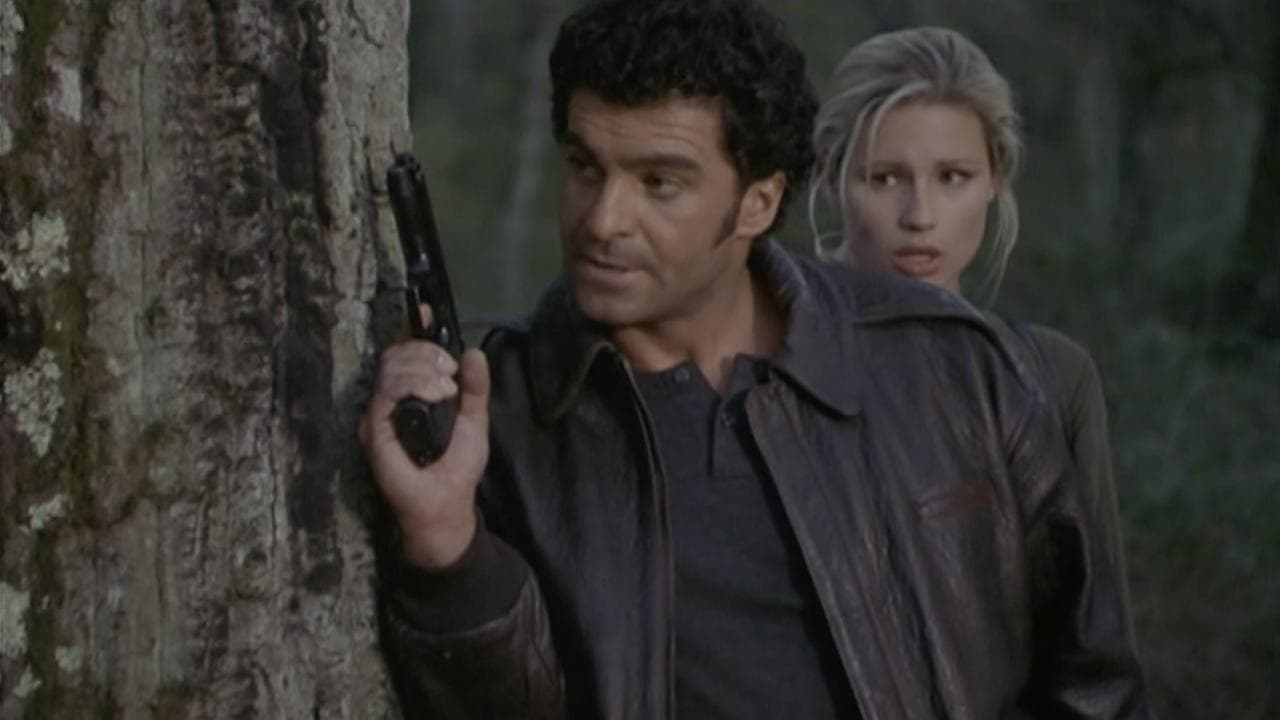
The premise drops Carabiniere Lt. Alessandro "Alex" Corso (Alberto Tomba) into a plot involving smuggled toxic waste and the requisite damsel in distress, Antavleva "Leva" (Michelle Hunziker), a witness he needs to protect. It’s a fairly standard Euro-action/thriller setup, the kind that populated late-night TV slots and the deeper shelves of the video store. What sets it apart, of course, is Tomba. The film clearly wants to leverage his athletic prowess, putting him on skis whenever narratively plausible (and sometimes when it isn't). You can almost hear the pitch meeting: "He's a world champion! People love him! Let's have him ski and shoot guns!"
And how does Tomba fare? Well, let's be kind and say his screen presence is… earnest. There's a certain physical confidence, naturally, especially when he's navigating snowy terrain. He looks the part of a rugged outdoorsman. But translating the charisma of athletic victory into nuanced acting is a different beast entirely. Dialogue delivery feels stiff, emotional range is limited, and there’s a general sense of him concentrating very hard on hitting his marks, both literally and figuratively. It’s not outright terrible in a way that’s unintentionally hilarious, more just… slightly blank. You find yourself watching Tomba the skier attempting to act, rather than fully buying into Alex Corso the character. Does this inherent awkwardness lend the film a certain charm? For forgiving viewers with a taste for the unusual, perhaps.
A Veteran Director and B-Movie Currents
What makes Alex the Ram particularly interesting, and perhaps a little sad, is the name in the director's chair: Damiano Damiani. This is the man who gave Italian cinema classics like Confessions of a Police Captain (1971) and the tense Mafia thriller The Day of the Owl (1968). Seeing his name attached to a relatively lightweight action vehicle starring a non-actor feels like a late-career detour into purely commercial territory. Does his experienced hand elevate the material? Marginally, perhaps. The action sequences, particularly the skiing chases, are competently staged. There's a professional sheen that prevents it from tipping over into complete amateurism. Yet, one can't shake the feeling that Damiani is operating significantly below his usual thematic weight class. The script, credited to multiple writers including Damiani himself, doesn't help, offering fairly generic thrills and dialogue that gives the actors little to work with.
Alongside Tomba, we have Michelle Hunziker, who was already a well-known TV personality in Italy and parts of Europe. She brings a certain energy but is largely confined to the 'witness in peril' role. More intriguing is the presence of Corinne Cléry, forever remembered by genre fans for The Story of O (1975) and as Bond girl Corinne Dufour in Moonraker (1979). Here, she adds a touch of veteran class in a supporting role, a familiar face lending a little nostalgic ballast to the proceedings.
Retro Fun Facts: The Making of a Curio
The story behind Alex the Ram is almost more compelling than the film itself. Conceived as a star vehicle to launch Alberto Tomba's acting career, it unfortunately did the opposite. The film was plagued by production issues and delays. Initially intended for theatrical release, its poor reception during early screenings reportedly led to it being significantly cut down and eventually premiering as a two-part TV movie in Italy.
Its budget was reportedly substantial for an Italian production at the time, aiming for international appeal, but it became a notorious critical and commercial flop. Critics savaged Tomba's performance, and the hoped-for action franchise never materialized. Watching it now, knowing this backstory, adds a layer of melancholy fascination. It’s a glimpse into ambition colliding with reality, a celluloid testament to the fact that stardom in one arena doesn't automatically translate to another. The film was shot largely on location in picturesque snowy settings, likely the Italian Alps, which provide some genuine visual appeal, especially during the ski sequences where Tomba is clearly in his element.
Verdict: For Collectors of the Curious
So, is Alex the Ram a forgotten gem waiting to be rediscovered? Not exactly. It's a B-movie actioner hampered by a stiff lead performance and a generic script, despite the pedigree of its director. Yet, there's something undeniably watchable about it, especially for enthusiasts of Euro-crime flicks, celebrity vanity projects, or just plain odd cinematic artifacts from that cusp-of-the-millennium era. The skiing scenes are genuinely impressive from a technical standpoint, reminding you why Tomba was a champion. It feels like one of the last gasps of a certain kind of slightly naive, star-driven European action film before digital effects and grittier styles took over completely. I remember seeing oddities like this appear without fanfare on satellite channels back in the day, the kind of thing you might stumble upon and watch with a mixture of bemusement and mild engagement.
Rating: 3/10
The rating reflects the fundamental flaws – primarily the lead acting and uninspired plot. However, it gets a couple of points for the competent direction (considering the material), the impressive skiing stunt work (Tomba doing what he does best), and its sheer value as a fascinatingly misfired cinematic curio. It earns its place in the 'so-bad-it's-almost-interesting' corner of VHS Heaven.
It stands as a monument, not to action cinema, but to the peculiar detours careers can take, leaving us with a film that’s less a thrilling ride and more a strange, snow-dusted footnote in the annals of both sport and screen. What lingers isn't the plot, but the image of a world-class athlete adrift in a world he hadn't quite conquered.