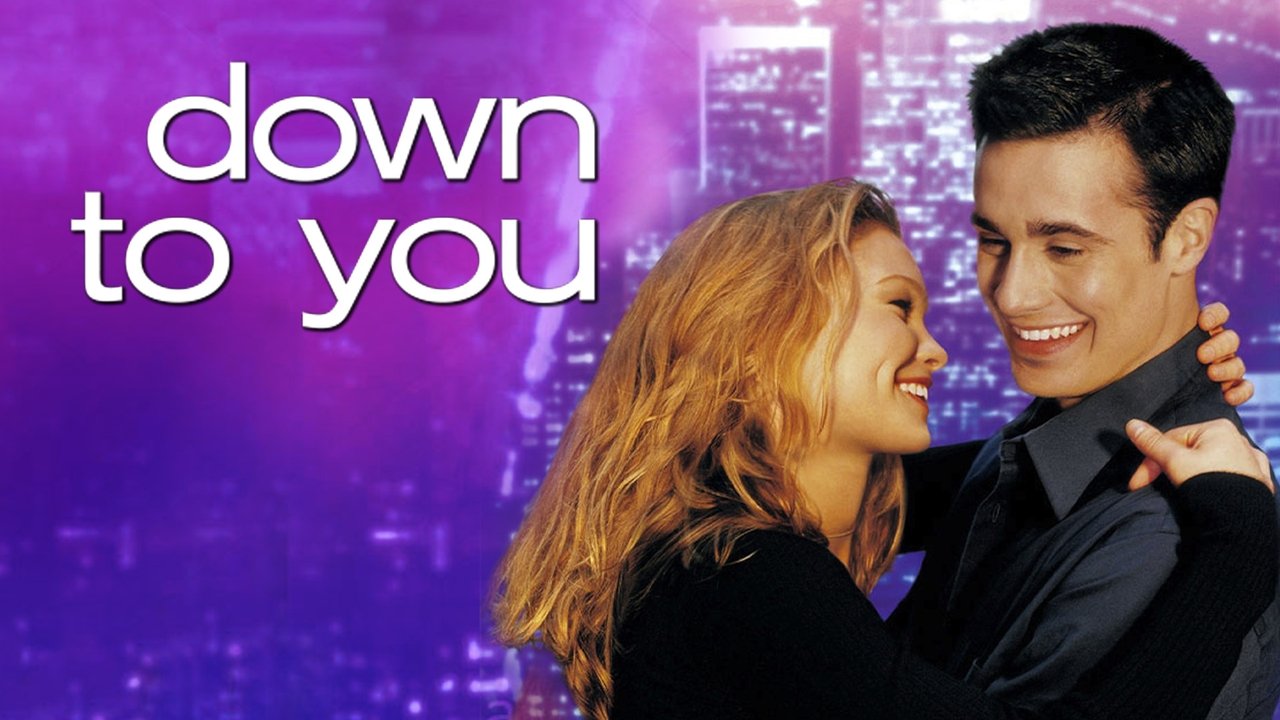
It arrived just as the ball dropped on a new millennium, a cinematic timestamp capturing the last echoes of 90s teen optimism before the world felt irrevocably different. Down to You (2000) paired two actors then radiating supernova-level heat – Freddie Prinze Jr., fresh off heartthrob duties in She's All That (1999), and Julia Stiles, the sharp, intelligent counterpoint from 10 Things I Hate About You (1999). It felt like a guaranteed slam dunk, didn't it? A college romance for the Y2K generation, promising a slightly more mature look at love than its high school predecessors. Yet, watching it again now, separated by decades, reveals a film perhaps more interesting for what it attempted, and the specific moment it occupies, than for its ultimate success.
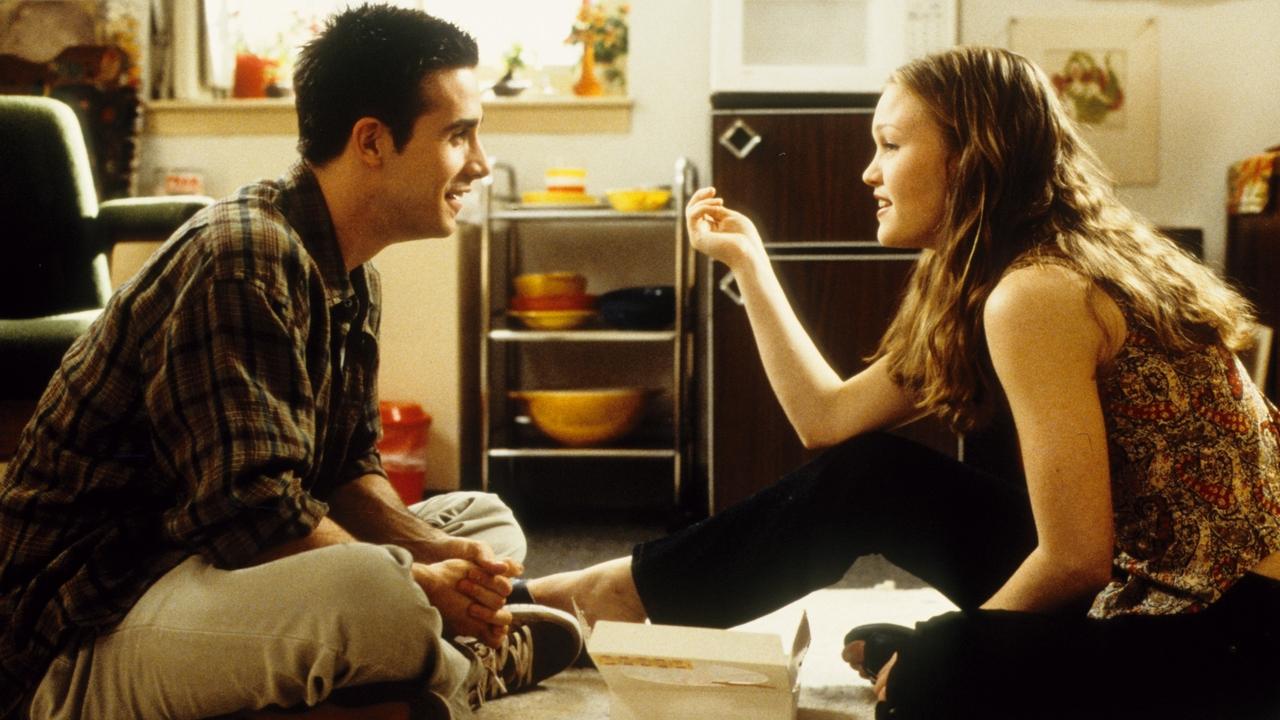
First Love, Collegiate Confusions
The premise is straightforward: Al Connelly (Prinze Jr.), an aspiring chef, and Imogen personnages (Stiles), a budding artist, meet cute amidst the chaos of freshman year at a New York City college. They fall hard and fast, navigating the heady mix of newfound freedom, intense connection, burgeoning sexuality, and the inevitable anxieties that accompany young adulthood. Writer-director Kris Isacsson, in his sole feature directing credit, frames their story with direct-to-camera interviews, aiming for a confessional, almost documentary feel interspersed with the main narrative. It’s an ambitious structure, clearly intended to lend emotional weight and perspective, though its effectiveness often feels uneven, sometimes pulling us out of the moment rather than deepening our immersion.
The film sincerely tries to grapple with themes of commitment, infidelity, artistic ambition versus relationship demands, and the terrifying vulnerability of giving your heart away for the first time. There's an earnestness here that sets it apart from some of the more purely comedic or cynical teen fare of the era. It wants us to feel the weight of Al and Imogen's choices, the sting of betrayal, the dizzying heights of passion. Does it always succeed? Perhaps not consistently. The dialogue occasionally veers into territory that feels more like screenwriterly pronouncements than authentic college kid conversation, and some plot turns rely on familiar rom-com contrivances.
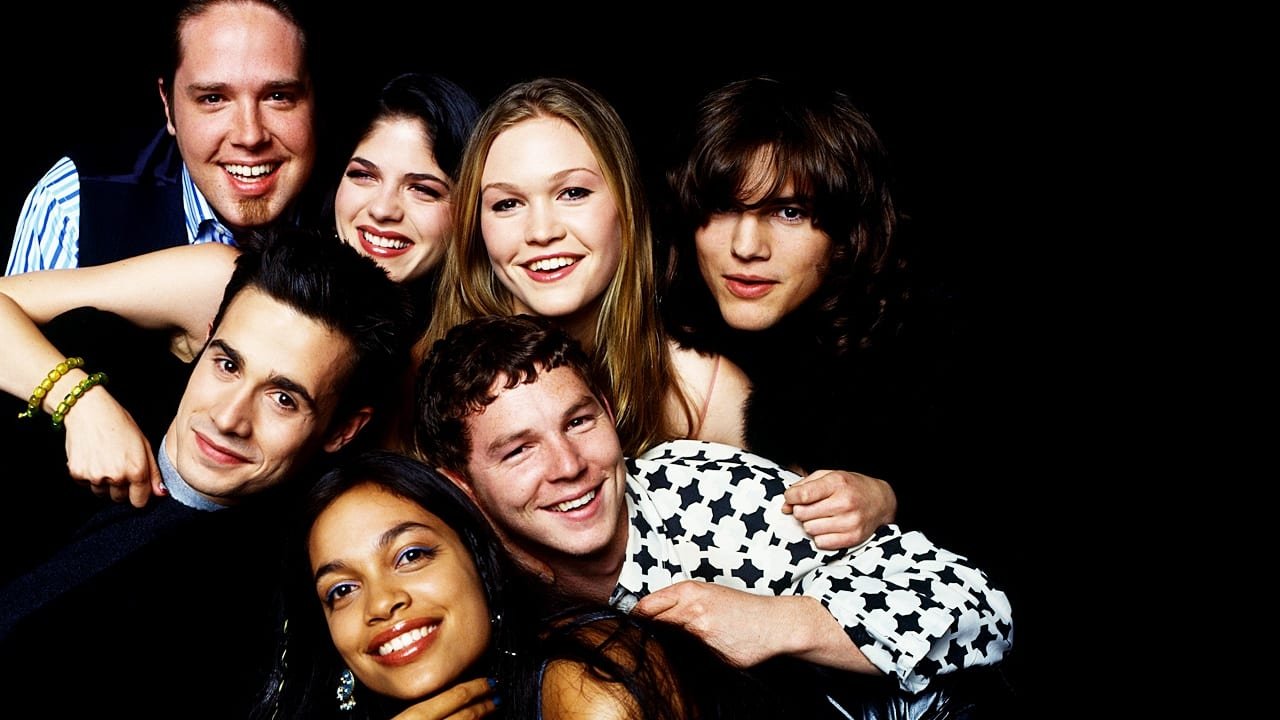
Star Power at the Turn of the Century
Undeniably, much of the film's initial appeal, and perhaps its lingering nostalgic resonance for some, rests on its leads. Freddie Prinze Jr. leans into his established persona – charming, slightly goofy, fundamentally decent. He sells Al’s passion for cooking and his sometimes-bumbling sincerity. Julia Stiles, already demonstrating the intelligence and intensity that would define her early roles, gives Imogen a thoughtful, slightly guarded quality. The chemistry between them is present, though perhaps not electric; it feels more like the comfortable intimacy of early love than a consuming fire.
Where the film often finds unexpected sparks is in its supporting cast, a veritable 'who's who' of faces familiar to anyone watching movies around that time. Selma Blair (Prinze Jr.'s co-star in the upcoming Cruel Intentions at the time of filming, though released before Down to You), steals scenes as the overtly sexual Cyrus, a character who feels both like a caricature and strangely refreshing in her bluntness. We also get early appearances from Rosario Dawson, Ashton Kutcher (playing a hilariously dim-witted musician), and even Henry Winkler as Al’s supportive chef father. Their presence adds texture and reminds us of the specific pool of talent circulating in Hollywood at that precise moment.
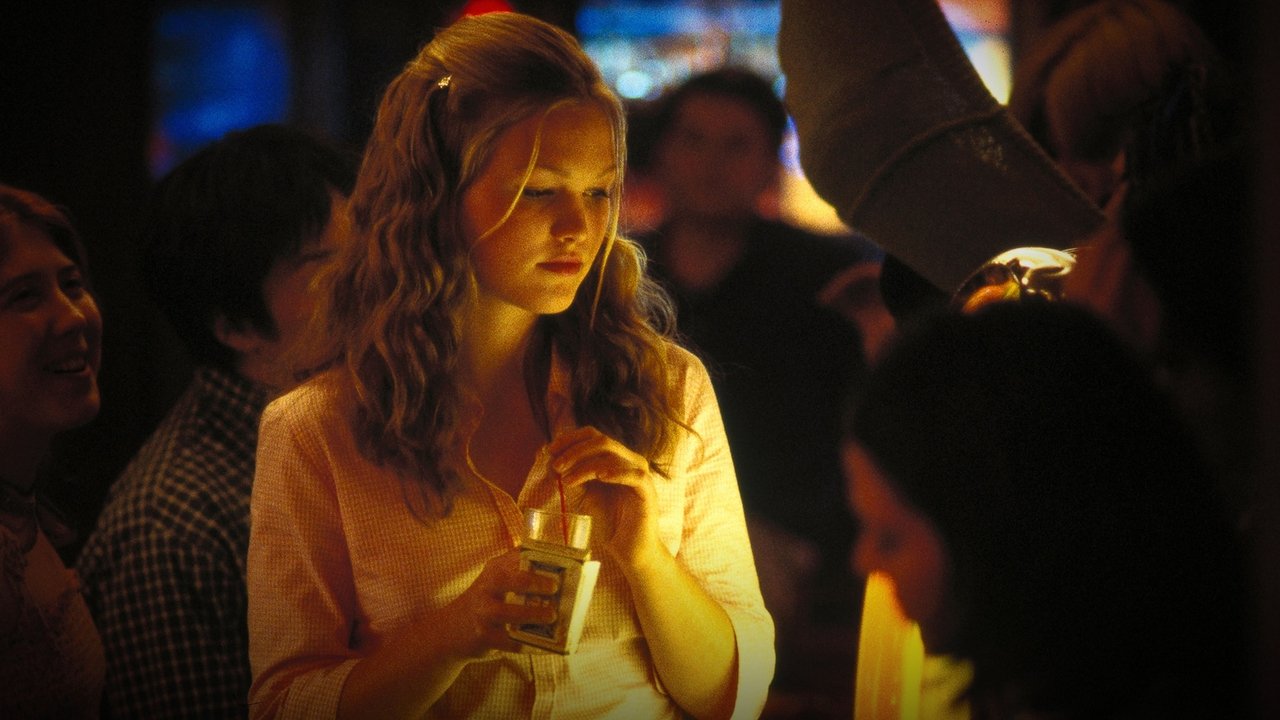
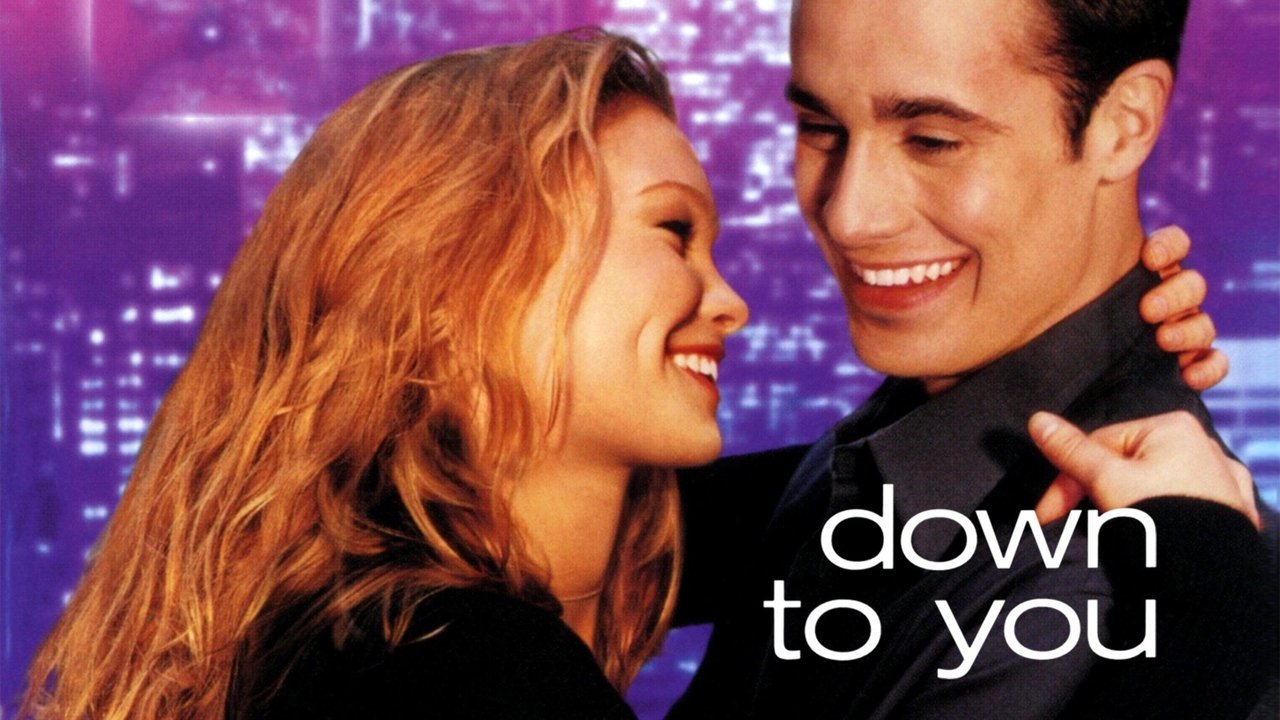
A Y2K Time Capsule
Watching Down to You now is like opening a time capsule labeled "Circa 2000." The fashion, the music (hello, Semisonic and Billie Myers on the soundtrack!), the specific anxieties – it all screams turn-of-the-millennium. The film captures that pre-9/11, pre-social media saturation moment in youth culture. It’s interesting to note that despite the star power and hitting right at the peak of the teen rom-com boom, Down to You wasn't the smash hit one might expect. Released in January 2000, it performed modestly at the box office, pulling in around $24.4 million worldwide against a reported $35 million budget – a financial disappointment, proving that even bankable stars couldn't guarantee success if the execution didn't fully connect. Perhaps audiences, and critics (who largely panned it), found its blend of earnest drama and rom-com tropes a bit jarring.
Yet, there’s a certain sweetness to its sincerity. Isacsson clearly cared about these characters and the emotional rollercoaster of their first serious relationship. The New York setting provides a nice backdrop, even if it feels more like a generic 'college town' version of the city. The film doesn't shy away entirely from the messiness of love – jealousy, miscommunication, the ways ambition can clash with intimacy. It aims higher than just easy laughs or swoony moments, even if it sometimes stumbles over its own earnestness.
Final Thoughts: A Flawed but Fondly Recalled Snapshot
Down to You isn't a lost masterpiece, nor is it the trainwreck its critical reception might suggest. It’s a film caught between the lighter fare of its high school counterparts and a more mature relationship drama it doesn't quite achieve. Its structural quirks don't always land, and the script occasionally feels forced. However, anchored by the undeniable appeal of its leads at the zenith of their youthquake fame, and imbued with a genuine, if sometimes clumsy, sincerity, it remains a fascinating artifact of its specific time. It captures the feeling of being young, in love, and utterly confused at the dawn of a new century. For those of us who were navigating similar waters back then, perhaps renting this on DVD as our trusty VCRs gathered dust, it might spark a flicker of recognition, a slightly nostalgic ache for the messy, heartfelt dramas of youth.
Rating: 5/10
The rating reflects a film that is ultimately average, hampered by structural issues and an uneven script, but elevated slightly by the charm of its leads, a strong supporting cast, and its value as a Y2K time capsule. Its earnest attempt to explore young love gives it a touch more substance than some contemporaries, preventing a lower score, but it never quite coalesces into a truly compelling whole.
It leaves you pondering the fleeting intensity of first love, and perhaps wondering whatever happened to the cinematic promise held within that very specific, turn-of-the-millennium moment.