Alright fellow tape travelers, slide that worn copy of The Hitchhiker's Guide to the Galaxy into the VCR slot. Hear that satisfying clunk? Good. Now, dim the lights, maybe ignore that slight tracking fuzz at the bottom of the screen, and prepare for a journey quite unlike anything else beamed onto our CRT screens back in the early 80s. Forget slick space operas; this 1981 BBC adaptation of Douglas Adams' beloved radio show and novel series felt beamed in from an altogether different, gloriously eccentric dimension.
### Tea, Towels, and Total Perspective Vortexes
Finding this six-episode series, often compiled onto chunky rental tapes, felt like discovering a secret handshake. It wasn't the high-octane thrill of Star Wars or the chilling dread of Alien. Instead, The Hitchhiker's Guide offered something uniquely British: cosmic absurdity delivered with a perfectly dry wit, wrapped in a production that embraced its limitations with charming ingenuity. This wasn't just science fiction; it was philosophical comedy wrestling with life, the universe, and everything, often pausing for a nice cup of tea.
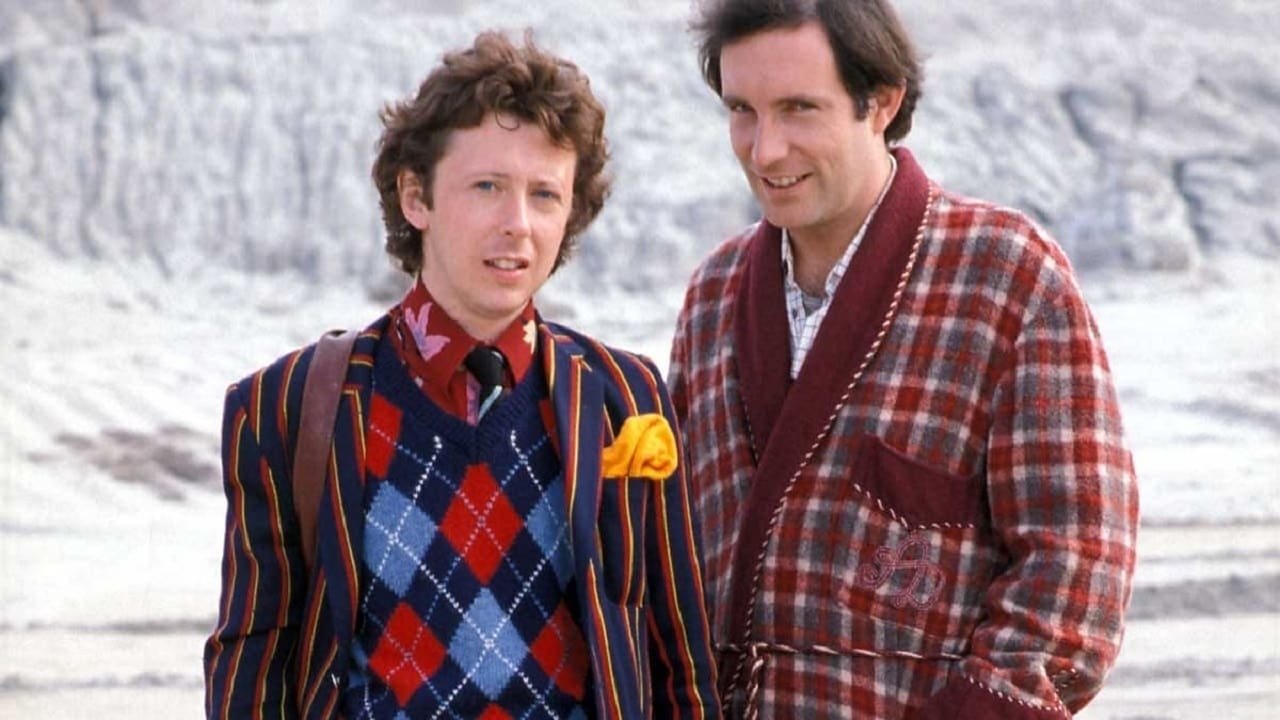
The premise, for the uninitiated (shame!), follows the perpetually bewildered Arthur Dent (Simon Jones, perfectly capturing the essence of a man whose planet has just been demolished to make way for a hyperspace bypass), rescued moments before Earth's demise by his alien friend Ford Prefect (David Dixon, radiating a fantastic, slightly manic energy). What follows is a rambling, episodic voyage through space featuring the two-headed, impossibly cool Galactic President Zaphod Beeblebrox (Mark Wing-Davey), the brilliant astrophysicist Trillian (Sandra Dickinson, whose American accent actually became a plot point), and arguably the show's breakout star: Marvin the Paranoid Android.
### Gloriously Analogue Androids and Graphics
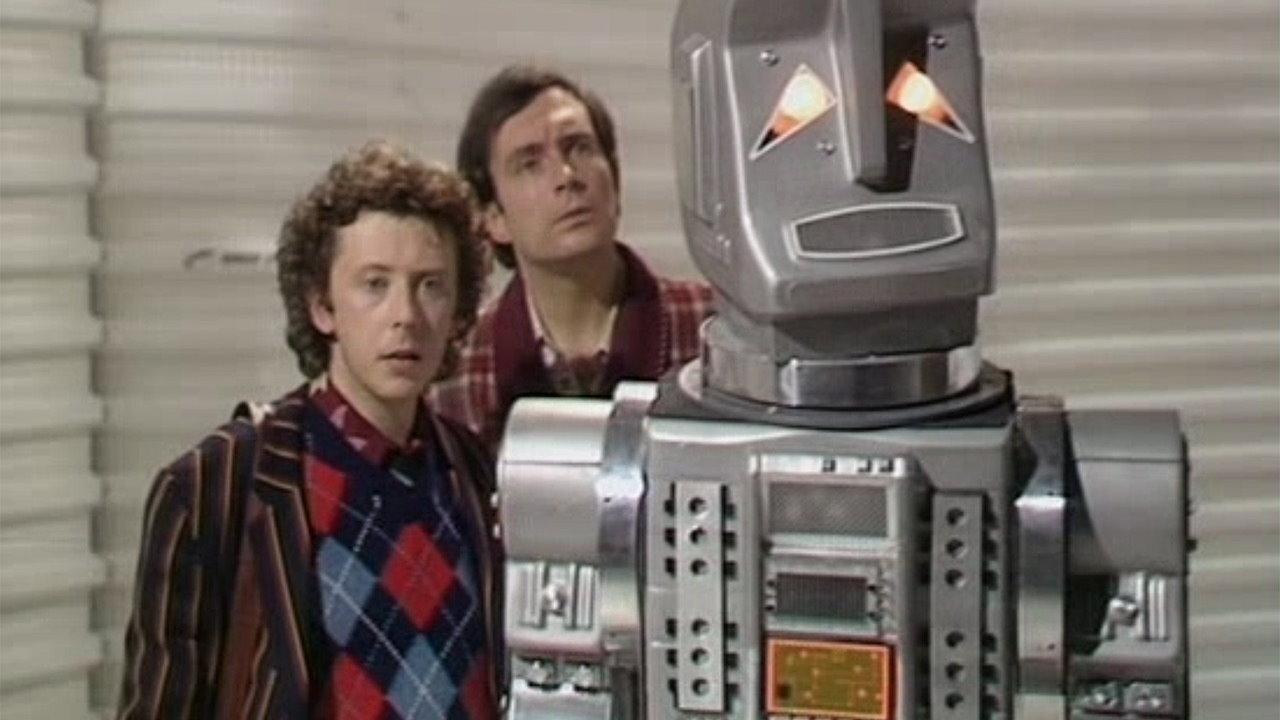
Let's talk about Marvin. Voiced with soul-crushing ennui by Stephen Moore and physically portrayed by David Learner inside a deliberately clunky, almost childlike robot suit, Marvin remains an icon of depressive robotics. His design perfectly encapsulates the show's aesthetic: not sleek or futuristic in the way Hollywood envisioned, but endearingly cobbled-together, functional yet full of personality. It’s a testament to the character's writing and performance that this fiberglass figure felt so profoundly, hilariously miserable.
And the effects! Forget CGI wizardry; this was the era of model work, matte paintings, and early, early computer graphics for the Guide entries themselves. Directed by Alan J.W. Bell, the show leaned into a visual style dictated as much by budget as by choice. Those animated Guide entries, created by Rod Lord using what was then cutting-edge (and now charmingly blocky) technology, were revolutionary for TV. They felt like accessing some forbidden, slightly bizarre digital encyclopedia. Were the spaceships sometimes clearly models dangling on wires? Absolutely. Did the alien landscapes occasionally look like repurposed quarries? You bet. But did it matter? Not one bit. It added to the charm, the feeling that this universe was held together by cosmic string and sheer, improbable luck – much like the Infinite Improbability Drive itself. A retro fun fact for you: Douglas Adams himself was deeply involved, often battling producers to keep his specific, sometimes difficult-to-visualize, jokes intact, ensuring the adaptation retained the source material's unique flavour.

### Adapting the Unadaptable
Bringing Adams' dense, digressive, and brilliantly funny prose to the screen was no small feat. The series cleverly uses the voice of The Book (narrated with avuncular authority by Peter Jones, reprising his radio role) to deliver many of the signature witty asides and explanations. While some subplots were trimmed or altered, the core spirit – the existential absurdity, the bureaucratic aliens (oh, the Vogons!), the quest for the Ultimate Question – shines through. Remember the sheer, delightful weirdness of the Babel Fish sequence? Or the quiet profundity hidden beneath Zaphod's relentless self-promotion?
Performances are key here. Simon Jones is Arthur Dent, the cosmic straight man reacting to galactic madness with polite confusion. David Dixon provides the necessary spark, a slightly dodgy guide through the chaos. The supporting cast, filled with familiar faces from British television, commits wholeheartedly to the strangeness. It wasn't trying to be cool; it was just... itself. And that's why it connected. It felt genuine, even in its most outlandish moments. Another fun tidbit: The initial budget was famously tight, forcing the production team into all sorts of creative problem-solving, which arguably contributed to its unique, handcrafted feel – a far cry from today's often sterile digital perfection.
### Still Know Where Your Towel Is?
Decades on, does The Hitchhiker's Guide hold up? Absolutely. Its wit remains razor-sharp, its observations on bureaucracy, technology, and the human (or rather, pan-galactic) condition are timeless. The low-fi effects, once perhaps seen as a weakness, now feel like a badge of honour, a testament to creativity thriving under constraint. Watching it on VHS, with its slightly soft picture and analogue warmth, feels like the right way to experience this particular corner of the galaxy. It bypasses the need for slickness and goes straight for the brain and the funny bone.
Rating: 8.5 / 10
Justification: While the pacing occasionally reflects its episodic TV origins and the effects are undeniably dated, the sheer brilliance of Adams' writing, the perfect casting, the iconic characterizations (Marvin!), and its unique blend of sci-fi and philosophical comedy make it an enduring classic. It overcomes its limitations through pure charm and intelligence.
Final Thought: Forget 4K restorations; the slightly fuzzy, perfectly imperfect charm of the 1981 Hitchhiker's Guide is best served exactly as we remember it – a comforting, brilliantly bizarre journey you can still take, provided you haven't panicked and forgotten your towel.