Floating through the static hiss of late-night television or tucked away in the slightly more esoteric sci-fi section of the local video rental joint, there it was: a VHS cover promising cosmic adventure, strange creatures, and a style that was clearly not from around here. Time Masters (or Les Maîtres du temps, 1982) wasn't your typical Saturday morning fare. It arrived like a transmission from another dimension of animation, carrying the unmistakable visual signature of a European comics legend and the thoughtful, sometimes melancholic, pacing of its celebrated director. Finding this tape felt like unearthing a secret – a visually stunning, slightly weird, and utterly unforgettable journey across the stars.
### A Universe Drawn by a Master
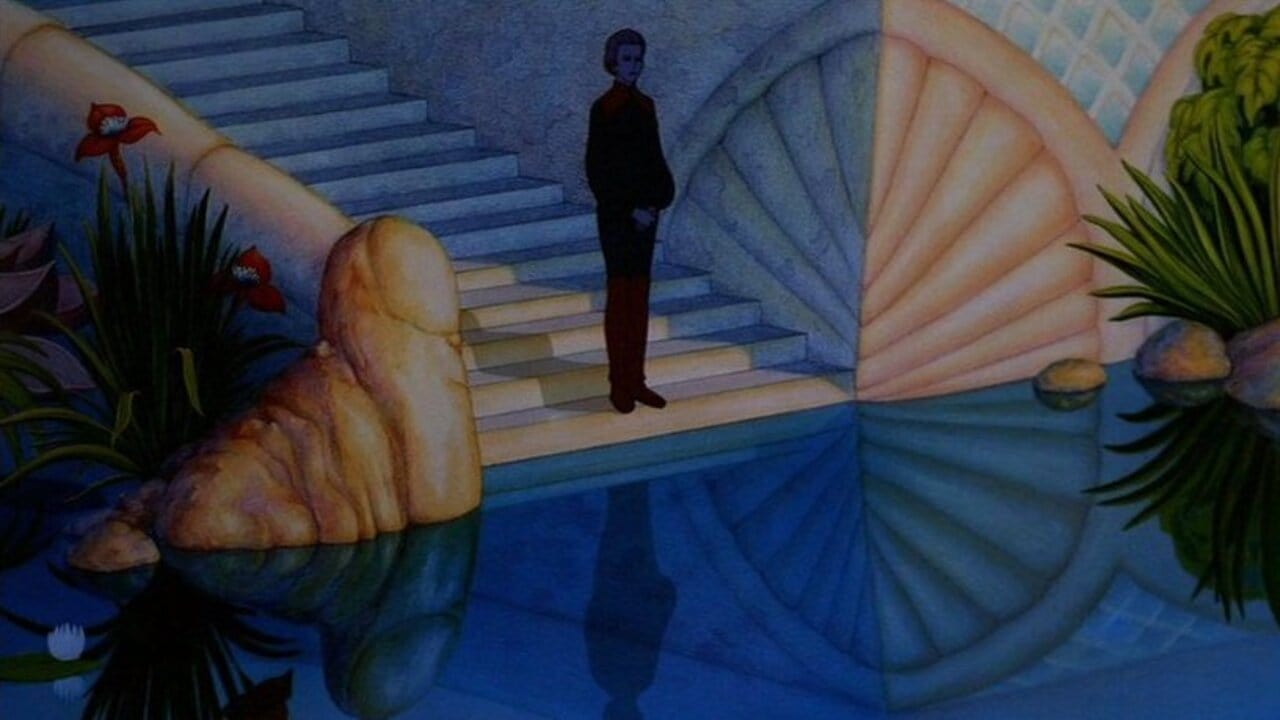
Let's be honest, the first thing that grabs you – and likely the reason many of us picked up that tape in the first place – is the art. The film's designs spring directly from the pen of the legendary Jean Giraud, better known to legions of comic fans as Mœbius. His influence is everywhere, from the distinctively elongated faces and flowing lines of the characters to the utterly alien landscapes and bizarre spacecraft. If you'd spent any time poring over Heavy Metal magazine or admired his conceptual work for films like Alien (1979) or Tron (1982), you recognised the style instantly. Seeing it fully animated, telling a cohesive story (well, mostly cohesive), felt like a dream. It gives Time Masters an aesthetic that remains unique even today, a blend of classic European sci-fi illustration and painterly animation that feels both retro and timeless.
The director steering this visually rich ship was René Laloux, already a cult figure thanks to his earlier collaboration with Roland Topor on the surreal and unforgettable Fantastic Planet (1973). Like that film (also based on a novel by Stefan Wul, who wrote L'Orphelin de Perdide, the basis for Time Masters), this isn't animation focused on fast-paced gags or action sequences in the American style. Laloux favours atmosphere, letting moments breathe, allowing the strangeness of the universe to sink in. The animation itself, largely handled by the Hungarian studio Pannonia Filmstúdió (a fascinating cross-Iron Curtain collaboration for the time!), has a deliberate, sometimes slightly limited feel common to European productions of the era, but it serves Mœbius's designs beautifully, creating a moving tapestry of otherworldly sights.
### A Rescue Mission Across Space and Time
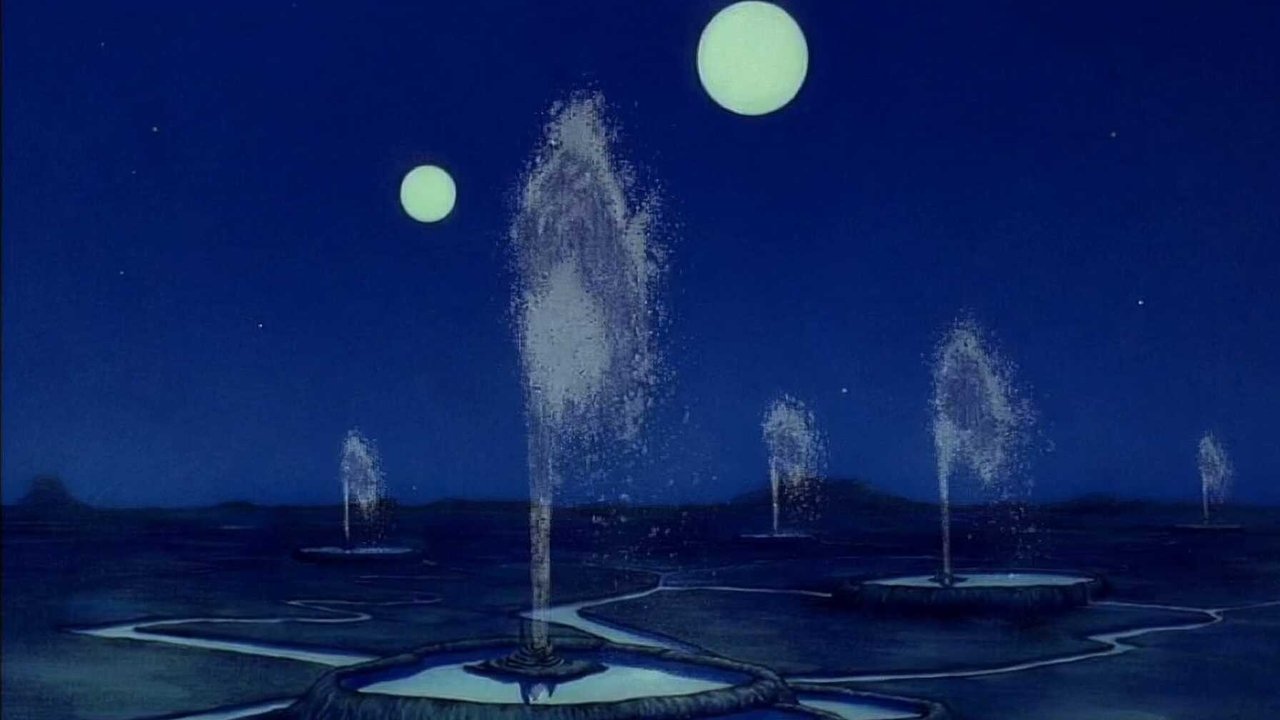
The plot kicks off with a genuine sense of urgency and isolation. Young Piel (Frédéric Legros providing the innocent voice) is stranded alone on the hostile planet Perdide after his father is killed in an attack. His only connection to the outside universe is a communicator microphone, linking him to the rugged space adventurer Jaffar (Jean Valmont). Jaffar, diverting from his lucrative cargo run, mounts a rescue mission, gathering a motley crew including the exiled Prince Matton, his alluring fiancée Princess Belle, and Silbad, an old space-farer nursing secrets and accompanied by two tiny, telepathic aliens named Yula and Jad.
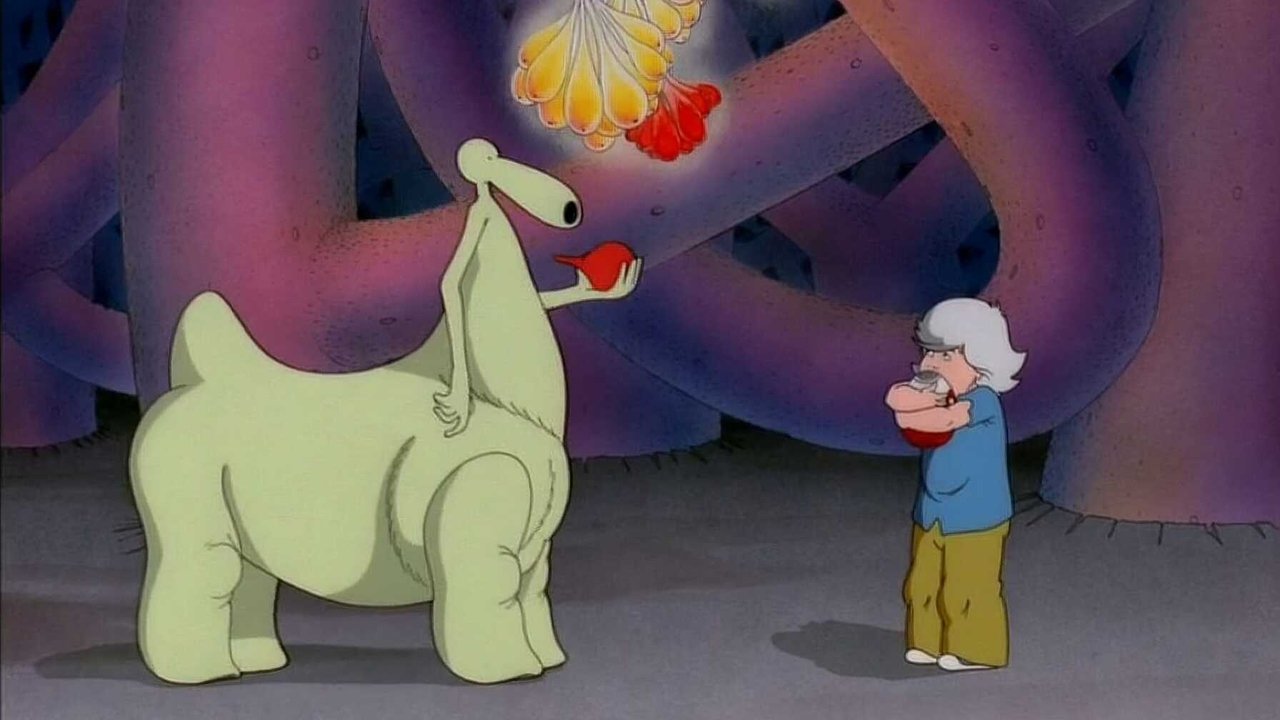
What follows is less a high-octane chase and more an episodic odyssey through a genuinely weird and dangerous cosmos. They encounter faceless, hive-minded angels, planets ruled by bizarre biological entities, and the looming mystery of the titular "Masters of Time" – godlike beings who perceive existence differently. The journey feels vast and perilous, capturing that classic sci-fi sense of humanity being small specks in an uncaring, wondrous universe. Some sequences, like the hypnotic journey through the field of predatory flowers or the encounter with the strange, dispassionate beings on Gamma 10, linger in the memory long after the credits roll. The pacing might feel slow to modern audiences accustomed to constant stimulation, but it allows the unique visuals and the underlying themes of loss, time, and perception to resonate.

### Retro Fun Facts & Quirky Charm
Part of the charm of revisiting Time Masters on VHS (or, let's be real, likely a streaming service or special edition Blu-ray these days) is appreciating its specific place in animation history. It's a film made before CGI smoothed everything out, where the artistry of hand-drawn animation, even with its occasional limitations, shines through. Mœbius wasn't just a designer; he co-wrote the screenplay with Laloux and Jean-Patrick Manchette, ensuring his visual ideas were deeply embedded in the narrative DNA.
It wasn't a massive box office smash, finding its audience more gradually through home video and television airings, becoming a cherished cult classic for those seeking animation outside the mainstream. Hearing the original French voices, particularly the distinct tones of Jean Valmont as Jaffar and Michel Elias voicing multiple supporting characters (including Silbad and the robot), adds to the film's unique European flavour. While an English dub exists, the original track often feels more aligned with the film's contemplative mood. The synthesizer-heavy score, typical of early 80s sci-fi, also adds perfectly to the retro atmosphere – sometimes haunting, sometimes pulsing with electronic energy.
### Still Masterful After All These Years?
Time Masters isn't perfect. The plot occasionally meanders, some character motivations feel a little thin, and the deliberate pacing won't be for everyone. But its strengths are undeniable. The sheer artistic vision of Mœbius, brought to life by Laloux's atmospheric direction, creates a world unlike any other. It taps into a sense of wonder and strangeness that feels distinctly European and deeply rooted in the imaginative sci-fi illustrations that graced countless book covers and magazines of the era. It dares to be thoughtful, even a little philosophical, amidst its space adventure trappings.
For those of us who stumbled upon it back in the day, it remains a special discovery – a testament to the power of animation to transport us to truly alien realms. It reminds you of a time when finding something different in the video store felt like uncovering treasure.
VHS Heaven Rating: 8/10
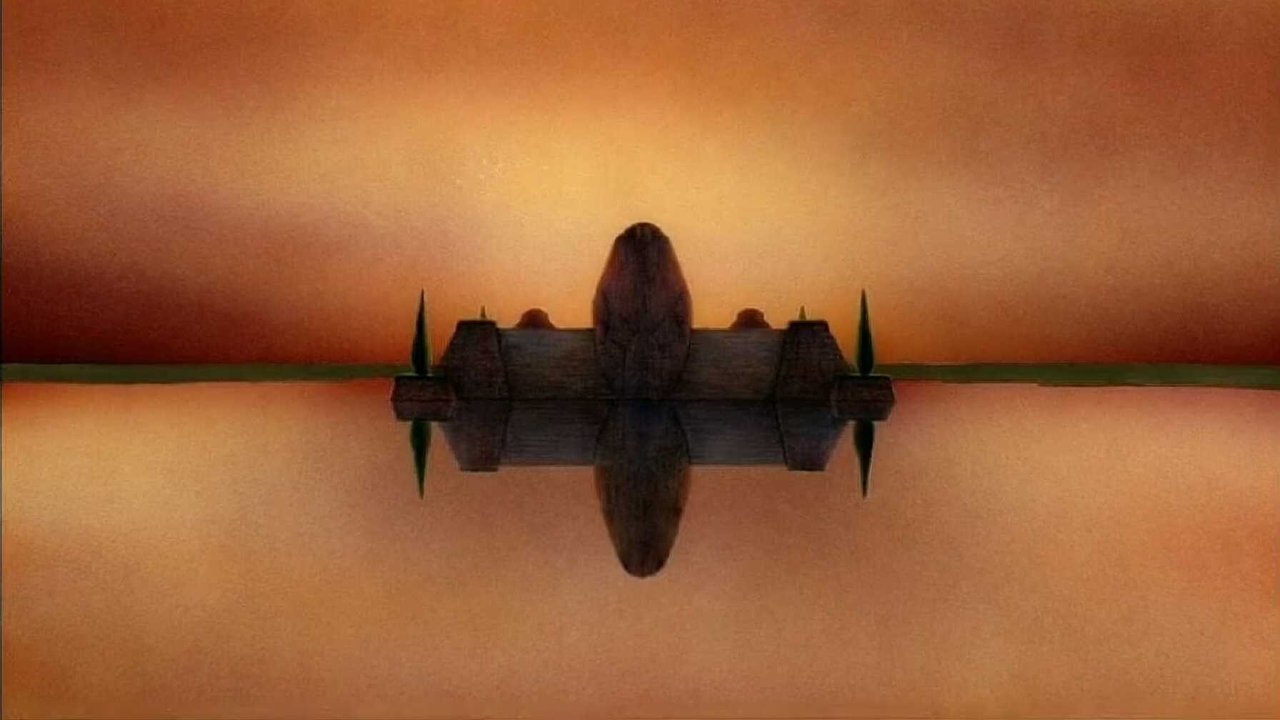
Justification: While the pacing can be meditative and some plot points feel slightly underdeveloped by modern standards, the sheer artistic brilliance of Mœbius's designs, Laloux's atmospheric direction, and the film's unique, haunting tone make it a standout piece of 80s animation. It earns high marks for its visual creativity, its commitment to a different kind of sci-fi storytelling, and its enduring cult status as a piece of beautifully strange, hand-drawn cosmic wonder.
Time Masters remains a captivating portal to a beautifully drawn, slightly melancholic, and utterly unique corner of the animated universe – a true gem from the era when imagination felt boundless on the flickering screen.