Okay, pull up a beanbag chair, maybe grab a soda – remember those glass bottles? Let's talk about a journey that felt truly cosmic, even viewed through the flickering static of a well-loved VHS tape. I'm talking about Galaxy Express 999: The Movie, the 1979 animated feature that took Japan by storm and eventually found its way into the VCRs, and hearts, of Western fans hungry for something beyond Saturday morning cartoons. Forget warp speed, this was a train ride to the stars, fueled by longing, mystery, and a surprising amount of melancholy.
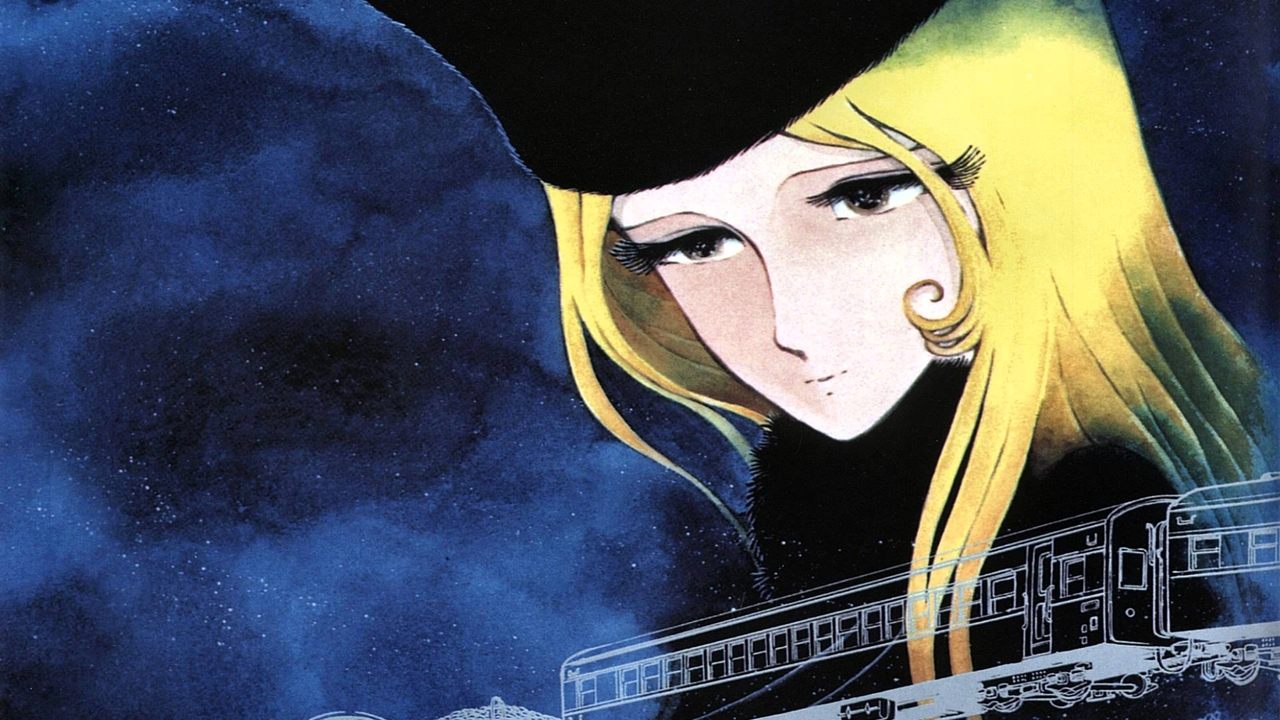
### All Aboard for the Andromeda Galaxy
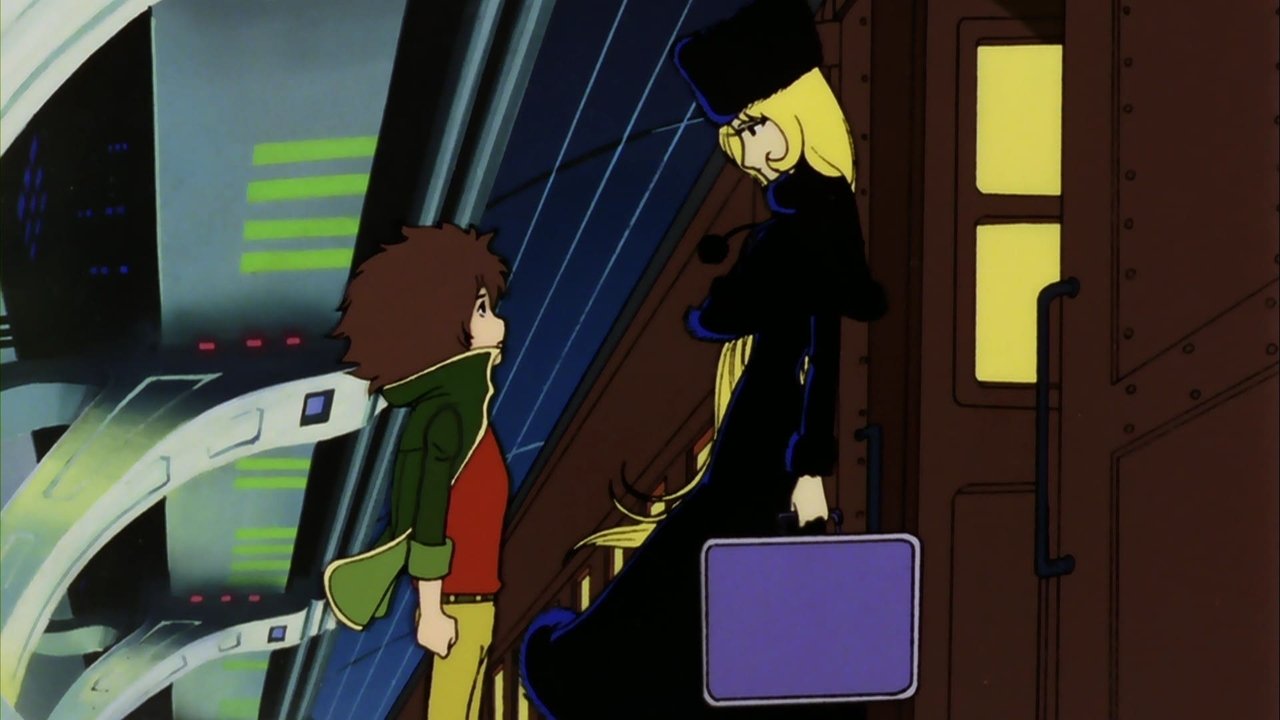
The premise itself is pure, distilled space opera romance: in a distant future, humanity has achieved a form of immortality by transferring consciousness into durable machine bodies. But this privilege costs dearly, leaving the poor and organic behind. Young Tetsuro Hoshino, a scrappy street kid whose mother was cruelly gunned down by the cybernetic Count Mecha, dreams of reaching the Andromeda Galaxy, where machine bodies are supposedly given away for free. His ticket to ride? The Galaxy Express 999, a fantastical interstellar steam train. His mysterious benefactor and travelling companion? The enigmatic Maetel, a tall, beautiful woman draped in black, whose secrets seem as vast as the cosmos itself.
This cinematic adaptation, directed by the legendary Rintaro (who would later grace us with gems like Metropolis (2001) and Harmagedon (1983)), brilliantly condenses the sprawling narrative of Leiji Matsumoto's original manga and beloved TV series. While compressing hundreds of episodes' worth of planetary layovers and philosophical musings into two hours means some depth is inevitably lost, the film gains a focused intensity. It hits the core emotional beats hard, creating an experience that feels both epic and deeply personal. Matsumoto, who also contributed to the script alongside Shintaro Tsuji and Hiroyasu Yamaura, ensured his unique, melancholic fingerprint remained all over the project.
### A Universe Unlike Any Other
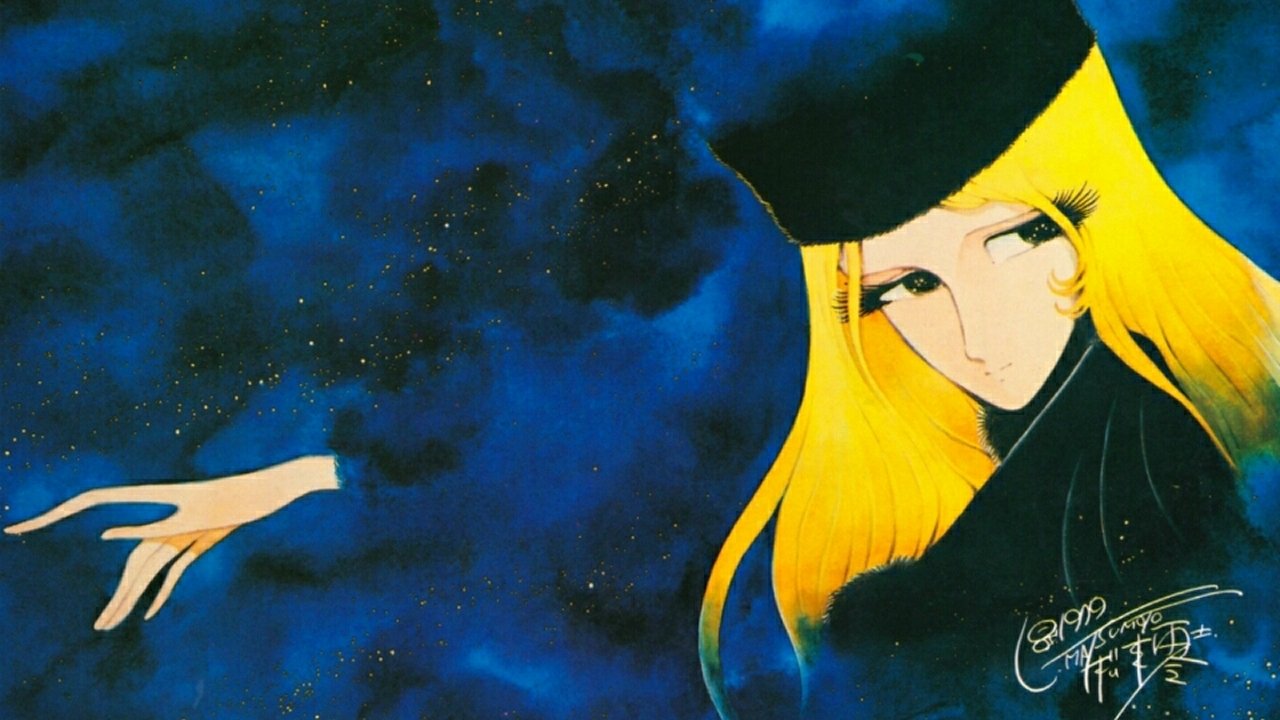
What immediately set Galaxy Express 999 apart, especially for audiences perhaps only familiar with Disney or Hanna-Barbera, was its distinctive visual style and tone. Matsumoto's character designs are iconic – the impossibly slender figures, the soulful, large eyes brimming with unspoken sorrow, particularly in Maetel. Tetsuro, voiced with fiery determination by the incomparable Masako Nozawa (yes, the voice of Goku!), is our grounded, relatable entry point into this bizarre future. But it's Maetel, brought to life with quiet grace by Masako Ikeda, who truly captivates. Who is she? Why is she helping Tetsuro? Her mystery is the engine driving much of the film's intrigue.
The journey itself is a series of vignettes, stops on strange and often dangerous worlds that serve as allegories for human nature, temptation, and the very definition of life. From the decadent despair of Pluto, populated by mechanized beings who have discarded their fragile hearts, to the tragic beauty of Titan, where Tetsuro encounters the kind waitress Claire (Yoko Asagami), whose crystal body holds a poignant secret – each stop leaves its mark on our young protagonist. The animation, while certainly dated by today's standards, possesses a handcrafted charm and ambition that was groundbreaking for its time. The celestial backdrops are breathtaking, and the design of the 999 itself – a glorious fusion of antique locomotive and starship – remains utterly unique.

### Retro Fun Facts & Cosmic Connections
It's hard to overstate just how massive Galaxy Express 999 was in Japan upon its release. It wasn't just an animated film; it was a cultural event, becoming the highest-grossing domestic film of 1979. Think Star Wars levels of phenomenon, but with a distinctly Japanese flavour. For many Western fans discovering it later on VHS, often through pioneering distributors who took a chance on this "weird cartoon", it was a revelation. This wasn't just for kids; it dealt with heavy themes – mortality, the value of flesh-and-blood existence, social inequality, loss.
Part of the magic, especially for those digging deeper, was realizing this wasn't an isolated story. Matsumoto's works often interconnected, creating a shared "Leijiverse". Die-hard fans surely let out a cheer (or maybe a gasp of recognition) when iconic figures like Captain Harlock and Queen Emeraldas make pivotal appearances, lending Tetsuro aid and guidance. These weren't just cameos; they felt like titans striding across a larger cosmic stage, adding layers of mythos to Tetsuro's personal quest. And let's not forget the score by Nozomi Aoki – that soaring, often heartbreaking theme music is pure nostalgic ear candy, instantly transporting you back to that feeling of cosmic wonder tinged with sadness.
### Why It Still Chugs Along in Our Memories
Watching Galaxy Express 999 today is like unearthing a time capsule. Yes, the animation shows its age, and the pacing might feel deliberate compared to modern blockbusters. But its power remains undiminished. It's a film that dares to be melancholy, to ask big questions without offering easy answers. Tetsuro’s journey isn't just about getting a new body; it's about discovering what it truly means to be human, flaws and all. It’s about the connections we make, the experiences we gather, and the bittersweet nature of growing up and letting go. Did any of us truly understand the depth of Maetel's sorrow back then, watching on a fuzzy CRT? Maybe not entirely, but the feeling, the atmosphere – that stuck with you.
It's a reminder of a time when feature animation aimed for the stars, not just in spectacle, but in thematic ambition. It paved the way for more complex anime narratives to reach international shores, proving there was an audience eager for stories that blended adventure with genuine pathos. The film even spawned a direct sequel, Adieu Galaxy Express 999 (1981), which continued Tetsuro and Maetel's saga.
Rating: 8.5/10
This rating reflects the film's historical significance, its enduring emotional impact, Leiji Matsumoto's visionary world-building, Rintaro's masterful direction for the era, and that unforgettable score. While the condensed plot might feel slightly rushed compared to the source material, and the animation is undeniably of its time, the film's artistry, heart, and sheer imaginative scope make it a cornerstone of classic anime and a profoundly moving space opera.
It’s more than just a train ride; it’s a journey into the heart of what makes us human, wrapped in a cosmic adventure that still feels wondrously unique. A ticket worth punching again and again.