Okay, settle back into that comfy armchair, maybe imagine the faint whir of a VCR rewinding nearby. Remember the turn of the millennium? The internet was still a noisy, magical frontier, Pokémon was king, and suddenly, another digital wave crashed onto shores and screens: Digimon. And then came Digimon: The Movie in 2000, a film experience that felt less like a carefully constructed narrative and more like a glorious, hyper-caffeinated sugar rush mainlined directly into your eyeballs. It was loud, it was chaotic, it was confusing… and for a certain generation, it was utterly captivating.
Three Films in a Trench Coat?
One of the most fascinating – and frankly, defining – aspects of Digimon: The Movie isn't necessarily on screen, but how it got there. What landed in Western theaters wasn't one singular film, but three separate Japanese Digimon short films (Digimon Adventure (1999), Digimon Adventure: Our War Game! (2000), and Digimon Adventure 02: Digimon Hurricane Touchdown!! / Supreme Evolution!! The Golden Digimentals (2000)) stitched together by Saban Entertainment and Fox Kids. Tasked with this Frankensteinian feat were American writers and voice directors Jeff Nimoy (yes, Leonard Nimoy's cousin) and Bob Buchholz. Their mission? Forge these disparate stories, featuring different character groups and time settings, into something resembling a cohesive 85-minute feature for English-speaking audiences.
The result is… well, unique. The plot, such as it is, jumps between a prequel incident involving Tai and Kari finding the first Digi-egg, the legendary Our War Game! segment where the DigiDestined battle an internet-born virus Digimon named Diaboromon, and a final, heavily truncated story featuring the Adventure 02 cast meeting an American DigiDestined named Willis. Nimoy and Buchholz layered in a connecting narration and recurring character (Willis) to try and bridge the gaps, along with a heaping dose of early 2000s slang, pop culture jokes, and that signature Fox Kids attitude. Does it always work? Absolutely not. The tonal shifts can be whiplash-inducing, and the plot threads sometimes feel stapled together rather than woven.

The Crown Jewel: Our War Game!
Let's be honest, the absolute standout, the segment that elevates this movie beyond mere nostalgic curiosity, is the middle chunk adapted from Digimon Adventure: Our War Game!. Directed in Japan by a then-up-and-coming talent named Mamoru Hosoda (who would later give us masterpieces like The Girl Who Leapt Through Time (2006) and Summer Wars (2009) – which shares a strikingly similar premise), this part is pure, exhilarating digital-age action.
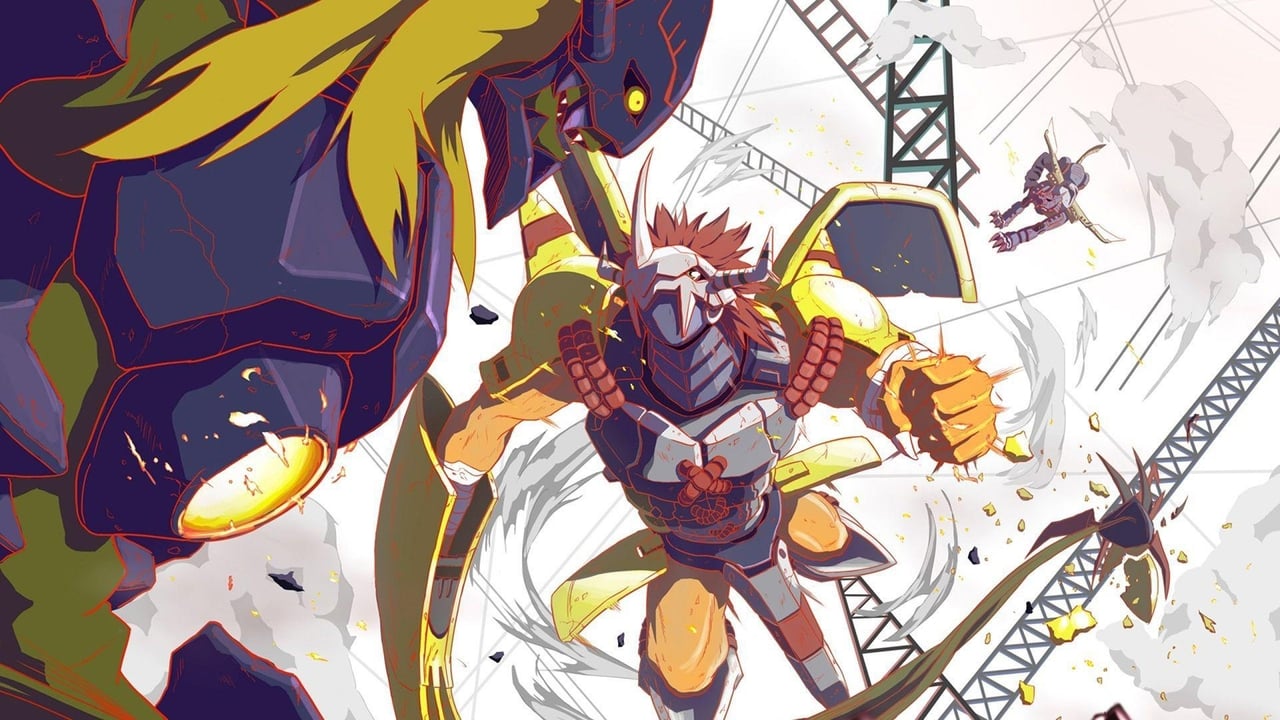
The premise is simple but incredibly effective for its time: a malevolent computer virus Digimon hatches on the internet, consuming data, multiplying exponentially, and threatening global communication networks (including launching a nuclear missile!). It’s up to Tai, Matt, Izzy, and Tentomon to log in and fight back, recruiting help from Gennai and eventually Joe and TK via frantic emails and choppy video calls from around the world. The sense of escalating panic, the clever visualization of the internet as a battleground, and the sheer coolness of WarGreymon and MetalGarurumon fusing into the awesome Omnimon – it’s fantastic stuff. Hosoda's direction shines through even the edits, capturing a sense of scale and urgency that feels genuinely cinematic. This sequence alone is worth the price of admission (or the Blockbuster rental fee back in the day!).
That Soundtrack, Though…
You cannot talk about the Western release of Digimon: The Movie without mentioning the soundtrack. Oh, that glorious, baffling, utterly unforgettable soundtrack. Instead of the original Japanese score, Fox opted for a wall-to-wall compilation of late-90s/early-2000s pop, rock, ska, and techno. From Less Than Jake’s “All My Best Friends Are Metalheads” to the Barenaked Ladies' "One Week" (somehow fitting the digital chaos) and, of course, the iconic use of Fatboy Slim's "The Rockafeller Skank," the music became inextricably linked to the film's identity for an entire generation. It’s a relentless auditory assault that perfectly mirrors the on-screen energy, even if it occasionally drowns out nuance. I distinctly remember that soundtrack CD being almost as sought-after as the movie itself!
Retro Fun Facts & Legacy
Behind the frantic pace and pop tunes lie some interesting tidbits. The American production team had the monumental task of not only editing the three films together but also re-writing dialogue to create links that weren't there originally, hence the slightly shoehorned-in presence of Willis throughout. The budget was reportedly around $5 million, and it grossed about $16 million worldwide – a modest success likely driven by the TV show's peak popularity. While critics at the time were largely baffled (it sits at a chilly 24% on Rotten Tomatoes), audiences, particularly young ones already invested in the Digi-verse, were far more forgiving.
The voice cast, including regulars like Joshua Seth (Tai), Lara Jill Miller (Kari), and Michael Reisz (Matt), deliver energetic performances that match the established TV show's tone, crucial for consistency. Though heavily localized, the film undeniably helped solidify Digimon's place in Western pop culture, offering a slightly more complex, tech-focused alternative to its pocket-monster rival. And that Our War Game! segment? Its influence is undeniable, particularly on Hosoda's own later work.
The Verdict
Digimon: The Movie is a fascinating time capsule. It's a product of aggressive localization, a testament to the power of a killer soundtrack (depending on your taste!), and a showcase for one truly brilliant piece of anime action nestled within a somewhat messy framework. Watching it today is an exercise in nostalgia, certainly, but also an appreciation for its sheer, unadulterated energy and the surprising effectiveness of that central Our War Game! story. It’s bumpy, it’s loud, the jokes haven’t all aged gracefully, and the narrative structure is held together with digital duct tape. But there's an undeniable charm to its chaos, a sincerity beneath the corporate repackaging.
Rating: 6/10
Why this score? While the structure is undeniably flawed and the localization heavy-handed, the sheer nostalgic power, the unforgettable soundtrack (for better or worse), and the genuinely thrilling Our War Game! segment make it a worthwhile trip down memory lane. It’s a bumpy ride, but parts of it remain surprisingly brilliant.
For those of us who caught the Digi-wave back then, popping this tape (or disc) in feels like booting up an old friend – noisy, a bit unpredictable, but guaranteed to spark a jolt of pure, unadulterated early-internet era excitement. Go Digi-Modify!