Here's the review for "Half Moon Street":

A certain kind of London fog seems to hang over Half Moon Street (1986), not the literal pea-souper of classic noir, but an atmospheric haze of intellect, danger, and clandestine desire. Watching it again, decades after its flickering presence on rental shelves, evokes a specific kind of 80s cinematic mood – the "adult thriller," a genre that often promised more sizzle than it delivered, yet sometimes, like here, left you pondering the intricate, often contradictory motivations of its characters long after the tape stopped whirring. It wasn't just another action flick; it felt grown-up, a little European, and hinted at complexities beneath its glossy surface.
Worlds Colliding
At its heart, the film, adapted by director Bob Swaim (who had previously helmed the gritty French crime hit La Balance (1982)) from Paul Theroux's novella Doctor Slaughter, presents a fascinating dichotomy. We meet Dr. Lauren Slaughter, portrayed by Sigourney Weaver fresh off her iconic turn in Aliens (1986). She's a brilliant academic, a China expert wrestling with low pay and institutional bureaucracy at a London think tank. Frustrated and seeking autonomy, she makes a calculated, almost defiant leap into the world of high-class escorting through the mysterious "Jasmine Agency." It's this stark contrast – the sharp mind navigating the perilous, emotionally charged landscape of selling intimacy – that forms the film's central tension. Does her intellectual prowess equip her for this dangerous game, or make her more vulnerable?
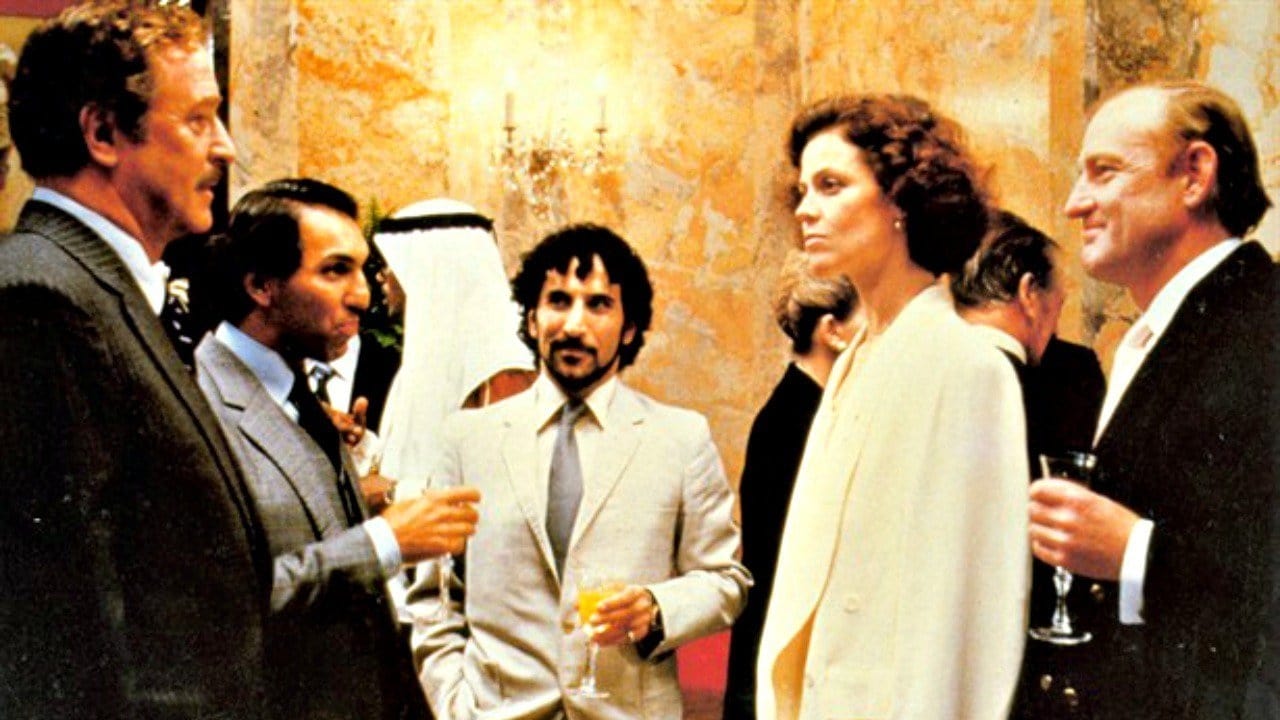
Weaver and Caine: A Study in Reserve
Sigourney Weaver's performance is key. Choosing this role was reportedly a conscious effort to break away from the sci-fi heroism of Ripley, and she imbues Lauren with a compelling mix of intelligence, cool detachment, and underlying vulnerability. There’s a deliberate calculation in Lauren's actions, a sense that she views her double life almost as an academic exercise initially, a problem to be solved. Yet, Weaver subtly lets the cracks show – the flicker of fear, the pang of loneliness, the unexpected yearning for connection. It's a performance that feels authentic in its complexity, even if the script sometimes struggles to fully explore the depths hinted at.
Opposite her is the always reliable Michael Caine as Lord Sam Bulbeck, a high-ranking British diplomat involved in sensitive Middle East peace negotiations. He becomes one of Lauren's regular clients, and their relationship evolves beyond the transactional into something more ambiguous. Caine, ever the master of understatement, portrays Bulbeck not as a lecherous predator, but as a solitary, weary man seeking companionship and perhaps, intellectual equals. There's a quiet dignity to his performance, a sense of melancholy that complements Weaver's guarded intensity. Their scenes together possess a fragile, tentative chemistry, more about shared loneliness than overt passion. Does their connection offer solace or merely compound the risks they both face?
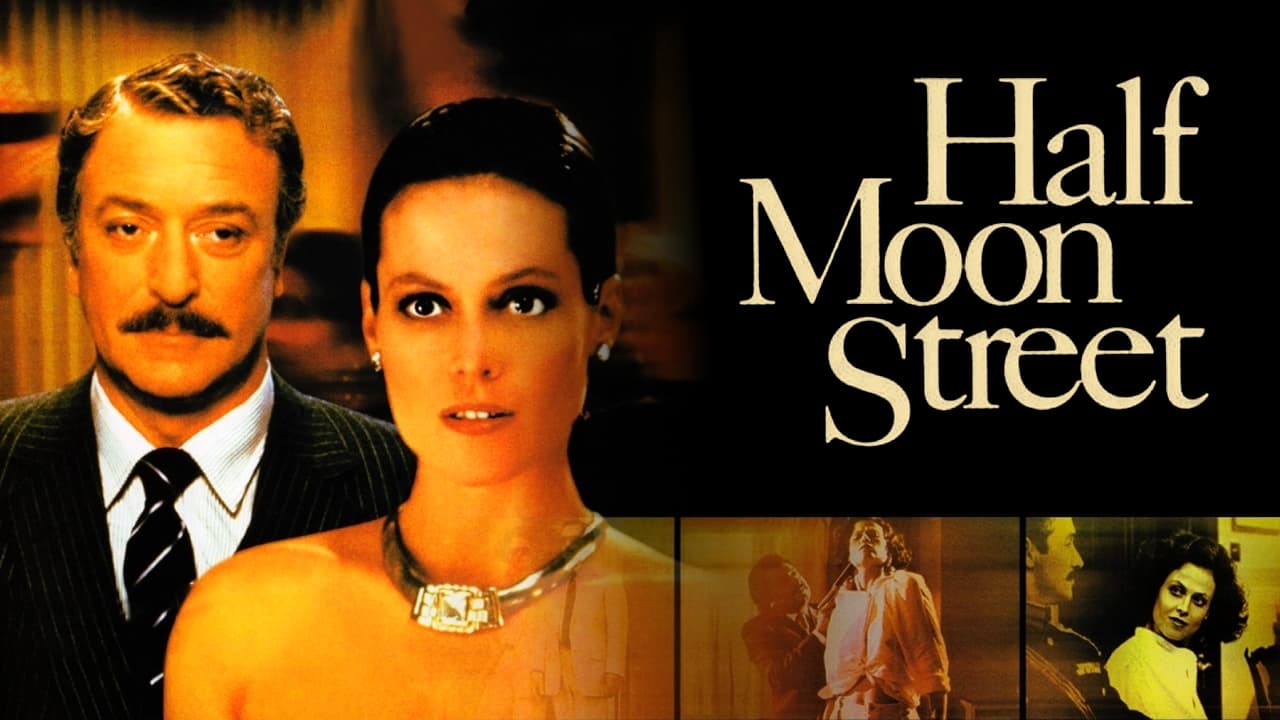
Retro Fun Facts: Behind the Crescent Moon
The journey from page to screen wasn't entirely smooth. Paul Theroux's original novella, Doctor Slaughter, was leaner, focusing more tightly on Lauren's internal world. The film adaptation, helmed by American director Bob Swaim making his English-language debut after La Balance, significantly beefed up the political thriller subplot involving Lord Bulbeck and Arab terrorists. This expansion aimed for broader appeal but arguably diluted the character study. Swaim himself later expressed frustration with studio pressure, suggesting they wanted more explicit content and less intricate political maneuvering, a common tension in commercial filmmaking.
Filmed on location in London, the movie captures the city's specific 80s feel – a blend of old-world establishment and modern anxieties. Interestingly, despite the star power of Weaver (riding high post-Aliens) and Caine (a ubiquitous screen presence throughout the decade), Half Moon Street struggled to find its audience. With a budget around $7.5 million, it reportedly grossed just over $1.1 million domestically, making it a significant box office disappointment. Critics at the time were divided, often praising the performances but finding the mix of erotic drama and political intrigue uneven, sometimes lacking both sufficient heat and suspense. Seeing it now, that initial cool reception feels somewhat understandable, yet the film possesses qualities that might be better appreciated with nostalgic hindsight.
Atmosphere Over Thrills
Where Half Moon Street succeeds most is in its atmosphere. Swaim and cinematographer Peter Hannan create a world of shadows and hushed conversations, contrasting the sterile environment of the think tank with the opulent, yet potentially dangerous, apartments where Lauren meets her clients. The political thriller elements, while perhaps underdeveloped, add a genuine layer of menace that hangs over Lauren and Bulbeck's burgeoning connection. You feel the precariousness of Lauren's situation – the constant risk of exposure, the threat of violence simmering beneath the surface.
However, the film never quite fully commits to being either a taut thriller or a deep character study. The pacing can feel leisurely, and the plot mechanics sometimes seem secondary to observing the central relationship. It raises intriguing questions about power, exploitation, intellectualism versus pragmatism, and the compromises people make for security or connection, but doesn't always delve as deeply as one might hope. Doesn't the ambiguity, though, sometimes reflect life more accurately than neat resolutions?
Final Reflections
Half Moon Street remains a fascinating curio from the VHS era. It’s a film that perhaps aimed higher than it achieved, caught between genres and ambitions. Yet, the strength of the central performances from Weaver and Caine, coupled with its evocative mood and the provocative nature of its premise, makes it linger in the memory. It’s not a pulse-pounding thriller, nor a deeply satisfying character drama, but something in between – a reflective, slightly melancholy look at two intelligent but isolated souls navigating a dangerous world, both internal and external. For those who remember browsing those slightly more 'adult' sections of the video store, it offers a welcome rediscovery.
Rating: 6/10
Justification: The score reflects the film's strengths in Sigourney Weaver and Michael Caine's thoughtful performances and its palpable, moody atmosphere. However, it's held back by an uneven script that doesn't fully integrate its thriller and dramatic elements, leading to pacing issues and underdeveloped subplots. It’s an intriguing film, but ultimately feels like a missed opportunity to fully explore its compelling core ideas.
Lingering Thought: What truly drives a character like Lauren Slaughter – intellectual curiosity, financial desperation, or a deeper, perhaps unacknowledged, need to challenge societal boundaries? The film leaves you pondering her complex enigma.