Super Mario Bros.: The Great Mission to Rescue Princess Peach!
Okay, fellow tapeheads, gather 'round the glow of the virtual CRT. Today, we're digging deep into the plastic crate of obscure treasures, past the blockbuster rentals and well-worn favorites, to unearth something truly special: the first ever Super Mario movie. No, not that infamous 1993 live-action fever dream (we'll get to that another time, perhaps after a stiff drink). We're talking about Super Mario Bros.: The Great Mission to Rescue Princess Peach! (or Super Mario Bros.: Peach-Hime Kyushutsu Dai Sakusen! if you're feeling authentic), a 1986 anime feature that, for decades, was the stuff of playground rumors and grainy VHS bootlegs traded among the most dedicated Nintendo acolytes. Seeing this feels less like watching a movie and more like uncovering a lost artifact from the dawn of video game cinema.

### Plunging Down the Pipe
Released in Japanese theaters on July 20, 1986, this hour-long animated adventure predates even the Western release of Super Mario Bros. 2 (our version, anyway). It hails from a time when Mario's world was still coalescing, distilled purely from the pixels and beeps of the original NES/Famicom smash hit. Directed by Masami Hata (who would later co-direct the ambitious Little Nemo: Adventures in Slumberland), with a script by Hideo Takayashiki, the film captures the essence of the game, even if it takes some wonderfully bizarre detours along the way.
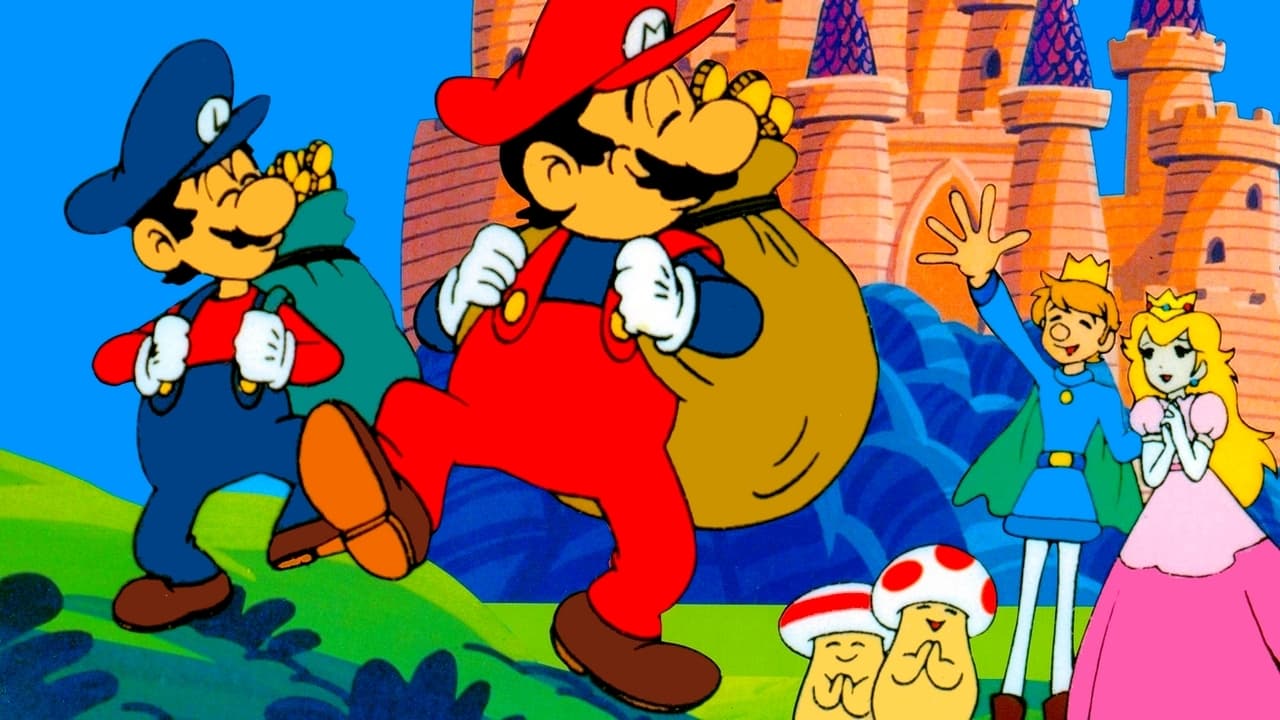
The story kicks off with Mario deep in a Famicom session (meta!) before the damsel herself, Princess Peach (Mami Yamase), leaps out of his TV screen, pursued by the hulking King Koopa (Bowser, voiced menacingly). Before Mario (Tōru Furuya, the legendary voice of Amuro Ray in Mobile Suit Gundam) can react, Koopa snatches Peach back into the TV. Guided by a strange dog-like creature named Kibidango (a film-exclusive character!), Mario and a surprisingly greedy, yellow-and-blue-clad Luigi (Masaharu Satō) are pulled into the Mushroom Kingdom to rescue her. What follows is a whirlwind tour through familiar game locales – deserts, oceans, icy plains – populated by Goombas, Koopa Troopas, Lakitus, and Hammer Bros., all rendered in a distinctly mid-80s anime style.
### A Mushroom Kingdom Unlike Any Other
Let's be clear: this isn't Studio Ghibli. The animation, produced by Grouper Productions, is perfectly serviceable 80s TV-anime quality, charming in its simplicity but certainly not groundbreaking. Yet, there's an undeniable energy to it. The character designs are fascinatingly "early days" – Mario is earnest and heroic, Peach is the classic damsel, but Luigi... oh, Luigi. Here, he's obsessed with gold coins, often distracted from the rescue mission by his avarice. It's a character trait largely forgotten in modern interpretations, adding a layer of quirky humor to their dynamic.
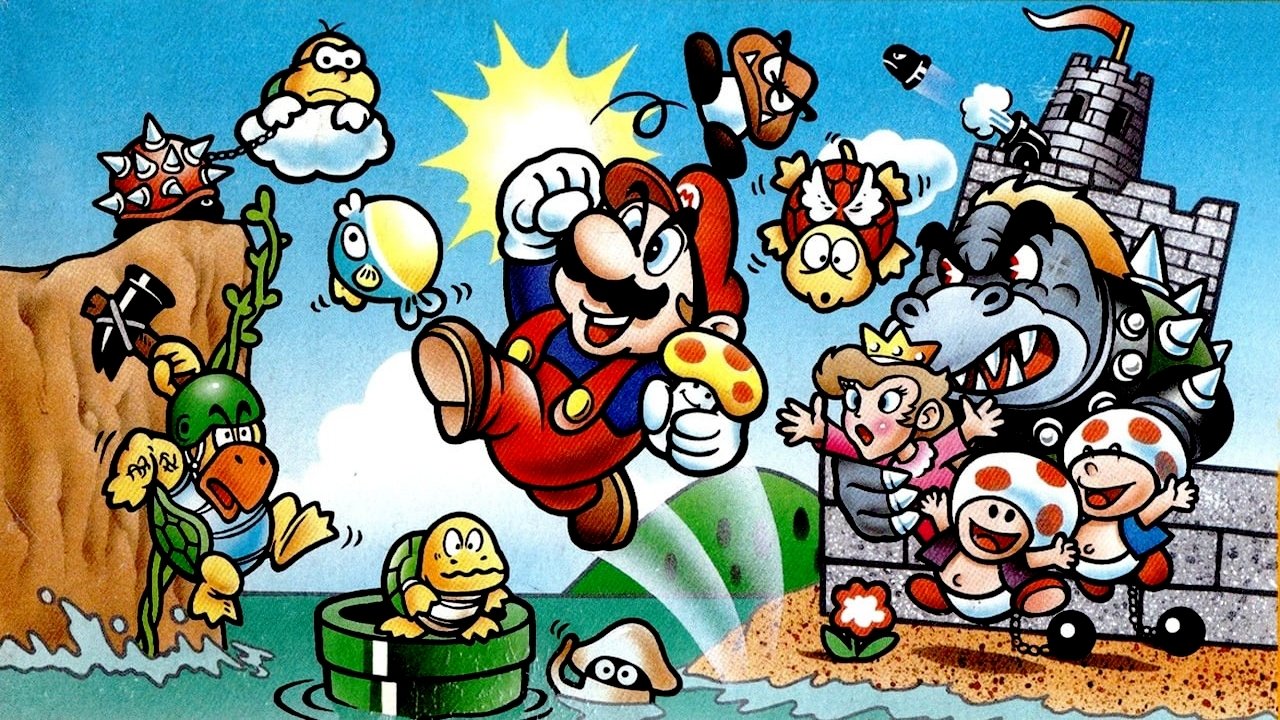
The film does a surprisingly decent job of incorporating game mechanics. Mario munches on Super Mushrooms, Flowers (seemingly Fire Flowers, though the effect varies), and even a Starman, triggering familiar power-up sequences. The sound effects, often lifted directly from the Famicom game, are pure nostalgic bliss, instantly transporting you back to simpler times. Watching Mario stomp Goombas or navigate perilous jumps feels like seeing your own gameplay sessions animated, albeit with some added narrative strangeness.
### Retro Fun Facts: Beyond the Game Cartridge
Part of the magic of The Great Mission lies in its context and subsequent obscurity. This wasn't just some straight-to-video quickie; it had a legitimate theatrical run in Japan, often paired with a short film based on Sega's Running Boy (you might know him better as Alex Kidd!). Imagine that double feature!
Its elusiveness in the West for so long only added to its mystique. For years, the only way to see it was through traded, multi-generational VHS copies, often without subtitles. It became a holy grail for Nintendo historians. Thankfully, fan efforts and eventually niche physical media releases have made it more accessible, but that initial rarity cemented its cult status.
The film also spawned its own wave of Japan-exclusive merchandise, things we could only dream of stateside back then – phone cards, manga adaptations, ramen bowls, even picture books. It’s a window into a time when Nintendo was experimenting wildly with its burgeoning mascot. One of the film's most memorable oddities is the ending (Spoiler Alert!): Peach is already engaged... not to Mario, but to Prince Haru of the Flower Kingdom, who Koopa had transformed into the dog Kibidango. Poor Mario gets a thank-you kiss and is sent home, ending the adventure on a surprisingly bittersweet, almost anti-climactic note. Talk about a unique take!
### Still Worth the Warp Pipe?
Watching Super Mario Bros.: The Great Mission to Rescue Princess Peach! today is a delightful exercise in retro archaeology. It’s undeniably dated, occasionally nonsensical (why is Luigi so greedy?), and the plot rushes along at warp speed. Yet, it possesses a genuine heart and an innocent charm that the later, much-maligned live-action film utterly lacked. It feels like an earnest attempt to translate the simple joy of the game into narrative form, filtered through the specific aesthetic and storytelling conventions of 80s children's anime.
It captures a specific moment in time, before Mario became a global phenomenon with rigidly defined characteristics. There's a looseness, a willingness to experiment (a coin-hungry Luigi? A princely dog fiancé?) that's fascinating to witness. For fans who grew up with the NES humming beside their boxy TVs, this film offers a unique and surprisingly endearing glimpse into Mario's very first cinematic adventure. It might not be a masterpiece, but it’s a crucial, charming piece of Nintendo history.
VHS Heaven Rating: 6/10
Justification: The rating reflects the film's historical significance and undeniable nostalgic charm for hardcore fans (points up!), balanced against its simplistic animation, rushed plot, and general weirdness that might baffle casual viewers (points down!). It's more of a fascinating curio than a cinematic classic, but its heart and unique place in Mario lore earn it a respectable score.
Final Thought: Forget cynical reboots; sometimes the purest nostalgia comes from the strangest, most unexpected corners of the Mushroom Kingdom, unearthed like a long-lost Power Moon.