Crayon Shin-chan: Great Adventure In Henderland
Okay, pop that tape in the VCR, maybe grab some Pocky if you're feeling authentic. Let's rewind to a time when anime feature films hitting video stores felt like discovering treasure, especially one as delightfully bizarre as this. Forget your standard cartoon fare; 1996's Crayon Shin-chan: Great Adventure In Henderland wasn't just another episode stretched thin – it was a full-blown dive into surrealist fantasy, wrapped in the unmistakable, often inappropriate, charm of its five-year-old protagonist. This wasn't just a movie; it felt like stumbling into someone's incredibly weird, surprisingly thrilling dream.
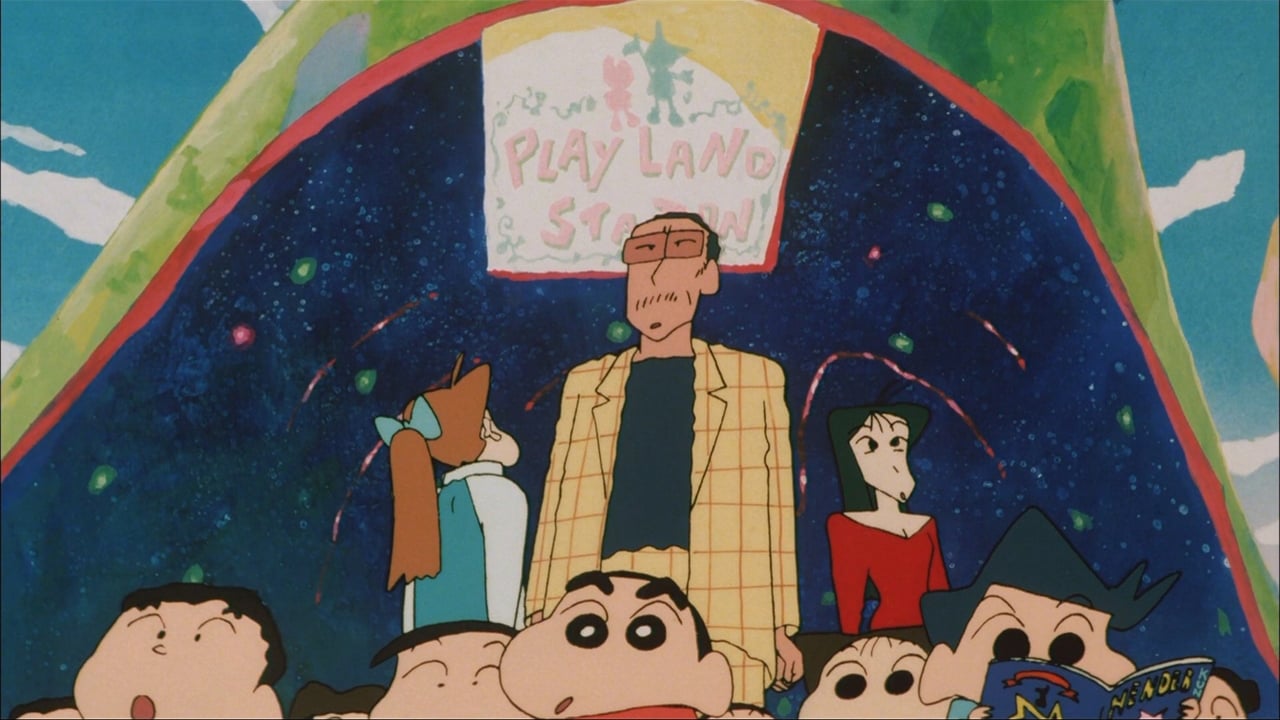
The Strangest Theme Park Admission Ever
Imagine the weirdest theme park you can think of, then multiply it by Shinnosuke Nohara's penchant for chaos. That's Henderland. Opened near the Nohara residence, this place isn't serving up churros and parades; it's a front for a pair of sinister sorcerers, Makao and Joma, whose flamboyant villainy is matched only by their truly unsettling magical powers. Drawn in by a mysterious sentient doll named Toppema Muppet (yes, really), Shin-chan finds himself tasked with saving not just his world, but Henderland itself from these magical baddies and their unnerving clay-figure minions. The premise alone, concocted by director and writer Mitsuru Hongo (adapting Yoshito Usui's beloved manga characters), throws typical kids' movie logic out the window, embracing a delightful absurdity from frame one.
Same Shin-chan, Bigger Playground
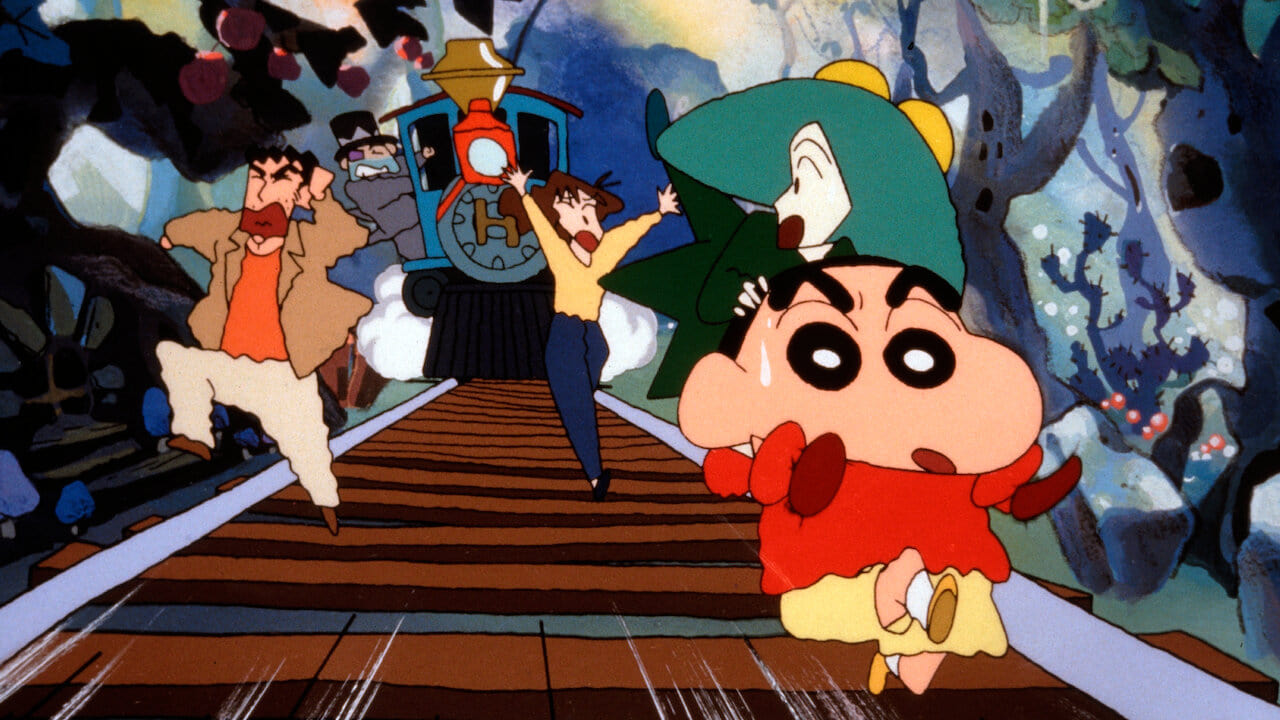
What makes Henderland click, beyond its sheer oddity, is how it integrates the core appeal of Crayon Shin-chan. Our titular hero, voiced with iconic cheekiness by Akiko Yajima, remains gloriously himself – obsessed with older women, prone to inappropriate jokes, and possessing an accidental bravery that somehow always saves the day. His parents, the long-suffering Misae (Miki Narahashi) and the perpetually weary Hiroshi (Keiji Fujiwara, whose distinctive voice work defined the character for years), are dragged along for the ride, grounding the fantastical elements with relatable parental exasperation. It’s this blend – the mundane family dynamic crashing headfirst into high-stakes magic – that gives the film its unique flavor. Seeing Hiroshi and Misae trying to parent amidst shape-shifting villains and cursed attractions is half the fun.
A Dash of Dark Magic and 90s Anime Style
As the fourth film in the long-running Crayon Shin-chan movie series, Henderland solidified the template Mitsuru Hongo established: take the familiar Kasukabe crew and plunge them into a high-concept adventure far removed from their suburban life. But Henderland added a distinct layer of surrealism, even darkness. Makao and Joma aren't just goofy antagonists; their magic feels genuinely threatening at times, particularly their army of Memory Mimes who trap victims in nostalgic loops. Remember those unsettling, blank-faced figures? Brrr. The animation, typical of mid-90s TV anime features, has that hand-drawn charm – vibrant colours, expressive character designs, and action sequences that favour comedic timing and inventive visual gags over slick fluidity. It feels perfectly of its era.
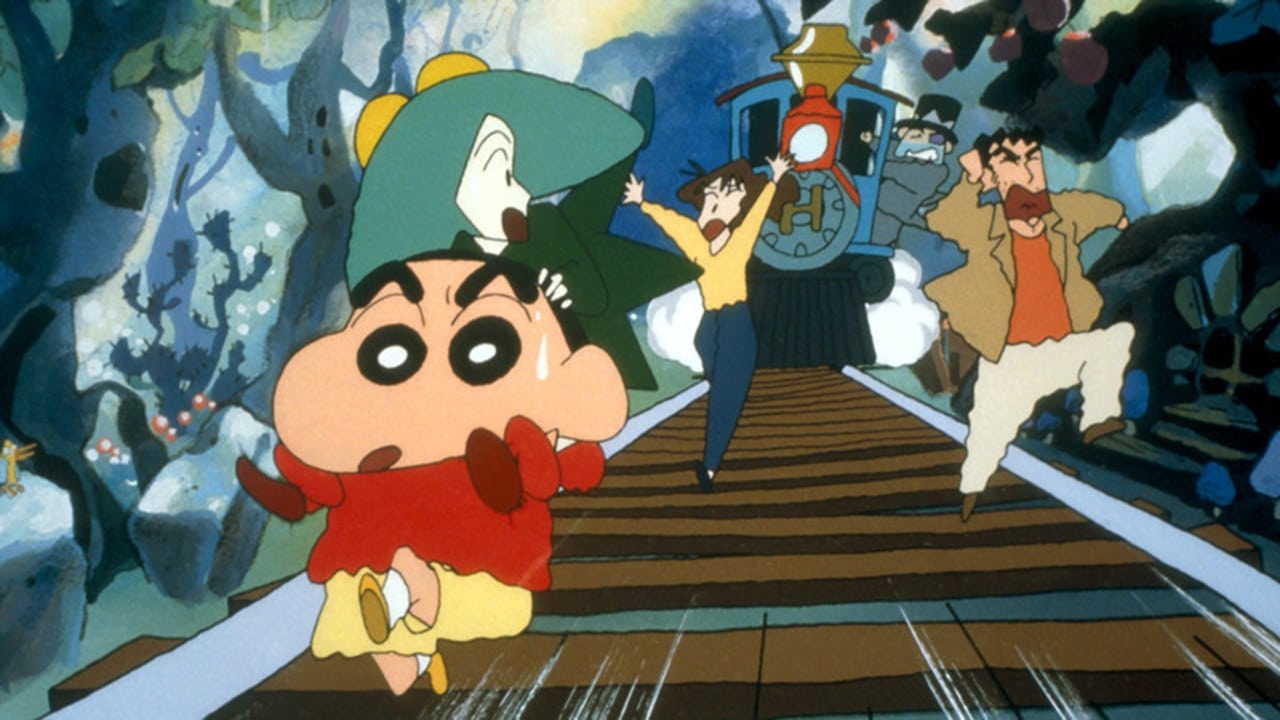
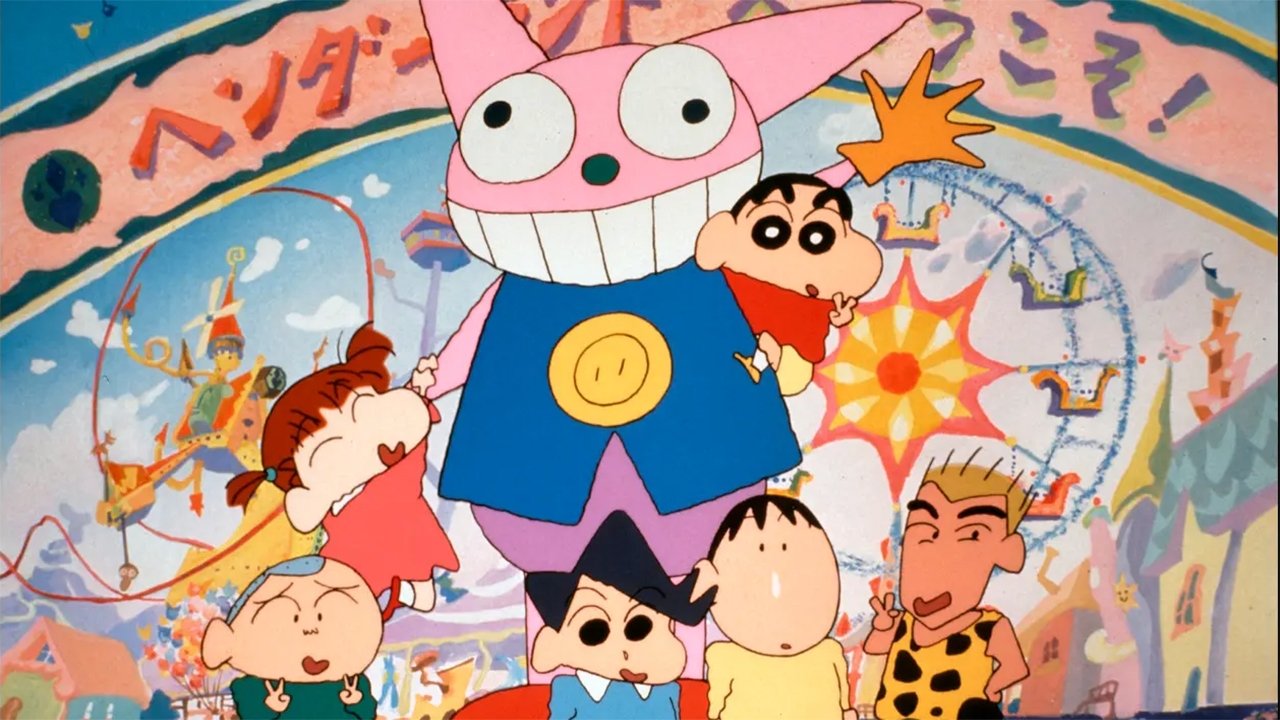
One of the film's most memorable elements has to be the "Sugenamonja!" playing cards – magical trump cards Shin-chan uses, summoning everything from his dad in embarrassing situations to helpful (and sometimes completely random) allies. It's a wonderfully silly plot device that perfectly captures the spirit of the series – solving world-threatening problems with the logic of a five-year-old playing make-believe. It’s pure, unadulterated imagination fuel.
Why Henderland Still Holds a Strange Fascination
Looking back, Great Adventure In Henderland stands out not just within the Shin-chan filmography, but among 90s anime features in general. It dared to be genuinely weird, blending slapstick humor with moments of surprisingly effective fantasy and even mild horror. It didn't talk down to its audience, trusting kids (and adults) could handle the bizarre tone shifts and Shin-chan's signature brand of humour. This wasn't just a cash-in; it felt like a passion project, a chance for the creators to really cut loose with the concept. It captured that feeling of boundless, nonsensical adventure that perhaps only animation can truly achieve. Did anyone else desperately want a set of those Sugenamonja cards after watching this? Just me?
While subsequent Shin-chan films explored different genres and wilder concepts, Henderland remains a fan favourite for its perfect balance of the familiar and the fantastical. It took the world's most infamous kindergartener and threw him into a conflict that felt both epic and utterly ridiculous, a combination that proved irresistible.
VHS Heaven Rating: 8/10
This score reflects the film's sheer creative audacity, memorable villains, successful blend of humour and fantasy, and its status as a standout entry in a beloved, long-running franchise. It perfectly captures the anarchic spirit of Shin-chan while delivering a genuinely fun and imaginative adventure. It might be a bit too weird for some, and the humour is definitely an acquired taste, but for fans of 90s anime and surreal comedy, it's a near-perfect slice of animated chaos.
So, if you stumble across this gem on a dusty tape or a streaming service, give it a watch. Crayon Shin-chan: Great Adventure In Henderland is a delightful reminder that sometimes the weirdest adventures are the most memorable ones – a trip to a theme park you won't soon forget, even if you wanted to.