It starts with silence, vast and snow-covered. Then, the earth trembles, a child cries, and a different kind of silence descends – the quiet observation of beings utterly alien yet recognizably, fundamentally human. Watching Michael Chapman’s The Clan of the Cave Bear (1986) again after all these years isn't just about revisiting a film; it's like unearthing a curious artifact from the back shelves of the video store, one radiating ambition, strangeness, and the ghosts of what might have been. This wasn't your typical 80s fare, squeezed between neon-lit action flicks and high school comedies. It aimed for something primal, something grand.
An Epic Undertaking
Adapting Jean M. Auel’s sprawling, beloved novel was never going to be easy. The book delves deep into the inner thoughts of Ayla, a Cro-Magnon girl orphaned and adopted by a Neanderthal clan, exploring complex social structures, spiritual beliefs, and the very dawn of human consciousness. Bringing that richness to the screen, especially in an era before seamless CGI, required immense audacity. Director Michael Chapman, a cinematographer revered for his work on gritty masterpieces like Taxi Driver (1976) and Raging Bull (1980), certainly brought a visual artist's eye to the project. Filmed largely on location in the stunning, stark landscapes of British Columbia, the film feels vast and ancient. You sense the cold, the isolation, the sheer effort of survival etched into every frame. The reported $15 million budget (a considerable sum back then, maybe around $42 million today) is visible in the scope, aiming for an authenticity that commands respect, even if the final product feels somewhat… muted.
Ayla Among the Others

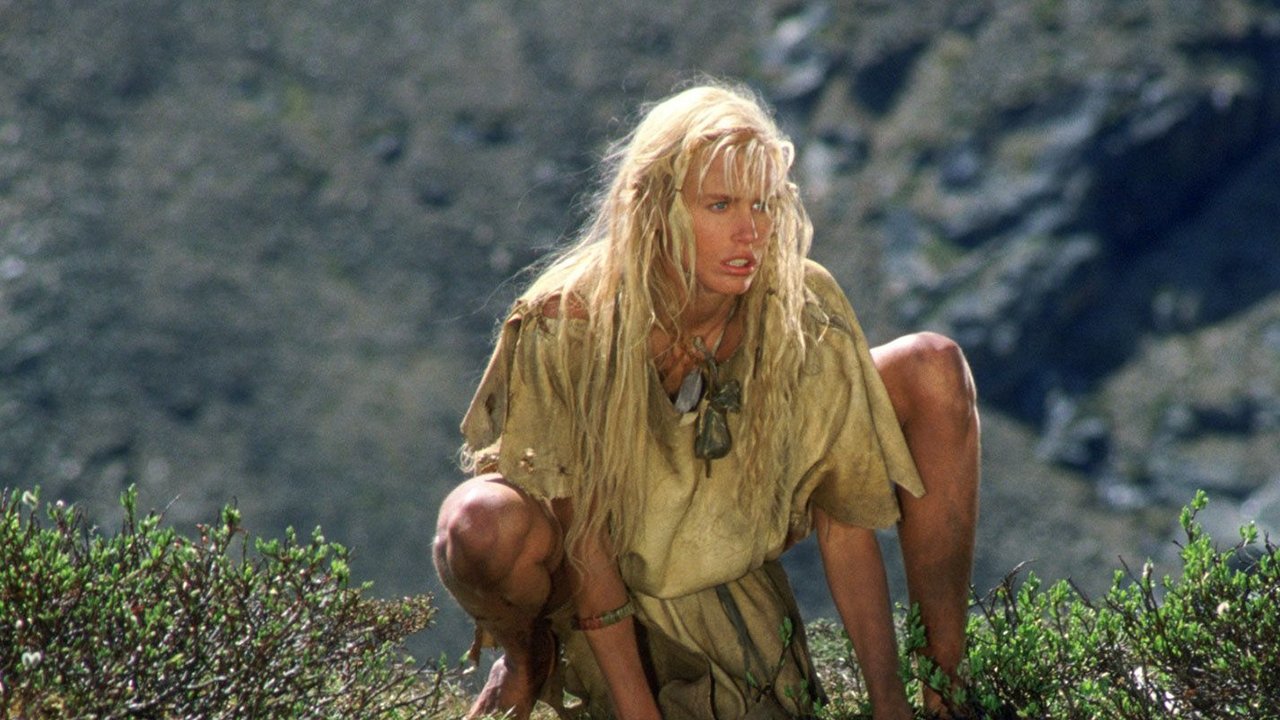
At the heart of the story is Ayla, played by Daryl Hannah. Fresh off her iconic roles in Blade Runner (1982) and Splash (1984), Hannah had the challenging task of portraying a character defined by her intelligence and difference, largely through expression and physicality, as true dialogue is scarce. Ayla is inherently other – taller, blonder, quicker to grasp abstract concepts than her adoptive kin. Hannah conveys this outsider status effectively, her bright eyes constantly observing, calculating, yearning. Does she fully capture the fierce, innovative spirit Auel described? Perhaps not entirely; the script, penned by the usually sharp John Sayles (who gave us Lone Star (1996) and often worked as a script doctor), seems to struggle with externalizing Ayla's internal evolution. Yet, Hannah's presence is luminous against the rugged backdrop, a flicker of the future amidst the past. I recall reading that she learned some basic survival skills for the role, an anecdote that speaks to the film's commitment to immersion, even if the narrative sometimes falters.
Communicating Across Millennia
The portrayal of the Neanderthals, the "Clan" of the title, is arguably the film's most fascinating and perilous element. Relying on grunts, gestures (a specific sign language was developed for the film), and heavy prosthetic makeup, the actors faced a unique challenge. Pamela Reed is genuinely affecting as Iza, the Clan’s medicine woman who forms the closest bond with Ayla, conveying warmth and wisdom despite the communication barrier. James Remar (familiar from The Warriors (1979) and later Dexter) brings a brooding intensity to Creb, the powerful, one-eyed shaman (Mog-ur) torn between tradition and Ayla's potential. The makeup effects, while perhaps looking a bit like masks by today's standards, were ambitious for their time, aiming for anthropological plausibility rather than simple "caveman" caricature. Yet, the limited verbal communication, while true to the concept, inevitably keeps the audience at an emotional distance from the Clan's inner lives, something the novel navigated through descriptive prose.

Echoes of the Source
The film grapples valiantly with the book's core themes: the clash between instinct and intellect, tradition versus innovation, and nascent feminism embodied by Ayla’s refusal to accept the Clan’s rigid gender roles. We see her defy taboos by learning to hunt, her mind working in ways the Clan struggles to comprehend. However, much of the novel's intricate detail about spirituality, memory, and social dynamics feels condensed or simplified. It’s known that Jean M. Auel herself wasn't particularly pleased with the adaptation, feeling it missed the essence of her work. Perhaps the challenge was insurmountable – translating such a dense, internal narrative into a visual medium inevitably involves sacrifices. What remains is a visually striking, often ponderous exploration of survival and difference. It feels less like a dramatic narrative and more like an extended, beautifully shot anthropological sketch.
A VHS Fossil Worth Examining?
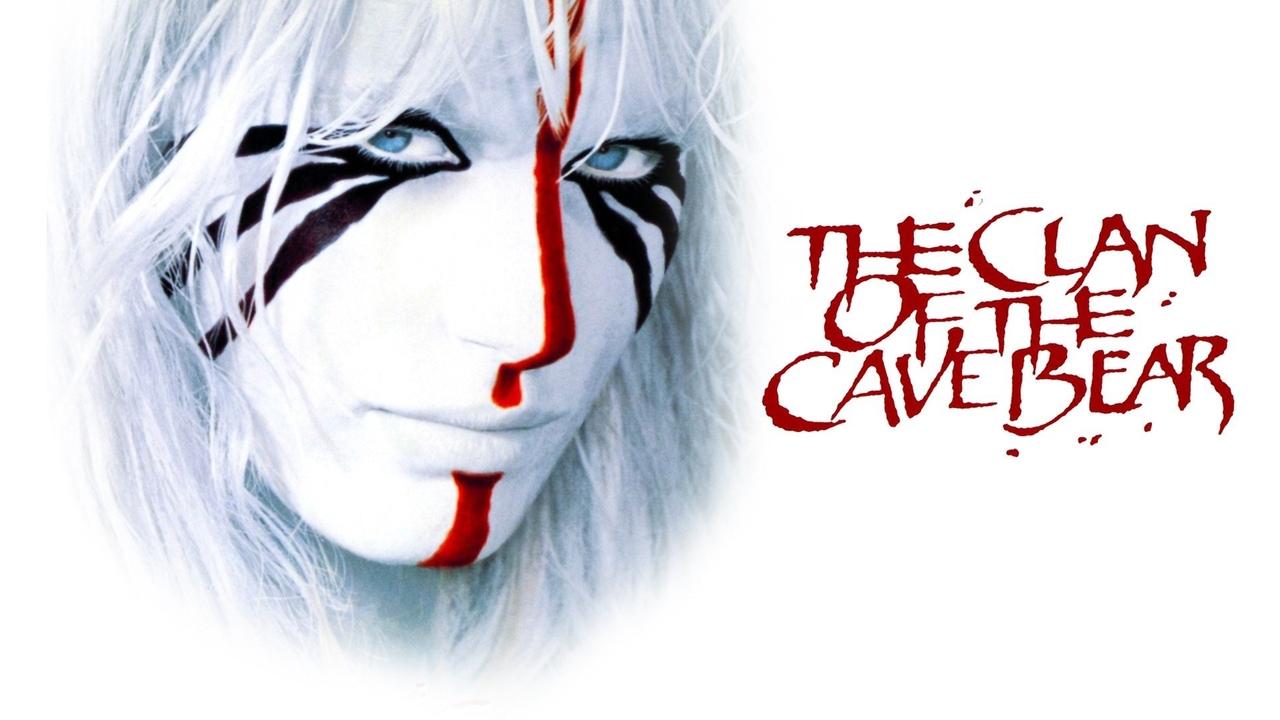
I remember the distinctive cover art on the VHS box, promising an epic journey into prehistory. It felt different, weightier than the usual rentals. But The Clan of the Cave Bear landed with a thud at the box office, grossing under $2 million against its hefty budget, immediately extinguishing plans for sequels based on Auel's subsequent books. It became one of those intriguing mid-80s experiments, a film many rented out of curiosity sparked by the book's popularity, only to find something slower, stranger, and perhaps more challenging than expected. Does it hold up? Visually, its commitment to practical effects and real locations offers a certain nostalgic integrity. The pacing, however, can feel glacial, and the emotional connection remains elusive. It’s a film easier to admire for its ambition and aesthetic than to truly love.

Rating: 5/10
The score reflects a film that reaches for greatness but falls short. Its visual scope, commitment to a unique premise, and strong central performances (Hannah, Reed, Remar) are commendable points, earning it a solid half. However, the glacial pacing, the inherent difficulty in translating the novel's depth, and a resulting emotional distance prevent it from being truly compelling. It’s a fascinating piece of 80s cinematic ambition, a testament to trying something daringly different, even if the execution couldn't fully match the vision of the source material or, perhaps, the director's own visual talents.
It remains a curiosity, a film that sparks thoughts about adaptation, the limits of cinematic language, and the enduring human drive to understand our deepest past. What lingers isn't necessarily a powerful story, but the haunting imagery of that lone, different figure against an immense, indifferent landscape – a visual echo of a truly epic undertaking.