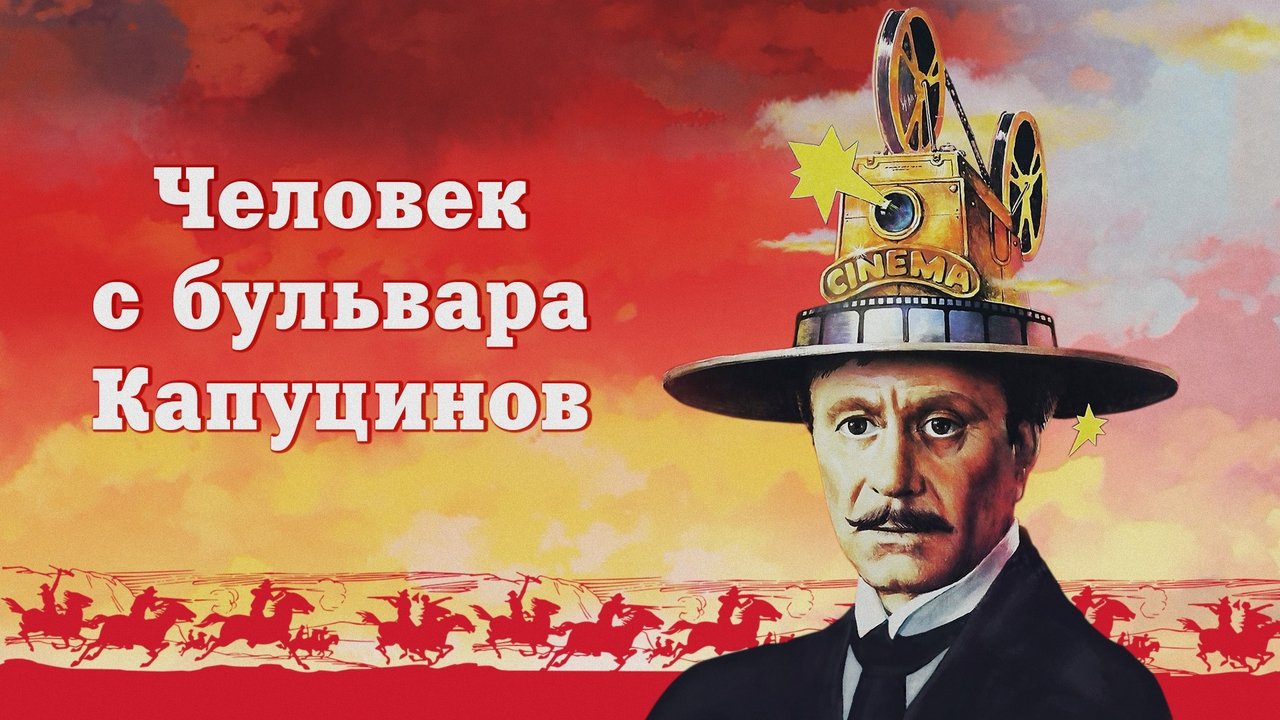
Alright, fellow tape travelers, gather 'round the flickering glow of the metaphorical CRT. Tonight, we're pulling a real curveball from the dusty shelves of VHS Heaven – a film that proves the Wild West wasn't just dusty American plains, but could also be found, unexpectedly, blooming in the heart of the late Soviet Union. I'm talking about the utterly charming, surprisingly sharp, and genuinely funny Alla Surikova directed A Man from the Boulevard des Capucines (1987) (also known sometimes internationally as The Man from Capuchin Boulevard). Forget tumbleweeds rolling past cacti; imagine them rolling past birch trees, maybe.
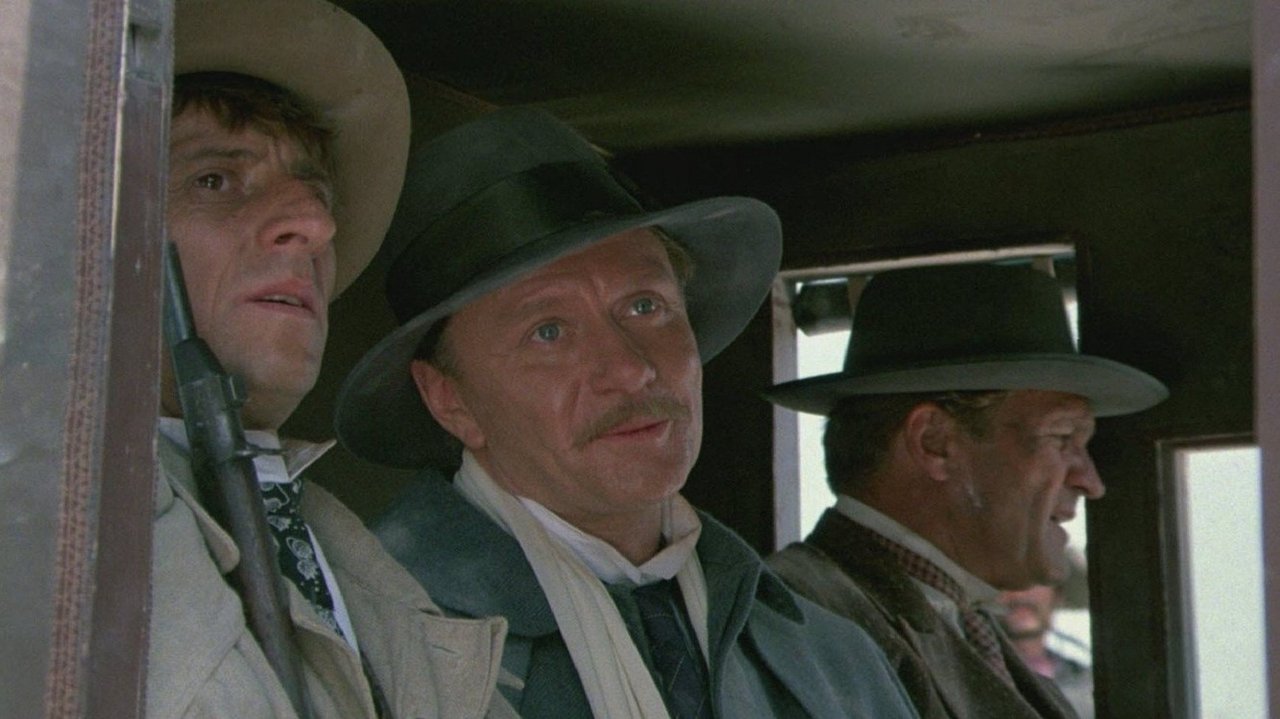
Finding this one back in the day felt like uncovering a secret transmission. A Soviet comedy and a Western parody? It sounded almost too weird to be true, nestled amongst the Stallone and Schwarzenegger tapes. But slipping that cassette into the VCR revealed something special: a film brimming with affection for cinema itself, wrapped in a surprisingly clever package. The premise alone is golden: Mr. Johnny First (Andrei Mironov), a dapper, optimistic missionary armed not with a Bible, but with a Lumière Cinématographe, arrives in the rowdy, perpetually brawling Western town of Santa Carolina. His mission? To introduce the magic of moving pictures to the hard-drinking, trigger-happy locals.
### Lights, Camera, Less Action!
What happens next is the film's core delight. Mr. First sets up his projector in the saloon, run by the initially skeptical Diana Little (Aleksandra Yakovleva-Aasmyae). Instead of the usual nightly chaos – gunfire, breaking bottles, fistfights orchestrated with almost balletic absurdity – the cowboys become utterly transfixed by the flickering images. Hilariously, the type of film shown directly influences their behavior. Slapstick comedies lead to playful mimicking, romances inspire sudden bouts of politeness and chivalry (cowboys start drinking milk!), and the mere idea of drama has them contemplating life beyond the saloon doors. It’s a brilliant, affectionate satire on the power of media, delivered with infectious energy.
The "action" here isn't about gritty realism, but the comedic deconstruction of Western tropes. The saloon brawls before Mr. First arrives are glorious pieces of choreographed chaos, precisely the kind of over-the-top spectacle early silent films might have captured. Seeing these rough cowboys suddenly attempting decorum, awkwardly trying to emulate the heroes they see on screen, is where the real gold lies. It’s less about practical explosions and more about the explosive impact of culture and art on a 'primitive' society. Remember how utterly transformative seeing any movie felt back then? This film bottles that feeling.
### Mironov's Swan Song and Soviet Ingenuity
At the heart of it all is the legendary Andrei Mironov as Mr. First. Charming, charismatic, and radiating gentle optimism, he's the perfect catalyst for change. Tragically, this would be Mironov's final completed film role. He collapsed from a cerebral hemorrhage during a stage performance in Riga just months after the film's release and passed away shortly after. Knowing this lends a poignant layer to his portrayal of a man bringing light and joy through flickering images. Reportedly, Surikova had Mironov in mind from the very beginning, feeling only he possessed the unique blend of comedic timing and sincere charm needed for the role. His performance feels effortless, a testament to a master comedian at the peak of his powers, making his sudden loss even more deeply felt by Soviet audiences who adored him.
Let's talk production. Making a "Western" in the Soviet Union in the 80s wasn't exactly straightforward. Filmed primarily in scenic Crimea, the landscapes do a surprisingly effective job standing in for the American frontier, albeit with a distinctly different flora. Alla Surikova, who already had hits like Be My Husband (1981), directs with a light touch, balancing the slapstick with genuine warmth and witty social commentary. The film reportedly cost around 1.5 million rubles, a decent budget for Mosfilm at the time, and it paid off handsomely. A Man from the Boulevard des Capucines became a colossal hit in the USSR, seen by estimates of up to 60 million viewers in its first year – a true blockbuster by Soviet standards.
### The Blacksmith, The Beauty, and The Bad Guy
While Mironov shines, the supporting cast is equally memorable. Mikhail Boyarskiy, usually the swashbuckling hero type (think D'Artagnan and Three Musketeers), chews the scenery delightfully as the menacing, gravelly-voiced outlaw Black Jack. His attempts to cling to the town's old ways, constantly thwarted by the civilizing influence of cinema (and his own buffoonery), are hilarious. And Aleksandra Yakovleva-Aasmyae is luminous as Diana, believably transitioning from a tough saloon owner to a woman captivated by both Mr. First and the possibilities his films represent. Even the ensemble cast of cowboys feels distinct and amusing in their reactions to the cinematic wonders. The musical score by Gennady Gladkov is also perfectly pitched, adding to the film's playful energy.
There's a gentle critique here, too, beneath the laughs. The film subtly pokes fun at the perceived crudeness of Western culture (or at least, its cinematic representation) while simultaneously celebrating the universal, humanizing power of art. It suggests that even the roughest souls can be softened and inspired by stories, a message that resonated strongly during the late Soviet era's period of Glasnost (openness).
Rating: 9/10
This score is earned through its sheer, undeniable charm, Andrei Mironov's poignant final performance, the clever premise executed with wit and warmth, and its status as a unique cultural artifact – a Soviet take on the American West filtered through a love letter to cinema itself. It’s funny, it’s smart, and it has a huge heart. Some of the pacing might feel a touch leisurely by modern standards, but the humor and inventiveness hold up remarkably well.
A Man from the Boulevard des Capucines is more than just a quirky comedy; it's a reminder that the magic we felt watching those flickering images on our own bulky TVs, maybe rented from a corner store with a Cyrillic name we couldn't pronounce, was universal. It proves that a good story, well told, can change the world – or at least, make a dusty saloon a much nicer place to drink milk. A true gem worth seeking out beyond the usual VHS suspects.